Home Landmark Achievement: China's First AI-Powered Vascular Interventional Surgical Robot Completes Large-Animal Trials, Pioneering a New Era of Autonomous Smart Intervention

Landmark Achievement: China's First AI-Powered Vascular Interventional Surgical Robot Completes Large-Animal Trials, Pioneering a New Era of Autonomous Smart Intervention

Jul 09, 2026 18:00 CST Updated 18:00

RaysightMed

Medical Imaging Product Developer

Image
Recently,RaysightMed and The Second Affiliated Hospital of Harbin Medical UniversityCompleted the world’s first large-animal experiment of an AI-powered vascular interventional surgical robot, and debuted the results globally for the first time at the 2026 Cold Region (Ice City) Cardiovascular Conference. This milestone marks a leapfrog breakthrough in China’s cardiovascular intelligent interventional devices—from mechanical assistance to autonomous surgery—propelling domestically produced medical-engineering integrated technologies to the forefront of the global competitive landscape.
Image

Major Launch | Top Medical-Engineering Teams Join Forces to Embark on a New Journey in AI Vascular Intervention
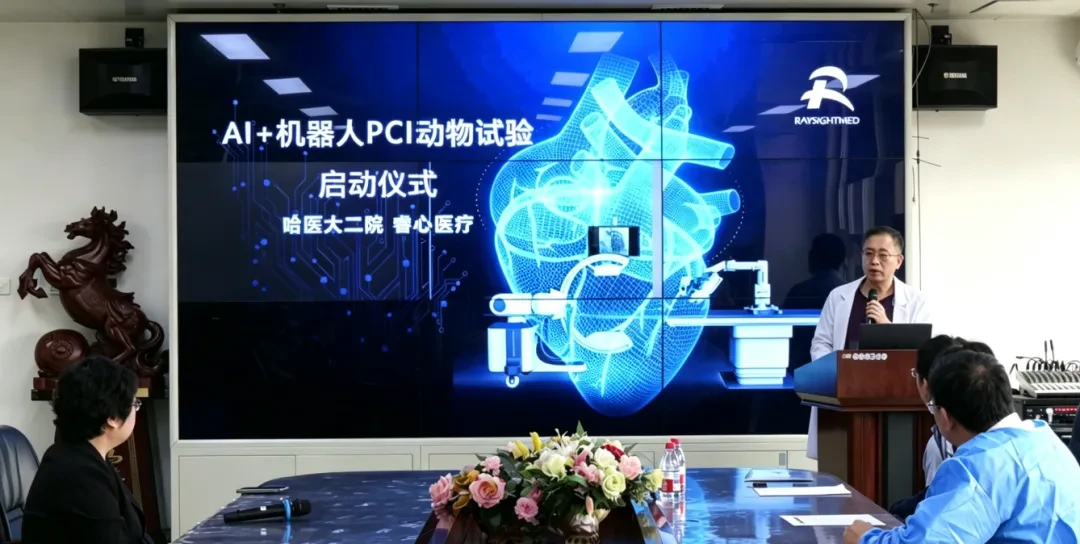
On June 6, 2026, Professor Yu Bo, Dean of the Cardiovascular Hospital at the Second Affiliated Hospital of Harbin Medical University, Professor Hou Jingbo from the Department of Cardiology, and multiple experts and scholars from the fields of clinical medicine and medical engineering gathered together to jointly witness a significant moment in intelligent healthcare: the launch of the animal trials for the world’s first AI-powered vascular interventional surgical robot.
Image
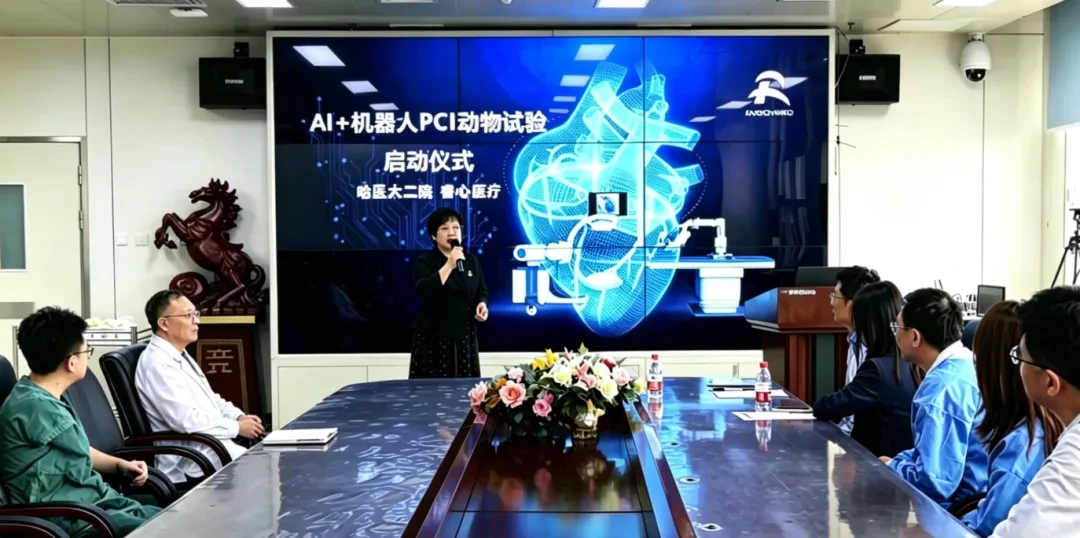
At the launch ceremony, Professor Yu Bo stated that the Department of Cardiovascular Medicine at the Second Affiliated Hospital of Harbin Medical University, as a National Key Clinical Specialty, has always been deeply engaged in the forefront of cardiovascular interventional diagnosis and treatment. He pointed out that the deep integration of AI and surgical robots is an inevitable development direction in the field of cardiovascular intervention, as well as a key pathway to narrowing regional healthcare disparities and enhancing the standardization of surgical procedures nationwide. Professor Yu Bo expressed high hopes for the cross-disciplinary medical-engineering collaboration with RaysightMed, expecting both parties to fully leverage their respective advantages in clinical resources and technological R&D to truly create original Chinese intelligent medical devices that align with clinical realities and benefit a broad patient population.

Image
Professor Hou Jingbo, drawing on clinical practice, noted that traditional vascular interventional procedures heavily rely on the operator’s experience and hand-eye coordination. The lengthy training period for physicians and the challenges in promoting these techniques at primary care levels have long been the core bottlenecks restricting the widespread adoption of interventional diagnosis and treatment. The emergence of AI-enabled embodied intelligent surgical robots holds promise for fundamentally restructuring the operational paradigm of interventional surgery.
Image
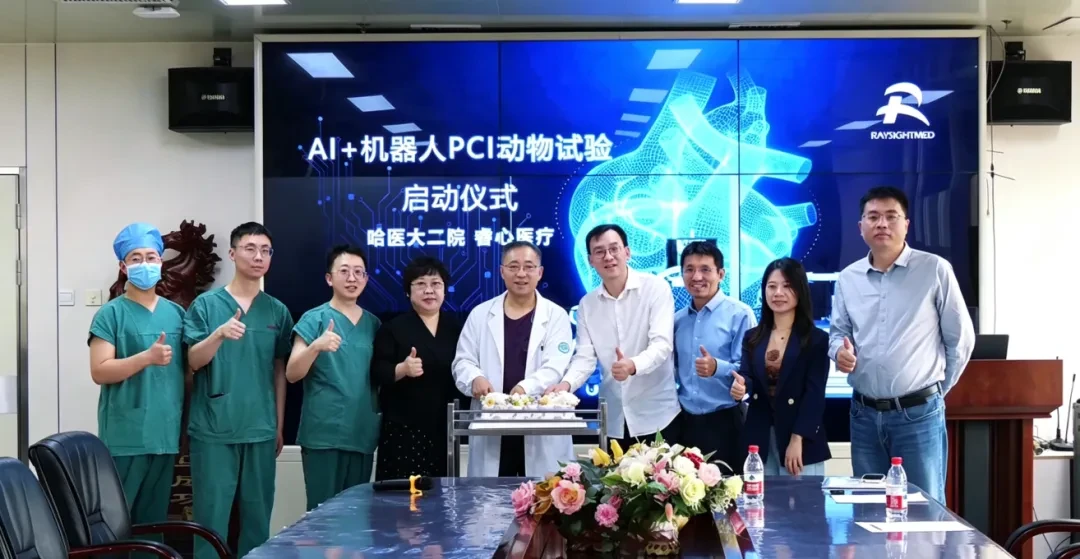
At the conclusion of the ceremony, the clinical expert team from the Second Affiliated Hospital of Harbin Medical University and the core R&D team from RaysightMed jointly cut the celebratory cake, officially announcing this globally leading
RaysightMed Interventional Robot Successfully Completes Animal Experiment Validation, domestically produced AI-guided interventional surgical robots have made a critical leap from technological R&D to clinical translation.

Experiment Concludes Successfully | AI Achieves Fully Autonomous Closed-Loop for the Entire Interventional Procedure, Disrupting Traditional Operational Models
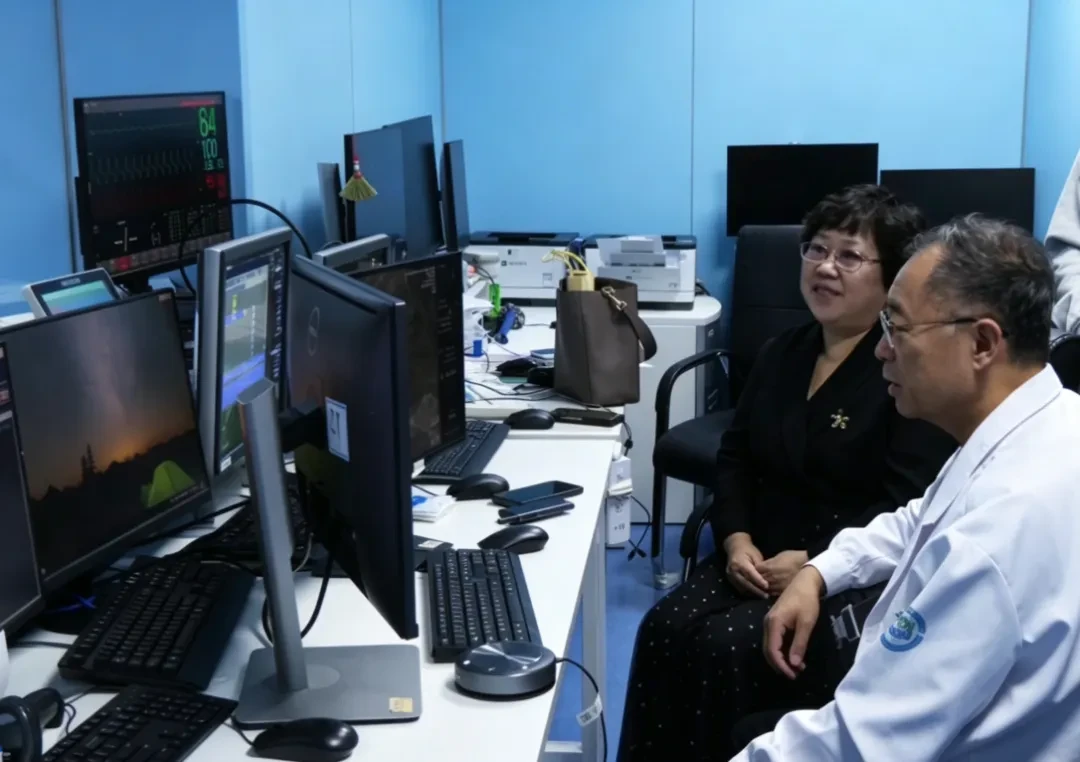
Image

From “Assistive” to “Autonomous”: AI Technology Enables a Closed-Loop Process for Interventional Surgery in Animal Experiments
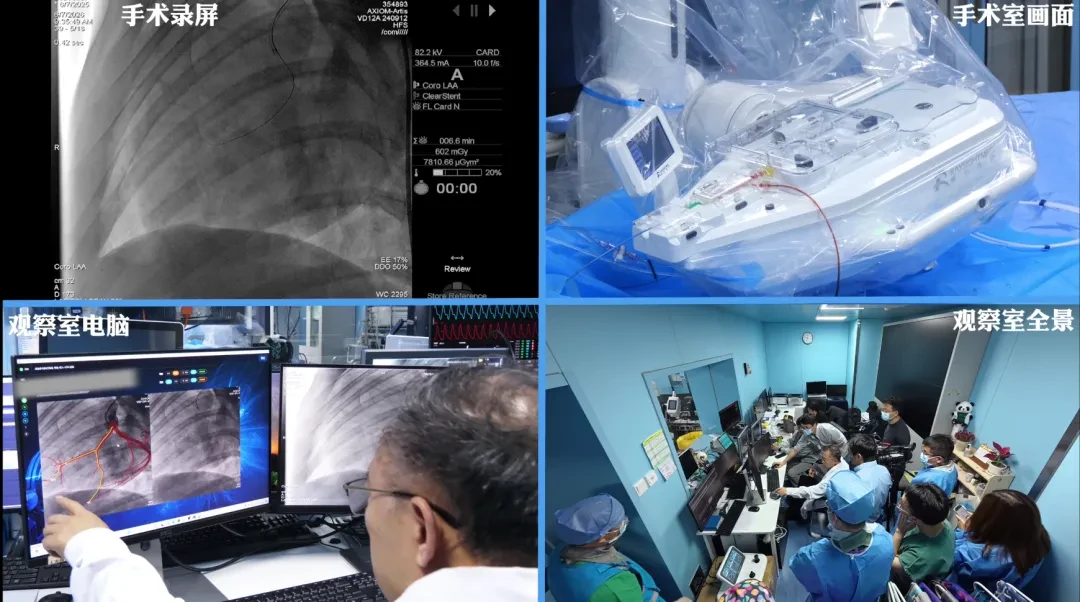
The success of this animal experiment marks the first global validation of the complete closed-loop application of AI embodied intelligence technology in vascular interventional surgery scenarios, achieving a fundamental leap from “mechanical assistance” to “autonomous execution.”
Unlike traditional surgical robots that merely passively follow manual operations and provide mechanical force assistance, RaysightMed’s AI vascular interventional robot deeply integrates three core technologies: large language model-based semantic understanding, real-time multimodal image recognition, and precise motion control, truly achieving full-process intelligence characterized by “understanding commands – interpreting intent – autonomous planning – precise execution.”
Image

During the experiment, operators only needed to issue surgical commands via voice or text, enabling the robot to autonomously identify vascular anatomical structures, plan the optimal interventional pathway, precisely deliver the guidewire to the designated location within the target vessel, and independently perform key procedural steps such as stent delivery and balloon angioplasty. The entire process required no manual point-by-point control, fully demonstrating the significant application potential of AI-embodied intelligence in the field of minimally invasive interventions.

Deep Integration of Medicine and Engineering: Top-Tier Clinical Resources Solidify the Foundation for Technology Implementation

This experiment was jointly conducted by RaysightMed and the Second Affiliated Hospital of Harbin Medical University, representing the outcome of a deep integration between top-tier clinical expertise and cutting-edge AI technology.
Harbin Medical UniversityThe Second Affiliated HospitalWith profound clinical expertise and extensive experience in managing complex cases in the field of cardiovascular intervention, comprehensive professional guidance was provided for experimental design, establishment of operational standards, and efficacy validation. Meanwhile, RaysightMed leveraged its years of accumulation in AI healthcare and robotics technology to provide core algorithms and engineering support for the product.
By leveraging complementary strengths and collaborating to overcome challenges, the two parties not only fully validated the safety and operational efficacy of the robotic system but also acquired valuable data from real-world surgical scenarios, laying a solid foundation for subsequent product optimization, iteration, and clinical translation.

A Global Breakthrough: Redefining the Future of Vascular Interventional Surgery

As the first team globally to apply AI-embodied intelligence technology to vascular interventional surgical robots and successfully complete comprehensive animal experimental validation, RaysightMed is redefining the development trajectory of vascular interventional surgery.
The breakthrough advancements in this technology will effectively lower the operational barriers and learning costs associated with vascular interventional procedures, significantly enhancing the standardization of surgical workflows. In particular, it will provide high-quality, standardized interventional surgical solutions for remote areas and regions with scarce medical resources, thereby enabling premium diagnostic and therapeutic resources to transcend geographical limitations.

Global Debut | Cold-Region Cardiovascular Conference Makes Its Public Appearance
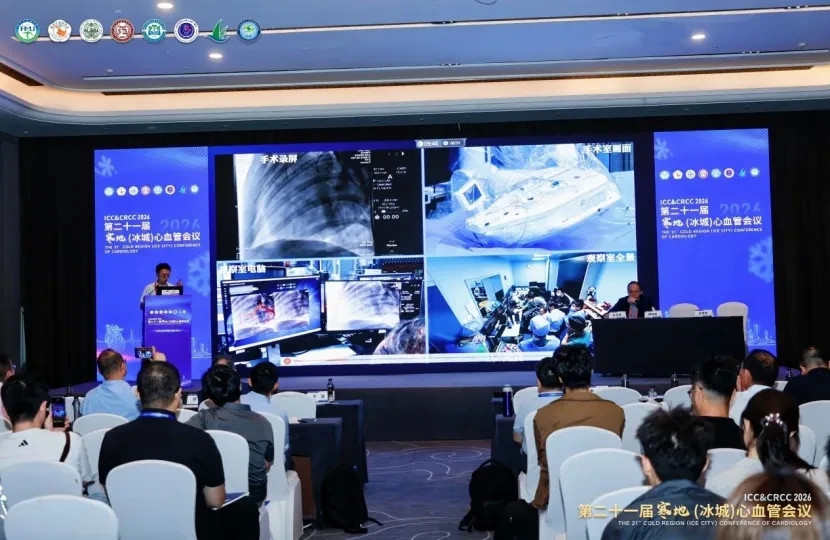
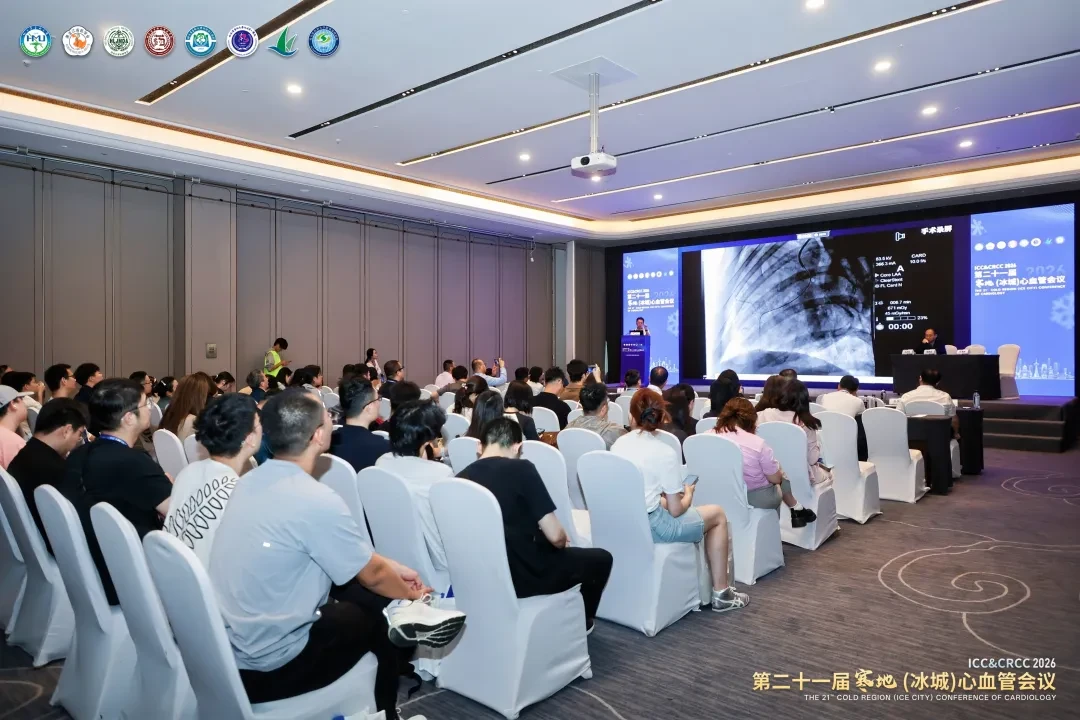
Harbin Medical UniversityThe Second Affiliated HospitalProfessor Yin Li, on behalf of his team, publicly shared for the first time the design and results of large-animal trials for an AI-powered vascular interventional robot. Operating from a console outside the catheterization laboratory, the operator issued surgical commands via voice instructions or mouse clicks. The AI system autonomously identified vascular anatomy, planned the optimal access route, precisely manipulated guidewires and stents, and performed real-time automatic deviation correction. In the study, experimental pigs were randomly assigned to either a manual surgery group or an AI-robot group. Results demonstrated that the AI group exhibited superior performance in terms of target task completion rate, radiation dose, and fluoroscopy time. The algorithm’s iteration speed exceeded expectations, enabling adaptation to various levels of complex vascular anatomical structures and stable execution of surgical procedures. Professor Yin Li pointed out that this paradigm not only reduces operators’ radiation exposure and the physical burden of lead aprons but also holds the potential to integrate multidimensional information—including anatomical, functional, and microcirculatory data—throughout the entire diagnostic and therapeutic cycle, from preoperative diagnosis and intraoperative procedures to postoperative follow-up.
Professors Hou Jingbo and He Yuquan, the reviewing experts, unanimously agreed that the core task for AI interventional robots at present is to accumulate multi-center clinical data and verify their safety and efficacy in real-world scenarios, so as to achieve large-scale clinical application in the near future.
The venue was packed to capacity, with many attendees arriving well in advance. This clearly demonstrates the immense popularity and significant industry attention garnered by AI-assisted surgical robots in the current landscape.
Image

Future Outlook | China’s Intelligent Manufacturing Breaks Geographic Barriers, Bringing Cardiovascular Care to Patients Worldwide

RaysightMed has always been committed to driving medical transformation through AI technology. The success of this animal experiment marks a key milestone in the company’s journey toward clinical application. In the future, we will continue to collaborate with leading domestic medical institutions to accelerate the clinical registration and implementation of our products, bringing China’s world-leading intelligent manufacturing technologies to patients worldwide as soon as possible, and ushering in a new chapter in smart interventional cardiovascular care.
Image