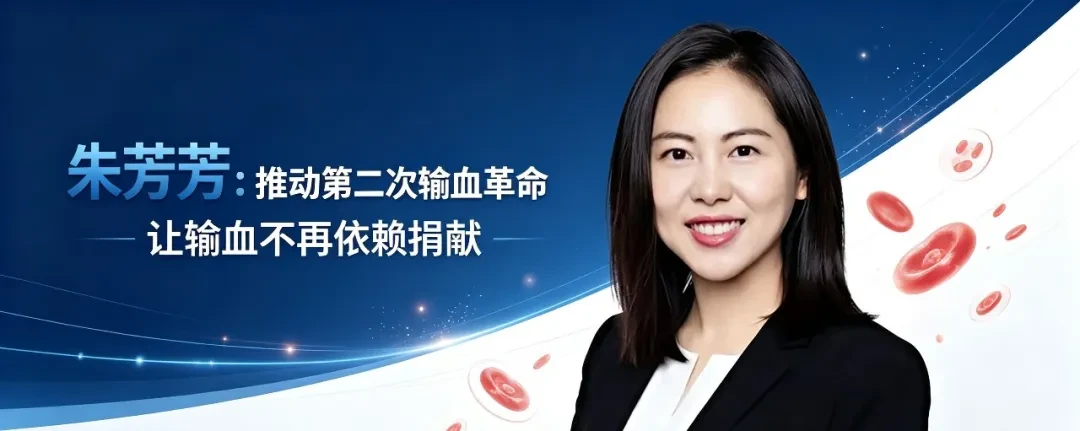
On July 7, 2026, the official website of the Center for Drug Evaluation (CDE) under the National Medical Products Administration announced that HemaCell Therapeutics, based in Suzhou, had submitted an application forHematopoietic Stem Cell-Derived Platelet InjectionThe application for clinical trial of a new drug has been officially accepted. The acceptance number is CXSL2600705, and the registration category is Class 1 therapeutic biological products.This is the first ex vivo regenerated platelet therapy in China to file an Investigational New Drug (IND) application, signifying that this Suzhou-based biopharmaceutical company, established just five years ago, has officially entered the top tier globally in the field of platelet regeneration.Driving all of this is a female scientist born after 1985—the founder and CEO of HemaCell.Zhu Fangfang. From her undergraduate studies at Lanzhou University to her doctoral degree at Peking University, from her postdoctoral research at Stanford University to her role as an investor in venture capital firms, and now as an entrepreneur, her life trajectory has always revolved around one goal:Making Blood Transfusions No Longer Dependent on Donations。
I. World’s First: iPSC-Derived Platelet Injection Enters Clinical Stage
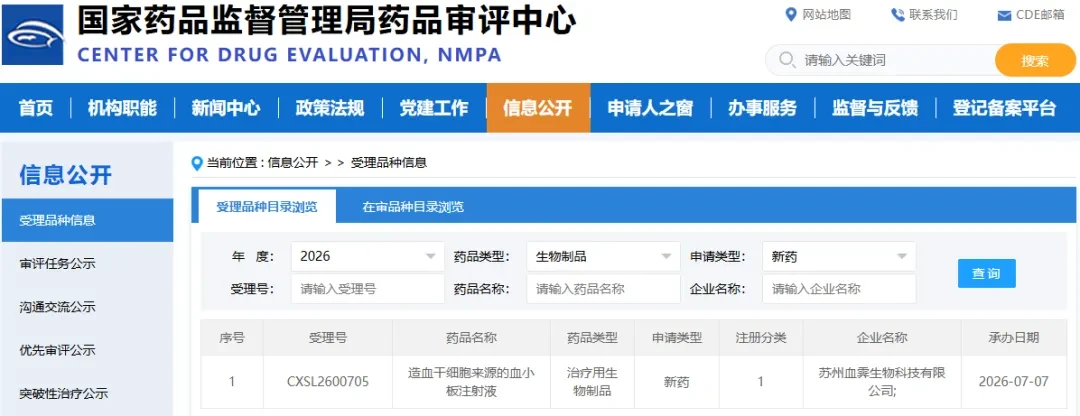
Figure: CDE Official Website Public Notice on Acceptance of Hematopoietic Stem Cell-Derived Platelet InjectionThe hematopoietic stem cell-derived platelet injection currently accepted for review is HemaCell’s core pipeline product. In simple terms, this product utilizes directed differentiation of stem cells to “manufacture” functional platelets in vitro for clinical transfusion therapy.Platelets are the key components in blood responsible for hemostasis. Clinically, scenarios such as tumor chemotherapy, bone marrow transplantation, and massive hemorrhage require substantial platelet transfusions. However, for a long time, platelets have relied entirely on unpaid blood donations, facing three major pain points:
Supply Shortage: China faces a significant clinical shortage of platelets, with prominent supply-demand imbalances
Extremely short shelf life: Platelets can only be stored ex vivo for 3 to 5 days, making reserve and allocation difficult.
Safety Risks: Platelets derived from blood donations carry a potential risk of transmitting infectious diseases
“If we compare the human body to a towering tree that is constantly growing, stem cells are the ‘seeds’ at its very base,” explained Zhu Fangfang in an exclusive interview with Cnr.cn, elaborating on the technical principle. “Our goal is to generate platelets through directed in vitro induction of stem cells, thereby fundamentally addressing the supply shortage of platelets.”Notably, this product had previously been approved in December 2025U.S. FDA Orphan Drug Designation, becoming the world’s first allogeneic platelet injection derived from iPSC differentiation without gene editing. The acceptance of the Investigational New Drug (IND) application in China marks the formal implementation of Zhu Fangfang’s team’s “dual filing” strategy in both China and the United States.HemaCell is also the first company in China and the third globally to enter the clinical stage for ex vivo regenerated platelets.
II. Studying Under Two Titans: The Research Journey from Lanzhou University to Stanford
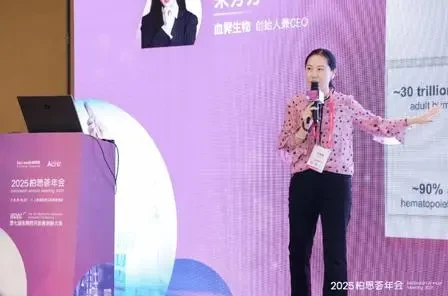
Figure: Zhu Fangfang, Founder of HemaCell Zhu Fangfang’s research trajectory can be described as an “academic overachiever” path.Completed undergraduate studies at the School of Life Sciences, Lanzhou University; after graduation, was admitted to Peking University for doctoral studies with honors, studying under a leading authority in the field of stem cells in China.Prof. Deng Hongkui, with a research focus on cell biology. Professor Deng Hongkui is a leading figure in stem cell research in China, having achieved multiple world-class results in areas such as iPSC reprogramming and liver regeneration.After earning her Ph.D. from Peking University, Zhu Fangfang traveled to Stanford University in the United States to conduct postdoctoral research under the supervision of the renowned “Father of Stem Cells.”Professor Irving Weissman— The Director of the Stanford Institute for Stem Cell Biology and Regenerative Medicine, a legendary figure in the global stem cell field, who discovered hematopoietic stem cells and leukemia stem cells, and is one of the founding pioneers of stem cell research.Her experience studying under two world-renowned academic titans laid an exceptionally solid foundation for Zhu Fangfang’s scientific research and deepened her reflections on the industrialization potential of stem cell technology.“Researchers should not limit themselves to R&D; they must also strive to improve the conversion rate of scientific and technological innovations, thereby promoting the industrialized and large-scale application of new technologies.” This is a statement Zhu Fangfang often makes.However, her entrepreneurial journey did not follow the conventional path of “starting a business immediately upon graduation.” After returning to China in 2020, Zhu Fangfang first worked at a venture capital firm for six months. This experience as an investor allowed her to re-examine the stem cell industry from a business perspective and laid the foundation for the unique advantages she would later leverage in her own startup."Having been an investor, I better understand what investors care about." Zhu Fangfang candidly stated in an interview with Xinhua Daily Press Network that her six-month investment experience taught her to evaluate projects from multiple dimensions—including market, business, and compliance—rather than focusing solely on the technology itself.
3. Finalizing the Team in One to Two Months: The "Acceleration" of Entrepreneurship in Suzhou
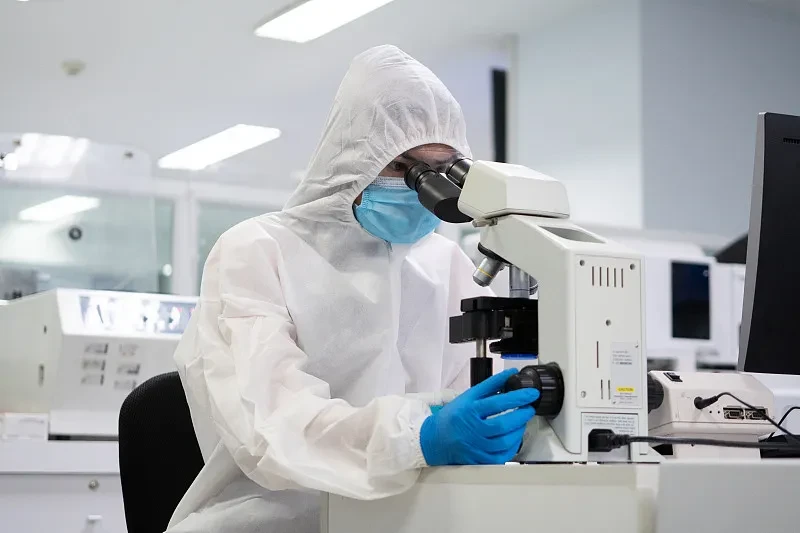
Figure: Work scene in a stem cell R&D laboratoryIn 2021, Zhu Fangfang officially decided to start a business.Her appeal quickly became evident: junior colleagues from her former laboratory at Peking University chose to join the venture after discussions about its entrepreneurial direction. “From the initial conversations about starting the business to packing our bags and returning to China, it took only one or two months. The team members were all firmly committed to the direction of platelet regeneration,” recalled Zhu Fangfang.Site selection was equally swift. Through the Suzhou International Elite Entrepreneurship Week, Zhu Fangfang’s team connected with the Suzhou Industrial Park, where a well-developed biomedical industry ecosystem, efficient government services, and generous talent policies ultimately led her to establish the company in Suzhou.June 2021,HemaCellOfficially established. The company name "HemaCell" is derived from the phrase "the sky clears after the rain," subtly embodying the aspirational vision that blood disorders will ultimately be conquered.In the early stages of its founding, the team consisted of only a few members, but with a clear objective: to focus on the niche field of platelet regeneration and develop globally leading technology.Platelet regeneration is a notoriously "tough nut to crack." The technical barriers are extremely high; few researchers focus on platelets in academia, and those who understand how to achieve industrialization are even rarer. This presents both a challenge and a moat—once accomplished, it will represent true global leadership.Zhu Fangfang proposed a highly ambitious slogan:Driving the "Second Transfusion Revolution"If the invention of blood transfusion technology a century ago was the first revolution, then the large-scale application of ex vivo regenerated platelets will completely transform the current reliance on donations for transfusions, becoming the second revolution.
IV. Continued Heavy Investment by Sequoia and CDH: Hard Tech Endorsed by Capital
Over the past five years since its inception, HemaCell has accelerated its fundraising pace, backed by an impressive lineup of investors: Sequoia China, CDH Investments, CMB International, and Yuanhe Holdings. The continued capital commitments from top-tier VC/PE firms serve as the strongest endorsement of Zhu Fangfang’s team and their technological roadmap.In 2026, the company completedSeries B Phase II Financing Exceeding RMB 100 Million, with the funds primarily allocated to accelerating the clinical development of the world’s first megakaryocyte-based drug and advancing the dual filing strategy in China and the United States.Why is Capital Bullish on HemaCell?
Scarcity in the Sector: Only three companies worldwide have entered clinical trials, with HemaCell being the sole domestic player, resulting in a highly favorable competitive landscape.
Hardcore Technology: The team has been deeply engaged in the field of stem cells for many years, possessing a complete technical system for iPSC differentiation and platelet production.
The Market Is Huge: The domestic platelet market alone is valued at tens of billions of yuan, with a persistent supply-demand gap.
Founder's Composite Background: Dual identity as a scientist and investor, capable of steering technological direction while understanding commercial implementation
In addition to the progress in fundraising, honors for Zhu Fangfang’s team have also come one after another:
In 2023, Zhu Fangfang was honored as the "Zhangjiang Life and Health Industry Annual Rising Star."
In the same year, HemaCell Therapeutics won the first prize in the startup category of the Suzhou Women's Entrepreneurship and Innovation Competition.
HemaCell Therapeutics has been selected for various talent programs in Suzhou Industrial Park, becoming a typical representative of hard-tech startups in the park.
Mainstream media outlets such as Xinhua Daily and CNR News have repeatedly reported on the story of Zhu Fangfang and HemaCell Therapeutics, highlighting it as a typical case of Suzhou’s talent attraction and development initiatives and the growth of its biopharmaceutical industry.
V. From 0 to 1: The Dawn of the "Second Transfusion Revolution"

Now that its domestic IND has been officially accepted, HemaCell has officially entered the clinical stage.For Zhu Fangfang, this is merely the first step in a long march. There is still a long road ahead for platelet therapeutics to go from clinical development to market launch: safety validation, efficacy validation, scalable manufacturing processes... Each step presents its own challenges.Yet her confidence stems not only from accumulated technological expertise but also from the team’s execution capabilities. Over five years of entrepreneurship, Zhu Fangfang and her team have achieved the critical leap from zero to one—growing from a small handful of individuals into an R&D force of over a hundred, and advancing from laboratory concepts to filing an Investigational New Drug (IND) application.In the longer term, HemaCell’s ambitions extend beyond platelets. Leveraging its stem cell-directed differentiation platform, the company is poised to expand into the ex vivo regeneration of a broader range of blood and immune cells, thereby building a more comprehensive cell therapy platform."Finding a 'mother' for platelets, so that transfusions no longer depend on donations." This was Zhu Fangfang's original intention in starting her business, and her most straightforward interpretation of the "second transfusion revolution."From the laboratories of Peking University to the campus of Stanford University, from investors’ offices to the R&D buildings in Suzhou Industrial Park, Zhu Fangfang has spent two decades steadily advancing toward this goal. The acceptance of the Investigational New Drug (IND) application for hematopoietic stem cell-derived platelet injection marks the official starting gun for this revolution.References:Public Notice of Acceptance on the Official Website of the Center for Drug Evaluation, National Medical Products Administration["Hello! Founder"] Finding a "Mother" for Platelets to End Reliance on Donations for Blood Transfusions | CNR Jiangsu Channel“HemaCell Therapeutics Is Committed to Driving the ‘Second Transfusion Revolution’” | Suzhou Industrial Park Science and Technology Innovation Committee“Talent-Friendly” Drives Suzhou Upward | Xinhua Daily[Venture Capital Observation | A Suzhou-based Enterprise Completes Series B1 Financing; Founder is a Peking University and Stanford Graduate with VC Experience] | Xinhua Daily Press / Huijiaodian News"Entrepreneurship Week Reunion | Zhu Fangfang: Finding a 'Mother' for Platelets, Making Blood Transfusions No Longer Dependent on Donations" | Suzhou International Elite Entrepreneurship Week"HemaCell Completes Over 100 Million Financing in Series B Phase II, Accelerating Clinical Development of the World's First Megakaryocyte Drug" | Yigu Network“World’s First Drug! HemaCell’s iPSC-Derived Platelet Injection Receives FDA Orphan Drug Designation” | Suzhou Industrial Park Science and Technology Investment Promotion CenterHemaCell Official Website: News and HonorsScan the WeChat QR code to add the editor of “Biologics Circle”; eligible individuals may then join.Biologics WeChat Group!Please indicate: Name + Research Direction!
EditionQuanSoundMing
All reposted articles on this official account are intended for informational purposes only, with clear attribution to the original source and author. Media outlets or individuals who do not wish their content to be reposted may contact us at cbplib@163.com, and we will promptly remove the relevant material. The views expressed in all articles are solely those of the authors and do not represent the position of this platform.