Beijing-based Biotech Imunopharm Files for STAR Market IPO with Post-money Valuation of RMB 3.8 Billion
Imunopharm
Developer of Gene and Cell Therapy Technologies

Huadong Medicine
Large Comprehensive Pharmaceutical Product Developer
▲94th-5th CBI Biopharmaceutical Innovation Expo Scan the QR Code to Register
Note:This article does not constitute any investment advice or recommendations; please refer to official/company announcements for authoritative information.This article is intended solely for the introduction of medications related to medical health and does not constitute a recommendation for treatment plans (if involved), nor does it represent the platform's position.Authorization is required for the reprinting of any article.
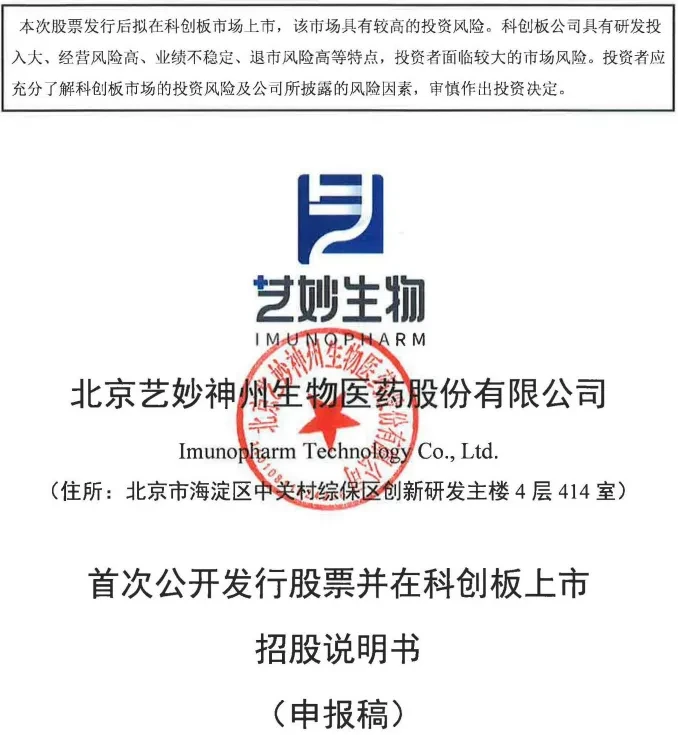
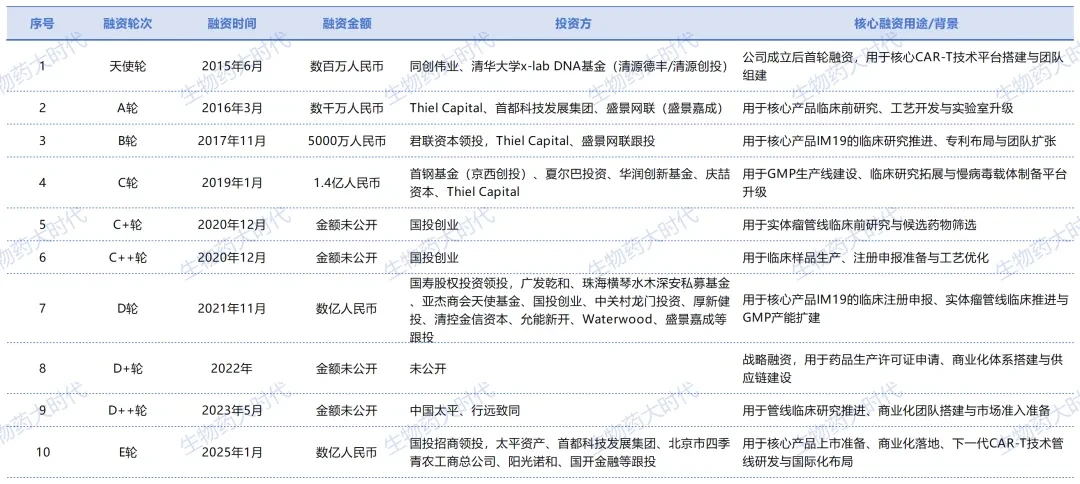
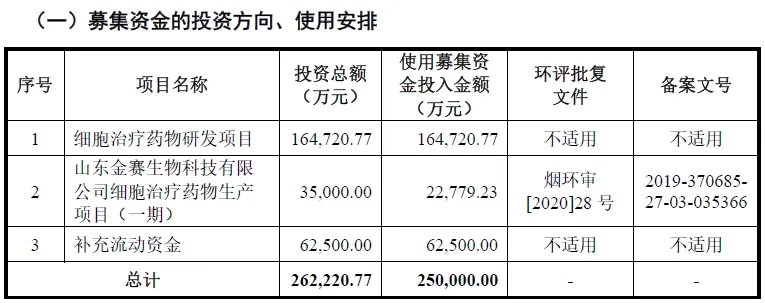
On June 30, 2026, the Shanghai Stock Exchange accepted the STAR Market initial public offering (IPO) application of Imunopharm Technology Co., Ltd., and its prospectus was officially disclosed. According to the prospectus, the company plans to issue no more than 10 million shares to raise RMB 2.5 billion, which will be used for the research and development of cell therapy drugs, the construction of production bases, and supplementary working capital. CITIC Securities serves as the sponsor. Founded in 2015 and focused on the research and development of gene and cell therapies, this biotech company has finally reached the doorstep of the capital market after ten rounds of financing.
The founding team of Imunopharm bears a distinct Tsinghua University imprint. Founder He Ting earned his bachelor’s degree from Xiamen University and later obtained his Ph.D. from the School of Life Sciences at Tsinghua University. Co-founders Dr. Lu Xin’an and Dr. Qi Feifei also graduated from the School of Life Sciences at Tsinghua University. Together, the three spearheaded the development of the company’s two core technology platforms: gene therapy vectors and immune cell therapies. As of the end of the reporting period, the company employed over 150 R&D personnel, more than 60 of whom held master’s degrees or higher.
Over the ten years since its establishment, the company has completed ten rounds of financing.Valued at approximately RMB 5 billion in its Series E financing round, the company’s investor lineup includes China Development Bank Capital, SDIC Innovation Investment, China Taiping, Beijing Capital Science & Technology Development Group, China Resources Fund, and Sun-Novo, among others. The company was selected as a 2025 National-Level Potential Unicorn Enterprise and a Provincial-Level Specialized, Refined, Differential, and Innovative (SRDI) Small and Medium-sized Enterprise.
Core ProductsIM19
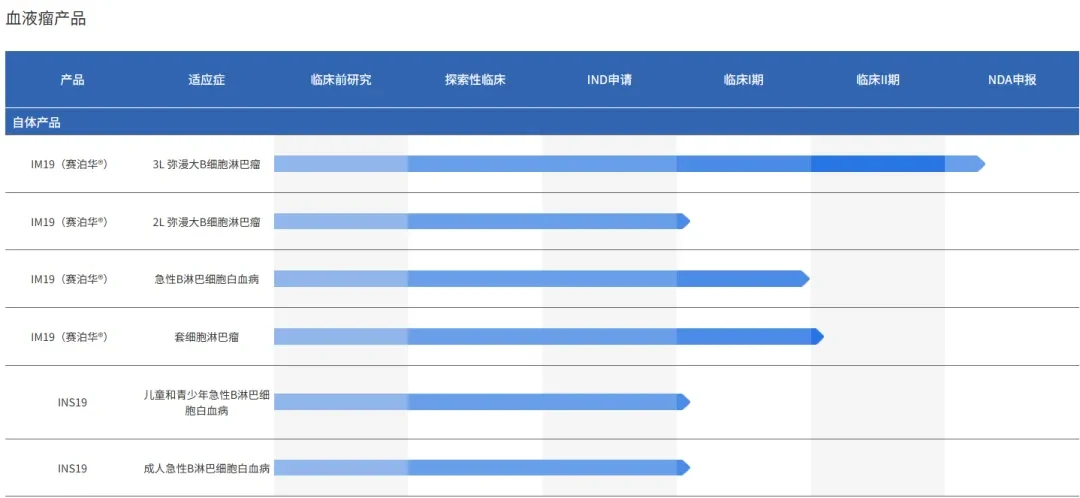
Core Products Disclosed in the ProspectusIM19 (Pojiolunsel) is an autologous CAR-T cell therapy product targeting CD19, indicated for the treatment of relapsed/refractory non-Hodgkin lymphoma (r/r NHL). The New Drug Application (NDA) for its third-line treatment indication in r/r NHL was submitted in November 2024, with clinical trial data demonstrating both excellent safety and efficacy.
From a commercialization perspective, in August 2024, Huadong Medicine and Imunopharm reached an exclusive commercialization agreement for IM19 within China, with Huadong Medicine paying an upfront fee of RMB 125 million and milestone payments of up to RMB 950 million. Meanwhile, the clinical trial application for IM19 as a second-line treatment for relapsed/refractory non-Hodgkin lymphoma (r/r NHL) was approved by the Center for Drug Evaluation (CDE) in January 2026, making it the first domestically developed CAR-T product to receive approval for clinical trials targeting this indication. The pivotal clinical trial for IM19 as a third-line treatment for relapsed/refractory mantle cell lymphoma (r/r MCL) is also progressing. According to the prospectus, research findings on IM19 have been invited for presentation at authoritative academic conferences both domestically and internationally, including CSCO, ESMO, and ASH.
Pipeline Layout
Imunopharm’s pipeline extends beyond hematologic malignancies. The prospectus reveals that the company is simultaneously advancing initiatives across three fronts: solid tumors, autoimmune diseases, and next-generation technological platforms.
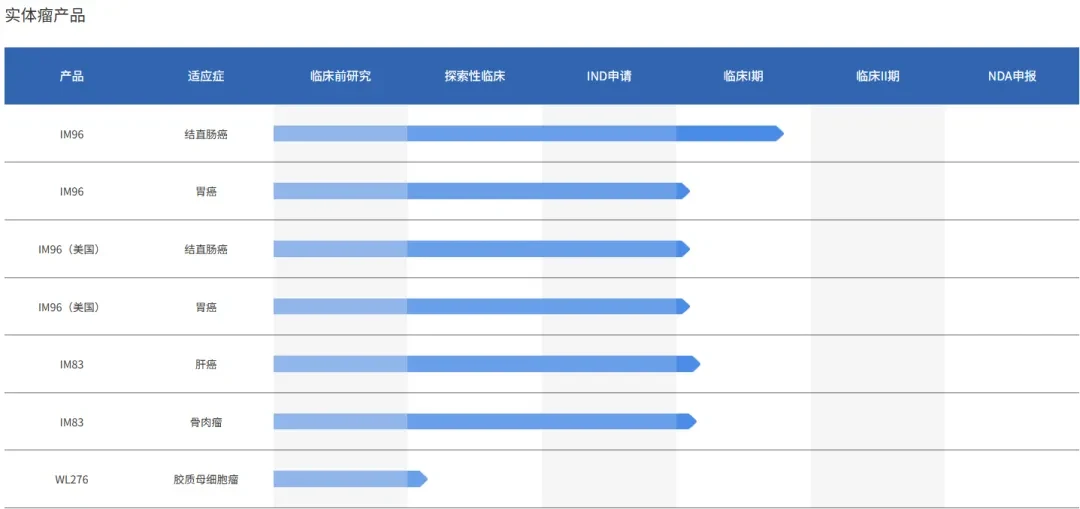

Among these, IM96 is the only CAR-T cell candidate drug globally to have received clinical trial approval for colorectal cancer indications in both China and the United States. According to the prospectus, Phase I investigator-initiated trial (IIT) results demonstrated that IM96 exhibited superior efficacy compared to existing treatment regimens in patients with third-line or later-stage colorectal cancer. ZM001 is an autologous CAR-T candidate drug targeting refractory systemic lupus erythematosus (SLE) and is currently in Phase I clinical trials. IIT results showed a 100% SRI-4 response rate, with only mild cytokine release syndrome (CRS) observed and no incidence of immune effector cell-associated neurotoxicity syndrome (ICANS), positioning it to potentially fill the market gap in CAR-T therapy for autoimmune diseases. The company is co-developing ZM001 with Sunshine Novo and is considering enhancing patient accessibility through commercial insurance and innovative payment solutions. Additionally, IM83, which targets GPC3 for the treatment of hepatocellular carcinoma, has obtained clinical trial approval in both China and the United States.
In terms of technological layout, the company is concurrently developing in vivoCAR-T (VivoCAR-T) and allogeneic CAR-T technologies, these two approaches respectively aim to address the high costs and supply chain complexities currently faced by autologous CAR-T therapy. As of the date of signing the prospectus, the company has been approved to conduct 11 clinical trials in China and 1 clinical trial in the United States, and has submitted 1 New Drug Application (NDA).
Use of Proceeds and Financial Status
This FundraisingRMB 2.5 billion will be allocated to three key areas. The "Cell Therapy Drug R&D Project" will accelerate the expansion of indications for IM19, advance clinical studies of solid tumor pipelines such as IM96 and IM83, and develop cutting-edge technologies including in vivo CAR-T and allogeneic CAR-T. The "Shandong Jin Sai Biotechnology Co., Ltd. Cell Therapy Drug Manufacturing Project (Phase I)" will establish high-standard manufacturing facilities to create cost advantages. The remaining funds will be used to supplement working capital and support commercialization layout, the recruitment of high-end talent, and the out-licensing of overseas rights.
Financially, Imunopharm is currently still operating at a loss, which is consistent with mostCAR-T companies exhibit similar pre-commercialization profiles. IM19 has just submitted its New Drug Application (NDA) and has not yet received marketing approval, while other pipeline candidates remain in early-stage clinical trials. The RMB 125 million upfront payment from the business development (BD) collaboration with Huadong Medicine provides a certain cash flow buffer; however, in the capital-intensive cell therapy sector, sustained R&D investment and the build-out of commercialization capabilities remain critical challenges.
Competitive Landscape
DomesticCompetition in the CAR-T sector is becoming increasingly intense. Fosun Kite’s axicabtagene ciloleucel injection was approved for market launch in 2021, followed closely by the approval of JW Therapeutics’ relma-cabtagene autoleucel. Carsgen Therapeutics’ zevor-cabtagene autoleucel has also received approval. More players are entering the field—pharmaceutical companies such as Hengrui Medicine and Anke Biotechnology are all developing their own proprietary CAR-T pipelines. Imunopharm’s differentiated advantages lie in its serum-free culture system, which offers unique value in enhancing the persistence of cell therapies and controlling costs, while IM96’s breakthroughs in the treatment of solid tumors possess global scarcity. In the area of CAR-T therapy for autoimmune diseases, ZM001 is currently addressing a market void.
Source: Corporate Prospectus
Copyright Statement: This article is reprinted from# In the Era of Biologics, such asMedia outlets or individuals who do not wish their content to be reprinted may contact us, and we will remove it immediately.