

Biopharma Industry Biweekly Report No.13 (2026), Total No.162: Initial Review of National Reimbursement Drug List Boosts Payment Expectations for Innovative Drugs

Gan&Lee Pharmaceuticals
Biological Synthetic Human Insulin Pharmaceutical R&D Manufacturer

Northland
Innovative Biopharmaceutical Manufacturer

GENRIX BIO
Developer of Novel Monoclonal Antibody Drugs

CSPC
Innovative Drug Research and Development, Manufacturer

AstraZeneca
Pharmaceutical Technology Research and Development Provider
| Collar Rise individual Femur |
Name | Related | Change (%) |
|---|---|---|---|
| Tri-Prime Gene | Research Report Cash Flow | 13.46% | |
| Gan&Lee Pharmaceuticals | Research Report Cash Flow | 10% | |
| Aidea Pharmaceutical | Research Report Cash Flow | 9.15% | |
| Northland | Research Report Capital Flow | 7.06% | |
| Click to view all >> | |||
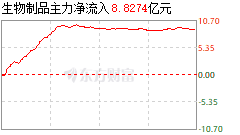
| 資 Gold Flow Entry |
Name | Related | Net Inflow (10k) |
|---|---|---|---|
| Gan&Lee Pharmaceuticals | Research Report Cash Flow | 25976.73 | |
| Wanze Co., Ltd. | Research Report Cash Flow | 7053.11 | |
| Kanghong Pharmaceutical | Research Report Cash Flow | 5682.41 | |
| Vcanbio | Research Report Cash Flow | 5190.96 | |
| Click to view all >> | |||
Industry Review
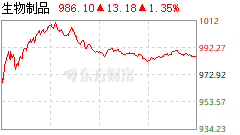
During the reporting period, the pharmaceutical and biological industry index rose by 8.90%, ranking first among the 31 first-level industries in the Shenwan classification, and outperforming the CSI 300 Index (-2.01%). By sub-sector, contract research organizations (CRO) and chemical preparations led the gains, with increases of 20.08% and 15.96%, respectively; blood products and hospitals experienced the largest declines, dropping by 2.21% and 0.97%, respectively.
In terms of valuation, as of July 3, 2026, the P/E ratio (TTM, overall method, excluding negative values) for the pharmaceutical and biotechnology industry stood at 29.21x (26.59x in the previous period), indicating an increase in valuation, which remains below the historical average. Among the Shenwan Level-3 sub-industries within pharmaceuticals and biotechnology, the top three sectors by P/E ratio (TTM, overall method, excluding negative values) were diagnostic services (112.79x), vaccines (43.05x), and other medical services (40.12x). The median P/E ratio was 31.23x, while pharmaceutical distribution (13.20x) had the lowest valuation.
Key Industry News:
NMPA: Public Consultation on the "Announcement on Optimizing Matters Related to the Review and Approval of Cell and Gene Therapy Drugs (Draft for Comments)"
National Healthcare Security Administration: Public Notice on Drugs and Related Information That Have Passed the Preliminary Formal Review for the 2026 Adjustment of the National Basic Medical Insurance, Maternity Insurance, and Work-Related Injury Insurance Drug Catalogs and the Commercial Health Insurance Innovative Drug Catalog
GENRIX BIO: Rabies Virus Bispecific Antibody “Silevemimab” Approved for Market Launch by NMPA, the First Globally
Insilico Medicine: First Innovative Drug “Rentosertib” Initiates Phase III Clinical Trials
CSPC: Reaches small nucleic acid drug collaboration with AstraZeneca, with an upfront payment of $30 million, potential R&D milestone payments of up to $540 million, and potential sales milestone payments of up to $1.2 billion
Investment Recommendations:
During this reporting period, China’s secondary pharmaceutical market rebounded significantly, with the innovative drug industry chain leading the gains. The rally was jointly driven by improved policy expectations, realization of industrial innovation, and valuation repair from low levels. However, uncertainty remains regarding whether a sustained trend can be established. Close monitoring is required on the implementation details of innovative drug listings in medical insurance and commercial insurance directories, sales volume growth of core drugs, and the realization of interim report performance. On the policy front, the initial approval rate for innovative drugs under the 2026 medical insurance and commercial insurance schemes has increased, improving expectations for multi-tier payment channels and alleviating some concerns about innovative drug pricing to a certain extent. Nevertheless, price reduction pressure persists in medical insurance negotiations, and the short-term reimbursement scale of commercial insurance remains limited. Although the accelerated review of Cell and Gene Therapy (CGT) and the inclusion of CAR-T therapies in the initial medical insurance review have boosted market sentiment, they do not resolve the commercialization pain points of high costs and low penetration rates associated with cell therapies. On the industrial front, clinical activity and overseas licensing for domestic pipelines such as Antibody-Drug Conjugates (ADCs) and CGT have increased, while the回暖 (recovery) in foreign investment cooperation has helped restore sentiment in the CRO/CDMO sectors. Investment focus centers on the upstream and downstream segments of innovative drugs: priority should be given to platform-based pharmaceutical companies in oncology, autoimmune diseases, and CGT that offer clinical differentiation, mature commercialization, and benefits from multi-tier payment systems; positions should be established in leading CRO/CDMO firms and upstream raw material suppliers with advantages in overseas delivery and compliance; and moderate allocation should be made to high-end medical devices with low centralized procurement risks and clear logic for domestic substitution and global expansion. This round of rebound relies on catalysts from medical insurance policies, supported by historically low sector valuations and institutional holdings, along with corporate share buybacks and cross-sector capital reallocation. However, the long-term tone of controlling healthcare costs remains unchanged. Coupled with potential disturbances from macroeconomic factors and overseas liquidity, the continuation of the market rally requires ongoing validation from fundamentals. If policy implementation, sales, and performance meet or exceed market expectations, the sector may transition from valuation repair to a fundamentals-driven structural rally; if data verification is weak, the sector may remain range-bound.
Risk Warning:
Policy performance falling short of expectations, R&D progress lagging behind expectations, and intensified market risks.