HuaXia InnoTec Raises Over RMB 200 Million in Series C Funding to Advance In Vivo CAR-T Platform and YTS109 Clinical Development

BriSTAR Immunotech
Cellular Immunotherapy Product Developer
On July 6, BriSTAR Immunotech announced the completion of its Series C financing round, raising over RMB 200 million.
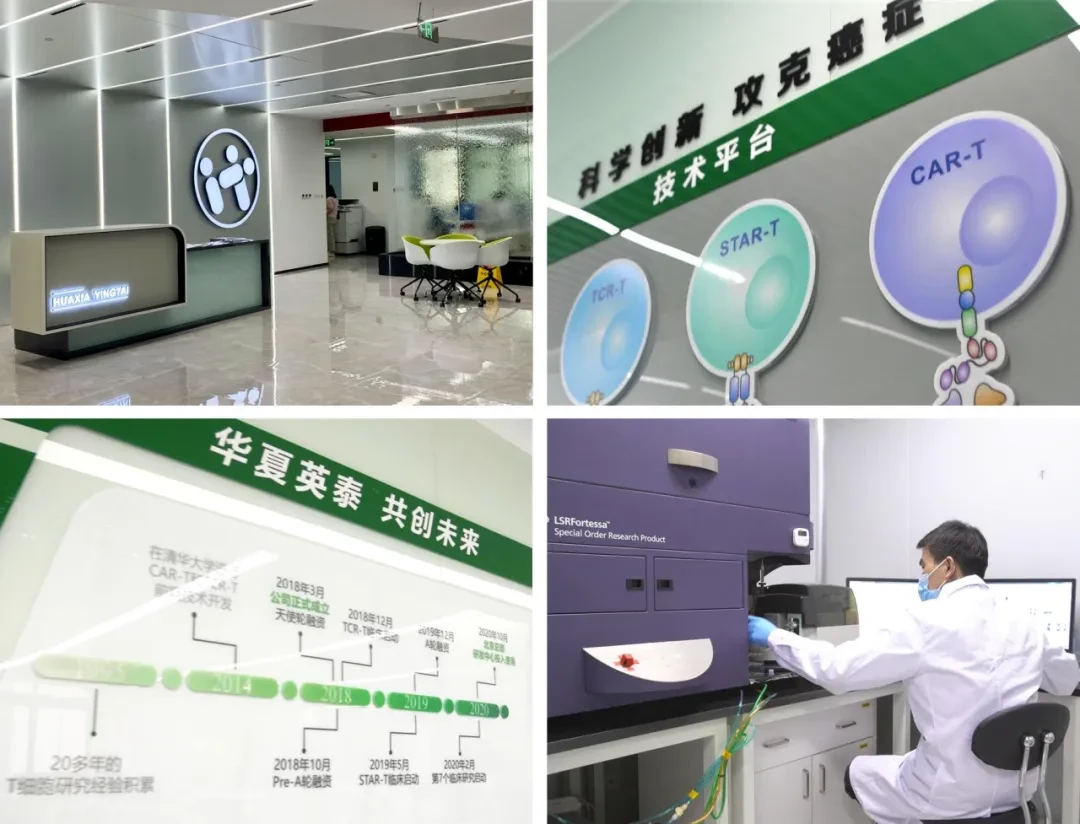
This round was led by Loyal Valley Capital, with Fudan Sci-Tech Innovation Fund as a co-investor. The funds will be primarily directed toward the registrational clinical trials of the universal STAR-T product YTS109, the development of the in vivo STAR-T technology platform, and commercialization initiatives.
At this point, the company founded by Professor Lin Xin, a leading authority in immunology at Tsinghua University, has secured cumulative financing exceeding RMB 500 million and is accelerating its transition from “original technology innovation” to “industry leadership.”

Capital Infusion into Original Foundations: From “Tsinghua Laboratory” to “Global Clinical Practice”
As capital shifts from “chasing trends” to “anchoring in foundational capabilities,” BriSTAR Immunotech’s fundraising pace precisely validates a trend—the next phase of cell therapy belongs not to followers, but to those who can rewrite the rules.
Since its establishment in 2018, BriSTAR Immunotech has remained deeply rooted in the original scientific research ecosystem of Tsinghua University and the Changping National Laboratory, constructing a comprehensive technology matrix encompassing three major platforms: STAR-T, universal site-specific integration, and In vivo STAR-T.
In this round, lead investor Founder Xingu Capital has long focused on source innovations with global competitiveness, while Fudan Sci-Tech Innovation leverages the technology transfer ecosystem of a top-tier university. Their joint participation not only endorses the company’s technological certainty but also represents a firm vote of confidence in the commercialization pathway for “China-originated cell therapies.”
Clinical Data Breakthrough: YTS109 Shows Its “Strong Card” in Autoimmune Diseases
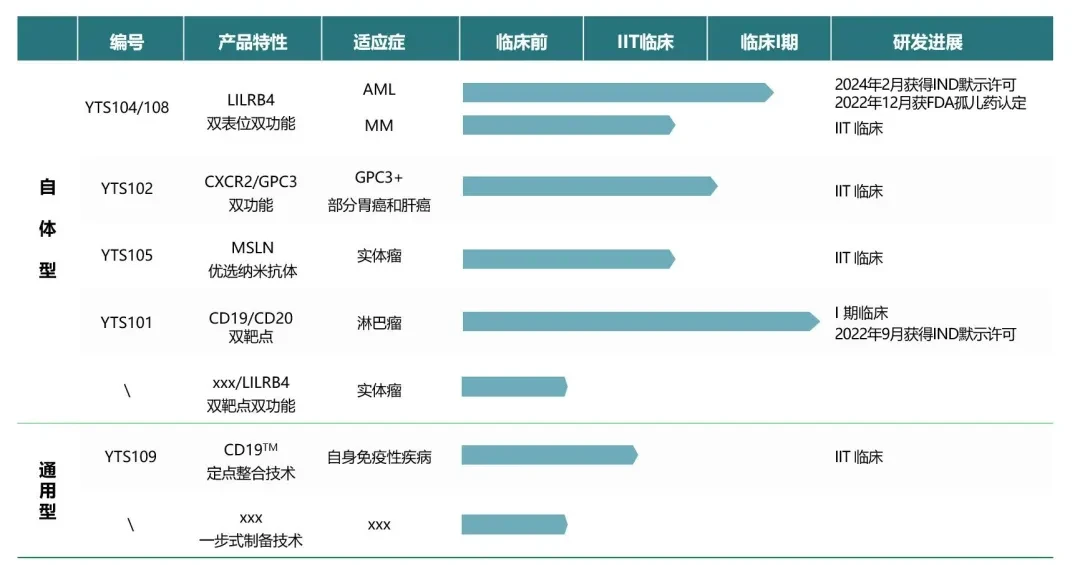
Unlike most cell therapy companies that are clustering in late-line oncology, BriSTAR Immunotech has chosen to tackle severe autoimmune diseases first with its universal STAR-T product, YTS109.
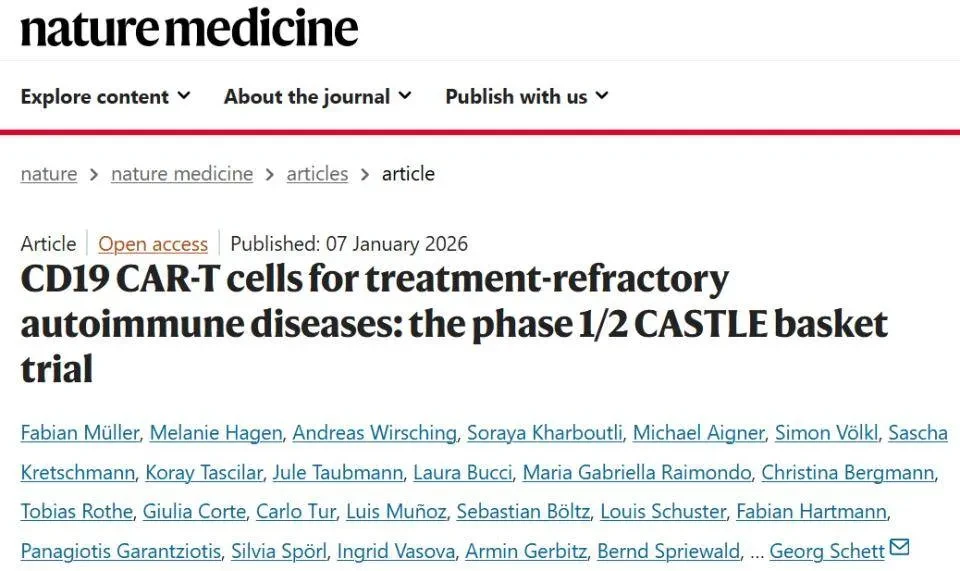
Data recently published in Nature Medicine and presented at EULAR 2026 demonstrate that the product achieves deep remission with a manageable safety profile in systemic lupus erythematosus, lupus nephritis, and autoimmune hemolytic anemia.
Its technical core—integrating the precise recognition of CARs with the natural signal transduction of TCRs—not only circumvents the persistent exhaustion associated with traditional CAR-T therapy but also retains the inherent tissue infiltration advantage of T cells, which is precisely the most scarce capability in the treatment of solid tumors and complex autoimmune lesions.
Forward-looking Strategy: In Vivo STAR-T, Enabling Cell Therapy in “One Step”
If YTS109 represents “off-the-shelf universal delivery,” then the in vivo STAR-T platform points to a more radical future—reprogramming T cells “in situ” directly within the patient’s body, without the need for cell collection or ex vivo culture.
If this technological pathway is successfully established, it will completely shatter the industry ceiling of cell therapy characterized by “exorbitant costs, long development cycles, and poor accessibility.” Leveraging the inherently low off-target risk and high functional durability of STAR-T, BriSTAR Immunotech is accelerating the construction of this foundational platform, defining it as the company’s “moat-building campaign” for the next five years.
From “Ex Vivo Manufacturing” to “In Vivo Generation,” BriSTAR Immunotech is not optimizing old pathways, but defining a new species.
Voices from the CEO and Investors
Dr. Zhao Xueqiang, CEO of BriSTAR Immunotech, stated, “This round of financing provides strong support for our ‘dual-wheel drive’ strategy—advancing our most mature products toward registrational clinical trials while pushing our most cutting-edge platforms toward validation. We believe that true innovation requires both diligently overcoming process-related hurdles and reimagining therapeutic paradigms.”
Zhengxin Valley Capital pointed out that BriSTAR Immunotech’s differentiation in the autoimmune field and the forward-looking nature of its in vivo platform align with its investment philosophy of “investing early, investing in challenging areas, and investing at the source.”
Fudan Sci-Tech Innovation holds that the project’s combination of “scientific depth and industrialization speed” represents the scarcest model in the translation of hard-tech innovations.
With the Series C funding injection, BriSTAR Immunotech will further integrate the entire value chain spanning “basic research—process development—clinical translation—large-scale manufacturing.”
In the global race to shift cell therapy from “personalized customization” to “universal accessibility,” this enterprise, anchored by Tsinghua University’s original technologies and propelled by real-world clinical data, is striving to answer a ultimate question: How can cutting-edge therapies truly become accessible options for ordinary patients?