

Jingze Biopharmaceutical Files for Hong Kong IPO for the Third Time, Focusing on Assisted Reproductive and Ophthalmic Therapeutics

Jingze Bio
New Drug Developer
Zhitong Finance APP learned that, according to the disclosure by the Hong Kong Stock Exchange on July 3, Jingze Bio (Hefei) Co., Ltd. (abbreviated as: Jingze Bio) has submitted a listing application to the main board of the Hong Kong Stock Exchange, with CICC and Guoyuan International serving as joint sponsors. The company had previously submitted applications to the Hong Kong Stock Exchange on June 27, 2025, and December 31, 2025, respectively.
Company Profile
The prospectus indicates that Jingze Bio is a biopharmaceutical company focused on two major therapeutic areas: assisted reproductive drugs and ophthalmic drugs. The company possesses: (1) two core products, namely (a) JZB30, a recombinant human follicle-stimulating hormone (rhFSH) injection intended for registration, which is proposed for (i) ovarian stimulation in assisted reproductive technology (ART) for adult female patients requiring controlled ovarian stimulation due to anovulatory infertility, and (ii) the treatment of infertility caused by hypogonadotropic hypogonadism in adult male patients; and (b) JZB05, an anti-vascular endothelial growth factor (VEGF) candidate drug for intravitreal injection, proposed for the treatment of fundus neovascular diseases (FND), including wet age-related macular degeneration (wAMD), diabetic macular edema (DME), and other FNDs, targeting adult patients with active neovascular diseases who require anti-VEGF therapy; and (2) six pipeline products.
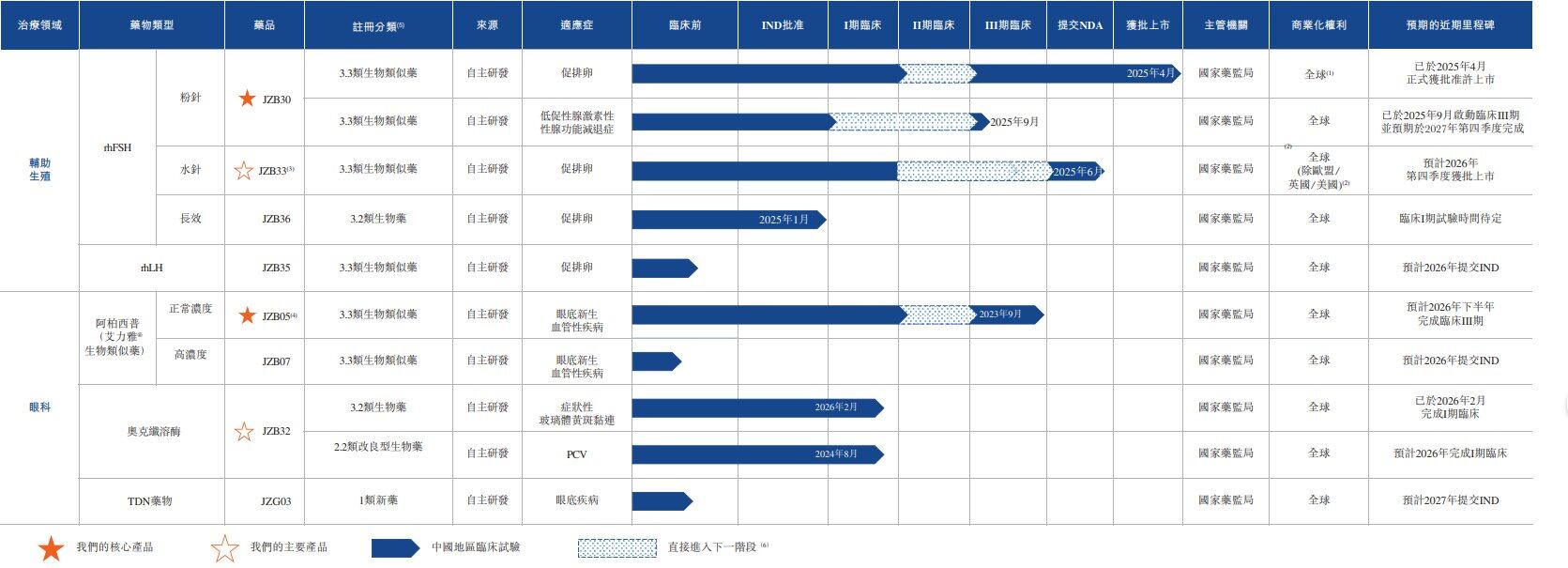
JZB30 is the company’s first commercialized product in the field of assisted reproduction. It is a lyophilized powder for injection of recombinant human follicle-stimulating hormone (rhFSH) developed by the company, serving as an ovulation induction agent during assisted reproductive cycles. JZB30 is a biosimilar developed to benchmark against Gonal-f®, the imported powdered injection product with the highest global market share in ovulation induction in 2024 and the first quarter of 2025. The company has completed Phase I and Phase III clinical studies involving head-to-head comparisons of JZB30 and Gonal-f® for controlled ovarian stimulation and ovulation induction in patients undergoing assisted reproductive technology. The New Drug Application (NDA) for JZB30 was approved by the National Medical Products Administration in April 2025. The company is also expanding the indications of JZB30 to include the treatment of hypogonadotropic hypogonadism.
JZB05 is expected to become the company’s first commercialized product in the ophthalmology sector. It is an independently developed anti-VEGF intravitreal injection, primarily indicated for the treatment of fundus neovascular diseases (FND) such as wet age-related macular degeneration (wAMD) and diabetic macular edema (DME). JZB05 is a biosimilar to aflibercept (Eylea®), the globally top-selling ophthalmic and anti-VEGF drug. According to Frost & Sullivan, aflibercept (Eylea®) achieved annual sales of USD 9.5 billion in 2024. As of the Latest Practicable Date, JZB05 had completed Phase I clinical trials involving head-to-head comparison with Eylea®, and entered further comparative Phase III clinical trials in September 2023. The company expects to complete the Phase III clinical trials in the second half of 2026 and submit an application for new drug marketing approval.
JZB33 is a recombinant human follicle-stimulating hormone (r-hFSH) injection independently developed by the company. It serves as an ovulation induction agent for assisted reproductive technology cycles and is a biosimilar developed to benchmark Gonal-F® liquid formulation. Building upon JZB30, JZB33 adopts a liquid formulation and is paired with a pre-filled cartridge injection pen, enabling patients to perform easy self-injection via press-button administration, thereby significantly enhancing medication convenience.
Leveraging the clinical research foundation of JZB30, the Company has obtained approval from the National Medical Products Administration (NMPA) to streamline the clinical development program for JZB33. The New Drug Application (NDA) can be submitted based on the results of a bioequivalence trial comparing JZB33 with the reference listed drug (Gonal-f®) using pharmacokinetic parameters, together with the Phase III clinical trial results of JZB30. The Company has completed the bioequivalence study for JZB33, submitted the NDA in June 2025, and the application has been accepted for review.
JZB32 is a recombinant human truncated plasmin (ocriplasmin) injection independently developed by the company, indicated for the treatment of symptomatic vitreomacular adhesion (sVMA). Ocriplasmin is a microplasmin that optimizes the structural instability inherent in endogenous plasmin while retaining its catalytic properties for degrading adhesive tissues. Unlike vitrectomy, which physically releases adhesions using microsurgical knives, ocriplasmin acts as a “molecular scalpel,” utilizing abnormally adherent components as substrates to achieve rapid and precise enzymatic degradation, thereby releasing vitreous adhesion or traction on the retina and preserving vision. According to Frost & Sullivan, JZB32 is the only ocriplasmin product under development in China. As of the Latest Practicable Date, Phase I clinical trials for the sVMA indication have been completed.
In addition to sVMA, the company is exploring the application of JZB32 in other fundus diseases. It is currently evaluating the use of JZB32 in polypoidal choroidal vasculopathy (PCV) as a Class 2.2 improved biologic, aiming to further unlock its clinical potential.
Financial Information
Revenue:
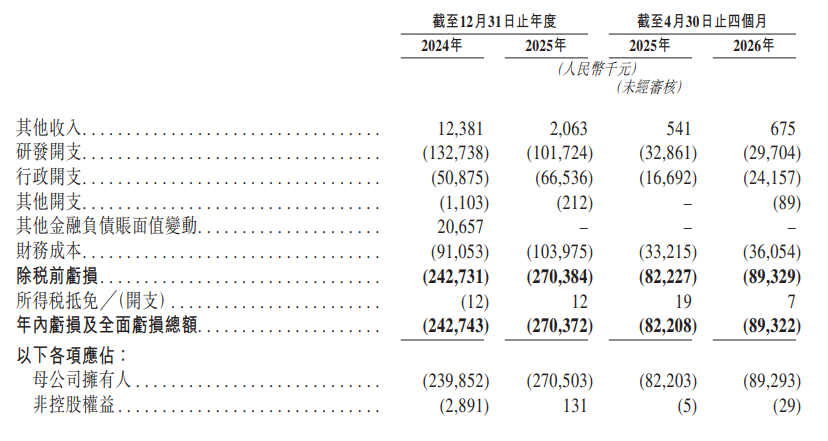
For the years 2024 and 2025, as well as for the four months ended April 30, 2025 and 2026, the Company’s other income amounted to RMB 12.381 million, RMB 2.063 million, RMB 541,000, and RMB 675,000, respectively.
Loss:
For the years 2024 and 2025, as well as for the four months ended April 30, 2025 and 2026, the loss for the year/period and total comprehensive loss amounted to approximately RMB 243 million, RMB 270 million, RMB 82.208 million, and RMB 89.322 million, respectively.
R&D Expenses:
For the years 2024 and 2025, as well as for the year 2025 and the four months ended April 30, 2026, the Company’s R&D expenses attributable to core products amounted to RMB 62.2 million, RMB 55.1 million, RMB 20.4 million, and RMB 16.2 million, respectively, representing 46.9%, 54.1%, 62.1%, and 54.4% of the Company’s total R&D expenses for the corresponding years/periods. Looking ahead, the Company may continue to incur substantial R&D costs for its core products.
Industry Overview
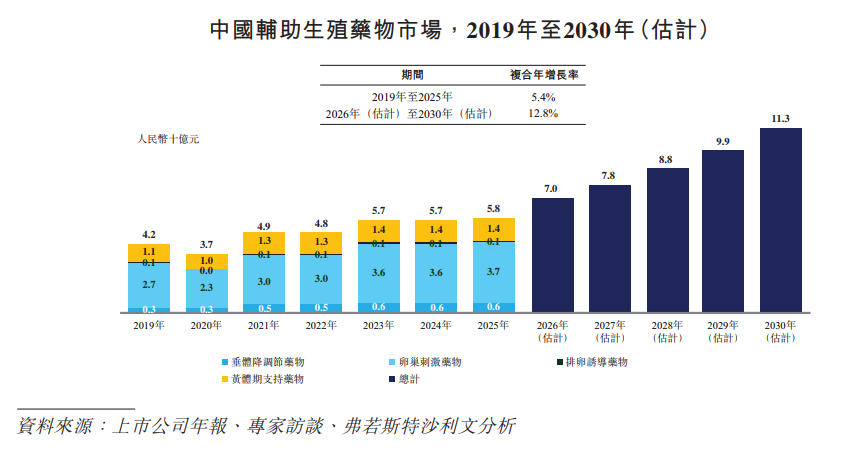
The market size of assisted reproductive drugs in China increased from RMB 4.2 billion in 2019 to RMB 5.8 billion in 2025, with a compound annual growth rate (CAGR) of 5.4%. It is expected to continue growing at a CAGR of 12.8% from 2026 to 2030, reaching RMB 11.3 billion by 2030.
According to Frost & Sullivan, the aforementioned analysis is based on the following assumptions: (i) Expansion of the patient population: The postponement of marriage and childbearing age, coupled with an increase in reproductive health issues, is expected to lead to a rise in the number of infertile couples, thereby driving up demand for pharmaceuticals; (ii) Adoption of ART: The gradually increasing application rate of IVF/ART in hospitals and fertility centers is expected to expand the population receiving treatment; (iii) Affordability and insurance coverage: Broader medical insurance coverage and enhanced affordability are expected to reduce financial barriers and increase the utilization rate of these technologies; (iv) Policy and awareness: The two-child/three-child policies and heightened public awareness are expected to unlock latent demand; and (v) Product innovation: The approval of safer, more effective, and personalized therapies is expected to enhance market attractiveness.
This market comprises several key segments, primarily including ovarian stimulation drugs, luteal phase support drugs, pituitary down-regulation drugs, and ovulation induction drugs. Among these, ovarian stimulation drugs constitute the largest segment. In 2025, the market size for ovarian stimulation drugs reached RMB 3.7 billion, accounting for approximately 63.8% of the total market size of assisted reproductive technology (ART) drugs in China.
The figure below illustrates the market size of China’s assisted reproductive technology (ART) pharmaceuticals market from 2019 to 2030, segmented by key market segments:
The FSH drug market is divided into two major categories: recombinant human follicle-stimulating hormone (rhFSH) and urinary follicle-stimulating hormone (uFSH). The market size of FSH drugs in China increased from RMB 2.4 billion in 2019 to RMB 3.3 billion in 2025, with a compound annual growth rate (CAGR) of 5.5%. It is projected to continue growing to RMB 7.2 billion by 2030, representing a CAGR of 15.6% from 2026 to 2030. In 2025, the market size of rhFSH drugs in China reached RMB 2.5 billion, with a CAGR of 6.8% from 2019 to 2025. It is expected to further grow to RMB 6.1 billion by 2030, with a CAGR of 19.2% from 2026 to 2030. The growth rate of rhFSH drugs will surpass that of uFSH drugs, capturing a larger market share.
The market size of ophthalmic drugs in China grew from RMB 19.4 billion in 2019 to RMB 31.5 billion in 2025, with a compound annual growth rate (CAGR) of 8.4%, and is expected to continue growing to RMB 51.9 billion by 2030, with a CAGR of 11.2% from 2026 to 2030.
According to Frost & Sullivan, the above analysis is based on the following assumptions: (i) Population Aging: The global population aged 65 and above is expected to exceed 900 million by 2030, and the accelerated aging process in China will drive up the incidence of age-related eye diseases; (ii) Disease Burden and Behavioral Changes: The rising prevalence of diabetes and prolonged digital screen time are expected to increase the incidence of diabetic retinopathy (DR) and dry eye disease; and (iii) Coverage and Accessibility: The expansion of medical insurance coverage and wider adoption of diagnostic and therapeutic technologies are expected to improve the diagnosis and treatment rates of eye diseases.
The market size of anti-VEGF antibody drugs for the treatment of FND in China grew from RMB 2.4 billion in 2019 to RMB 6.4 billion in 2025, representing a compound annual growth rate (CAGR) of 17.7%. It is projected to continue growing to RMB 12.6 billion by 2030, with a CAGR of 13.4% from 2026 to 2030.
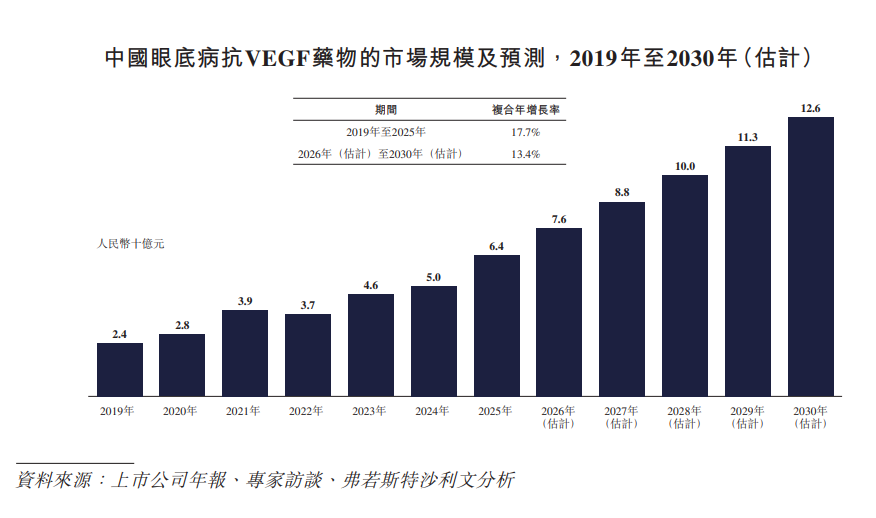
According to Frost & Sullivan, the above analysis is based on the following assumptions: (i) Demographics: China’s population aged 65 and above is expected to reach 263.7 million by 2030, which will increase the prevalence of age-related macular degeneration (AMD), diabetic retinopathy (DR), and related conditions, thereby driving up demand for VEGF inhibitors; (ii) Underlying incidence rates and behavioral patterns: The rising prevalence of diabetes and prolonged use of electronic screens are expected to exacerbate the burden of ophthalmic diseases, promoting the widespread application of VEGF inhibitors; and (iii) Insurance coverage, guidelines, and market penetration: Expanded medical insurance coverage, the inclusion of VEGF drugs in more clinical guidelines, and deeper market penetration in second- and third-tier cities are expected to improve diagnosis and treatment rates.
As of the latest practicable date, five anti-VEGF molecules have been approved in China for the treatment of FND, including aflibercept, ranibizumab, conbercept, faricimab, and brolucizumab. In 2025, these five agents were marketed in China, with their respective revenue shares in the Chinese anti-VEGF biologics market for FND treatment being 20.0% for aflibercept, 21.5% for ranibizumab, 38.1% for conbercept, 19.6% for faricimab, and 0.8% for brolucizumab.
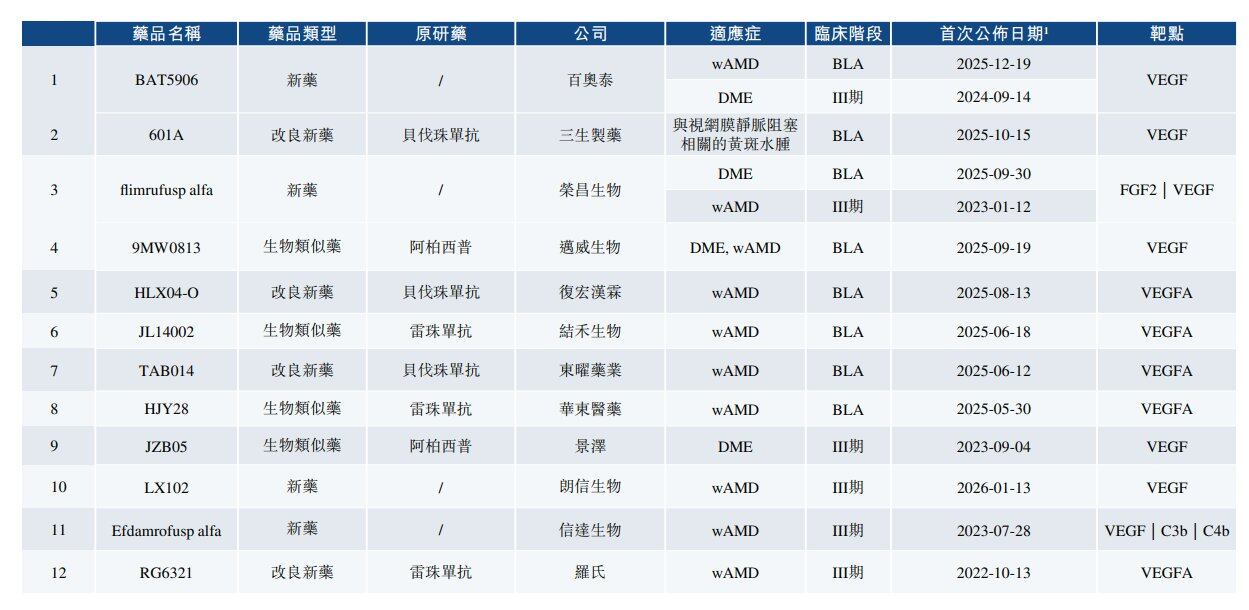
As of the Latest Practicable Date, there are five VEGF monoclonal antibody drugs for the treatment of fundus diseases on the Chinese market, namely Lucentis® (Novartis), Eylea® (Bayer), Langmu® (Kanghong), Beovu® (Roche), and BEOVU® (Novartis), as well as three biosimilars marketed in China, which are ranibizumab and aflibercept. As of the Latest Practicable Date, there are a total of 12 anti-VEGF candidate drugs for the treatment of FND in China that are in Phase III or later stages of clinical development.
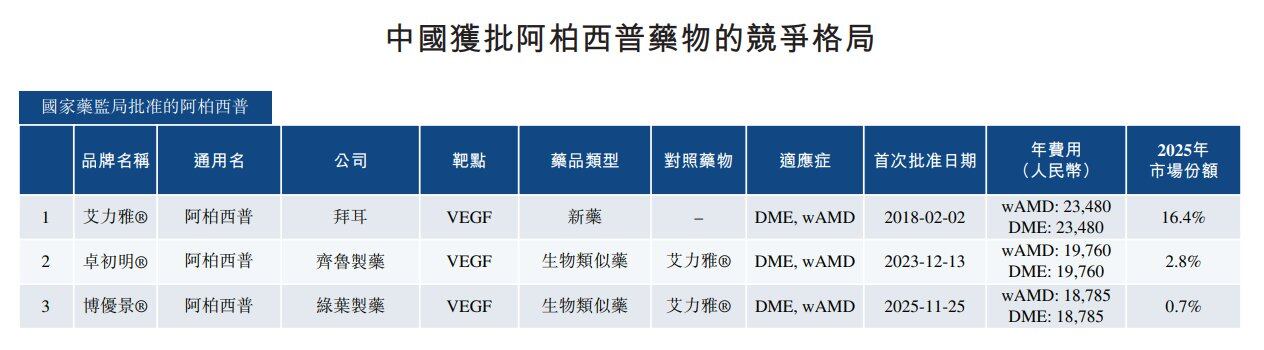
As of the latest practicable date, three aflibercept drugs have been approved in China for the treatment of FND, namely Eylea® (Bayer), Zhuochuming® (Qilu Pharmaceutical), and Boyoujing® (Luye Pharma).
The Company’s core product, JZB05 (a biosimilar candidate of aflibercept), is indicated in China for neovascular fundus diseases, including diabetic macular edema (DME) (Phase III studies completed) and wet age-related macular degeneration (wAMD) (anticipated indication). According to Frost & Sullivan’s analysis, drugs approved by the National Medical Products Administration as comparators include: (i) for DME: Eylea®, Zhuochuming®, and Boyoujing® (aflibercept), Langmu® (conbercept), Lucentis® and Anzhuoming® (ranibizumab), Vabysmo® (faricimab), Beovu® (brolucizumab), and Ozurdex® (dexamethasone intravitreal implant); and (ii) for wAMD: Eylea®, Zhuochuming®, and Boyoujing® (aflibercept), Langmu® (conbercept), Lucentis® and Anzhuoming® (ranibizumab), and Vabysmo® (faricimab).
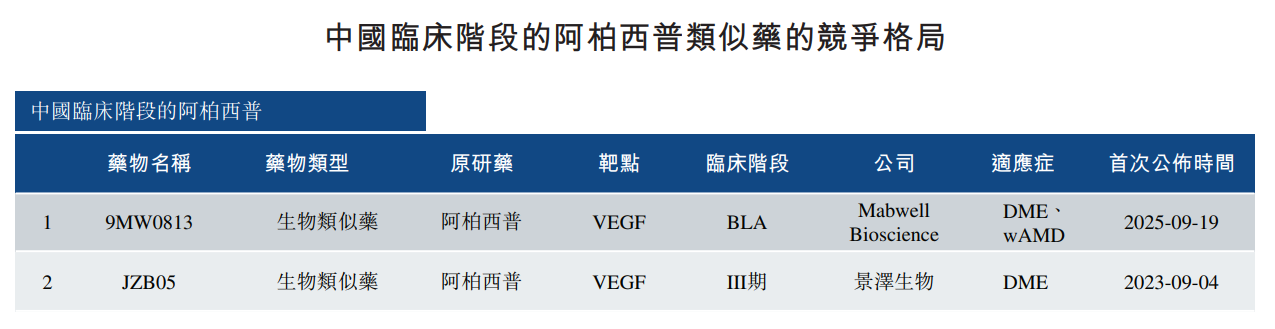
As of the Latest Practicable Date, in addition to the Company’s JZB05, there are two aflibercept biosimilars under investigation for the treatment of DME.
Board Materials
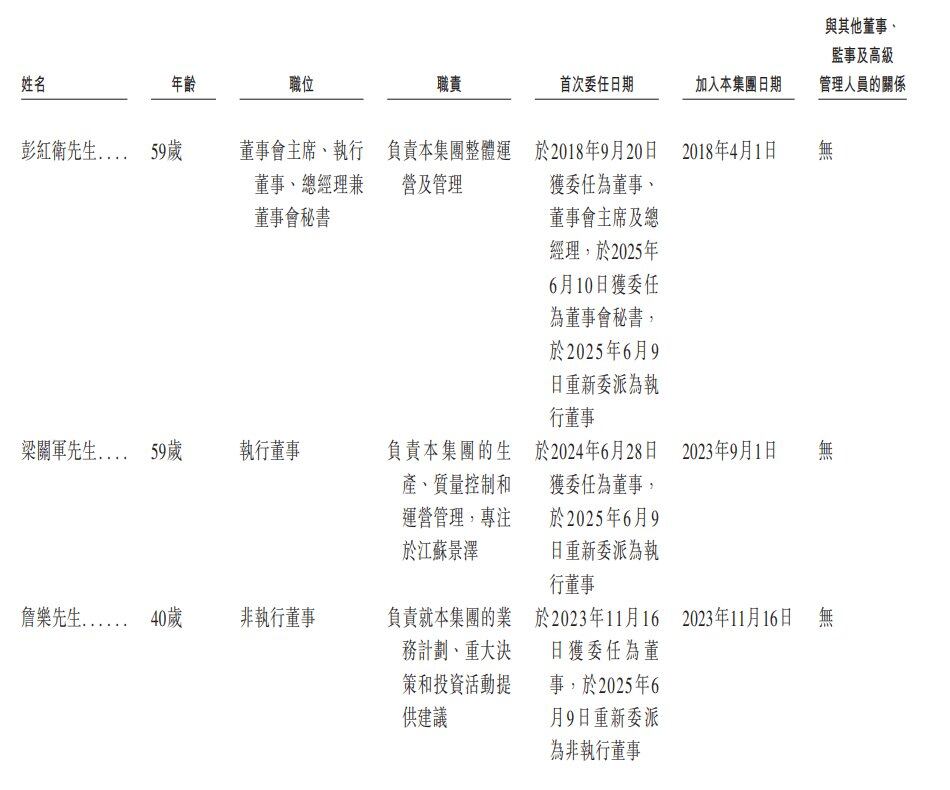
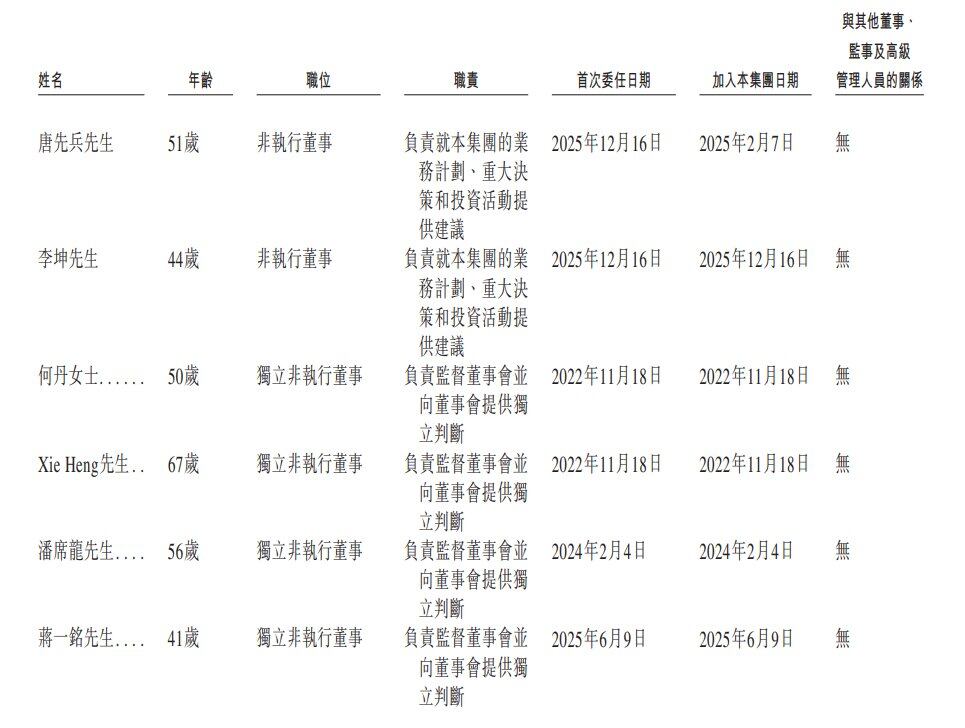
The Board of Directors consists of nine directors, including two executive directors, three non-executive directors, and four independent non-executive directors.
Equity Structure
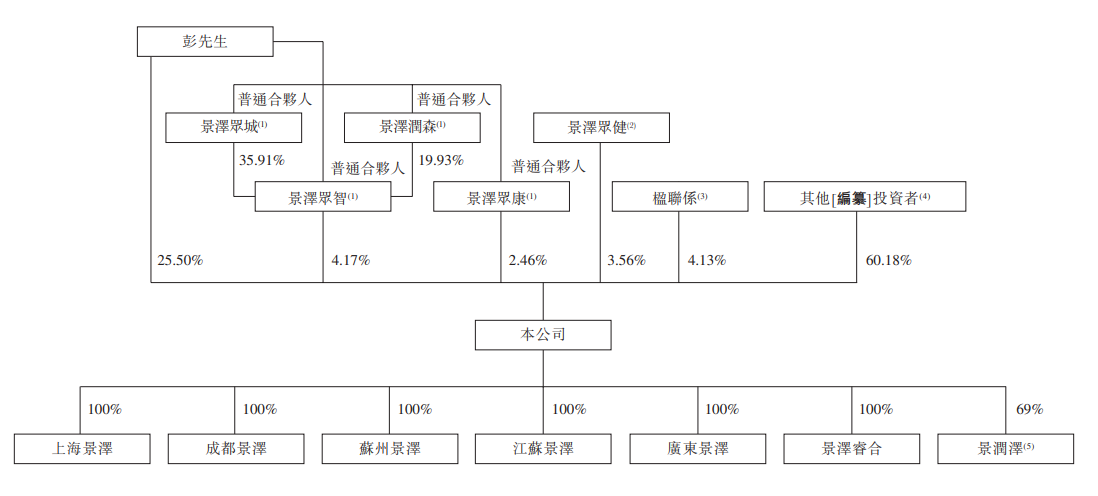
Jingze Zhongcheng serves as the shareholding platform for the Group’s current employees. Jingze Zhongzhi, Jingze Zhongkang, and Jingze Rensen serve as shareholding platforms for the Group’s employees and consultants. The executive partner of Jingze Zhongjian is Mr. Xu Yi, a supervisor of the Company. The Yinglian Entities, including Xiamen Yinglian, Jiaxing Yinglian, and Yingjia Investment, are seasoned investors.
The remaining 31% equity interest in Jingze Bio is held by the following parties: (a) Chengdu Tengdashu Nano Biotechnology Co., Ltd., ultimately controlled by Lin Yunfeng, holding 18.9963%; (b) Luo Delun, holding 6%; (c) Tao Ming, holding 4.5537%; (d) Huang Zhiyan, holding 1.2%; and (e) Tian Taoran, holding 0.25%. All other shareholders of Jingze Bio are independent third parties.
Intermediary Team
Joint Sponsors:CICC Hong Kong Securities Company Limited, Guoyuan Finance (Hong Kong) Company Limited
Corporate Legal Counsel:Hong Kong and U.S. laws: Freshfields Bruckhaus Deringer; Chinese laws: Tian Yuan Law Firm
Legal Counsel to the Joint Sponsors:Hong Kong and U.S. laws: DLA Piper; PRC laws: Han Kun Law Offices
Auditors and Reporting Accountants:Ernst & Young
Industry Consultant:Frost & Sullivan (Beijing) Consulting Co., Ltd. Shanghai Branch