Home AZ's Fourth Bet on CSPC: MNCs Rush to Secure China’s Early-Stage R&D Platforms

AZ's Fourth Bet on CSPC: MNCs Rush to Secure China’s Early-Stage R&D Platforms

Jul 03, 2026 20:34 CST Updated 20:34
CSPC

Innovative Drug Research and Development, Manufacturer

AstraZeneca

Pharmaceutical Technology Research and Development Provider


图片

图片
As the second half of the year begins, the “fire” of small nucleic acid therapeutics continues to burn.

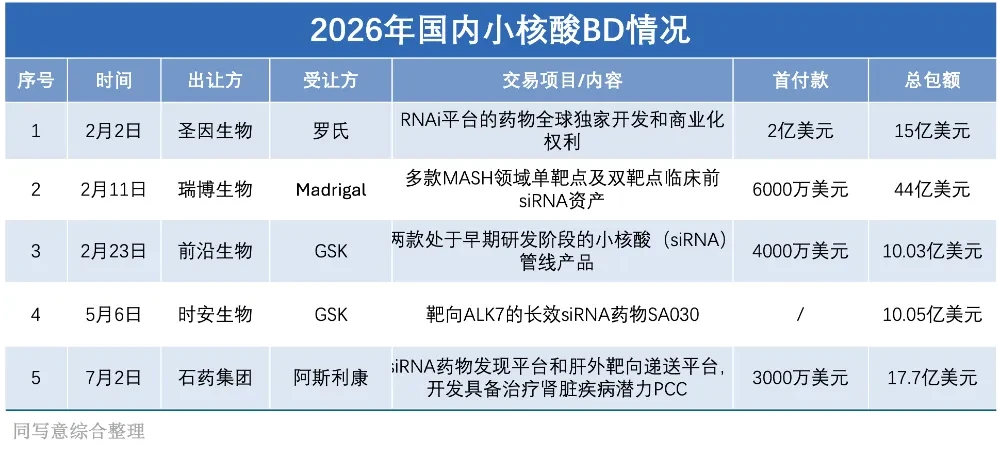
On July 2, CSPC announced that it had entered into a collaboration, option, and license agreement with AstraZeneca to establish a strategic R&D partnership. The collaboration will leverage CSPC’s proprietary siRNA drug discovery platform and extrahepatic targeted delivery platform to develop novel small nucleic acid drug candidates, with a total potential value of up to $1.77 billion.

Unlike previous overseas expansions by Chinese oligonucleotide companies, which primarily involved licensing out mature clinical-stage assets, CSPC is exporting a reusable, end-to-end drug discovery and delivery technology platform. This signifies that multinational pharmaceutical companies now recognize China’s foundational capabilities in underlying oligonucleotide delivery and AI-assisted molecular screening, marking an upgrade in the global expansion of oligonucleotide therapeutics from “monetizing individual products” to “exporting platform value.”

In fact, this is not the first time AstraZeneca has paid for CSPC's technology platform.

Since their initial partnership in October 2024, the two parties have secured four major business development (BD) deals within less than two years. The collaboration has evolved comprehensively from early-stage single-product licensing to platform-level strategic cooperation, with its scope expanding from small molecules and peptides to oligonucleotides.

Multinational corporations are no longer investing heavily solely in the rights to individual molecules, but rather in the reusable technological capabilities of Chinese pharmaceutical companies. The collaboration between innovative Chinese drug developers and multinational corporations is entering a new phase characterized by “early engagement, shared risk, and co-created value.”


TONACEA

01

“The Atypical Player’s” Technological Assets


Compared with other emerging oligonucleotide therapeutics players at the BD negotiation table in the past, CSPC, with its roots in traditional pharmaceuticals, is to some extent an “atypical face” in this field.

However, CSPC is no novice. With nearly three decades of history, this established pharmaceutical enterprise has been redefining its growth trajectory in recent years by leveraging a suite of new technologies and therapies. Its innovation landscape has expanded from traditional small-molecule drugs to several frontier areas at the forefront of the global pharmaceutical industry, covering advanced technological platforms such as ADCs, PD-1 bispecific antibodies, GLP-1, and siRNA.

Public information shows that,CSPC Has Established Eight Major Innovative Technology Platforms, featuring not only small-molecule new drug screening and R&D platforms and long-acting injectable drug development platforms, but also technology platforms for antibodies/fusion proteins, nanomedicines, cell therapies, antibody-drug conjugates (ADCs), and siRNA-based therapeutics.

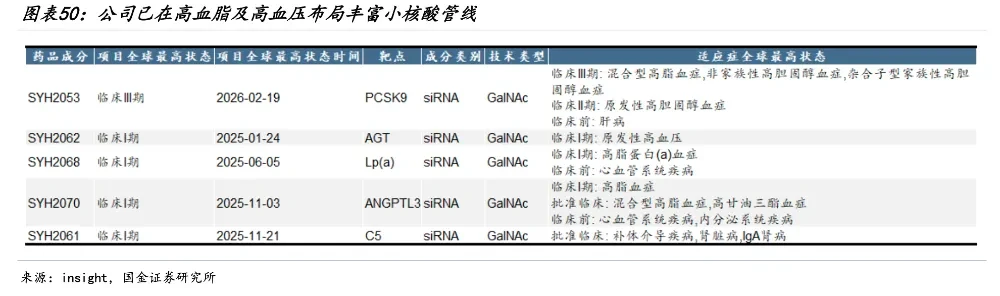
Among themIn the field of small nucleic acids,CSPC has approximately 10 siRNA therapies in development, with SYH2053 (targeting PCSK9) being the most advanced. It entered Phase III clinical trials in February 2026, ranking second globally and in China, only behind Novartis’s Leqvio.; other pipeline candidates such as SYH2062, SYH2068, SYH2070, and SYH2061 are in Phase I clinical trials.

Image

Overall, its siRNA therapy pipeline covers AGT, C5, SOD1, MASP2, and coagulation factor XI, along with a first-in-class (FIC) Ang2/VEGF-A oligonucleotide drug. It has established a diversified portfolio spanning lipid metabolism, blood pressure, lipoprotein(a), triglycerides, and the complement pathway, poised to leverage the long-acting and precise therapeutic properties of siRNA to build differentiated competitiveness in the field of chronic diseases.

Understanding CSPC’s Accumulation in the Field of Small Nucleic Acids Makes It Easy to Grasp the Value Proposition of This Collaboration—Rather than selecting a specific pipeline, AstraZeneca anchored its collaboration in the siRNA drug discovery platform and the extrahepatic targeted delivery platform, valuing CSPC’s accumulated, reusable foundational technological capabilities in the field of small nucleic acids.

Specifically regarding the collaboration, both parties will jointly discover and develop preclinical candidate drugs targeting two specific targets, with the potential to treat multiple indications of kidney diseases.(PCC)

For each PCC project, AstraZeneca shall have the right to elect to obtain rights on a global basis or for territories outside China(as applicable)Exclusive rights to develop, manufacture, and commercialize. CSPC will retain all rights to the development, manufacturing, and commercialization of one PCC within China.

In terms of transaction value, CSPC will receive a $30 million upfront payment and is entitled to up to $540 million in R&D milestone payments, up to $1.2 billion in sales milestone payments, as well as single-digit royalty rates on sales.

Image

The $30 million upfront payment is not high for transactions of this type, but the nearly $1.8 billion in subsequent milestone potential indicates that the true value lies ahead. By retaining Chinese rights to one of the PCC candidates, CSPC has also secured the initiative for its future local commercialization.

Meanwhile, for CSPC, the execution of such transactions,Not only does it contribute stable business development (BD) revenue and help amortize early-stage R&D costs, but it also continuously demonstrates the credibility of its technology platform to the market.—This is precisely the key anchor for long-term valuation.


TONACEA

02

Why Does AstraZeneca Continue to Increase Its Bets?


In terms of CSPC’s overall business development (BD) pace, its international business development has formed a “Anticipating Release Expectations, Continuously Delivering on Cooperation” distinctive characteristics.

May 29, 2025,CSPCIn a rare disclosure in its first-quarter report, the company is advancing three potential license-out transactions with multiple multinational pharmaceutical companies, involving innovative assets such as EGFR ADCs. The total value of each potential transaction is approximately $5 billion, amounting to a combined total of around $15 billion, with one deal already in final negotiations and expected to be completed by June.

This proactive disclosure of its business development (BD) pipeline prior to formal signing was extremely rare in China’s innovative drug industry at the time. Over the following year, CSPC consistently delivered on the previously signaled collaboration expectations, becoming a typical case of successful fulfillment of “preview-style BD” among Chinese innovative pharmaceutical companies.

Among these, the collaboration with AstraZeneca is particularly noteworthy.

The origins of the collaboration between the two parties can be traced back to October 2024.At that time, CSPC’s independently developed AI-powered small-molecule drug design platform successfully yielded the Lp(a) inhibitor YS2302018 and the MAT2A inhibitor SYH2039. The former was licensed to AstraZeneca, securing CSPC a $100 million upfront payment, with the total transaction value potentially reaching up to $2.02 billion.

Subsequent to 2025, in addition to this small nucleic acid collaboration, the two parties have reached three more deals:

• In June 2025, CSPC and AstraZeneca entered into a strategic R&D collaboration to develop AI-driven novel oral small-molecule candidate drugs, with the total potential transaction value amounting to approximately USD 5.33 billion;

• In January 2026, the two parties further signed a strategic R&D collaboration and licensing agreement to develop innovative long-acting peptide drugs leveraging CSPC’s long-acting delivery technology platform and its AI-driven peptide drug discovery platform. AstraZeneca paid an upfront fee of $1.2 billion, with the total potential deal value reaching up to $18.5 billion, setting a new record at the time for the highest value of an out-licensing transaction in China’s biopharmaceutical industry.

• In July 2026, the two parties once again reached a collaboration agreement centered on the siRNA drug discovery platform and the extrahepatic targeted delivery platform, with a total potential value of up to $1.77 billion.

A careful review of these transactions reveals that,AI capabilities serve as the core benchmark linking these four collaborations.——Even in the announcement regarding this small nucleic acid transaction, it was specifically mentioned that these platforms rely on the group’s proprietary AI molecular design model and fully automated high-throughput screening system, enabling efficient identification of nucleic acid drug molecules with high activity and enhanced extrahepatic targeting potential.

Focusing on oligonucleotide development, the integration of AI is transforming the process of siRNA sequence design and optimization. Through machine learning model training, it can predict sequence efficacy and recommend chemical modification strategies, significantly streamlining the design cycle. Meanwhile, it can be employed to model target mRNA, explore novel chemical modification spaces, and optimize non-viral vector design at the delivery system level.

AI + small nucleic acid therapeutics has become a global industry consensus, and CSPC’s ability to translate this general paradigm into concrete capabilities stems precisely from its years of accumulated expertise.

AsAs one of the first pharmaceutical companies in China to build AI-driven drug discovery capabilities, CSPC established its CADD research laboratory as early as 2011., began to explore the use of computer-aided drug design and research. Through continuous exploration and development, from initial random screening to high-throughput screening, and then to the application of advanced technologies such as expert systems and rule-based optimization design, an AI-driven resource matching acceleration system was ultimately established.

Its independently developed “AI Engine Dual-Drive High-Efficiency Drug Discovery Platform” leverages AI to deeply analyze the binding modes between target proteins and compound molecules, purposefully optimize molecular structures, and rapidly screen for oral small-molecule drug candidates with high potency and strong development potential.

“The application of AI has shortened the early discovery time for new drugs by more than 30%, and increased the overall R&D success rate of early screening by 50% to 60%.” Yang Hanyu, Dean of the Runshi Research Institute of CSPC, pointed out in an interview report.Currently, AI has been applied to various stages of the company's new drug research and development, including small molecule screening, antibody screening, nucleic acid screening, mRNA sequence optimization, protein remodeling, and other R&D methods.

This AI foundational capability, embedded with various cutting-edge technologies, has ultimately become a key driver for BD transactions. UBS commented in a May research report: CSPC is a leader among pharmaceutical companies in AI-driven drug R&D(AIDD)a pioneer, measured by total transaction value($27.7 billion), even more soThe World's Largest AIDD Platform Licensor

AstraZeneca, having collaborated with CSPC through multiple rounds, has gained a thorough understanding of the latter’s technical prowess and delivery capabilities; their repeated partnerships across different drug modalities essentially serve as iterative validation and confirmation of each other’s competency boundaries.

Moreover, from the perspective of its own strategic layout, as of February this year,AstraZeneca Officially Launches “AI 2030” Strategy Globally, Positioning AI as the Core Engine for Achieving Its 2030 Corporate Vision, accelerate innovation efficiency and upgrade the industrial system, its layout in the AI field has entered a "strategic" stage.

AstraZeneca's core strategy in the field of AI can be summarized as:By pursuing a dual strategy of building enterprise-grade AI capabilities in-house and engaging in intensive external collaborations, we deeply embed AI across the entire value chain, from drug discovery to commercial-scale manufacturing.

Against this backdrop, continuing to deepen cooperation with CSPC, a long-trusted partner, is undoubtedlyThe Optimal Strategic Solution—Rather than seeking out, evaluating, and integrating new partners on a global scale, it is more advantageous to continue investing in validated technology platforms, thereby reducing transaction risks and shortening the time from collaboration to output.


TONACEA

03

Early-Stage R&D Collaboration Reshapes Value Division


Viewed from a broader perspective, the multiple collaborations between AstraZeneca and CSPC are not an isolated incident; rather, they exemplify a global industry trend that is accelerating.Multinational pharmaceutical companies are shifting comprehensively from the traditional “late-stage acquisition” model to a new paradigm focused on “securing early-stage R&D capabilities.”

Over the past decade, the core strategy of multinational corporations (MNCs) has been “late-stage acquisition”—securing mature assets through mergers and acquisitions or licensing during late-stage clinical development or commercialization phases to mitigate R&D risks. However, as competition in global development pipelines intensifies, “early entry and rapid locking” have become imperative for securing scarce innovative assets.

Securing early-stage projects in China ahead of time and establishing long-term strategic collaborations with Chinese pharmaceutical companies possessing platform capabilities have become a rational choice for multinational corporations (MNCs) to optimize their R&D portfolios and enhance innovation efficiency. Several major transactions this year have further confirmed this trend.

For example, in the field of small nucleic acids, this February,Shengyin Biologics and Genentech, a Roche subsidiaryDeal Reached with a Potential Total Value of $1.7 Billion: Shengyin Biopharma Grants Genentech Exclusive Global Rights to Develop and Commercialize an RNAi Therapy, While Itself Continuing to Focus on Early-Stage R&D; Genentech Will Be Responsible for Subsequent Clinical Development, Regulatory Filings, and Global Commercialization.

AgainYesBiopharma companies such as Hengrui, and their $15.2 billion mega-deal with Bristol Myers Squibb (BMS), jointly promoteAdvancing 13 early-stage projects in oncology, hematology, and immunology—Hengrui is responsible for early clinical development to accelerate the completion of clinical proof-of-concept(PoC); BMS, leveraging its global clinical development capabilities, regulatory expertise, and commercial scale, is responsible for the subsequent global advancement.

Innovent Biologics has collaborated with Eli Lilly eight times., the binding态势 between the two parties has become increasingly strengthened, deeply validating this logic. Itsin,Seventh Strategic Cooperation with a Potential Total Value of $8.85 Billion, both parties in oncology self-Immuno-oncology collaboration to lay out early-stage targets, Innovent BiologicsSubstanceLead drug discovery through to the proof-of-concept stage of Phase II clinical trials in China, while Eli Lilly leads global development and commercialization outside Greater China.

Galaxy Securities previously provided an in-depth analysis of this “Early Binding, Risk Sharing, Value Co-creation” new model, and pointed out that its core highlights are reflected in:

1. Advancement of Collaboration Phase: MNCs are shifting from late-stage involvement to early-stage engagement, reflecting recognition of the early R&D capabilities of Chinese innovative pharmaceutical companies.

2. Deeply Integrated Partnership: The collaboration model with MNCs has shifted from single-product licensing to the joint development of multiple early-stage pipelines leveraging innovative technology platforms, thereby establishing a long-term global strategic partnership.

3. Transformation of Collaborative Division of Labor: Shifting from MNC-led end-to-end processes to Chinese pharmaceutical companies fully leading early-stage R&D, with MNCs undertaking global late-stage development, regulatory registration, and commercialization, thereby forming an industry ecosystem of “early-stage R&D in China + global translation.”

This division of labor is not complex; the underlying logic is very clear:Anchored by China’s innovation speed and efficiency, Chinese pharmaceutical companies conduct target validation and early proof-of-concept studies, while multinational pharmaceutical corporations take over large-scale clinical trials and global market commercialization. This “originating in China, scaling globally” collaborative model has become one of the key pathways for Chinese innovative drugs to enter international markets in recent years.

In this sense, the four collaborations between CSPC and AstraZeneca represent not only a deepening partnership between the two companies but also a quintessential example of the paradigm shift in the industry—from product licensing to platform-based cooperation, from single-molecule deals to multi-pipeline joint development, and from segmented responsibilities to end-to-end alignment. Each step underscores the fundamental transformation in the relationship between multinational corporations (MNCs) and innovative Chinese pharmaceutical enterprises.

References:
1. CSPC Announcement

2. Cailianshe: The "Turning Point" for Legacy Pharmaceutical Companies: How CSPC Is Forging a New Growth Curve | Company Research


3. PharmCube: Revisiting CSPC


4. Guojin Securities, CSPC: The Inflection Point Has Emerged, Driven by the Dual Engines of Innovation and Internationalization


5. Economic Daily, Multinational Companies in China | Lin Xiao, General Manager of AstraZeneca China: Joining Hands to Build an Industrial Innovation Ecosystem


6. Same as above,Two Major MNCs Set Sights on a Chinese RNAi Pharmaceutical Company


7. Same as above,$15.2 Billion Mega Deal: The Industry Leader Stuns the Market!


8. Same as above,Eli Lilly, “Blind Bet” of $8.85 Billion


Tweets are intended for knowledge dissemination. If you have any questions regarding copyright or other matters, please contact Medical Overview within 30 days of the publication of this article.
Original content may not be reposted to other platforms without authorization.
©2021 Medical Overview. All rights reserved.

Previous Issues
"The Little Vaccine" Development Story | Pharmaceutical Company Pipeline Inventory
Immunology for EveryoneImmunology for Everyone (Audio Edition)
Interpretation of Review Articles | Brief Literature Review | Medical Science Popularization|Frontiers in Medicine Notes
PROTAC TechnologyAntibody DrugsAntibody-Drug Conjugates - ADC
Nucleic Acid Vaccines | CAR TechnologyChemical Biology