CSPC Pharmaceuticals Licenses siRNA Platform to AstraZeneca in $1.77B Deal Targeting Kidney Diseases

CSPC
Innovative Drug Research and Development, Manufacturer

AstraZeneca Investment China
Pharmaceutical Manufacturer
Editor: Yaoshida
On July 2, CSPC and AstraZeneca China almost simultaneously announced the closing of a major business development deal—entering into a collaboration, option, and licensing agreement with AstraZeneca for the development of novel siRNA drugs, with a total potential value of up to$1.77 billion。
This marks another deal that brings CSPC’s cutting-edge platform to the global stage, following its earlier licensing of the GLP-1 pipeline to a multinational corporation (MNC) earlier this year.
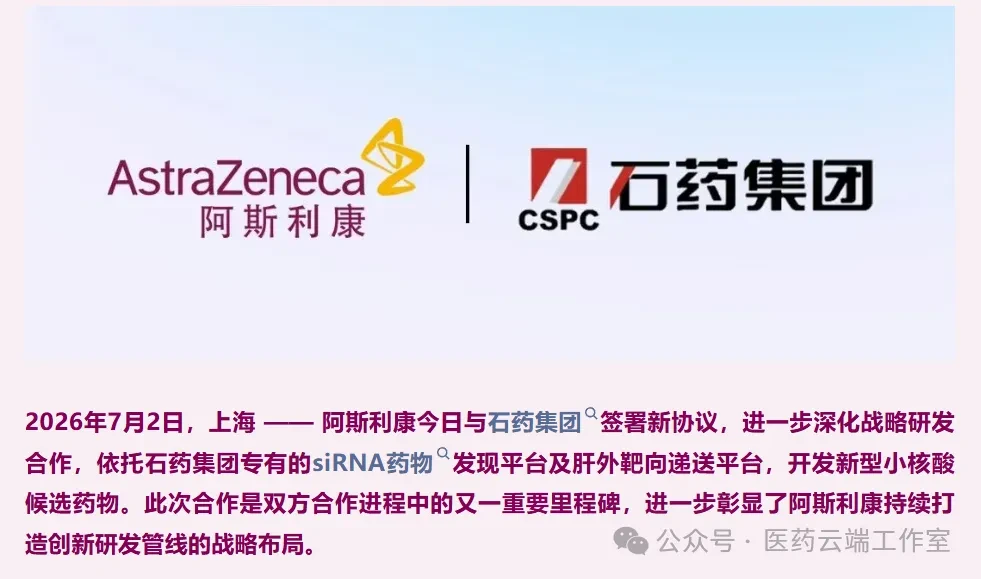
Image source: AstraZeneca Investment China
The core vehicle of the collaboration is CSPC’s proprietarysiRNA Drug Discovery Platform + Extrahepatic Targeted Delivery Platform, backed by AI-driven molecular design models and a fully automated high-throughput screening system, to efficiently identify nucleic acid molecules with high activity and extrahepatic targeting potential.
Both parties centered aroundTwo TargetsJointly discover and develop preclinical candidate drugs (PCCs) with the potential to treat multiple indications of kidney diseases.
Equity split follows the typical “MNC takes global + local stays in China” model: for each PCC project, AstraZeneca has the right to select exclusive rights for development, manufacturing, and commercialization in global markets or regions outside China;CSPC retains the rights to one of the PCCs in China,By leveraging AstraZeneca’s R&D and global commercialization capabilities to bring its pipeline to market, the company has also maintained its core position in the domestic nephrology market.
CSPC$30 million down payment+Maximum$540 Million R&D Milestone+Maximum$1.2 Billion Sales Milestone, plus a single-digit percentage of net sales as commission, with a total cap of RMB 1.77 billion.
For AstraZeneca (AZ), this collaboration strengthens its CVRM (cardiovascular-renal-metabolic) pipeline. Nephrology is already a core area of strength for AZ, as evidenced by the significant market presence of Farxiga (dapagliflozin) in chronic kidney disease (CKD). If the long-acting properties of siRNA can overcome extrahepatic delivery challenges and target renal-related pathways, it could theoretically enable a “once-every-six-months” dosing regimen for chronic diseases, thereby complementing AZ’s existing small-molecule portfolio.
For CSPC, the acquisition of its siRNA platform by AstraZeneca represents another example of a platform-based global expansion in China’s oligonucleotide sector. Previously, Zoetis, Novartis, and Roche have all sourced assets within this domestic oligonucleotide landscape. CSPC’s combination of “AI-driven screening plus extrahepatic delivery” was key to securing the AstraZeneca deal.
Worth mentioning as background: Since 2023, AZ has reached agreements with Chinese innovative pharmaceutical companies15 Partnerships Across 17 Initiatives, China has not only become its second-largest global market but is also increasingly resembling an early-stage pipeline "sourcing hub."
Judging from this deal, AstraZeneca’s acquisition strategy in China has shifted from “launched/late-stage clinical assets” to “platform + pre-clinical” opportunities. This sends a signal to domestic biotech and pharmaceutical companies that if platform technologies are sufficiently robust, they can command substantial valuations even at the pre-clinical stage.
Next, we will examine whether the two PCCs can be delivered on schedule, whether AstraZeneca will ultimately exercise its option to acquire the overseas rights to both projects, and whether the PCC for the Chinese market retained by CSPC can be combined with dapagliflozin and similar agents to form a synergistic treatment strategy in the domestic nephrology sector.
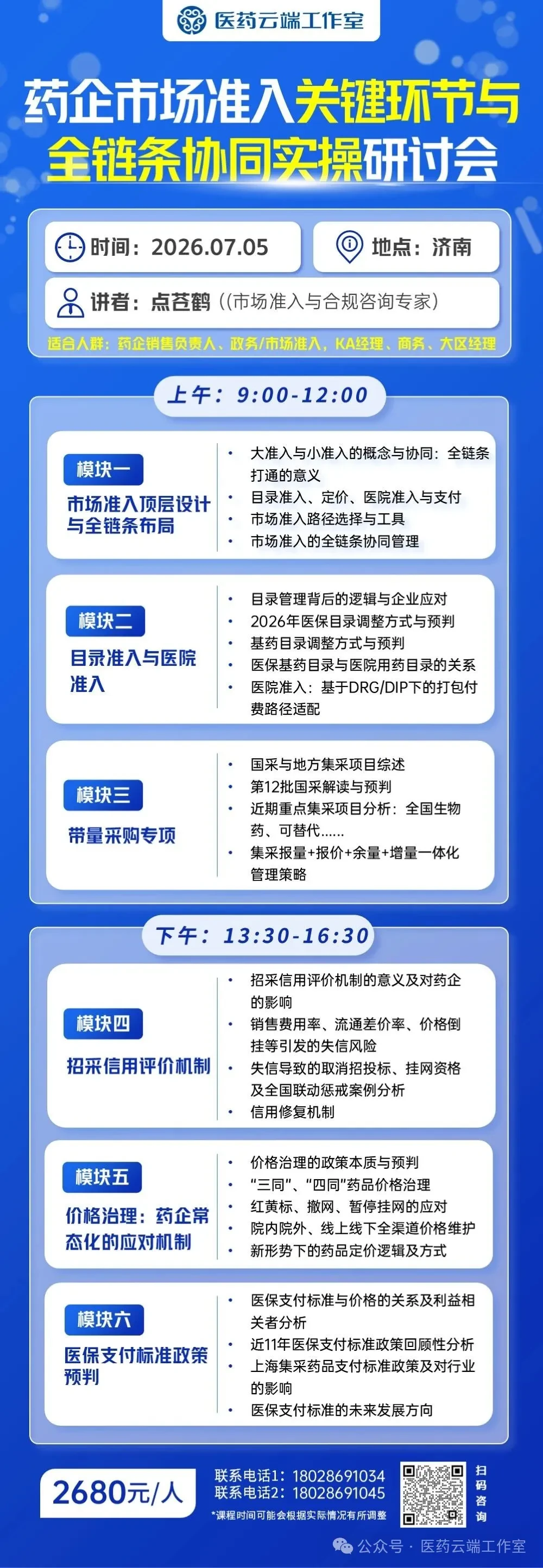
Welcome to AttendJuly 5, Jinanheld
“Seminar on Key Links in Market Access for Pharmaceutical Enterprises and Full-Chain Collaborative Practice”
We will integrate the key market access stages currently faced by enterprises,
Connecting the entire market access chain to provide you with systematic solutions.