Agilent CEO Padraig McDonnell Leads Executive Delegation to XtalPi, Charting a Collaborative Vision for AI for Science with 'Brain-Hand-Eye' Synergy

XtalPi
Computation-Driven Innovative Drug R&D Provider
Recently, Padraig McDonnell, President and CEO of Agilent, a global leader in analytical testing and life sciences, led a team of core executives to visit XtalPi (XtalPi,2228.HK) Shanghai Innovation R&D Center. Dr. Ma Jian, Co-founder and CEO of XtalPi, led the team for exchanges, with both parties focusing onAI for Science (AI-empowered scientific research), Laboratory Automation, Autonomous Labconducted in-depth exploration of key issues such as.
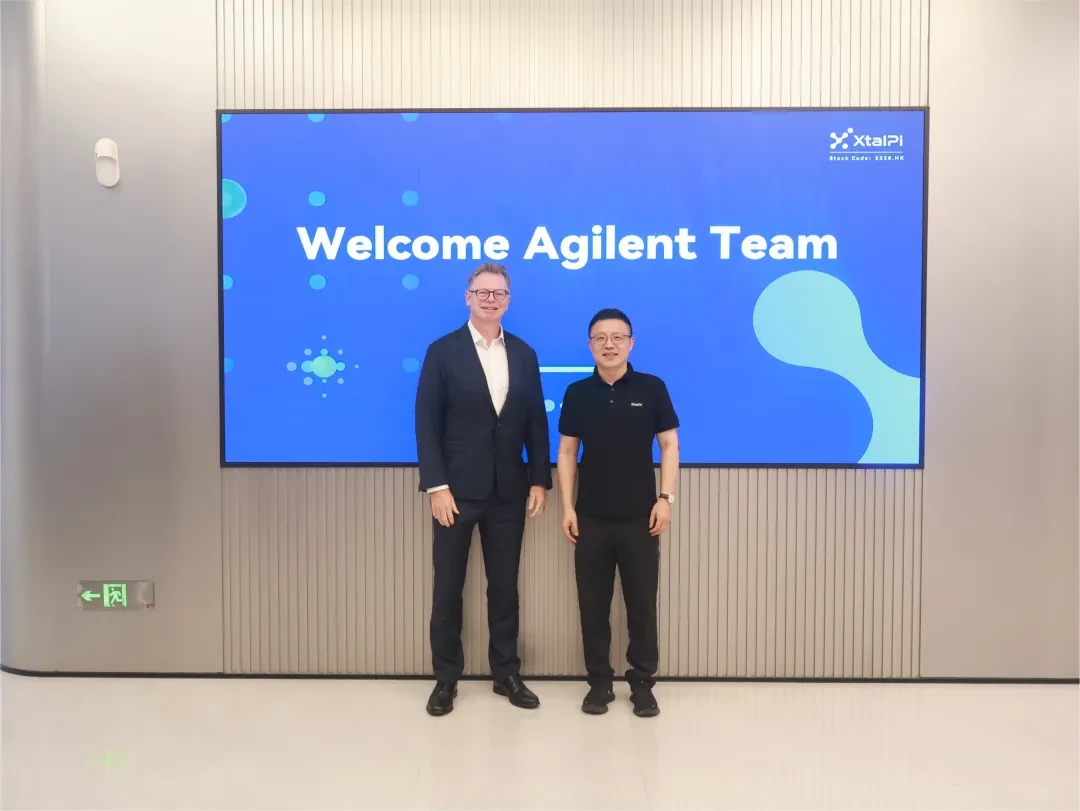
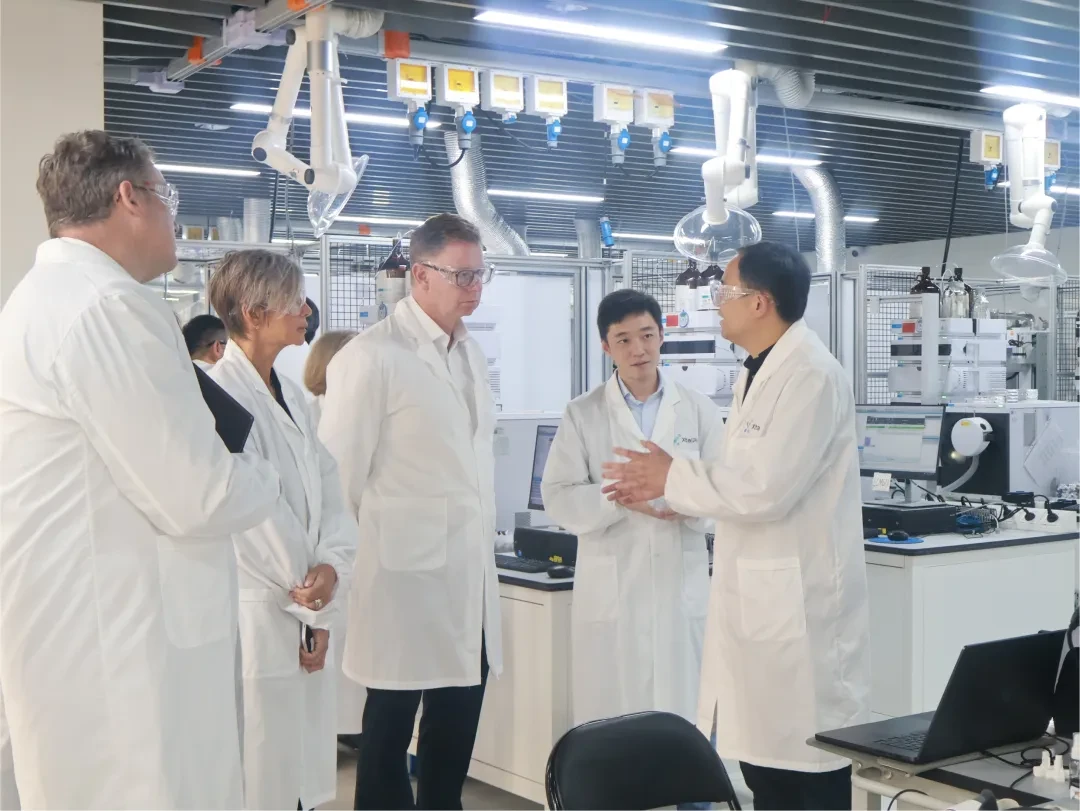
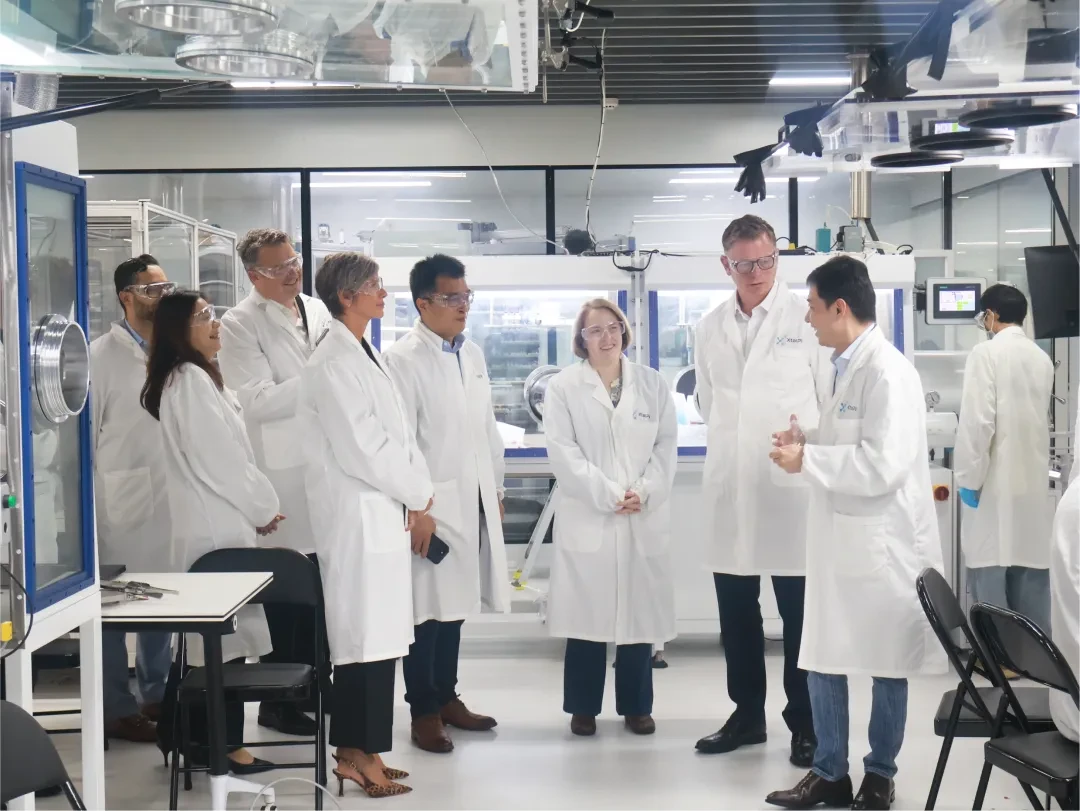
During the visit, Padraig McDonnell and his delegation toured XtalPi’s AI-driven autonomous laboratory and other AI R&D facilities. They affirmed XtalPi’s systematic capabilities in areas such as its AI R&D platform, robotic automation, and scientific data generation, and engaged in on-site discussions with the XtalPi team regarding multiple specific application scenarios.

AI for Science:
High-Quality Research Data Is the Core Bottleneck
Dr. Ma Jian pointed out in the discussion that XtalPi’s core experience in AI-driven drug discovery over the past five years demonstrates:What truly constrains the deployment of AI in scientific research is the availability of high-quality data. “Currently, most public datasets consist primarily of positive samples, whereas AI models genuinely require both positive and negative samples. We must leverage Physical AI technology to generate scientific research data at scale, seizing the opportunity for AI to comprehend ‘the language of nature.’””
Over the past decade, large language models have exhibited emergent intelligence by learning from natural language on the internet; in the next decade, the next breakthrough will come from“The Language of Nature”—Scientific instruments and equipment serve as the “eyes” through which humanity deciphers this language.”。Intelligence emergence can truly occur only when data accumulation reaches a sufficient scale.

Independent Experiment:
From "Tool" to "Infrastructure",
“Brain-Hand-Eye” Synergy Cracks the Scalability Bottleneck
At the exchange session, the XtalPi team systematically outlined the evolutionary path of “Autonomous Scientific Discovery” and shared a tiered development roadmap based on autonomous decision-making capabilities—ranging from L1 (single tools), L2 (copilots), and L3 (Agents) to L4–L5 (fully autonomous end-to-end discovery).
The scientific community is in a phase of rapid transition from L2 to L3,L4 has been achieved in a limited number of scenarios, with the majority expected to reach L4 within the next 3–5 years. This trend will directly reshape the traditional boundaries among R&D enterprises, contract research organizations (CROs), and instrument manufacturers, as the industrial division of labor between these three sectors is rapidly blurring.
At the exchange session, the XtalPi team shared insights based on their self-developed experimental platform regarding the trend of “autonomous adaptability” in equipment: over the next five years, the majority of instruments and devices will be operated by physical intelligence and directly invoked by AI Agents.
This necessitates that instruments and equipment be both robotics-friendly and agent-friendly—by opening API interfaces to allow Agents to directly read and write data. More importantly, they must output raw data to facilitate the development of more precise Scientific AI, enabling autonomous critical decision-making and ultimately achieving 24/7 operation.

In the laboratory, scientific intelligence serves as the “brain,” physical intelligence as the “hand,” and instruments and equipment as the “eyes.” The systematic collaboration of brain, hand, and eyes in advancing scientific experiments will enable a new research paradigm to empower diverse industries at greater speed and scale.
Both parties stated that, taking this meeting as an opportunity, XtalPi and Agilent will continue to deepen their collaboration in the fields of AI for Science and autonomous experimentation, jointly promoting the scaled production of “high-quality scientific data,” a scarce asset in the AI era, thereby injecting new momentum into global drug development and broader scientific research.