

Surge of 159%! Exclusive Interview with Investors: What Makes the First Listed Biopsy Robot Company Stand Out?

True Health
Medical Surgical Robot Developer
Today, True Health (02697.HK) listed on the Hong Kong Stock Exchange, becoming the first publicly traded company in China specializing in puncture surgical robots. Its opening price was HK$327.2, representing a 159% surge from its issue price of HK$126.2. As of press time, the stock was trading at HK$360.
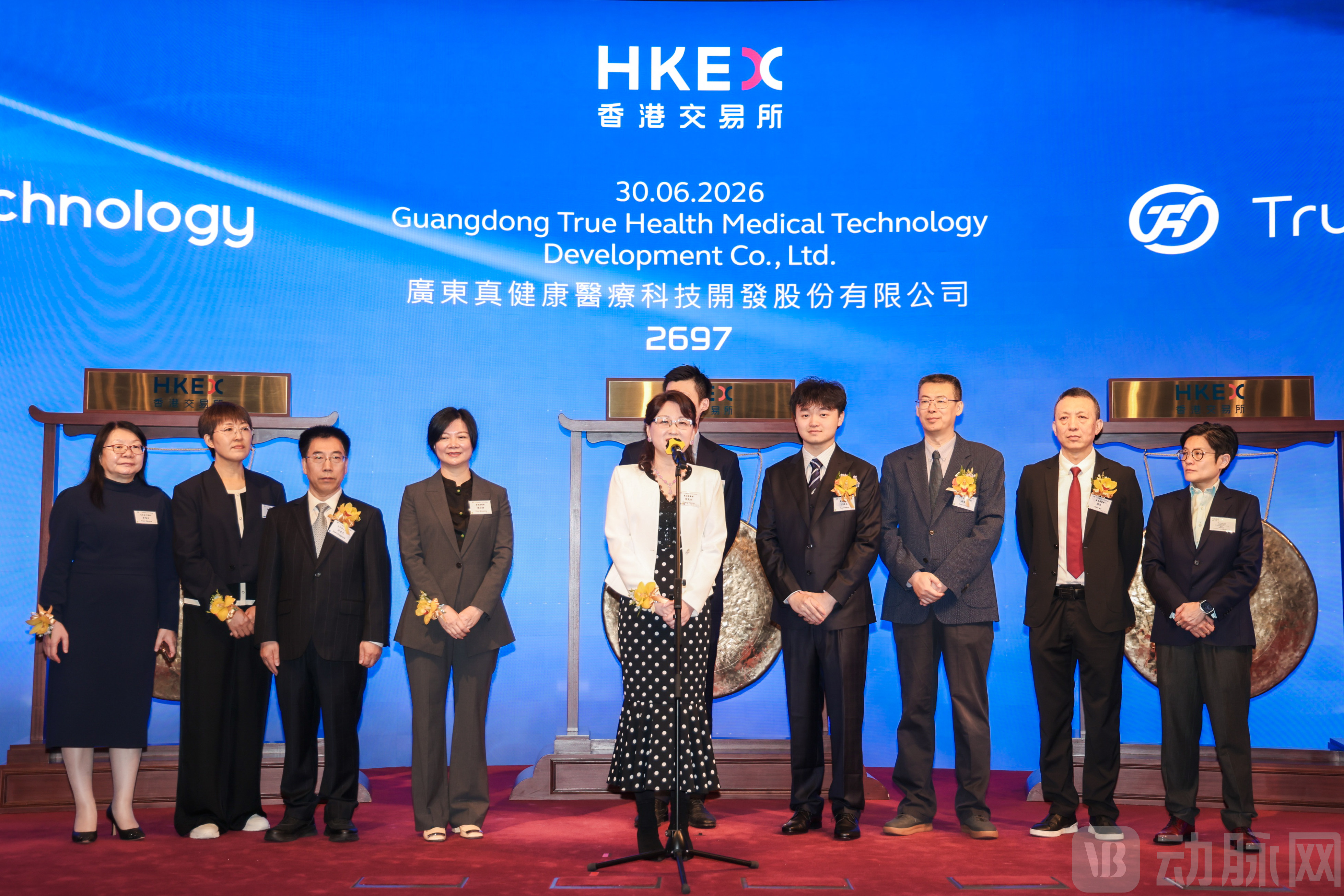
Founded in 2018, True Health focuses on the R&D and industrialization of percutaneous puncture surgical robots and ablation surgical robots. Since its inception, True Health has been a darling of the capital market: to date, it has completed nine rounds of financing, with total funding reaching RMB 648 million.
On the other hand, True Health has faced some skepticism regarding its technical barriers and commercialization capabilities. In fact, investment institutions have repeatedly raised these concerns during their due diligence. Ultimately, True Health's responses proved satisfactory to investors.
To uncover the growth logic, technological barriers, and long-term value of this niche market leader, VCBeat held an in-depth conversation with Wu Shuai (a pseudonym), an investor in True Health.
True Health's core product is a percutaneous needle-insertion surgical robot, primarily designed to assist in image-guided procedures such as needle biopsy, ablation therapy, seed implantation, and lesion localization. It addresses a broad range of indications, including nodules and tumors in the lungs and abdominal solid organs.
Surgical robots represent a typical technology-intensive, long-cycle, high-barrier hard-tech sector. The founders of most domestic surgical robot companies come from research institutes; for example, Zhang Songgen, founder of Tinavi, previously focused on scientific research at the Institute of Electronics, Chinese Academy of Sciences; Xu Kai, founder of Surgerii, is a professor at the School of Mechanical Engineering, Shanghai Jiao Tong University; and Wang Yu, founder of Rossum Robot, is an associate professor at the School of Biological Science and Medical Engineering, Beihang University...
In contrast to these academically trained founders, Zhang Haoren, the founder of True Health, stands out as a highly distinctive "atypical entrepreneur" in the sector: a graduate of Shanghai Medical University (now Fudan University's School of Medicine), with over 20 years of deep expertise in the medical device industry and prior service at the Macao Health Bureau.
Wu Shuai stated, "I recall my first meeting with Chairman Zhang Haoren was in 2021. Chairman Zhang possesses a composite background spanning the Macao Health Bureau and China's pharmaceutical and medical device sectors. With decades of deep industry engagement, he has consistently adhered to a technology-driven strategy throughout his entrepreneurial journey, demonstrating remarkable resilience and an unyielding spirit."
Shortly after the institution first connected with Zhang Haoren's team and initiated due diligence, it completed its investment in True Health. This rapid execution was driven by the True Health team's exceptional operational efficiency and strong collaboration.
Wu Shuai told VCBeat, "During the due diligence period, Zhang Haoren led his team to provide efficient, end-to-end support. Regardless of late night or early morning hours, they promptly supplied additional materials and addressed inquiries, ensuring the due diligence process advanced efficiently."
This unyielding resilience has permeated every stage of the company's development. Wu Shuai cited an example: "To promote the adoption of our biopsy robot in top-tier (Grade A tertiary) hospitals in cities such as Zhuhai and Guangzhou, Zhang Haoren systematically navigated resource channels, engaging stakeholders from the Executive Committee of the Hengqin Cooperation Zone to the Zhuhai State-owned Assets Supervision and Administration Commission, and further to provincial-level authorities. Within the framework of policy support and industrial incentives, he ultimately secured access to the key decision-makers at these hospitals."
Not only is Zhang Haoren "atypical," but so is the team he leads. In the surgical robotics startup sector, which is predominantly male-dominated, the core senior executives at True Health are primarily women. Chen Miaoping, the CFO, brings over 20 years of experience in pharmaceutical sales, corporate management, and capital operations on the Hong Kong Stock Exchange, overseeing the company's financial systems and compliance governance. Executive Director Guo Jian has spent 21 years deeply engaged in pharmaceutical R&D, taking full responsibility for product registration, clinical implementation, quality control, and the establishment of the R&D framework. Lin Huiyi, Joint Company Secretary, possesses more than a decade of experience in compliance operations for companies listed on the Hong Kong Stock Exchange, ensuring the standardized advancement of the company's capitalization process.
In an interview, Wu Shuai stated: "The core team of True Health combines resilience, stability, and exceptional execution capabilities. For instance, True Health secured its first Class III medical device registration certificate in May 2022 and achieved commercial revenue within the same year, leading the industry in implementation speed. Furthermore, as of now, True Health has accumulated a total of 10 Class III medical device registration certificates, with multiple products recognized as 'first-of-their-kind domestically and internationally.' The high value of these certifications, rich portfolio layout, and rapid iteration speed firmly place the company at the forefront of its niche sector."
Meanwhile, True Health's senior executives largely hail from leading medical device companies both in China and abroad, bringing together multidisciplinary talent in medicine, robotics, and AI algorithms to build a cross-functional, composite core team.
In addition, True Health has assembled an elite team of expert advisors: through a deep strategic partnership with the National Center for Respiratory Medicine, He Jianxing, Director of the National Center for Respiratory Medicine and Dean of the Guangzhou Institute of Respiratory Health, serves as the Clinical Principal Investigator (PI); Wang Tianmiao, Honorary Director of the Robotics Institute at Beihang University and doctoral supervisor, serves as Strategic Advisor; and Duan Xingguang, Tenured Professor and doctoral supervisor at Beijing Institute of Technology, serves as Chief Scientist. Backed by top-tier academic and clinical resources, True Health has established a robust barrier ensuring its technological leadership, clinical authority, and product innovation.
Currently, the market is concerned about the technological innovativeness and commercialization of needle insertion surgical robots. This was also the most frequent question Wu Shuai raised during his due diligence. How did True Health alleviate the concerns of Wu Shuai's institution?
First, multiple lines of clinical data validate the clinical value of percutaneous puncture surgical robots.
Percutaneous lung biopsy is widely recognized as a highly challenging procedure in the field of minimally invasive medicine. Continuous respiratory motion causes ongoing displacement of internal organs; even for senior physicians with over a decade of experience, freehand puncture can still result in errors of 3–5 millimeters, potentially leading to complications such as pneumothorax and hemothorax. This makes the procedure particularly difficult to perform in elderly patients. For a long time, traditional manual biopsy has heavily relied on physicians' experience, carrying high surgical risks and low tolerance for error, representing a critical clinical challenge that urgently needs to be addressed.
Wu Shuai told VCBeat, "According to our research, True Health's needle insertion surgical robot has achieved a disruptive technological breakthrough in the field. The device offers a needle insertion accuracy of 0.1 millimeters (sub-millimeter level), with an accuracy rate five times higher than that of manual freehand procedures."
Leveraging its high-precision capabilities, the True Health surgical robot has successfully facilitated multiple complex procedures in ultra-elderly patients aged 80 to 90, overcoming challenges associated with advanced age and complex puncture surgeries, thereby validating its clinical value. The prospectus also indicates that, compared to manual freehand operations, the True Health puncture surgical robot can reduce overall complications by more than 50% and severe complications by approximately 90%. By virtue of its high precision, the puncture robot can be employed in surgeries that were previously difficult or high-risk when performed manually; such cases are estimated to account for over 10% of procedures. For instance, clinicians have already extended minimally invasive treatments to small lesions (≤10 mm).
In 2025, the Second Affiliated Hospital of Soochow University released real-world evidence further corroborating the clinical value of the product: the True Health biopsy robot achieved a 100% procedural success rate, effectively reducing the number of intraoperative needle adjustments, CT scans, and procedure duration, significantly lowering radiation exposure risks for both patients and medical staff, and markedly enhancing departmental diagnostic and treatment efficiency.
Furthermore, compared to other competitors, True Health leads the industry in R&D iteration and regulatory approval speed. During the 2024 due diligence phase, True Health already held four Class III medical device registration certificates. Among these, two innovative products—the TH-S Percutaneous Puncture Surgical Robot and the TH-X MW Percutaneous Microwave Ablation Surgical Robot—were recognized by the NMPA as "China's First" and "World's First," respectively. The significance of these "firsts" sufficiently demonstrates its leading position and innovativeness.
Second, commercialization and real-world implementation have validated the sector's potential.
Addressing the market's heated debate over "low equipment sales," Wu Shuai's team confirmed through in-depth research that this is not due to insufficient competitiveness of True Health's products, but rather a common industry-wide phenomenon triggered by a policy vacuum period. Nevertheless, the commercialization pathway and prospects for the biopsy robot have already been validated.
From the perspective of fundamental market dynamics, percutaneous surgical robots are applicable to a wide range of indications, including nodules and tumors in the lungs and abdominal solid organs. Taking pulmonary nodules as an example, the global population affected by this condition was approximately 1.6 billion in 2025, with around 308.9 million cases in China. The market segment boasts substantial growth potential and continues to expand.
According to data from China Insights Consultancy (CIC), the global total volume of percutaneous procedures is projected to increase from approximately 7.4 million cases in 2020 to around 8.5 million cases by 2031. Robot-assisted percutaneous puncture procedures amounted to approximately 98,000 cases in 2025 and are expected to rise to 1 million cases by 2031.
In terms of commercial implementation, True Health has already established an initial closed loop. Wu Shuai revealed, "During the due diligence phase in 2024, True Health's products had been adopted by more than 50 Grade-A tertiary hospitals, with over 100 such hospitals reserved for future collaboration. The company performed more than 3,000 clinical surgeries annually, achieving a 100% success rate. To date, True Health's cumulative surgical volume has exceeded 7,200 cases, fully validating the clinical safety and practicality of its products. Additionally, the company achieved commercial revenue in the same year it secured its first Class III medical device registration certificate in 2022, demonstrating a market rollout efficiency far exceeding the industry average."
In 2025, approximately nine units of needle insertion surgical robots were sold in the Chinese domestic market. The low sales volume is attributed to the industry still being in its early development stage, as the promotion and sales of large-scale medical equipment typically require two to three years. Meanwhile, the previous lack of a unified pricing and reimbursement standard for surgical robots in China led to audit concerns among hospitals during procurement and departmental applications, creating an industry stalemate characterized by "hesitation to purchase despite demand, and reluctance to utilize despite availability."
In 2026, the industry reached a critical policy turning point. In January, the National Healthcare Security Administration issued guidelines for pricing surgical assistance devices. By April, Guangdong and Hunan provinces implemented local fee schedules, marking the industry's entry into a new phase characterized by "established pricing, reimbursable fees, and eligible declarations." With these policies taking effect, puncture surgical robots are expected to accelerate their scale-up and mass adoption.
Following the investment, Wu Shuai's core focus shifted from "the viability of technology and demand" to "the company's sustainable growth."
In this regard, True Health continues to refine its multi-tiered product portfolio and business model, comprehensively accelerating market scale-up. The high-end TH-S series caters to the demands of complex surgeries at top-tier Grade A tertiary hospitals, while the lightweight TH-P series penetrates the primary healthcare market, achieving coverage across hospitals of all levels. Leveraging its nationwide distributor network to broaden sales channels, the company has innovatively introduced equipment leasing and placement models to lower procurement barriers for hospitals. In April 2026, it successfully secured direct procurement orders from hospitals, further validating its commercialization model.
To support the accelerated development of True Health, Wu Shuai has also provided assistance in areas such as talent acquisition, channel development, and product promotion. On numerous occasions, Wu Shuai has promoted True Health's percutaneous puncture robot or facilitated connections with medical institutions.
As market interest intensifies, the number of domestic players in the needle-insertion robotics sector continues to grow. Currently, 21 products have received regulatory approval for market launch, including 19 domestically produced ones, marking the industry's gradual transition from a blue-ocean market to a stage of robust competition.
However, Wu Shuai believes that the continuous entry of new players will not disrupt the existing industry landscape, and the concentration trend among top-tier companies will remain entrenched in the long term.
On the one hand, leading enterprises have taken the lead in completing product approvals, large-sample clinical validations, and the implementation of reimbursement policies, thereby accumulating scarce real-world clinical data and hospital channel resources. New entrants will require at least a 3-5 year cycle to complete product R&D and registration, accumulate clinical data, and achieve breakthroughs in market channels, making it extremely difficult for them to catch up.
On the other hand, the current sector remains in the early stages of commercialization, with ample overall market space. Companies employing different technological approaches and product positioning can achieve differentiated deployment across specific indications and hospitals at various tiers, meaning it is not a zero-sum game.
In the long run, leading enterprises with core technological barriers, mature commercialization capabilities, and comprehensive product portfolios will continue to capture incremental industry growth, further increasing market concentration. Leveraging its first-mover technological advantage, full-scenario product layout, and exclusive ablation product line, True Health continues to solidify its position as the leader in this niche sector.
Industry-authoritative data corroborates its leading position: In 2025, the CR5 market share in China's percutaneous puncture robot industry reached as high as 82.5%, indicating a highly pronounced head effect in this sector. Among these players, True Health secured the top industry position for three consecutive years with a 28.0% revenue-based market share, further strengthening its competitive moat as the market leader.
Following the investment, Wu Shuai also expressed concern that puncture surgical robots or their associated consumables might suddenly be included in centralized procurement, thereby impacting the economic model of his investment.
In response, True Health has already laid out its overseas market strategy, planning to mitigate related impacts through diversified revenue streams. Leveraging the unique locational and policy advantages of the Hengqin Guangdong-Macao In-Depth Cooperation Zone and the China-Portuguese-speaking Countries Cooperation Platform, the company has strategically positioned itself in the global market ahead of time, establishing an internationalization strategy centered on "Europe as the gateway, radiating globally, and deeply cultivating Portuguese-speaking markets," thereby embarking on its journey of global expansion.
In January 2026, True Health submitted the CE certification application for its core products. Upon approval, these products will gain seamless access to major global healthcare markets, including Europe, Southeast Asia, the Middle East, and Australia, thereby unlocking significant overseas growth opportunities.
The Hengqin Guangdong-Macao In-Depth Cooperation Zone has also provided support for True Health's international expansion. By organizing official overseas roadshows and facilitating global industrial resource matchmaking, the Cooperation Zone is helping True Health tap into blue-ocean markets in Portuguese-speaking countries such as Brazil, establishing an international clinical training and technology demonstration center, and providing comprehensive empowerment for the company's global implementation.
Leveraging its exclusive technological advantages in niche segments, True Health is poised to replicate the high-growth trajectory of Chinese-made medical devices expanding overseas, break free from domestic competitive constraints, and build a global growth engine.
Beyond its overseas expansion, True Health is also laying the foundation for a "second growth curve" by strategically deploying innovative products.
For example, True Health has initiated the expansion of indications for its biopsy surgical robot to include retroperitoneal lesions, with a plan to submit a registration application in the fourth quarter of 2026, thereby further covering high-difficulty minimally invasive surgical scenarios. Its internationally pioneering navigation and positioning microwave ablation system received new approval for pulmonary indications in April 2026, achieving full coverage of ablation therapy capabilities for both the liver and lungs. Meanwhile, the company is also developing a cryoablation surgical robot, with a registration application planned for submission in the second half of 2027.
True Health has also entered the field of regenerative medicine related to organ transplantation, deploying intelligent organ preservation and assessment devices based on normothermic continuous mechanical perfusion. Clinical trials for the two devices are scheduled to commence in 2027 and 2028, respectively.
The high valuation accorded to True Health by the capital market reflects a comprehensive recognition of the scarcity within the niche sector of puncture surgical robots, the company's robust clinical value, the long-term stability of its core team, and the favorable industry policy environment. As the first publicly listed company in the puncture surgical robot segment, True Health's successful IPO not only propels the niche sector from isolated pilot applications toward large-scale clinical adoption, but also establishes a highly reference-worthy industrial model for domestic high-end minimally invasive device enterprises in terms of technological iteration, commercialization, capitalization, and global expansion.
Regarding this investment, Wu Shuai considers it a strategic "ballast" capital for True Health. After the lock-up period expires post-IPO, institutional investors will not engage in indiscriminate sell-offs at low valuations. Instead, they will partially exit at opportune moments, aligned with the company's long-term operational development, thereby maintaining long-term partnership and sharing in the growth dividends of this niche sector.