

PRIMEAI Completes First Closing of Hundred-Million-RMB Series A, Building a World-Leading AI Clinical Trial Innovation Infrastructure

PRIMEAI
Developer of the Big Data Federated Collaboration Network for Health Across the Full Life Cycle

CICC Capital
Private Equity Investment Management Firm

Qiming Venture Partners
Healthcare Investment Institutions

IQVIA
Biopharmaceutical Development and Sales Outsourcing Services (CRO) Supplier
On June 30, Hangzhou Prime Life Sciences(PRIMEAI) officially announced the completion of the first closing of its Series A financing round, totaling approximately RMB 100 million. This round was led by CICC Capital, with participation from Sumitomo Corporation Equity Asia Limited, Suzhou High-tech Rongsheng, and other institutions. Combined with early-stage investors Qiming Venture Partners and global contract research organization leader IQVIA, the company has secured the endorsement of three types of capital—industrial capital, top-tier financial funds, and international pharmaceutical and contract research organization giants—validating its rare investment value in the artificial intelligence clinical trial sector.
Founder Wang Zheng disclosed that PRIMEAI has initiated its latest financing round, with proceeds to be used for expanding the world's largest artificial intelligence-native clinical network, traditional business acquisitions, intelligent agent cluster iteration, service capitalization, and global strategic deployment, accelerating the implementation of global delivery capabilities.
Leveraging its self-developed E2E full-link artificial intelligence platform, PRIMEAI has achieved a tenfold improvement in clinical trial efficiency, an 80% reduction in labor costs, and a 50% shortening of research and development cycles. Positioned at the forefront of the global regulatory shift toward artificial intelligence and digital transformation, the company stands as one of the few domestic enterprises capable of benchmarking against, or even leading, top overseas artificial intelligence pharmaceutical technology innovators. Combined with its dual-driven service model of "platform plus capitalization," PRIMEAI has rapidly grown and established global delivery capabilities.
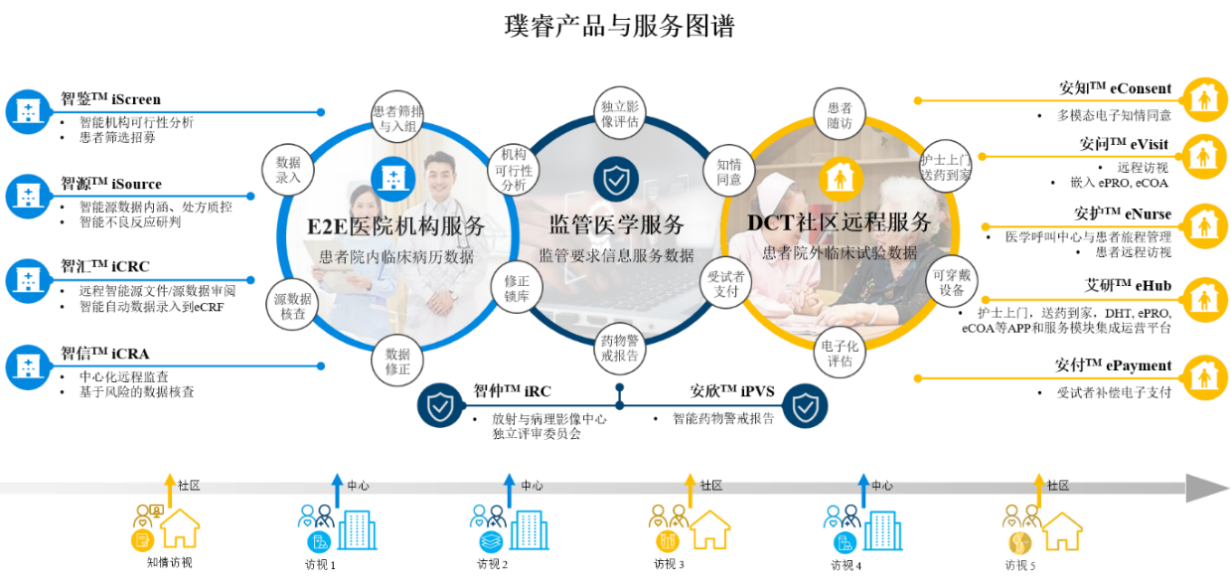 PRIMEAI E2E+DCT Full-Stack AI Clinical Trial Business System
1Aligning with Dynamic Regulation and Enhancing Quality and Efficiency: Full-Stack AI Infrastructure Upgrade for Clinical Trials
The global clinical trial market is currently expanding at a rapid pace, with annual growth exceeding 30%. However, the industry has long been constrained by labor-intensive operations, protracted timelines, and high compliance costs. Against this broader backdrop, the global drug regulatory framework has completed a fundamental shift in its underlying logic, transitioning from static segmented approval to dynamic real-time data supervision. This transition has opened a golden window of policy and industry resonance for artificial intelligence-powered full-link clinical platforms.
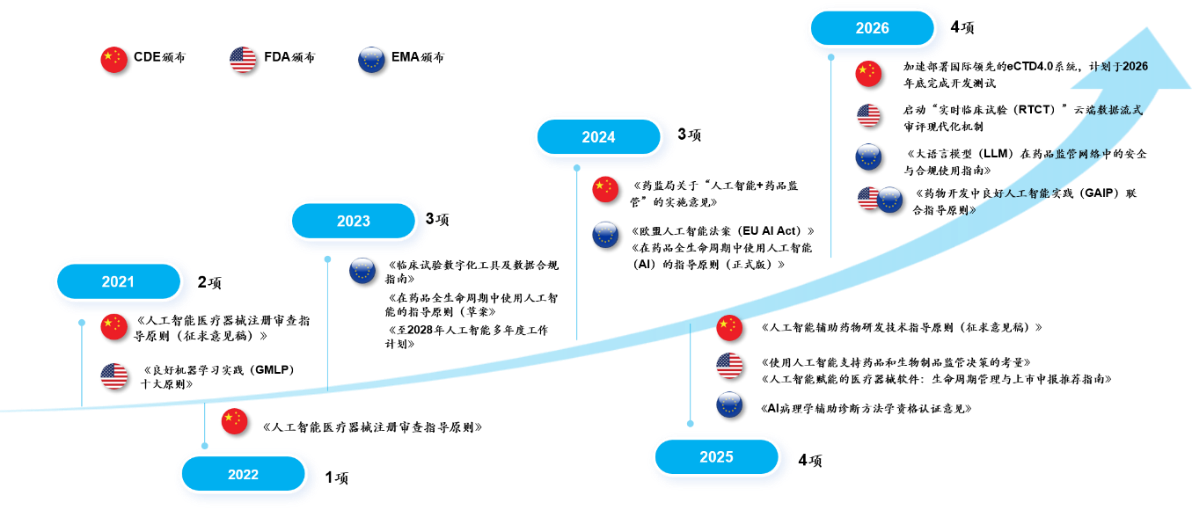 Global Regulatory Policy Shifts Clear the Way for AI Clinical Models
At the same time, the demands from hospitals and Good Clinical Practice institutions have shifted toward "proactive procurement of artificial intelligence systems to reduce costs and improve quality." PRIMEAI currently covers more than 80 top-tier hospitals across 25 cities in 15 provinces in China, and has established deep end-to-end collaborations with leading top-tier hospitals including West China Hospital, Peking Union Medical College Hospital, Peking University People's Hospital, and Nanfang Hospital affiliated with Southern Medical University. The company holds access to massive hospital-wide electronic medical record data sources, forming an in-hospital scenario barrier that is difficult for overseas competitors to replicate.
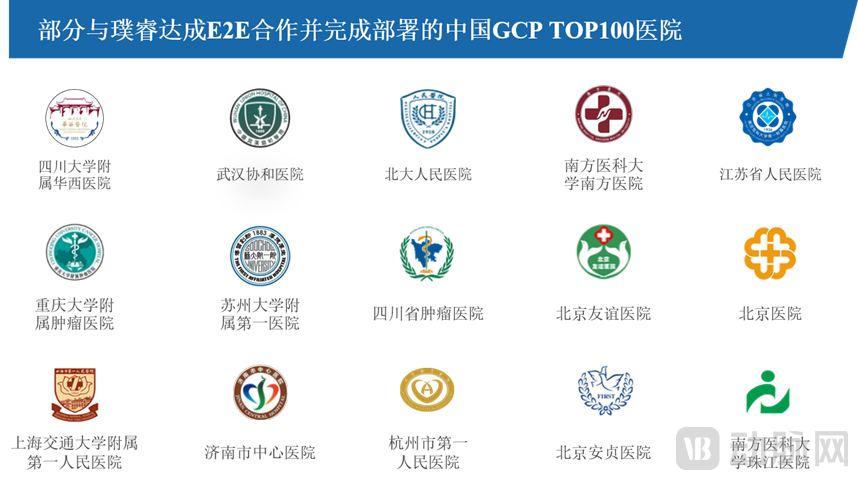
Clinical Institutions Are Shifting from Passively Accepting Services to Proactively Seeking AI-driven Upgrades
In addition, all of the world's top 20 multinational pharmaceutical companies have incorporated artificial intelligence in clinical trials into their long-term strategies. PRIMEAI has completed proof-of-concept validation and supplier qualification with over 50% of leading multinational pharmaceutical companies, and has established full-cycle collaborations spanning Phase I to Phase IV with 7 of the world's top 10 pharmaceutical companies.
According to reports, PRIMEAI's artificial intelligence modules can achieve gross margins of 70% to 80%, with overall delivery gross margins exceeding 60%. This high-profitability business model precisely aligns with pharmaceutical companies' demands for cost reduction and efficiency improvement. In 2026, the company is projected to achieve revenue exceeding RMB 100 million, with total contract value approaching RMB 160 million, marking the entry of its commercialization into a phase of exponential growth.
2End-to-End Full-Link Native AI Agent Architecture: Overtaking on the Curve in Dual Tracks
PRIMEAI's current system covers 15 provinces, over 25 cities, and more than 80 top-tier hospitals and medical consortia in China, with access to over 100 million hospital-wide electronic medical records from patients. Its partner Good Clinical Practice institutions are all among China's leading top 300 clinical trial institutions, which collectively contribute to 90% of international multi-center clinical trials conducted in China.
Distinguishing itself from industry point-solution artificial intelligence tools, PRIMEAI has developed the world's first artificial intelligence-native end-to-end full-link intelligent platform, representing a complete infrastructure-grade product for clinical research and development. Its dual-core system—the TrialChain data flow platform and the MetaPivot artificial intelligence agent scheduling cluster—covers the entire process including patient screening, source data acquisition, artificial intelligence-powered automatic data entry, intelligent assessment of adverse events and serious adverse events, remote centralized monitoring, pharmacovigilance, and statistical submission. The system fully integrates multi-source heterogeneous data from in-hospital electronic medical records, hospital information systems, laboratory information systems, and picture archiving and communication systems with out-of-hospital decentralized clinical trial wearable devices.
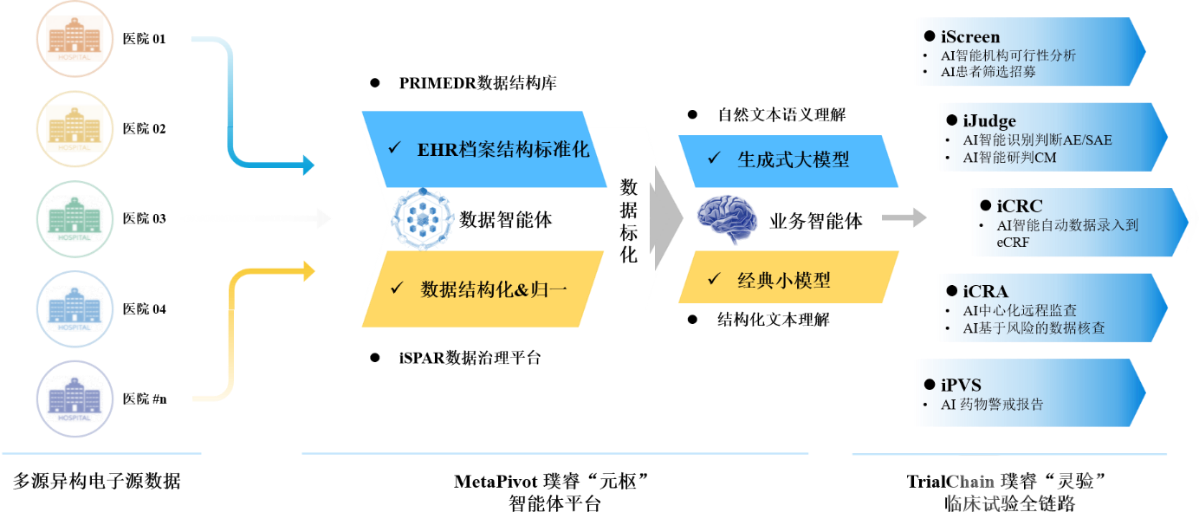
Dual-Platform Drive by TrialChain and MetaPivot: Building a "Zero-Friction" Pathway from Electronic Medical Records to Clinical Trials
Leveraging the dual-platform architecture of TrialChain and MetaPivot, PRIMEAI has compressed the overall clinical trial cycle by 30% to 50%, shortening the traditional 32-to-48-month Phase III new drug clinical trial period to 18 to 26 months. Patient recruitment time has been reduced by 70%; data entry efficiency has improved by 80%; and overall labor costs have decreased by 80%. The platform processes over 100 million hospital-wide electronic medical records per month. At the same time, the artificial intelligence models are continuously iterated and optimized through massive real-world clinical data, with intelligent performance improving by 30% every six months.
Rooted in China's hospital and clinical trial institution systems, PRIMEAI has forged a distinctive development path that differs from its overseas counterparts. Unlike overseas platforms that focus primarily on community clinic models, PRIMEAI deeply undertakes multi-center, high-value global registration clinical projects. Leveraging its billion-level hospital-wide multimodal medical record resources, the company has developed deep technological expertise in natural language processing and complex medical record structuring. The vast clinical scenarios and high-quality medical data continuously fuel the iterative upgrading of artificial intelligence models, enabling the platform to build unique advantages tailored to the Chinese system in terms of clinical research depth, breadth, and data complexity.
In particular, addressing the industry pain point of fragmentation between electronic medical records and clinical artificial intelligence, PRIMEAI has developed an integrated closed-loop model of "electronic medical record underlying data plus full-stack proprietary artificial intelligence." The platform autonomously connects to hospital-wide electronic source data systems, obtaining authorized rights to use fully de-identified data in compliance with regulations. Its proprietary L1-to-L5 layered artificial intelligence agent cluster covers multiple diseases and various subspecialty scenarios without relying on third-party tools.
This full-chain autonomous capability, spanning from underlying data acquisition to upper-level artificial intelligence computation, positions PRIMEAIas one of the few platforms globally that possesses both a clinical data foundation and native artificial intelligence research and development capabilities, offering a Chinese solution for the development of global artificial intelligence healthcare infrastructure.
3"Five-in-One Integration of Data, Intelligence, Compliance, Talent, and Capital to Build Unreplicable Competitive Barriers"
End-to-End Traceable Data Barriers: High Migration Costs Build the Industry's "Maginot Line"
PRIMEAI has independently established data flow and traceability standards for clinical trials that are aligned with the International Council for Harmonisation E6 (R3) guideline. The company has achieved deep integration with the full operational systems of dozens of top-tier hospitals. The entire data pathway, interface specifications, and compliance processes are highly exclusive, creating significant barriers for competitors. Switching service providers requires pharmaceutical companies and hospitals to re-execute system integration, compliance audits, and model adaptation—a replacement cycle lasting 24 to 36 months—thereby establishing a long-term first-mover advantage. The company plans to cover 80% of China's top 300 clinical institutions by 2028, further securing the entry points for data flow.
Technical Barriers of Native AI Agent Clusters: Continuous Iteration of Industry-Specific Models
Distinguishing itself from the industry's general-purpose large model fine-tuning approaches, PRIMEAI has independently developed a vertical artificial intelligence agent cluster for healthcare, covering more than 20 specialized clinical scenarios including intelligent site assessment, subject screening, automatic adverse event identification, source document quality control, and remote monitoring. All models across 6 disease areas and 25 disease subtypes are continuously trained on real clinical projects, with accuracy rates consistently approaching 100%, and the pace of technological iteration leads the industry.
Global Compliance Delivery Barriers: Proactively Adapting to New International Regulatory Standards
PRIMEAI is one of the few domestic platforms that simultaneously meets both domestic and international regulatory requirements. The platform natively embeds a full-process compliance system aligned with the International Council for Harmonisation E6 (R3) guideline, fully supports the United States Food and Drug Administration's real-time flow-based regulatory monitoring, and has successfully passed multiple rounds of audits by global multinational pharmaceutical companies and leading international contract research organizations, possessing the qualifications for standardized delivery of global multi-center projects.
Competitive Moat of a Top-Tier Composite Team: A Triple Hybrid Background in Clinical Practice, Industry, and AI
Founder Wang Zheng possesses a rare and diversified background: a Doctor of Medicine in cardiac surgery from Shanghai Jiao Tong University, a Master of Business Administration from Duke University, five years of clinical experience as a physician, and former roles as head of strategy for the Asia-Pacific region at IQVIA. He has deep expertise across three core domains—clinical practice, the contract research organization industry, and digital strategy. The core team members come from international pharmaceutical companies including IQVIA, Pfizer, and AstraZeneca, as well as technology companies such as Huawei, Alibaba, and Tesla. The team covers five major specialties—clinical medicine, pharmaceutical research and development, artificial intelligence algorithms, software engineering, and global compliance—forming a multidisciplinary "pharmaceutical plus technology" team.
Diversified, High-Flexibility Business Model Moat: Breaking Free from the Traditional CRO Headcount-Based Pricing Dilemma
PRIMEAI has established three business models to achieve a dual-driven approach of platformization and capitalization, balancing short-term cash flow with long-term equity returns, while breaking through the revenue ceiling of traditional contract research organizations:
Project-based service model: Revenue is recognized upon milestone-based delivery. Leveraging artificial intelligence to compress timelines and improve delivery quality, the company secures routine clinical projects;
Milestone-based profit-sharing model: Service costs are advanced for early-stage biotechnology pipelines in exchange for subsequent financing returns and exclusive service rights, thereby securing high-quality innovative assets;
Service capitalization model: For shelved early-stage clinical assets in oncology and autoimmune disease areas, value appreciation is achieved through equity participation and licensing-based revenue sharing, opening a second growth curve.
The global clinical trial market exceeds USD 800 billion, with clinical research and development accounting for 70% to 80% of total new drug investment, making it one of the largest sectors for artificial intelligence-driven pharmaceutical transformation. The industry is currently still in the early stages of transitioning from a "human-driven" to an "artificial intelligence-driven" paradigm. Rooted in China's vast clinical data resources and top-tier hospital networks, and leveraging its proprietary full-stack artificial intelligence technologies, PRIMEAI has the potential to surpass its Western counterparts such as EPIC and Paradigm—world-class leaders in artificial intelligence clinical infrastructure—and achieve an industrial breakthrough of "Chinese technology serving global pharmaceutical companies."