In the domestic market, the competition is heating up not only for weight-loss drugs but also for lipid-lowering drugs.
On June 25, the NMPA officially accepted the application.Marketing Authorization Application for the Biological Product Ledacibep, thisis China's fifth domestically produced third-generation PCSK9 inhibitor,By a U.S. companyLIB TherapeuticsR&D; domestic commercialization is handled by Everest Medicines.Major Breakthrough: Another New Lipid-Lowering Drug Filed for Marketing Approval in China
Lipid-lowering drugs constitute a fairly extensive class, IThe population with dyslipidemia in China has exceeded 400 million, with a prevalence rate of over 35% among adults, meaning one in every three adults suffers from dyslipidemia.Currently, the mainstream lipid-lowering drugs are statins and fibrates, with statins in particular serving as the cornerstone of hyperlipidemia treatment, leading to the development of several "blockbuster" drugs.
However, even the most miraculous drugs have inevitable drawbacks. Statins are prone to causing intolerance, includingAbnormal Liver Function、Muscle-Related Complications、Newly diagnoseddiabetes risk, etc. Once intolerance occurs, alternative medications need to be sought; furthermore, when used as monotherapyWhether statin therapy achieves target levels determines the need for combination with other lipid-lowering agents.
PCSK9 inhibitors are one such example; they belong to a new generation of lipid-lowering agents and can be used as monotherapy or in combination with statins.
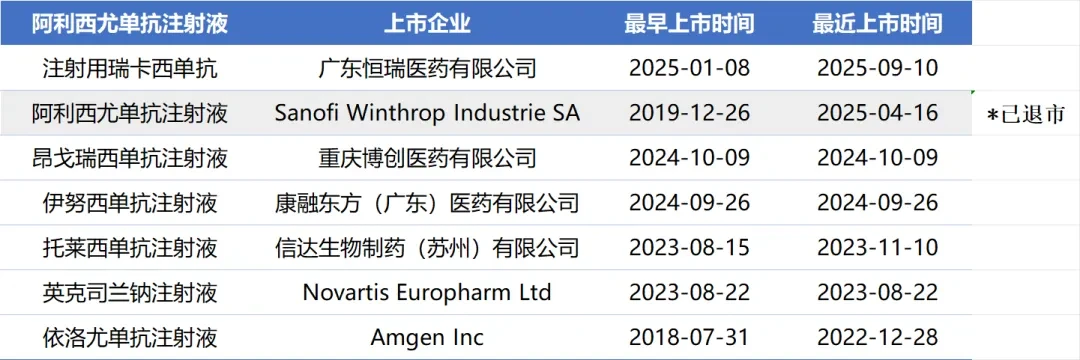
Currently, all PCSK9 inhibitors are subcutaneous injections, collectively known in the market as “lipid-lowering injections.” Once, these injections were synonymous with being prohibitively expensive, often costing thousands of yuan per dose.
In 2018, the first PCSK9 inhibitor approved for marketing in China was evolocumab from Amgen.(brand name: Repatha), one year later, Sanofi'sAlirocumab (brand name: Bolida) has been launched. The former, evolocumab, was priced at RMB 1,298 per injection after its market launch, with an annual treatment cost exceeding RMB 30,000; the latter is priced at RMB 1,982 per injection, with an annual treatment cost exceeding RMB 50,000, which is quite expensive.
However, following the 2021 National Reimbursement Drug List negotiations, the prices of two lipid-lowering injections have been significantly reduced.Evolocumab has dropped to 283 yuan per injection.Alirocumab has dropped to RMB 306 per injection, a reduction of nearly 80%, with annual treatment costs falling below RMB 10,000.
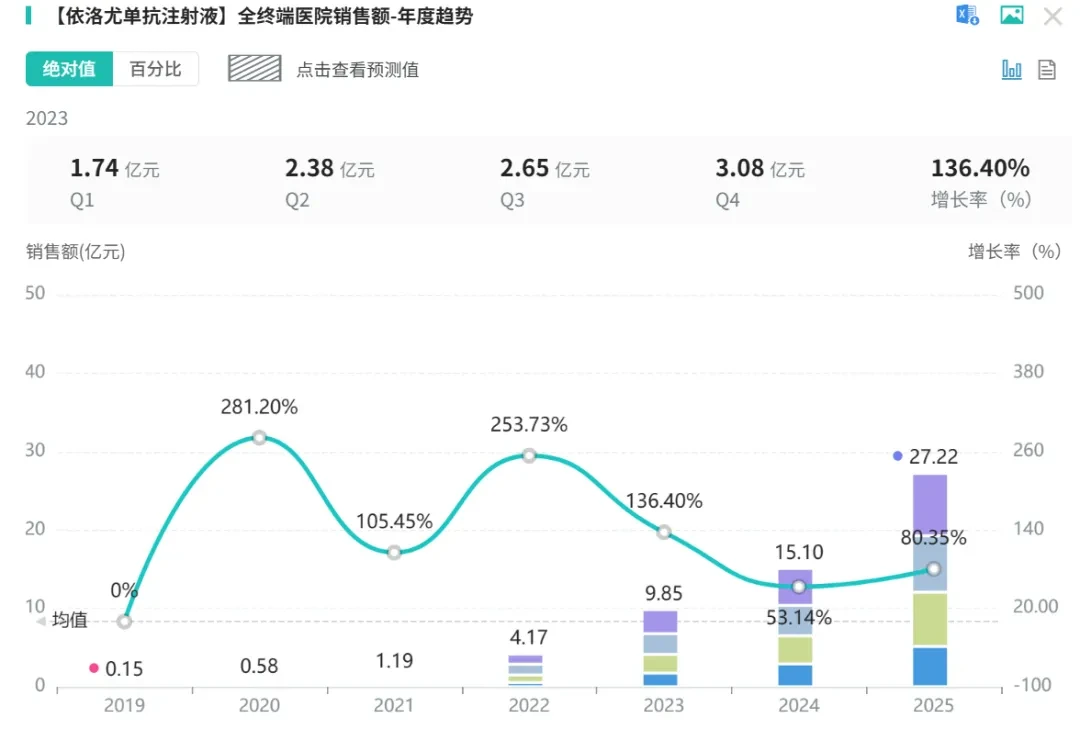
Interestingly, the two lipid-lowering injections yielded two distinctly different outcomes after their price reductions,Sales of evolocumab began to surge after 2021, with total hospital sales across all channels exceeding RMB 2.5 billion in 2025, nearly doubling compared to 2024.Sanofi'sAlirocumab: Sales have remained stagnant, consistently staying below $1 billion.In July 2025, Sanofi directly announcedAlirocumab Withdraws from the Chinese Market Due to Tight Raw Material Supply and Intensified CompetitionSanofi’s withdrawal of alirocumab has not only provided an opportunity for its long-standing rival Amgen, but also opened the door for other PCSK9 inhibitors.
The earliest domestically produced lipid-lowering injection comes from Innovent.Taileximab was included in the National Reimbursement Drug List (NRDL) negotiations in 2024. After becoming eligible for medical insurance reimbursement in 2025, it achieved annual sales of RMB 500 million within a year—a veritable miracle.Currently, domestically produced PCSK9 inhibitors approved for marketing in China include Innovent’s Taletrectumab, Akeso’s Inuciximab, Junshi Biosciences’ Angorciximab, and Hengrui Medicine’s Recaticumab; the product recently submitted for production approval by Everest Medicines is the fifth such drug in China.By 2025, the lipid-lowering injections from Kangrong, Bochuang, and Hengrui were all included in the National Reimbursement Drug List (NRDL) through national price negotiations, with formal implementation in 2026. The outcome of these negotiations has been a significant reduction in the price of lipid-lowering injections, bringing them down to the hundred-yuan range.However, the long-acting efficacy of these monoclonal antibodies still falls short of that of inclisiran. Inclisiran inhibits PCSK9 protein expression via a small interfering RNA (siRNA) mechanism. Developed by Novartis, this drug was officially approved for marketing in China in 2023. To date, no other PCSK9-lowering drugs based on the siRNA technology platform have been approved for marketing in China.Novartis’s small nucleic acid drug has taken the global market by storm since its launch. With an ultra-long-acting formulation requiring only semi-annual injections and no need for cold-chain transportation, these advantages are not possessed by monoclonal antibody-based lipid-lowering injections.Inclisiran was launched in China in 2023, with each injection costing nearly RMB 10,000, a price tag considered “astronomical.”Similarly, following the national reimbursement drug list (NRDL) negotiations, inclisiran after the 2025 national negotiationsThe price has dropped toRMB 2,790 per injection; the annual treatment cost in the following year is less than RMB 6,000. Although significantly discounted, it remains one of the few lipid-lowering injections in China priced at the thousand-yuan level.
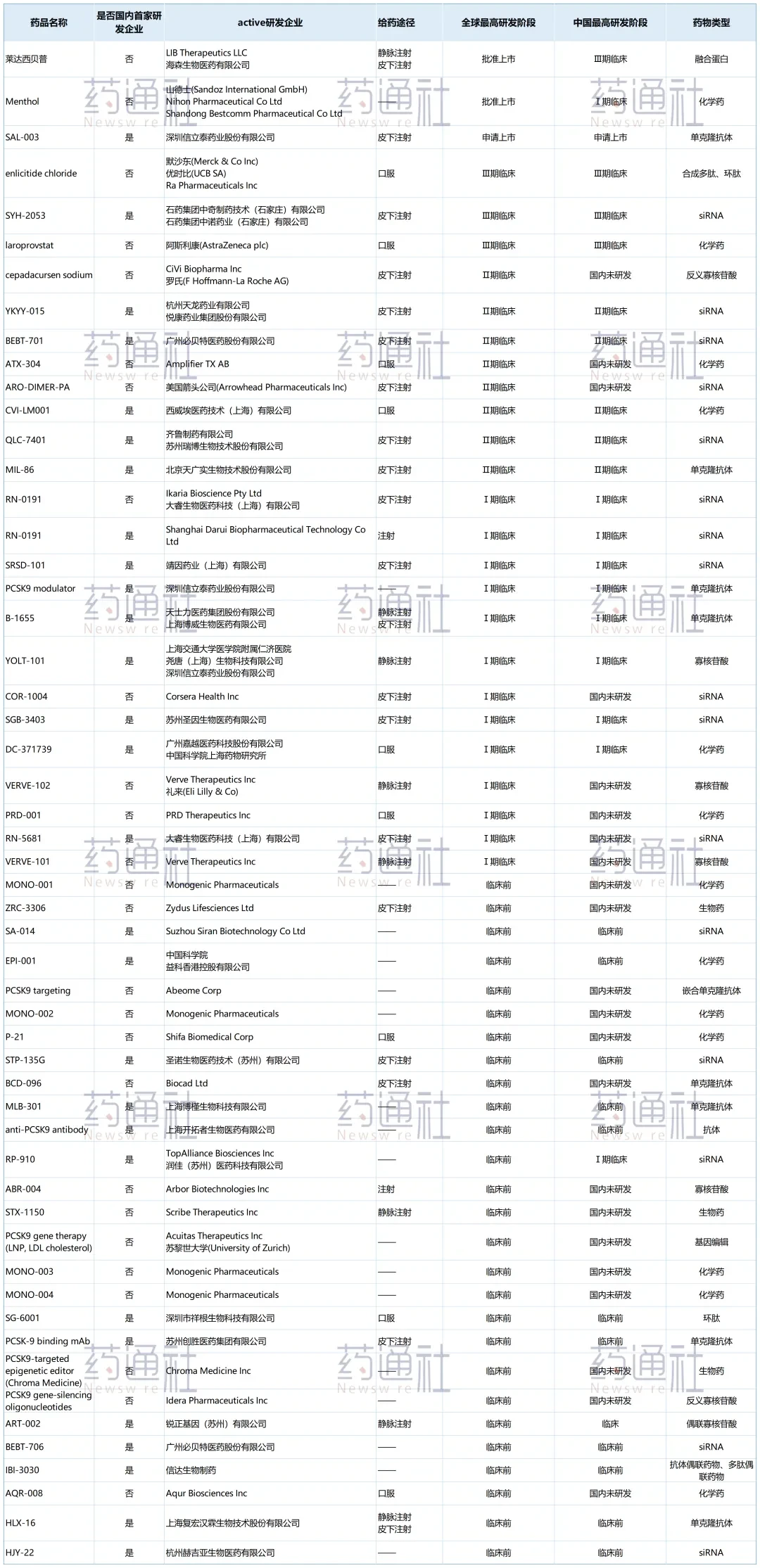
Currently, inclisiran poses a significant threat to competing monoclonal antibodies. This is intuitively reflected in the data: in 2025, despite not being included in the National Reimbursement Drug List, inclisiran achieved sales exceeding RMB 200 million.Currently, these several productsAll PCSK9 inhibitors have been included in the national medical insurance, with reimbursement for all four drugs officially commencing in 2026, marking the onset of genuine competition.Competition among companies with marketed lipid-lowering injections is intensifying, while new entrants continue to emerge. Everest Medicines, AstraZeneca, and Qilu Pharmaceutical are still focused on the development of injectable PCSK9 inhibitors, whereas Merck & Co. and AstraZeneca have already begun researching oral PCSK9 inhibitors.Source: Hongxing Capital BureauNote: This article is for popular science purposes only and does not constitute medical advice.

↓⭐Follow YaoTongShe to gain insights into industry trends↓