Ipsen to Acquire Kartos Therapeutics for Up to $1.75 Billion to Strengthen Late-Stage Oncology Pipeline with Navtemadlin

Ipsen
Biopharmaceutical Manufacturer

Kartos Therapeutics
Biopharmaceutical Company

Amgen
Developer of Treatment Drugs for Serious Diseases
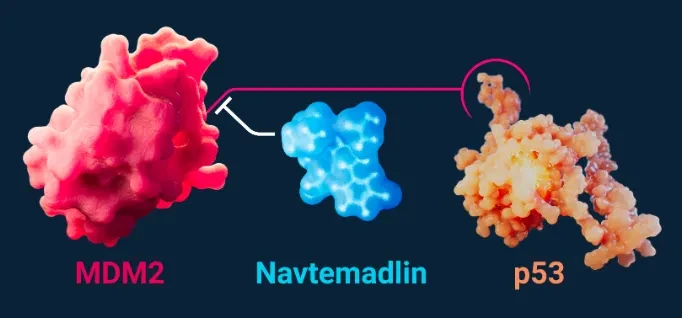
On June 29, Ipsen and Kartos Therapeutics announced that they had entered into a definitive merger agreement, under which Ipsen has agreed to acquire Kartos for a total consideration of $1.75 billion. This acquisition secures navtemadlin, an MDM2 inhibitor in Phase 3 clinical development, designed to restore the natural tumor-suppressor function of p53, a key tumor suppressor in myelofibrosis. Data indicate that navtemadlin holds strong therapeutic potential as an add-on therapy for patients with intermediate- to high-risk TP53 wild-type (wt) myelofibrosis who have had an inadequate response to the standard treatment ruxolitinib. In April this year, Eli Lilly acquired a next-generation JAK inhibitor developer for $2.3 billion.Ajax Therapeutics, thereby obtaining targeted therapy for myelofibrosisOnce-daily oral Type II JAK2 inhibitorAJ1-11095。($2.3 Billion! Eli Lilly Acquires Ajax Therapeutics)As of prior to the acquisition,KartosHas accumulated approximately in financing$265 million,Major Investors: IncludingSR One 、Amgen、OrbiMed 、 Quogue Capital, Fidelity, BlackRock, etc.


Under the terms of the Agreement and Plan of Merger, Ipsen will make an upfront payment of $450 million at closing through its wholly owned subsidiary. Shareholders of Kartos Therapeutics are also eligible to receive up to $1.3 billion in additional milestone payments, including significant regulatory approval milestones and sales-based milestones.
Ipsen CEO David Loew stated:“This acquisition further strengthens our late-stage oncology portfolio, reflecting our continued focus on delivering transformative therapies for cancer patients. We are excited about the potential of navtemadlin to define a new treatment paradigm for patients with myelofibrosis who have had an inadequate response to current standards of care, addressing critical unmet needs and providing new treatment options as early as 2028.”
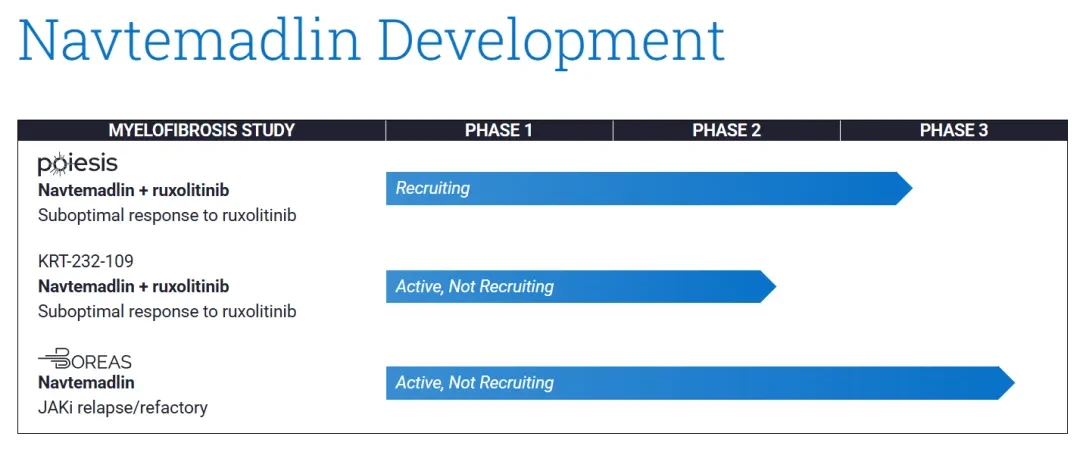
The current standard of care isRuxolitinibImprove splenomegaly and myelofibrosis-related symptoms. However, a significant proportion of patients are resistant toRuxolitinibpoor response, leading to treatment discontinuation.RuxolitinibPatients who discontinue treatment have a poor prognosis, with a median overall survival of approximately 1–2 years. Navtemadlin is currently being evaluated in the global Phase III POIESIS trial, which aims to enroll more than 600 patients across over 250 sites as standard-of-care therapy.Ruxolitinibas an adjunctive therapy for the treatment ofRuxolitinibPatients with intermediate- and high-risk TP53 wild-type (TP53wt) myelofibrosis who have suboptimal response. This trial builds upon early clinical evidence, including a Phase Ib/II trial (KRT-232-109), in which the addition of navtemadlin to standard therapyRuxolitinibDemonstrated clinically meaningful and disease-improving activity in patients with myelofibrosis who had a suboptimal response. Data presented at the 2023 European Hematology Association Congress showed that at Week 24,RuxolitinibAmong patients with suboptimal response (n=19), 42% achieved a reduction in spleen volume of at least 25%, 32% achieved a reduction in spleen volume of at least 35%, and 32% demonstrated an improvement of at least 50% in total symptom score. These data also indicate the potential disease-modifying activity of navtamedlin, with 71% of evaluable patients (n=7) achieving a ≥20% reduction in driver mutation allele frequency at Week 24, and 57% showing an improvement in myelofibrosis grade by ≥1 level.
Srdan Verstovsek, M.D., Chief Medical Officer of Kartos Therapeutics, stated:“As a clinician who has treated more than 1,000 patients with myelofibrosis, I have witnessed firsthand that despite receivingRuxolitinibThere is a significant gap in the care of patients with myelofibrosis who remain symptomatic or have persistent splenomegaly despite treatment. Navtemadlin has the potential to enhance the current standard of care through an additive approach, aiming to transition poorly responding patients into the clinical responder group by optimizing management. We believe this innovative treatment paradigm can meaningfully improve patient outcomes while avoiding unnecessary overtreatment in those who are already responding well.
John Mascarenhas, Professor of Medicine at the Icahn School of Medicine at Mount Sinai and Director of the Center of Excellence for Blood Cancers and Myeloid Disorders, stated:“Myelofibrosis remains a serious and rare cancer associated with a significant symptom burden and progressive splenomegaly that severely impacts quality of life. Combining navtamedlin with”Ruxolitinib“The clinical rationale for combination use is highly compelling, with new data indicating synergistic potential in deepening responses and addressing the underlying biology of the disease.”
Dr. Pankit Vachhani, Associate Professor of Medicine and Director of the Clinical Research Division at the University of Alabama at Birmingham, and Global Principal Investigator for POIESIS, stated:“The Phase III POIESIS trial has the potential to redefine how we treat patients with myelofibrosis. This is the largest trial conducted for this disease, designed to reflect real-world clinical practice. The trial evaluated how the addition of navtamedlin provides more clinically meaningful and durable responses, thereby addressing critical unmet needs. I amnavtamedlinExcited about the prospect of providing disease-modifying benefits, ushering in an era of rational combination therapies for those who respond poorly to standard treatments, and targeting the bone marrowFibrosiscomplementary disease pathways beyond JAK inhibition.”
This late-stage transaction is expected to contribute to Ipsen’s core operating income starting in 2029, with limited dilution within the full-year 2026 guidance. The transaction is anticipated to close by the end of the third quarter of 2026, subject to customary closing conditions, including the expiration of the waiting period under the Hart-Scott-Rodino Antitrust Improvements Act.