

Leading Domestic Radiotherapy Positioning Consumables Maker Surges 190% at IPO Debut

Klarity
Medical Consumables and Equipment Developer
Today, Klarity listed on the Beijing Stock Exchange (BSE) for its initial public offering (IPO). As of press time, its share price stood at 45.3 yuan, representing a 190% increase from the issue price of 15.62 yuan stated in its previous prospectus.
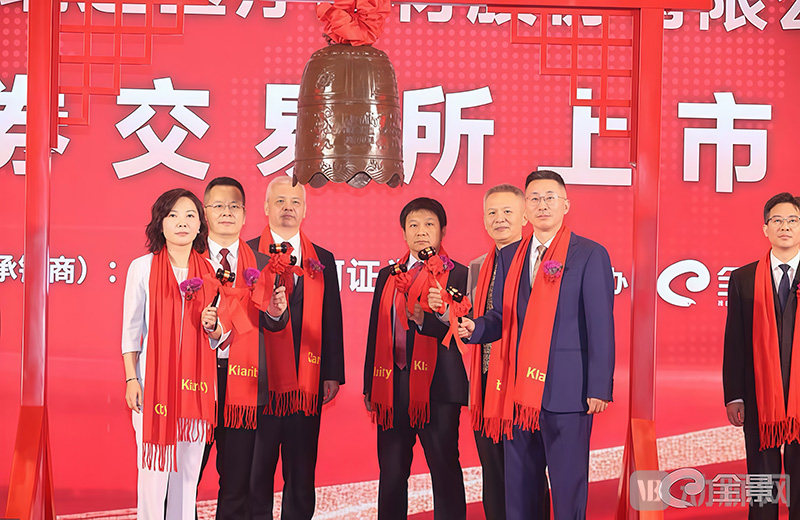
Klarity's IPO Bell-Ringing Ceremony (Image source: Panorama Finance)
Hidden within Klarity's prospectus, which spans over 400 pages, lies a niche market largely overlooked by most: consumables for radiotherapy positioning. Simply put, these thermoplastic materials secure tumor patients on the radiotherapy table, ensuring that radiation beams precisely target the lesion with each treatment.
This niche market may not be large, but it is highly specialized. Within this segment, Klarity has captured a 42.5% share of the Chinese domestic market and ranks third globally, trailing only Belgium's Orfit and the US-based CQ Medical. The key instrument that enabled Klarity to break into this market was a membrane with an optimized material formulation.
The story begins more than twenty years ago.
At the turn of the millennium in 2000, when Zhan Deren and his wife Li Li founded Klarity in Guangzhou, it was merely an agent for the U.S. company Larson, with its primary business being the sale of Larson's low-temperature thermoplastic materials to domestic hospitals that manufactured rehabilitation braces.
At that time, the entire market for radiotherapy positioning consumables was firmly controlled by Orfit and CQ Medical, which accounted for the vast majority of market share. Meanwhile, all positioning films used by medical institutions in China were imported products.
At that time, radiotherapy positioning masks were still in the era of polycaprolactone (PCL). This material has a short shaping window and a cooling shrinkage rate as high as 1.27%, causing significant pressure on patients after molding and easily leading to stress-induced movements. In radiotherapy scenarios requiring millimeter-level precision, this figure means that even slight skin movement by the patient during treatment can cause the radiation beam to deviate from the target area's edge.
The turning point came in 2003, when Klarity's management made a strategic assessment: while the rehabilitation market had limited capacity, radiotherapy would continue to grow steadily with the widespread adoption of cancer treatment in China. Most importantly, the underlying manufacturing processes for thermoplastic materials could be leveraged across applications. By achieving breakthroughs at the material level, Klarity could bypass the dominance of imported products and fundamentally address clinical pain points that had previously remained unresolved.
This judgment carried a significant stake. Klarity spent a full four years on the research and development of polyurethane-modified thermoplastic materials.
In 2009, Klarity launched the world's first polyurethane radiotherapy immobilization mask. The shaping window was significantly extended from just over 40 seconds for imported products to 85–98 seconds. This additional time window of several dozen seconds meant that technologists no longer needed to rush to complete the shaping before the material cooled, substantially improving operational tolerance.
Meanwhile, the cooling shrinkage rate of the new material decreased from 1.27% to 0.73%. For patients lying on the radiotherapy table, this difference of less than one percentage point could mean the distinction between radiation missing its target and precisely targeting the tumor.
Upon its launch, this innovative positioning membrane gained recognition from top-tier oncology institutions such as the MD Anderson Cancer Center and Mayo Clinic in the United States, breaking the monopoly of foreign manufacturers in the high-end market and earning the Second Prize for Technological Invention in Guangdong Province. Since then, Klarity has transformed from a distributor into a genuine technology-driven enterprise, simultaneously establishing three major technical platforms: basic materials, product applications, and intelligent devices.
As of the signing date of the prospectus, Klarity Medical & Equipment (Gz) Co., Ltd. held a total of 148 patents, including 47 invention patents. The company also took the lead in formulating two industrial standards: Immobilization Devices for Radiotherapy Part 1: Thermoplastic Mask (YY/T1547.1—2017) and Immobilization Devices for Radiotherapy Part 2: Vacuum Cushion (YY/T1547.2—2017). It is the only domestic enterprise equipped with dual production lines covering both radiotherapy consumables and intelligent radiotherapy positioning systems.
However, while breakthroughs in materials address product-related challenges, another test arises from shrinking profit margins.
Klarity's financial data presents a typical profile of “high gross margins, slow growth.”
From 2023 to 2025, its operating revenue rose from RMB 238 million to RMB 315 million, representing a two-year compound annual growth rate of approximately 15%. Though the growth pace is not rapid, performance remains steady. Notably, the company's overall gross profit margin stayed consistently above 60% throughout the three-year period. Within the medical device sector, a gross margin of 50% is already considered favorable for consumables manufacturers; a figure exceeding 60% signifies strong technical premium and robust channel control power.
However, a signal emerged in 2025: its revenue grew by 10.48%, while its net profit attributable to shareholders of the parent company declined by 4.73% year-on-year. The reasons were outlined in the risk factors section of the prospectus. Three of its construction projects funded by the offering have been partially completed and put into production, resulting in an annualized increase in depreciation of RMB 11.7497 million. Once all projects reach full production capacity, the annual depreciation could amount to as much as RMB 16.97 million, reducing net profit by one-quarter.
This is not a one-time impact. The annual depreciation of fixed assets may continue to squeeze the income statement for several years to come. Meanwhile, consumables for radiotherapy positioning have been included in the transparent online price negotiation platforms in multiple provinces, leading to a continuous decline in terminal prices.
Looking upstream, its raw material, polycaprolactone (PCL), is primarily sourced from Ingevity in the UK, with procurement accounting for 20–31% over the past three years, representing a significant cost. In 2024, Klarity introduced domestic suppliers; however, the stability of domestically produced materials still requires long-term clinical validation, and cost pressures are not expected to ease in the short term.
Upstream prices may rise, downstream prices may be squeezed, and fixed depreciation remains in the middle. This cost structure will also test Klarity's proud 60% gross margin.
If we focus solely on the Chinese market, Klarity is a niche leader with a 42.5% market share. However, taking a global perspective reveals a more compelling picture. Its overseas revenue has accounted for approximately 30% of its core business for three consecutive years. Its products are exported to over 80 countries and regions, covering six of the top ten cancer hospitals worldwide and eight of the top ten specialized oncology hospitals in China. Furthermore, Klarity maintains deep strategic partnerships with mainstream radiotherapy equipment manufacturers such as United Imaging Healthtech, Siemens, GE, and Philips.
However, the situation changed starting in February 2026. Due to geopolitical factors, exports of finished radiotherapy products from China to the United States became subject to an additional 35% tariff, while raw materials such as cryogenic plates faced an additional 17.5% tariff. Although revenue from the U.S. market accounts for approximately 9% of the company's total business revenue—a proportion that is neither negligible nor dominant—the substantial increase in tariffs has directly eroded a significant portion of its overseas gross profit margin.
According to the prospectus, Klarity's growth logic is clear. First, the adoption of precision radiotherapy in domestic tertiary hospitals is accelerating; the expansion of primary-care hospitals is unlocking incremental demand in lower-tier markets; radiotherapy penetration rates are steadily rising; and the potential for replacing existing imported positioning consumables is substantial.
In overseas markets, the SGRT optical tracking system has obtained FDA and CE certifications. As a high-end product that breaks the monopoly held by foreign equipment manufacturers, its unit price far exceeds that of consumables, positioning it to create new growth opportunities.
Furthermore, the rehabilitation needs of China's 460 million-strong population requiring rehabilitative care are substantial. Demand for scoliosis management and foot-spine correction is being increasingly realized, and homologous low-temperature thermoplastic material technology can also be applied to 3D-printed braces and functional insoles. Of course, competition in this market segment is also intense, and price wars may erode the profitability of this business.
Can the net proceeds of RMB 199 million raised in this IPO alleviate these issues? Can capacity expansion outpace depreciation? Can the rehabilitation business deliver profits after the channel investment phase? Is the overseas rollout speed of the SGRT system sufficiently rapid?
According to the prospectus, the couple of controlling persons Zhan Deren and Li Li collectively hold 64.93% of the voting rights through platforms including Lijin Technology, Huaxinghai and Ertekang, resulting in an extremely high concentration of equity.
The prospectus of Klarity serves as a representative case study of domestic medical device manufacturers, featuring prominent strengths alongside stark weaknesses. In fact, most "specialized, sophisticated, unique and innovative" little giant enterprises in China's medical device industry face identical circumstances. Operating in niche segments long monopolized by foreign brands, they carve out market space through breakthroughs in core underlying technologies and secure leading domestic positions. While benefiting from technical premiums, they simultaneously endure dual pressures from regulatory policies and supply chain constraints. Their sustained growth hinges on two key factors: the depth of their technical moat, and whether their cash flow can sustain operations until their second growth driver matures.
For Klarity, the next critical juncture will be 2027–2028. If all goes well, its three major fundraising investment projects will reach full production capacity by then, bringing depreciation to its peak; whether the rehabilitation business can deliver scaled profits; and whether the SGRT system can achieve significant volume growth overseas. These factors will collectively determine whether this hidden industry leader can successfully navigate the cycle and complete its strategic leap.
Over the past two decades, radiotherapy has gradually evolved from a scarce medical resource to one where linear accelerators are being deployed in county-level hospitals. However, inaccurate patient positioning renders even the most advanced linear accelerators ineffective.
Within this industrial chain, Klarity safeguards the most unassuming yet indispensable link. It may not be glamorous, but it is difficult to replace. This is perhaps the true significance of domestic substitution.