

From Ophthalmic Neuromodulation to Visual Brain-Computer Interface: Super Vision Technology's i-NYS Launched and Series D Financing Completed
Super Vision
Ophthalmic Disease Treatment Product Developer

Beyond Ventures
Venture Capital Fund

Guokai Technology Venture Investment
National-Level Science and Technology Innovation Investment Institution

Lapam Capital
Venture Capital Institutions in the Biomedical Field
In March 2026, the world's first therapeutic device for congenital nystagmus, the "i-NYS Implantable Ocular Muscle Neurostimulator," developed by Super Vision Technology, was approved for market launch in China, ushering in a new era of clinical treatment for what has been termed an "incurable disease" in ophthalmology. Leveraging its continued breakthroughs in visual brain-computer interface technology, Super Vision Technology completed Series B, Series C, and Series D financing rounds successively between 2025 and 2026, raising a cumulative total of several hundred million RMB.
In 2025, the company completed its Series B financing round, co-led by Aibo Qingshi and Lapam Capital, with follow-on participation from Chang Development and existing shareholder Dalian Xingweilai Fund. Entering 2026, the financing pace further accelerated: the Series C round was successfully completed early in the year, co-led by Hong Kong Investment Corporation Limited and Beyond Ventures, with continued participation from existing shareholder Canglin Investment. In May of the same year, the company secured its Series D financing round, led by Aibo Hongsheng Fund, in which existing shareholder Aibo Medical participated, and also introduced prominent institutions such as the Beijing Medical and Health Industry Investment Fund and Guokai Kechuang, with existing shareholders Lapam Capital and Zhongzhi Zhonghe also increasing their investments.
From Series B to Series D, the continued follow-on investments from existing shareholders and the successive entry of new institutions fully demonstrate the market's long-term confidence in Super Vision Technology's technological direction and growth potential. The funds raised in this and previous rounds will be used to comprehensively accelerate the company's research and development in visual brain-computer interface technology, and to provide strong support for the in-depth advancement of its globalization strategy.

As a cutting-edge field at the deep intersection of life sciences and information technology, brain-computer interface technology is leading a fundamental transformation in human-computer interaction and has become a future industry that countries around the world are actively vying to develop. In China, the strategic importance of this industry has also been elevated to the top-level policy design. At the end of 2025, "brain-computer interfaces" were officially incorporated into China's Fifteenth Five-Year Plan, clearly positioned as one of the six major future industries, entering a phase of rapid development driven by national strategy.
Driven by this momentum, visual brain-computer interface technology, a subfield based on brain-computer interfaces, is accelerating its transition from a scientific concept within the laboratory to exploration and practice in clinical reality. Super Vision Technology has been deeply engaged in the field of visual brain-computer interfaces for many years, with long-term dedication to the research and development of neuromodulation technologies, and is the first enterprise in China to launch ophthalmic neuromodulation products.
The "i-NYS Implantable Ocular Muscle Neurostimulator," independently developed by Super Vision Technology, is the world's first Class III active implantable medical device for the treatment of congenital nystagmus. This product delivers electrical stimulation to the neuromuscular interface of the extraocular muscles to inhibit abnormal neural impulses in patients, thereby effectively alleviating the symptoms of nystagmus.
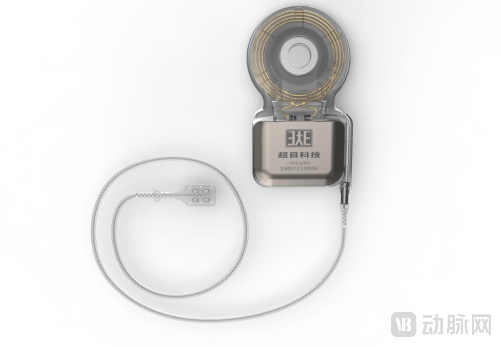
i-NYS Implantable Ocular Muscle Nerve Stimulator, image source: Super Vision
In January 2024, i-NYS was granted access to the National Medical Products Administration's "green channel" for innovative medical devices. Recently, the product has officially obtained both a Class III medical device registration certificate and a medical device production license from the National Medical Products Administration. Prior to this, i-NYS had already received Humanitarian Use Device designation from the United States Food and Drug Administration in June 2025. Leveraging the company's forward-looking international expansion strategy, this innovative product is expected to benefit more patients worldwide in the future.
According to data published by China Central Television, China has the largest population of visually impaired individuals in the world. As of 2023, the number of people with visual disabilities in China was approximately 17.3 million, accounting for about 18% of the global visually impaired population. Globally, approximately 1.2 billion people were living with some form of visual impairment in 2020, of whom at least 43 million were blind. Of greater concern is the fact that the risk of vision loss increases significantly with age. Against the backdrop of continued global population aging, visual health has become a worldwide public health challenge.
Among these tens of millions of visually impaired individuals, a considerable proportion have conditions resulting from neural tissue damage, which are difficult to address with conventional ophthalmic correction methods or surgical interventions. Faced with this heavy and intractable disease burden, a frontier scientific question has been brought to the forefront: can direct electrical stimulation of the brain's visual cortex restore sight to the blind?
In 2025, Super Vision Technology officially unveiled its independently developed domestic-first visual reconstruction brain-computer interface product—the "Implantable Visual Cortex Spatiotemporal Interference Neurostimulator." This product delivers spatiotemporal interference electrical fields to the visual cortex through implanted electrodes, with the potential to restore partial functional vision in patients with irreversible blindness, reopening their window to the world.
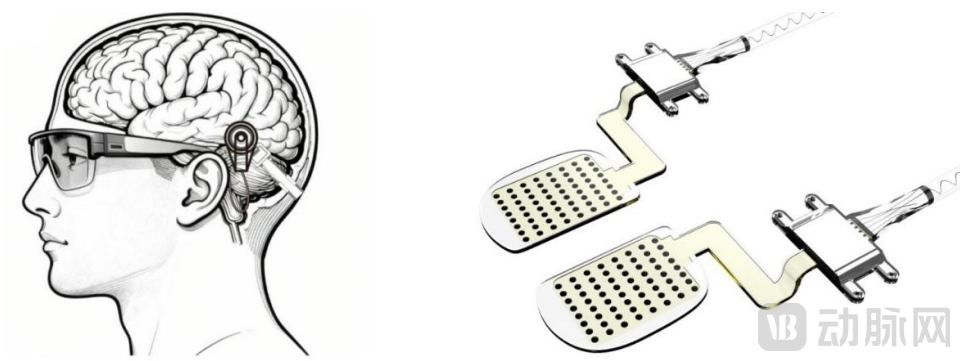
Implantable Spatiotemporal Interference Neural Stimulation System for the Visual Cortex, image source: Super Vision
The Implantable Visual Cortex Spatiotemporal Interference Neurostimulator developed by Super Vision Technology employs an innovative spatiotemporal interference electrical field technology, which breaks through the limitations of traditional visual restoration approaches and establishes a novel mapping system based on "animal electroencephalographic recording, relay transmission, and stimulation parameter execution," delivering significant technological, industrial, and social value. Compared with existing visual restoration technologies, this technology offers the following notable advantages:
Broader indications: It does not depend on residual retinal function, making it applicable to a wider range of blindness-causing ocular diseases;
More precise stimulation: Through the innovative spatiotemporal interference electrical field, it achieves precise modulation of neurons in the visual cortex;
Higher safety: Compared with Neuralink's brain-computer interface technology, it does not penetrate the dura mater, resulting in minimal invasiveness and significantly reducing the risk of tissue damage.
Professor Wang Lejin, founder of Super Vision Technology and affiliated with Peking University People's Hospital, stated: "Our goal is to use visual cortex brain-computer interface technology to enable blind patients to regain functional vision, helping them perform daily activities such as independent walking and reading."
Currently, this project has been selected in 2025 for the "2025 Artificial Intelligence Medical Device Innovation Task List and Leadership Initiative" jointly launched by the Ministry of Industry and Information Technology and the National Medical Products Administration, and has also received special support from the Beijing Municipal Bureau of Economy and Information Technology under the "Innovation for the Future" program. It has gained national-level recognition for its technological originality, clinical urgency, and industrial foresight, positioning Super Vision Technology as one of the representative forces at both the national and local levels that are being prioritized to support breakthroughs in core technologies.
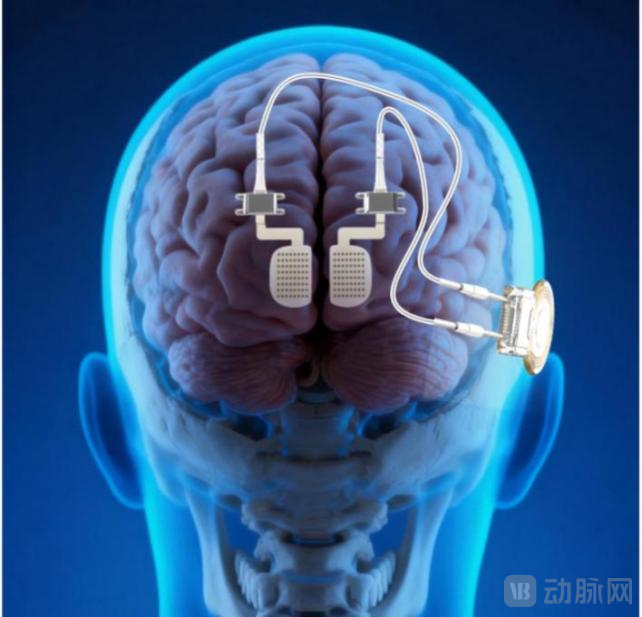
Implantable Spatiotemporal Interference Neurostimulation Technology for the Visual Cortex, Image Source: Super Vision
It is worth noting that the company has accumulated extensive experience and deep technological know-how in areas including acquisition and stimulation chip design, electrode development and precision manufacturing, as well as system integration of Class III active implantable neuromodulation devices. Through sustained technological efforts, Super Vision Technology has successfully overcome critical challenges such as integrated circuit miniaturization, precision machining of platinum-iridium alloy electrodes, and the application of biocompatible materials. The company has also obtained multiple national invention patents and Patent Cooperation Treaty international patents, establishing a high technological moat and laying a solid foundation for the subsequent mass production of implantable neuroelectrical stimulation devices.