

Big Pharma Spends $134 Billion in Six Months: Racing Against Time to Secure Late-Stage Assets

GSK
Pharmaceutical R&D Manufacturer

Nuvalent
Targeted Therapy Drug Developer
This is AbbVie’s largest acquisition in over five years. What it has its sights on isApogeeWith a focus on atopic dermatitisLong-actingIL-13Pipeline, a potential future challengeDupixentcandidate drugs.
Two weeks ago,GSKJust used106Acquired for hundreds of millions of USDNuvalent, securing two targeted lung cancer drugs in its portfolio. Eli Lilly has also been active, acquiring a non-opioid pain medication company.4E Therapeuticsafter, this is already Eli Lilly2026announced in the year11Pen acquisition.
These transactions are not the result of impulsive decisions by a few major pharmaceutical companies.
According toSTATStatistics,2026In the first six months of the year, globally there have already occurred33Valuation exceeds10hundred million USDBiotechAcquisition, total amount approximately1340hundred million U.S. dollars.2025For the entire year, this figure is26Pen,1120100 million USD.
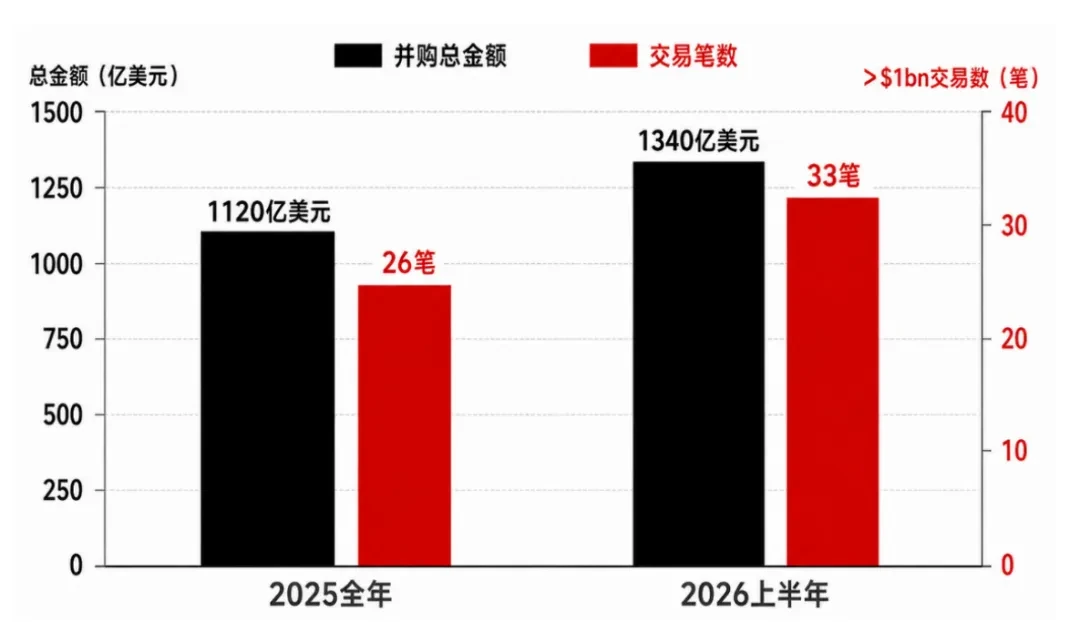
In other words, with only half of the year elapsed, pharmaceutical companies have already exhausted their full-year M&A budgets from last year, and then some.220hundred million USD.
On the surface,BiotechGood times seem to have returned.
But1340Behind the hundreds of millions of dollars, the real question to answer is not why pharmaceutical companies have suddenly become wealthy, but rather another: Why are they suddenly unwilling to wait?
01
Big Pharma Starts Spending Money to Buy Time
The growth of pharmaceutical companies is determined by two clocks.
One is the commercial clock. The launch of blockbuster drugs, sales ramp-up, and patent expiration are largely predictable. Once a core product loses market exclusivity, generics and biosimilars rapidly enter the market, potentially causing a swift decline in sales.
The other is the R&D clock. It is far less punctual.
From the discovery of a target to the approval of a new drug, it often takes more than ten years. Success in early-stage experiments does not guarantee efficacy in humans; promising Phase II data does not ensure success in Phase III trials; and even if clinical trials are successful, challenges may still arise during regulatory review, manufacturing, or commercialization.
The patent cliff arrives on schedule, but new drugs never graduate on time.
This is preciselyBig PharmaThe most anxious part.
They may have cash on hand, clinical teams, global regulatory capabilities, and established sales networks, but these resources cannot instantly mature a project that has just entered clinical development. If the internal pipeline cannot fill the revenue gap in time, the only way to significantly compress timelines is to acquire a company that has already completed the first half of the journey on their behalf.Biotech。
GSKAcquisitionNuvalentThis is a typical case.
Nuvalentbrings not merely a technical concept confined to the laboratory, but one that has already enteredFDAMarketing Authorization Reviewtwo modelsTargeted Drugs for Lung Cancer(Next GenerationALKInhibitorNeladalkib、ROS1InhibitorZidesamtinib)。GSKThe transaction announcement explicitly stated that this acquisition is expected to create new near-term sales growth opportunities, and from2027began to improve profit contribution.
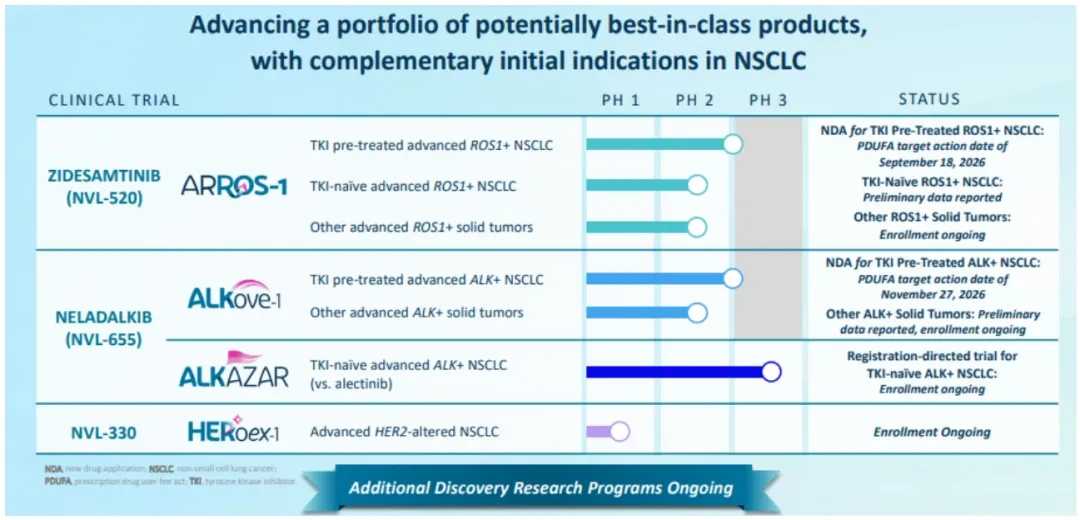
Nuvalentof3Oncology Pipeline
106The hundreds of millions of dollars spent were not just for the acquisition of two drugs, but alsoNuvalentTime for completed clinical development.
AbbVie AcquisitionApogeeThe same logic applies. AbbVie is not short of immunology drugs, but it needs to continuously replenish its next-generation products to maintain its long-term advantage in the immunology market. Rather than cultivating a new project from scratch, it is better to directly acquire a pipeline that has already entered clinical validation.
Therefore, the core commodity in this wave of mergers and acquisitions is neither companies nor entirely technology. What large pharmaceutical companies are truly purchasing is time.
02
Buyers Are No Longer Willing to Pay for Stories
Previous RoundBiotechDuring boom periods, merely possessing a popular technology platform offered companies the opportunity to achieve high valuations.
Gene Therapy, Cell Therapy,mRNA、AIPharmaceuticals, protein degradation: many companies have secured substantial financing based on the perceived potential of their platforms, despite lacking clinical data.
But2026This year’s buyers are noticeably more pragmatic.
They are no longer focused solely on what this technology might achieve in the future, but rather on how close this drug is to market launch.
Therefore, the most sought-after assets typically share several common characteristics: they have already obtained human data, are in the mid-to-late stages of clinical development, target indications with sufficiently large markets, can be integrated into the acquirer’s existing clinical and commercial infrastructure, and offer the potential to generate revenue within a few years.
This is also why this year’s large-ticket transactions have been concentrated in mature therapeutic areas such as oncology, immunology, metabolism, and neuroscience.
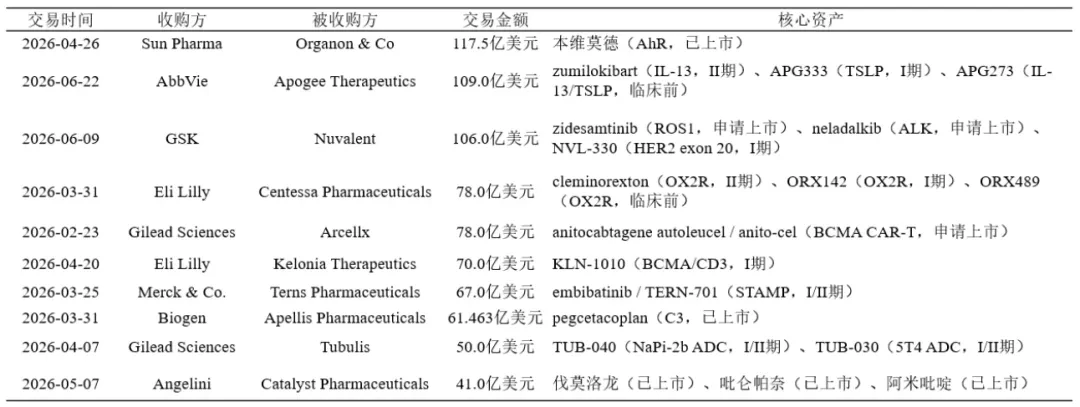
2026H1ofTop 10Mergers and Acquisitions Transactions
Although competition in these fields is fierce, the patient population size, reimbursement pathways, and business models are relatively clear. For large pharmaceutical companies, acquiring a lung cancer drug nearing regulatory approval offers a far more calculable return on investment than purchasing an unvalidated platform.
Eli Lilly’s consecutive acquisitions also illustrate this point.
Weight-loss drugs have generated strong cash flow and market capitalization for Eli Lilly, but the company has not pinned all its hopes on continuing to bet onGLP-1Above. It is continuously acquiring in the fields of pain, oncology, neuroscience, and immunological diseases, using existing growth to seed the next round of expansion.
Acquisition4E Therapeutics, what Eli Lilly has its sights on is a portfolio of oral, non-opioid medications for chronic pain. While they may not become the next blockbuster weight-loss drug, the pain market is sufficiently large, and there is a clear clinical need for non-opioid therapies.
This round of mergers and acquisitions has givenBiotechThe signal is clear: while compelling science remains important, scientific merit alone is no longer sufficient. Buyers are willing to pay a premium for certainty partially validated by clinical data, shorter time-to-market pathways, and products that can be rapidly absorbed by existing commercial systems.
The Valuation Standards for the Innovative Drug Market Are Shifting from How Novel the Technology Is to How Much Risk Has Been Mitigated.
03
M&A Rebounds
≠BiotechSpring Has Arrived
33A multi-billion-dollar acquisition easily creates an illusion:BiotechThe industry has fully recovered.
But the reality is not so optimistic.
On one side, large pharmaceutical companies are writing checks worth billions of dollars; on the other, there are still numerousBiotechLayoffs, pipeline cuts, fundraising efforts, and even company sales. Capital has not returned evenly to all enterprises; instead, it is increasingly concentrated in a select few projects with mature data.
High-quality assets are becoming increasingly expensive, while ordinary assets are becoming harder to sell.
This is not a broad-based recovery across the entire industry, but rather a further intensification of industry divergence.
For the few companies with late-stage pipelines, it may be a rare seller’s market. Several large pharmaceutical companies are simultaneously seeking growth assets, which can easily drive up transaction prices. However, for companies that only have early-stage platforms, lack human data, or whose clinical results lack differentiation, buyers have more options. They can wait, negotiate lower prices, or simply skip the deal.
Therefore,1340hundreds of millions of dollars does not mean the capital winter is over.
More accurately, the capital winter has merely changed its form: the money has not disappeared, but the channels to access it have become narrower.
On one end are the few star assets fiercely contested by large pharmaceutical companies; on the other are the numerous ordinary ones still striving to extend their cash runway.Biotech。
Capital is sending the most direct message to the industry:
Not all innovations are valuable; only those that save buyers time and reduce risks have the potential to command high prices.
04
Buying More Does Not Mean Buying Right
Mergers and acquisitions can shorten R&D timelines but cannot circumvent biological risks.
Pfizer is the most direct reminder.
2023year, Pfizer spent430$100 million acquisitionADCLeading CompanySeagen, aiming to rebuild its oncology business and gain access to matureADCR&D Platform.
But2026Year6In [Month], Pfizer announcedsigvotatug vedotinPhase III Results. This is an acquisitionSeagen, the first to disclose pivotal clinical dataADC. The results showed that the drug failed to significantly improve overall survival compared with docetaxel in previously treated patients with non-squamous non-small cell lung cancer, and the trial did not meet its primary endpoint.
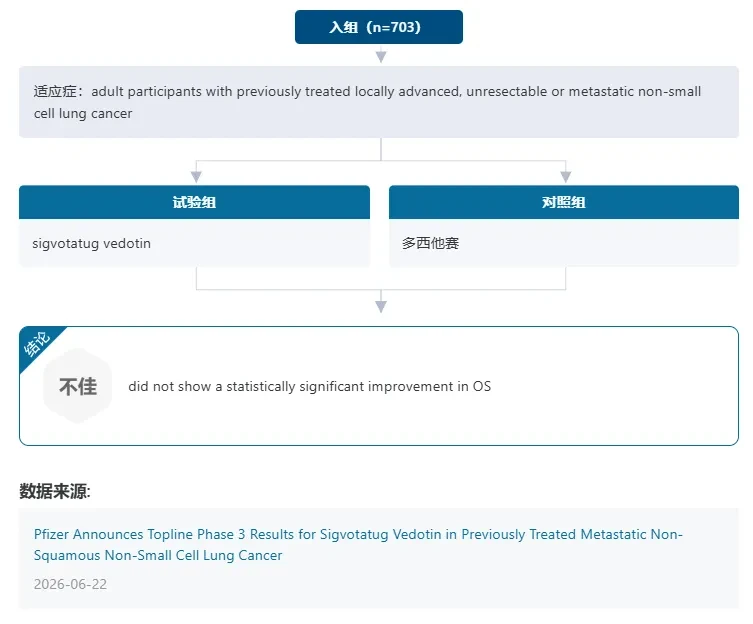
sigvotatug vedotinofIIIStageToplineData
430Hundreds of millions of dollars can buy a technology platform, several marketed products, and an R&D team, but it cannot buy a guarantee of clinical success.
This is also the most easily overlooked aspect of the M&A boom.
Pharmaceutical Company AcquiresBiotech, it does not eliminate the risk, but rather transfers the risk from“Can candidate drugs be identified?”, transferred to“Can the candidate drug pass clinical, regulatory, and commercialization stages?”。
The higher the transaction amount, the greater the requirements for future sales. If a core project fails, the buyer will not only bear the R&D losses but may also face goodwill impairment, pipeline contraction, and strategic adjustments.
Today’s star deals may end up on the impairment list in a few years.
Even so, major pharmaceutical companies will continue to make purchases.
For them, the risk of making a wrong acquisition is high, but the risk of not acquiring anything at all may be even higher. Patents on core products will expire, revenue gaps must be filled, and capital markets will not wait indefinitely for internal R&D to deliver results.
Mergers and acquisitions are not the safest option, but they may be the fastest among the remaining choices.
Final Remarks
Half a year1340hundred million USD, it seems that capital has regained confidence in innovative drugs.
But it is more likeBig PharmaA premium paid for anxiety.
As the patent cliff looms ever closer and internal R&D cannot guarantee the timely delivery of the next blockbuster drug, major pharmaceutical companies are forced to take their cash reserves into the market to acquire completed experiments, clinical data, and development timelines from others.
What this wave of mergers and acquisitions truly proves is not how wealthy pharmaceutical companies are, but how expensive time has become.
Big PharmaIt’s not that they’ve suddenly become wealthier. They’re just running out of patience.
Ref
https://www.statnews.com/2026/06/22/pharma-biotech-ma-boom-2026-deals-total-123-billion/
https://nextpharma.pharmcube.com/
https://www.fiercebiotech.com/biotech/fierce-biotech-layoff-tracker-2026
https://investors.nuvalent.com/
https://www.pfizer.com/news/press-release/press-release-detail/pfizer-announces-topline-phase-3-results-sigvotatug-vedotin

Click "Pharmadl" below”, for more exciting content
Disclaimer
The WeChat Official Account push rules have changed yet again. If you don’t click"Seen"Or not set to"Starred", we might just fade into the vast sea of literature~ Click here to make sure you don't miss the latest updates from Yaodu! ???