CE Certification Secured: Penumbra's THUNDERBOLT™ System Adds New Momentum to Boston Scientific’s $14.5B Acquisition

Penumbra
Developer of Treatment Devices for Stroke and Other Neurovascular Diseases

Boston Scientific
Medical Device Manufacturer

Recently, a leading global company in the fields of thrombectomy and neurointerventional proceduresPenumbra Announces CE Mark Approval for Its THUNDERBOLT™ System in the European Union. Just days earlier, the system received U.S. FDA 510(k) clearance. Securing market access in both Europe and the United States in rapid succession signifies that Penumbra is further advancing computer-assisted vacuum thrombectomy (CAVT) technology into neurointerventional procedures for acute ischemic stroke.
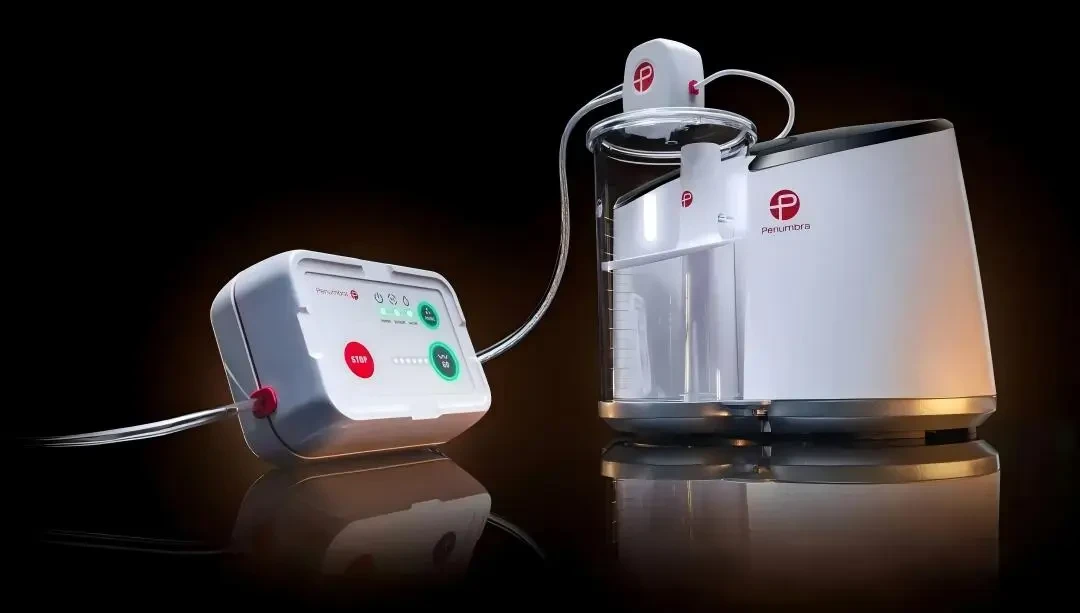
THUNDERBOLT™ System (image source: official website)
This timeThe CE certification is also noteworthy as it comes in the wake of changes to Penumbra’s capital landscape. In January this year, Boston Scientific announced its intention to acquire Penumbra at an enterprise value of approximately $14.5 billion, with one of the transaction’s objectives being entry into strategically adjacent fields such as mechanical thrombectomy and neurovascular care.
That is to say,The European market access of THUNDERBOLT is not merely a milestone in overseas registration; it also provides an additional lens through which to assess the subsequent value of this major merger and acquisition. Mechanical thrombectomy has evolved from focusing solely on “whether the thrombus can be removed” to emphasizing “whether blood flow can be restored more rapidly, more completely, and in a more controlled manner.” The technological highlights of THUNDERBOLT are closely aligned with this shift.

From"Continuous Negative Pressure" to "Dynamic Aspiration"
In its announcement, Penumbra stated that THUNDERBOLT is powered by the Penumbra ENGINE™, with its core innovation being the application of “modulated aspiration” for thrombectomy in acute ischemic stroke. A literal translation of this term as “modulated suction” would sound somewhat awkward. Based on Penumbra’s public descriptions, a more comprehensible explanation is that the system employs computer-assisted control to dynamically adjust the aspiration process during thrombectomy, rather than relying solely on a single, continuous negative pressure suction.
According toAccording to Penumbra, THUNDERBOLT can identify thrombus at the occlusion site and facilitate thrombus loosening and capture through dynamic aspiration, ultimately aspirating the thrombus into the catheter system. Compared with simple continuous negative pressure aspiration, this design aims to make the thrombectomy process more controllable.
This differs somewhat from the traditional logic of aspiration thrombectomy. Previously, aspiration thrombectomy largely depended on catheter deliverability, lumen design, negative pressure conditions, thrombus characteristics, and operator experience.THUNDERBOLT does not simply generate greater negative pressure; rather, it incorporates software algorithms and system control into the aspiration process. In other words, Penumbra aims to shift thrombectomy from a method relying solely on continuous negative pressure to one that emphasizes system-controlled aspiration.
However, regulatory approval does not equate to clinical efficacy that is comprehensively superior to existing therapies.Penumbra previously announced that enrollment for the THUNDER IDE study has been completed. This multicenter, single-arm study targets patients with acute ischemic stroke secondary to large intracranial vessel occlusion who are eligible for mechanical thrombectomy. The primary efficacy endpoints include immediate post-procedural recanalization of the target vessel. Public registry information indicates that this recanalization metric corresponds to mTICI 2b or higher.
As of now,Penumbra has not yet disclosed the full results of the THUNDER study in its CE and FDA announcements. Therefore, the assessment of THUNDERBOLT still needs to rely on subsequent clinical data, real-world usage feedback, and operational experiences from different stroke centers.

Why Do Thrombectomy Devices Continue to Iterate?
Acute ischemic stroke remains one of the significant global disease burdens. The World Stroke Organization and The Lancet· The Neurology Committee once predicted that if the prevention and control system does not improve significantly, the global number of stroke deaths may increase from approximately 6.6 million in 2020 to about 9.7 million by 2050, representing an increase of nearly 50%.
In terms of treatment, mechanical thrombectomy has become an important therapeutic approach for eligible patients with acute ischemic stroke due to large vessel occlusion.The AHA/ASA guidelines indicate that for selected patients with large vessel occlusion in the anterior circulation, mechanical thrombectomy can be extended to a longer time window under strict imaging criteria: mechanical thrombectomy is recommended for patients within 6–16 hours who meet the DAWN or DEFUSE-3 criteria, and it is also considered a reasonable option for patients within 16–24 hours who meet the DAWN criteria.
Precisely because of its clear clinical value, the competition for thrombectomy devices has not remained confined toIn the debate between “stent retriever” and “aspiration” approaches, what physicians truly care about is whether they can shorten procedural time, improve first-pass recanalization rates, reduce thrombus fragmentation and distal embolization, while lowering procedural uncertainty. This is precisely the significance of THUNDERBOLT: it does not redefine mechanical thrombectomy, but rather adds enhanced system control capabilities to the aspiration thrombectomy pathway.
From the perspective of product portfolio,THUNDERBOLT is not a completely standalone product. According to Penumbra’s announcement, the system can be used in combination with the RED 62, RED 68, RED 72 SILVER LABEL, or RED 72 SILVER LABEL with SENDit™ technology pre-packaged configurations. This indicates that Penumbra is continuing to enhance the comprehensive solution capabilities of its neurothrombectomy product line, building upon its existing RED series of reperfusion catheters.

Why Does Penumbra Continue to Bet on CAVT?
Penumbra has long built its product portfolio around thrombectomy, with business coverage spanning neurological thrombectomy, pulmonary embolism, peripheral vascular disease, and acute limb ischemia. The company’s full-year 2025 revenue amounted to USD 1.4037 billion, representing a year-over-year increase of 17.5%; revenue for the first quarter of 2026 reached USD 374.8 million, a year-over-year increase of 15.6%, of which global thrombectomy business revenue was USD 253.9 million, up 12.1% year over year.
Viewed in the context of mergers and acquisitions,The significance of THUNDERBOLT will become clearer. Boston Scientific values Penumbra not merely for a single catheter or device, but for its established product portfolio and clinical access in the field of thrombus removal. The CE marking of THUNDERBOLT further strengthens Penumbra’s systematic layout in mechanical thrombectomy for acute ischemic stroke.
Mechanical thrombectomy is not merely about selling a single catheter or stent; rather, it is a systematic business that heavily relies on product portfolios, clinical evidence, operator training, and stroke center workflows. For large medical device companies, the true value lies not in any individual product, but in the capability to cover the entire thrombectomy procedure workflow.The advancement of THUNDERBOLT also allows external observers to continue examining the industrial logic behind this major merger and acquisition from a product perspective.

CompetitorLayout: Stenting, Aspiration, and Systematic Approaches in Parallel
From the perspective of market size, neurothrombectomy devices are still in a stage of steady growth. Although statistical methodologies vary among different institutions, the overall trend remains consistent.GMI estimates that the global neurothrombectomy device market was valued at approximately USD 659 million in 2023 and is projected to reach around USD 1.2 billion by 2032; DelveInsight, meanwhile, estimates that the global neurothrombectomy device market will grow from approximately USD 849.7 million in 2024 to about USD 1.4348 billion by 2032.
In terms of the competitive landscape, thrombectomy stents and aspiration systems have long coexisted. Regarding stent retrievers,Medtronic’s Solitaire and Stryker’s Trevo are representative products; in the aspiration category, product lines include Penumbra RED/THUNDERBOLT, Imperative Care Zoom, and Route 92 Medical HiPoint. In recent years, the industry has continued to iterate on large-bore catheters, distal access, combined thrombectomy, and systematic aspiration techniques.
THUNDERBOLT differentiates itself by shifting the competitive focus from “catheter specifications” and “negative pressure capacity” further toward “aspiration control methodology.” If subsequent comprehensive data and real-world feedback demonstrate advantages in procedural efficiency, recanalization quality, or thrombus aspiration and capture stability, THUNDERBOLT is poised to become a significant growth driver for Penumbra’s neurothrombectomy product portfolio. Conversely, if clinical benefits do not show a marked distinction, hospitals will continue to select solutions based on price, supply availability, training familiarity, and existing device portfolios.

Significance of Observations on Domestic Neurointerventional Companies
The Chinese neurointerventional thrombectomy sector is also continuing to develop.In 2018, the National Medical Products Administration approved the innovative product registration of Jiangsu Nico Medical’s “Cerebral Thrombus Removal Device,” which is used to remove thrombi from the large intracranial vessels of patients with ischemic stroke within 8 hours of symptom onset, thereby restoring blood flow.
In 2021, the People's Daily Overseas Edition reported that China's first domestically produced intracranial thrombus aspiration catheter system, Afentta™, had been approved for market launch by the National Medical Products Administration, providing an interventional thrombectomy solution for patients with acute ischemic stroke.
These developments indicate that domestic companies have already secured product approvals in areas such as thrombectomy stents and intracranial aspiration catheters. The next phase of competition may hinge not merely on the approval of individual products, but on the ability to form a more comprehensive product portfolio encompassing catheters, pumps, access devices, clinical evidence, physician training, and usage practices within stroke centers.
Therefore,THUNDERBOLT’s CE Mark approval can be seen as a signal of the continued advancement in the technological trajectory of mechanical thrombectomy. While it will not immediately reshape the market landscape, it will further steer industry focus toward intelligence, systematization, and evidence-based practice. For Penumbra, the next steps involve validating clinical data, promoting clinical adoption, and scaling up sales. For Chinese companies, the true challenge lies in transitioning from single-product breakthroughs to the long-term development of product platforms, clinical evidence generation, and physician training capabilities.

Competition Project Results Report
Medtronic Leads, Eli Lilly Follows! This Wuxi Medical Device Company Secures Another Hundred Million USD in Financing
World’s First + Over RMB 1 Billion in Financing in Six Years! Medical Device Unicorn Advances with Unstoppable Momentum
200 Million in Series C Funding Officially Announced: Why Is Capital Frequently Betting on This Company?
Not Chasing Trends, Already Seizing the Initiative! $500 Million in Overseas Financing Secured, Chinese Companies Lead the New Race