

Exclusive Interview with Guo Jia of Shaanxi Investment Growth: Seven Years in a Niche Sector Culminate in a Peptide Innovative Drug IPO on the HKEX

Micot
Dual functional and multifunctional specific peptide drug developers
On June 24, 2026, Shaanxi Micot Pharmaceutical Technology Co., Ltd. (hereinafter referred to as "Micot"; stock short name: "Micot Pharma-B"; stock code: 02335.HK) officially listed on the Main Board of the Hong Kong Stock Exchange (HKEX). It is the first domestic listed company focused on innovative peptide drugs under Chapter 18A of the HKEX Listing Rules, and also the first innovative pharmaceutical enterprise from Northwest China to enter the capital market. This listing represents a dual milestone: it fills the gap in the domestic market for listed companies specializing in the innovative peptide drug sector, and marks a zero-to-one breakthrough for innovative pharmaceutical enterprises in Northwest China going public, leaving a landmark imprint on the high-quality development of China's biotech hard-tech industry.
The spotlight moments are underpinned by Micot's years of dedicated efforts in innovative peptide drug research and development, as well as robust support from numerous investment institutions. Particularly noteworthy is that during the company's early stages, when its industry recognition was still limited, Dr. Guo Jia, Deputy General Manager of Shaanxi Investment Growth, led her team in making forward-looking strategic investments, taking a significant stake in Micot's first round of financing. Over the following seven years, they provided continuous, in-depth support and industrial empowerment, navigating multiple cycles of capital market fluctuations and industry transformations. With the patience and commitment characteristic of long-term capital, they witnessed Micot's evolution from a start-up R&D team into an industry benchmark and publicly listed company.
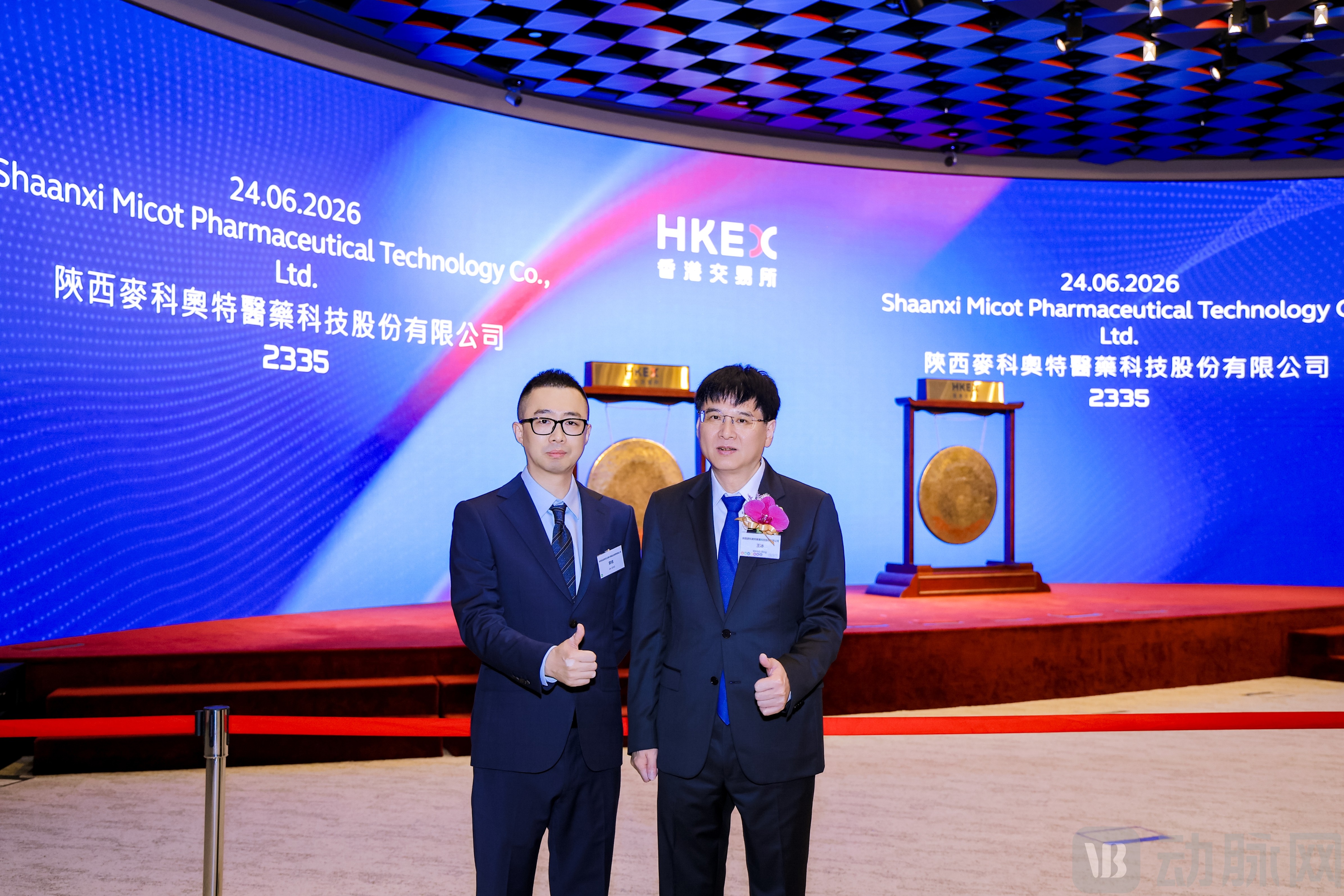
As a seasoned investor with years of expertise in the biotechnology investment sector, Guo Jia possesses a dual professional background in pharmaceutical R&D and industrial finance. Adhering to the core investment philosophy of "patient capital," and leveraging the "Heaven-Earth-Human" investment framework alongside the core methodology of "multidimensional thinking," she has continuously added value to this domestically grown hard-tech biotech enterprise, helping it steadily evolve into a platform-based peptide innovative pharmaceutical company with international competitiveness.
Micot's successful listing is by no means an accidental windfall from short-term capital market dividends; rather, it is the inevitable realization of long-term value accumulated through hard-tech innovation, and a benchmark practice demonstrating how state-owned patient capital anchors early-stage sci-tech innovation tracks to empower the transformation and upgrading of China's local biopharmaceutical industry. In an exclusive interview, Guo Jia candidly stated, "Biopharmaceuticals is a typical hard-tech sector characterized by long cycles, high risks, and R&D intensity. Only by adhering to long-termism and staying true to the industrial fundamentals can one navigate the industry's cyclical fluctuations and ultimately witness the blossoming of innovation."
In 2018, a surge of investment in innovative drugs swept across China, with massive capital flooding into the sector and driving industry enthusiasm to unprecedented heights, thereby giving rise to the "unicorn bubble" in the biotech field that year. It was also in this year that Guo Jia returned to Xi'an from Beijing and officially joined Shaanxi Investment Growth, taking the lead in industrial investment and strategic layout for the biomedical and pharmaceutical segment. Through rigorous investment logic analysis, Guo Jia steered clear of the crowded and fiercely competitive hot sectors prevalent at the time, and precisely targeted the niche segment of peptide-based innovative drugs—a less scrutinized area that had not yet been fully explored by the market. This overlooked blue ocean revealed to her scarce core value and significant long-term growth potential.
The century-long industrial evolution of the global peptide niche sector has fully replicated the underlying operational logic of the Kondratiev wave cycle: "technological breakthrough – capital influx – bubble expansion – cyclical clearance – technological iteration." The industry began with the industrialization of natural peptide extraction in 1920, underwent an industrial iteration with chemical synthesis technology in the 1960s, and officially entered a new era of original peptide innovation in 2010.
Among these factors, 2015 marked a critical watershed in the transition from old to new growth drivers within China's peptide industry. With the large-scale emergence of the domestic innovative drug sector, the competitive landscape underwent a fundamental transformation: at that time, Chinese peptide companies were still concentrated in the saturated competition surrounding generic drugs and active pharmaceutical ingredients (APIs), while enterprises possessing independent original R&D and innovation capabilities were extremely scarce. After decades of accumulation, the industrial infrastructure for basic peptide synthesis processes in China has become fully mature, meaning that manufacturing capability alone no longer constitutes an industry barrier.
As early as the beginning of 2018, Guo Jia made accurate predictions in an industry interview, stating bluntly that the competitive logic of the peptide industry had undergone a fundamental shift: the core barriers of the industry have officially surpassed the level of process manufacturing. The decisive factors for long-term competition in the future will focus on original design capabilities and high-throughput screening technologies for frontier molecules such as multifunctional peptides, peptide-drug conjugates (PDCs), cell-penetrating peptides, cyclic peptides, and peptide-based tumor vaccines. This constitutes the core foundation for platform-oriented innovative pharmaceutical companies to navigate economic cycles and build sustainable long-term competitive advantages.
Micot's rare capability for original innovation has led Guo Jia to firmly conclude that, unlike innovative pharmaceutical companies that concentrate resources on a limited R&D pipeline, Micot pursues a platform-based development path driven by foundational technologies. By leveraging its reusable peptide technology platform to continuously expand the boundaries of its pipeline, the company combines strong technological extensibility with long-term growth resilience, positioning it to become a scarce, benchmark-setting platform enterprise in the field of innovative peptide therapeutics.
Leveraging forward-looking industry insights and a rigorous, robust investment evaluation framework, Guo Jia accurately assessed both the value of the core founding team and long-term industry trends. She decisively positioned herself in the early-stage innovative peptide drug sector and, together with Northern Light Venture Capital, Tasly Capital, and Detong Capital as core investors, facilitated Micot's key Series A financing round in 2019, totaling RMB 115 million.
Having precisely completed her layout in downstream innovative pharmaceutical enterprises, Guo Jia continued to delve deeper into the peptide industry cycle logic and complete the sector landscape. Just three months later, the team made another precise move by completing the first-round investment in Hunan Zonsen PepLib Biotech Co., Ltd. (hereinafter referred to as "Zonsen PepLib Biotech"), a company specializing in the discovery of novel peptide drugs. Through an integrated upstream-downstream strategy combining "front-end high-throughput new drug screening" with "back-end platform-based drug development," she successfully achieved full-chain positioning across the peptide innovative drug industry—from source molecule discovery to clinical translation—thereby establishing foundational ecological barriers covering the most core technological segments of the industry.
At that time, the capital market winter had not yet receded, and risk aversion in the industry was high. Most institutions adopted a wait-and-see and conservative stance, avoiding early-stage, high-risk sci-tech innovation projects. Against this backdrop, two highly forward-looking early-stage investments not only provided crucial seed funding for Micot and Zonsen PepLib Biotech to break through their start-up development bottlenecks and deepen their engagement in the original innovation track of peptides, becoming the core "first pot of gold" on their growth journeys, but also, leveraging the credibility and robust strength of state-owned capital, provided a substantial, authoritative, and reliable credit endorsement for the value of high-quality Chinese sci-tech innovation enterprises with source innovation capabilities.
"The earlier and less attended the sci-tech innovation field is, the more it needs patient capital to provide a safety net," said Guo Jia. "The core mission of state-owned investment institutions is not to chase short-term hotspot dividends, but to root themselves in the 'no man's land' of industries, bear the high risks of hard-tech innovation, and safeguard truly original technologies and high-quality sci-tech enterprises. Every early-stage investment is a response to breaking through the 'chokehold' bottlenecks in China's hard-tech innovation. This is also the core logic that Shaanxi Investment Growth has always adhered to: investing early, investing small, investing long-term, and investing in hard technology."
"The core essence of investment lies in aligning with the timing of heaven, leveraging the advantages of earth, and harnessing the harmony of people, while anchoring to the correct strategic path and adhering to it with long-term conviction." This is the central principle that has guided Guo Jia's entire investment career and constitutes the foundational core of her "Heaven, Earth, and People" investment philosophy. "Heaven's timing" refers to the evolutionary rhythm of industry cycles and the era-specific windows for technological innovation; "Earth's advantage" denotes the value accumulation from deep cultivation of a sector and the fertile ground of the industrial ecosystem; and "People's harmony" embodies the vision and mental resilience of founding teams as well as the core competitive strength derived from organizational evolution.
Innovative drugs represent the inevitable direction for the industrial upgrade of China's biotechnology sector. As a high-growth niche, innovative peptide therapeutics have become the core thread driving industry development. For early-stage investment in innovative drugs, the comprehensive strength of the founding team is the key variable determining a project's long-term value. Within Guo Jia's "Heaven, Earth, and Human" investment framework, "Human Harmony" is the critical factor determining whether an enterprise can navigate through industrial cycles. Wang Bing, founder of Micot, serves as a quintessential benchmark for the "Human Harmony" dimension. His multiple attributes collectively build the foundational resilience enabling the company to withstand cyclical challenges: adhering to first-principles thinking to escape homogeneous competition and reconstructing the underlying logic of peptide drug discovery from the source; possessing exceptional stress resilience and mental fortitude, allowing him to calmly break through impasses even during troughs in development; maintaining a consistent alignment of knowledge and action to ensure the steady implementation of long-term strategic visions; implementing an elite organizational model that consolidates top-tier individual capabilities into synergistic collective advantages; employing end-game thinking to assess industry trends while consistently anchoring to the correct long-term trajectory; and cultivating an antifragile growth mindset that enables continuous iteration and sustainable progress amidst capital and industry cycle fluctuations.
Identifying high-quality sectors and locking in top-tier teams are merely the starting points for long-term investment. The core determinant of whether a company can maximize its value and ultimately grow into a great, globally competitive hard-tech enterprise lies in breaking free from single-point, short-term linear thinking and establishing an integrated four-dimensional thinking framework.
Leveraging a profound background in new drug R&D and years of experience in industrial investment, Guo Jia has constructed a "multi-dimensional thinking" methodology for investing in and empowering hard-tech biology ventures. Scientist-led startups often fall into the linear trap of "prioritizing technology over industry, individuals over management, and R&D over capital." However, to leap from an early-stage research team to a world-class platform enterprise, it is essential to rely on the synergistic and simultaneous advancement of four dimensions—"technological thinking," "industrial thinking," "managerial thinking," and "financial thinking"—to comprehensively support the company's growth throughout its entire lifecycle.
Technical thinking safeguards the essence of innovation by anchoring to genuine clinical needs, deeply cultivating foundational original technologies, and building insurmountable technical barriers. Industrial thinking extends the value chain by leveraging sector cycles and ecosystem resources to achieve strategic positioning across upstream and downstream partners, thereby continuously amplifying industrial value. Management thinking strengthens organizational foundations, helping scientists transition from a research mindset to an entrepreneurial one, and building organizational capabilities capable of long-term evolution. Financial thinking navigates industry cycles by rationally planning financing cadence and capital pathways, maintaining strategic stability and accumulating counter-cyclical strength amidst fluctuating market conditions.
Sustained fundraising capability has always been the core lifeline for early-stage innovative pharmaceutical companies to maintain their R&D momentum and navigate development cycles. From 2022 to 2024, the biopharmaceutical industry entered a painful period of deep adjustment, with the overall financing environment cooling down. A large number of innovative drug companies encountered financing bottlenecks, causing their development momentum to stall. Leveraging the systematic support of its "multi-dimensional thinking" methodology and the cohesion of its core team, Micot successfully completed multiple rounds of financing against the tide, backed by continuous industrial empowerment and resource coordination from both existing and new shareholders. This achievement has firmly established the financial and resource foundation for subsequent R&D breakthroughs and IPO preparations.
"An industry downturn is both a litmus test for a company's true value and the ultimate trial of capital's original intent and patience," Guo Jia admitted.
Micot's growth trajectory not only validates the feasibility and demonstrative value of the state-backed patient capital model—characterized by early-stage, small-scale, long-term, and hard-tech investments—but also confirms that Shaanxi Province, leveraging its high-quality local scientific and educational resources, is fully capable of incubating original biotechnology enterprises with international competitiveness. In the future, industrial capital, government guidance funds, and long-term private capital will jointly constitute the core capital pillars of pharmaceutical innovation, gradually forming a diversified, symbiotic development pattern defined by "leadership from industry giants, breakthroughs by startups, empowerment through scientific research, support from capital, and protection from the government."
Behind the success of individual cases lies the solid support of investment institutions' systematic investment and empowerment capabilities. "Research-first, targeted sourcing" is a distinctive feature of Shaanxi Investment Growth. Leveraging years of experience in industrial layout, Shaanxi Investment Growth has developed a mature biotechnology industry map that precisely covers frontier innovation tracks, consistently anchoring on companies' differentiated innovation capabilities as well as their dual core values in clinical and commercial domains.
"We do not engage in sporadic, opportunistic project investments. Instead, we systematically deduce our strategy based on the underlying logic of biotechnological innovation, comprehensively mapping out the entire sector's landscape. Just as living organisms operate according to their genetic maps, the biotech industry has its own 'first principles': the ultimate goal of all technological innovation is to address unmet clinical needs. Guided by the objective laws of life sciences, industrial development progresses step by step—from mechanism discovery and target identification to molecular design, clinical validation, and commercialization. Every critical bottleneck within the industry chain represents a key value anchor for our strategic focus," explained Guo Jia.
Meanwhile, Guo Jia's team employs a dual-track empowerment model of "VC + M&A" and "VC + BD," breaking away from the traditional "invest first, serve later" logic by front-loading post-investment value-added services to the investment stage. Beyond financial support, the team deeply integrates industrial resources, optimizes core team structures, and clarifies long-term development strategies, comprehensively assisting companies in achieving high-quality innovative growth.
Guided by the "Heaven, Earth, and Humanity" investment philosophy and the "Three-Dimensional Thinking" methodology, and upholding an industry-focused mindset and long-term commitment, Guo Jia has led her team to deeply cultivate high-quality sectors in biological hard technology, systematically lay out frontier innovation fields, and implement investments in a batch of highly growth-oriented early-stage hard-tech enterprises. Representative investment cases cover core frontier directions: innovative peptide drugs: Micot Pharma (02335.HK) and Zonsen PepLib Biotech; innovative drugs targeting the tumor microenvironment: InxMed; immune cell therapies: Hrain Biotechnology and CorreGene Biotechnology; stem cell therapeutics: Zephyrm and Renerval Therapeutics; red blood cell-based therapeutics: Westlake Therapeutics; protein degradation drugs: Polymed Biopharma; nucleic acid therapeutics: RongCan and Youjia; organoids and organ-on-a-chip: Daxiang Biotech; gene editing: GeneRulor; non-invasive neuromodulation and brain-computer interfaces: Neurodome; regenerative medicine: Bio-Regen Med; and blue laser ablation: Blueray Medical. Currently, several of these companies have entered the critical stage of sprinting toward public listing.
In Guo Jia's view, original innovation in biotechnology possesses strong industrial leverage. Breakthroughs from zero to one in upstream foundational technology platforms can drive the entire mid- and downstream chain—encompassing R&D, clinical development, manufacturing, and commercialization—to achieve industrial expansion from one to one hundred, making it a typical high-leverage, high-value sector. Shaanxi Province boasts top-tier university and scientific educational resources along with profound basic research accumulation nationwide. With abundant reserves of original technologies and a well-established hierarchy of high-end talent, it provides fertile ground for nurturing world-class hard-tech biomedical enterprises. The core mission of Shaanxi Investment Growth is to complement the industrial ecosystem, amplify Shaanxi's sci-tech innovation advantages, and serve as patient capital facilitating the province's innovation-driven development. By continuously replicating Micot's mature investment empowerment model, it aims to incubate more local benchmark hard-tech enterprises, helping original biotech forces from Northwest China enter capital markets and compete in the global industry.
Looking back on this seven-year marathon of value creation, Guo Jia and Shaanxi Investment Growth have fully demonstrated the responsibility and industrial commitment of state-owned patient capital through solid investment outcomes. From strategically positioning themselves in the then-niche polypeptide sector against prevailing trends, to accompanying Micot throughout its journey to a successful listing on the Hong Kong Stock Exchange; from adhering to the long-termist philosophy centered on hard technology, to building a comprehensive, multi-dimensional industrial empowerment system—these efforts highlight their dedication. Standing at a new starting point for the transformation and upgrading of China's innovative pharmaceutical industry, this capital force, deeply rooted in Northwest China and committed to industrial development and value investing, will continue to uncover the original innovation value in biotechnology. It aims to empower the iterative upgrading of regional industries, drive China's bioeconomy away from low-end, homogeneous competition, and usher in a new era of high-quality, original development.
"Investing in hard-tech biotechnology requires imagination, but even more so, it demands steadfastness and a sense of responsibility," Guo Jia concluded. "Seven years ago, few believed that Northwest China could nurture a benchmark enterprise for the nationwide listing of innovative peptide drugs. Today, Micot has achieved this. I firmly believe that by anchoring ourselves to the fundamental logic of the industry, adhering to the correct long-term direction, and being friends with time, the golden age of China's original hard-tech biotechnology is only just beginning."