

Xi'an Peptide Biotech's HKEX IPO: An Exclusive Interview with Its First Investor

Micot
Dual functional and multifunctional specific peptide drug developers
Today, Micot, a clinical-stage biotech headquartered in Xi'an, Shaanxi, officially listed on the Hong Kong Stock Exchange, with its opening price surging more than 90%. This established biotech, known for its expertise in dual- and multi-target specific peptide-based drugs, is also on the verge of commercializing two core products. At press time, Micot's market capitalization on the Hong Kong stock market exceeded HK$11 billion.
Founded in 2007, Micot completed multiple rounds of financing and brought in professional investment institutions such as Northern Light Venture Capital and NRL Capital as long-term partners before listing. In 2019, Dr. Song Gaoguang, Managing Director of Northern Light Venture Capital, visited Micot for the first time. The research concept proposed by Professor Wang Bing, the founder, impressed him with its novelty.
"The Northwest region is not traditionally considered a hub for the pharmaceutical industry, with high-quality innovative drug candidates almost exclusively concentrated in core areas such as the Yangtze River Delta, the Pearl River Delta, Beijing, and Chengdu," Dr. Song Gaoguang told VCBeat. "However, Micot is already developing bifunctional and even trifunctional peptides, boasting a robust technology platform, outstanding formulation and pharmaceutical data, and a product portfolio breadth that far surpasses that of other peptide companies in China." Consequently, Northern Light Venture Capital became Micot's first institutional investor.
In accordance with the consensus at the time, Professor Wang Bing resigned from his academic position at Xi'an Jiaotong University to devote himself full-time to the company's operations. Although peptide-based pharmaceutical companies rarely attracted attention from investment institutions in China's innovative drug market seven years ago, Dr. Song Gaoguang was greatly enthused by the unique technical advantages of such drugs and their significant potential for clinical intervention in metabolic disorders and central nervous system diseases.
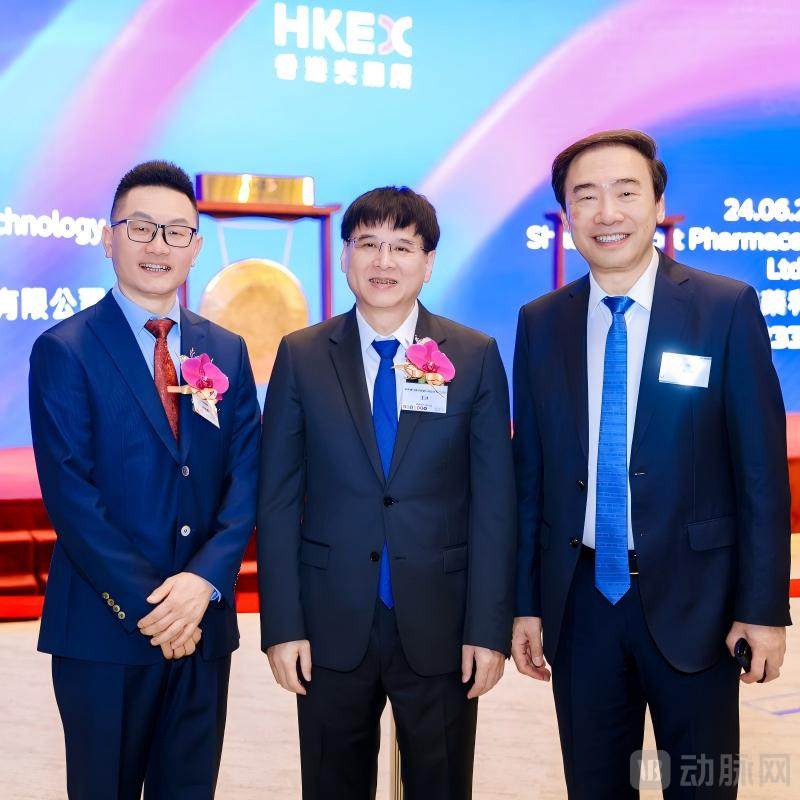 From right to left: Deng Feng, Founding Managing Partner of Northern Light Venture Capital; Professor Wang Bing, Founder of Micot; Dr. Song Gaoguang, Managing Director of Northern Light Venture Capital
At that time, the Shaanxi Investment Growth Fund, under the Shaanxi Provincial State-owned Assets Supervision and Administration Commission (SASAC), also joined forces with Northern Light Venture Capital as an investor. During this IPO process, Kaizen Hong Kong, also affiliated with the Shaanxi Provincial SASAC, became one of the cornerstone investors. High-quality sectors with long-term growth potential often require patient, long-term commitment from investors.
Stable Commercialization Prospects
Micot's core pipeline candidate, MT1013, is a dual-target peptide agonist targeting CaSR and OGP for the treatment of chronic kidney disease–secondary hyperparathyroidism (CKD-SHPT). CKD-SHPT is one of the common metabolic complications of chronic kidney disease, with its core clinical manifestation being abnormally elevated serum parathyroid hormone (PTH) levels. Data show that the global prevalence of chronic kidney disease has exceeded 10%, and secondary hyperparathyroidism is widespread during the progression of chronic kidney disease, affecting approximately 70% of patients undergoing hemodialysis.
Globally, approximately 5.9 million people suffer from secondary hyperparathyroidism. Elevated serum PTH levels can lead to numerous complications affecting the skeletal, cardiovascular, and nervous systems. These include osteoporosis, pathological fractures, and bone pain resulting from accelerated bone resorption, as well as vascular calcification caused by abnormal deposition of calcium salts in the vessel walls, which accelerates atherosclerosis and directly increases the risk of myocardial infarction and stroke. In clinical practice, the management of secondary hyperparathyroidism primarily relies on triple-target agents such as cinacalcet, evocalcet, and etelcalcetide. However, in patients with severe disease characterized by markedly elevated PTH levels, these drugs demonstrate suboptimal efficacy and limited improvement in abnormal bone metabolism, while also posing safety risks such as hypocalcemia and gastrointestinal adverse reactions.
In theory, the dual-target design of MT1013 can achieve more precise regulation of calcium and phosphorus metabolism, reduce the incidence of side effects, and optimize existing treatment regimens. According to the prospectus, MT1013 has currently completed two Phase II clinical trials for secondary hyperparathyroidism due to chronic kidney disease and has entered a Phase III clinical trial with cinacalcet as the control drug. This Phase III trial is expected to be completed by the end of 2026. Micot plans to submit a pre-NDA communication application by the end of 2026 and formally file a New Drug Application (NDA) in early 2027.
Certainly, for a non-profitable biotech company, commercialization is more challenging than the product itself. On February 5, 2026, Micot entered into an agreement with Everest Medicines, granting the latter exclusive commercialization rights in China and the Asia-Pacific region (excluding Japan) for its core pipeline candidate MT1013, receiving an upfront payment of RMB 200 million, as well as potential milestone payments totaling RMB 1.04 billion.
As a result, the commercialization pathway for MT1013 has become clear. Everest Medicines is one of the few innovative pharmaceutical companies in China to have built a comprehensive product portfolio in the nephrology field, with its core product, Nefecon®, being the world's first and only disease-modifying therapy for IgA nephropathy approved in China, the United States, and Europe, with sales revenue of RMB 1.443 billion in 2025, representing a year-on-year increase of 309%. Leveraging Everest Medicines' established sales network and hospital access capabilities, MT1013 can rapidly enter the commercialization track.
More importantly, the collaboration between Everest Medicines and Micot extends beyond the commercialization of MT1013. VCBeat has noted that Everest Medicines is also one of the cornerstone investors in Micot. This multi-dimensional alignment, spanning both business operations and equity interests, demonstrates Everest Medicines' strong confidence in the commercial prospects of MT1013 as a partner and facilitates further synergy between the two parties.
In fact, this dual-binding model involving both commercial partnerships and cornerstone investments is not uncommon among biotech companies that have recently listed on the Hong Kong Stock Exchange. In December 2025, Insilico Medicine listed on the Hong Kong Stock Exchange, with Eli Lilly subscribing to USD 5 million as a cornerstone investor—just one month after the two parties had announced their intention to collaborate. In June 2025, TransThera listed on the Hong Kong Stock Exchange, with Akeso, Inc. included among its five cornerstone investors, following the announcement of their strategic partnership in March of the same year. Earlier, in March 2024, Qyuns Therapeutics listed on the Hong Kong Stock Exchange, with Huadong Medicine subscribing to USD 5 million as a cornerstone investor; Huadong Medicine had already acquired the commercialization rights for QX001S in China as early as August 2020.
The most immediate impact of this dual binding is the stabilization of market capitalization in the early stages of an IPO. Market data shows that Insilico Medicine, TransThera, and Qyuns Therapeutics all achieved stock price increases of 20% to 70% on their first day of listing. The underlying reason is that cornerstone investors typically have a longer lock-up period of six to twelve months. More importantly, this dual binding lays the foundation for sustained collaboration between the parties. In March 2026, Eli Lilly upgraded its partnership with Insilico Medicine, reaching a "pipeline licensing + drug development" deal with a potential upfront payment of $115 million and a total value of $2.75 billion. In July 2024, Huadong Medicine partnered with Qyuns Therapeutics on QX005N, agreeing to deeply participate in subsequent clinical development within the licensed territories, secure exclusive options for market promotion, and enjoy priority cooperation rights regarding the transfer of marketing authorization holder status for the product.
For Micot, which has been in operation for nearly 20 years, stable commercialization expectations for its core products are undoubtedly crucial.
World's First Triple-Target Weight Loss Drug
If MT1013 marks the commercialization starting point for Micot, then XTL6001 represents its core bet on differentiation.
This is a triple-target peptide candidate drug targeting GLP-1R, GCGR, and MASR, indicated for obesity and metabolic diseases. Currently, there are 17 triple-target GLP-1R candidate drugs in clinical stages globally, among which 12 follow the "enhanced tirzepatide" pathway, i.e., targeting GLP-1R, GCGR, and GIPR. XTL6001 is the only triple-target GLP-1R drug worldwide that targets MASR.
Currently, GLP-1 receptor agonists are undoubtedly the hottest therapeutic area in the global pharmaceutical industry. Faced with immense market potential, nearly all pharmaceutical companies are eager to enter the field and capture a share of the profits. In 2025, driven by semaglutide and tirzepatide—the reigning and former blockbuster drugs respectively—the global market size for GLP-1 medications exceeded $70 billion. Meanwhile, industry giants are continuously expanding indications into diverse areas such as muscle building and cardiovascular protection, rapidly enlarging the market pie while simultaneously raising the barriers to entry.
Therefore, Micot directly adopted an aggressive strategy by developing a triple-target therapy that targets MASR, thereby addressing an overlooked patient population. In the impression of Dr. Song Gaoguang, Professor Wang Bing, the founder of Micot, is a highly adept learner and a decisive leader.
"The Northern Light weekly regular meeting was consistently scheduled for 12:00 PM on Mondays. Upon learning of this, Professor Wang Bing swiftly implemented a similar recurring meeting system within his company, where different departments took turns delivering presentations each week," recalled Dr. Song Gaoguang. In his view, this rapid iteration capability—characterized by the principle of "learning upon observation and immediate implementation of acquired knowledge"—demonstrates that he is not solely focused on technical work, but also adept at proactively leveraging established governance best practices to optimize corporate management.
Another detail that left a deep impression on Dr. Song Gaoguang dates back to the early stages of their collaboration. "At that time in 2019, there was skepticism within the industry about whether professors were suited for entrepreneurship. Therefore, when we invested, we agreed that Professor Wang Bing would resign from his academic position to devote himself full-time to the startup, and we structured the investment disbursement in phased tranches," Dr. Song Gaoguang told VCBeat. "Unexpectedly, he decisively completed his resignation procedures from Xi'an Jiaotong University within two to three months—a step that most professor-entrepreneurs find difficult to take."
It is precisely the founder's learning agility and rapid responsiveness that have enabled Micot to carve out a precise niche in the GLP-1 market, which has become nearly a red ocean. The MAS receptor (MASR) belongs to the protective axis of the human renin-angiotensin system (RAS). The other end of the RAS is the classic injurious axis (Ang II/AT1R), which leads to vasoconstriction and renal injury. Activation of MASR can dilate renal blood vessels, increase renal blood flow, reduce urinary protein, and inhibit renal inflammation and fibrosis.
These effects precisely address a potential risk associated with traditional GLP-1 weight-loss medications. Long-term use of GLP-1 receptor agonists may increase renal burden, which is generally acceptable for patients with simple obesity but poses significant risks for those with obesity comorbid with kidney disease. In clinical practice, this patient population often requires more cautious dose adjustments or may even be excluded from the indicated indications. The logic of XTL6001 thus follows: GLP-1R and GCGR achieve weight loss, while MASR activates protective pathways, theoretically making it suitable for patients with obesity and kidney disease—a population precisely overlooked by traditional GLP-1 therapies.
According to the prospectus, XTL6001 has currently received Investigational New Drug (IND) approval in both China and the United States. The Phase I clinical trial in China has completed its final visit, with database lock achieved, and Phase I data are expected to be disclosed soon. Nevertheless, further progress for XTL6001 will take time; the obesity indication remains in early-stage clinical development. The Phase II trial for proteinuric chronic kidney disease (CKD) is anticipated to commence in mid-2027, while the IND application for metabolic dysfunction-associated steatohepatitis (MASH) is expected to be submitted in early 2027. Approval for the renal indication is not expected until around 2030 at the earliest.
Meanwhile, the window of opportunity is narrowing. Competing products such as tirzepatide may accumulate substantial real-world data before then, potentially even expanding into nephrology indications. For instance, the FLOW trial has already confirmed the renal protective effects of GLP-1 receptor agonists in chronic kidney disease. Although Micot holds a strong hand with XTL6001, whether it can ultimately win this round will depend on how the game is played.
Amid the Wave of Platform-based Biotech
Currently, when investors evaluate a biotech company, they have adopted a new valuation framework. Rather than focusing solely on whether the company has promising drugs, they assess its underlying capability to continuously generate high-quality drug candidates. The era of blind, rapid expansion in innovative drug development has come to an end. Only by sustaining innovation can biotech firms remain agile enough to survive amidst emerging challenges.
This same logic is also emphasized in Micot's narrative. As a biotech company with nearly two decades of history, Micot undoubtedly possesses the fundamental resilience to withstand economic cycles. "At times, the team felt that Professor Wang might be overly cautious," Dr. Song Gaoguang told VCBeat. Professor Wang Bing demonstrates exceptional financial control, enforcing strict cost management in daily operations. If stringent financial discipline enabled Micot to navigate the industry's most challenging downturn from 2022 to 2024, it is the company's platform-based technological capabilities that continue to drive its sustained growth and impact.
In its prospectus, Micot describes its competitive advantage as a fully integrated, end-to-end platform covering the entire value chain from discovery to commercialization. In terms of technology reusability, proactive design capabilities for target portfolios, and synergistic effects within its pipeline portfolio, Micot has initially established platform-level technological capabilities.
Specifically, the two core pipelines, MT1013 and XTL6001, are not entirely independent molecular development projects but rather different target combinations derived from the same peptide receptor agonist technology platform. From the outset of the MT1013 project, a three-target iterative pathway was planned, with XTL6001 representing the second step in this pathway. Its molecular design was completed before the GLP-1R sector gained significant traction, rather than being a temporary, trend-chasing pivot.
In a sense, Micot has already begun to reap the dividends of its platform-based development. One aspect is the bargaining power in licensing transactions. Without platform endorsement, the core argument for license-out deals is "this molecule is better than yours"; with platform endorsement, the core argument becomes "my platform can continuously produce molecules that are superior to yours." The latter offers significantly greater room for negotiation. Everest Medicines' in-licensing of MT1013 is, to some extent, a bet on this platform's sustained output capability—if the clinical data for MT1013 support the design logic of dual/multi-target agonists, the valuation of subsequent pipeline assets on the platform will rise accordingly.
On the other hand, there is the defensiveness of pipeline iteration. The GLP-1 sector is crowded, but not without gaps. The differentiated value of the MASR pathway has yet to be validated. Micot's platform enables it to continuously iterate around the MASR pathway, from XTL6001 to the next candidate molecule. If competitors such as tirzepatide achieve breakthroughs in nephropathy indications, Micot can rapidly follow up based on existing data, without having to start over from target identification.
Furthermore, there has been a structural enhancement in financing capabilities. This explains why provincial government guidance funds and industrial capital, rather than venture capital firms solely pursuing financial returns, have emerged as cornerstone investors.
Yet the challenges are equally real. The platform requires ongoing clinical validation to prove its worth, and its maintenance costs are substantial. For Micot, which has not yet achieved commercialization, balancing resource allocation between sustaining R&D investment in the platform and managing the clinical development pressures of MT1013 and XTL6001 remains a persistent dilemma. The most fundamental challenge, however, is that the platform's narrative must be backed by data. Whether Phase III data can validate the dual-target design logic of MT1013, and whether Phase I data can substantiate the value of the MASR pathway for XTL6001, will directly determine the platform's credibility and value.
With its listing on the Hong Kong Stock Exchange, Micot has reached a new starting point. Platform-based development has granted it a ticket to compete in the next phase, but whether it can remain at the table will ultimately depend on its data performance.