

Nansu Tech Secures Tens of Millions in Pre-B Funding to Advance 'Temporal Target' Closed-Loop Brain-Computer Interface Platform

Nans Tech
Developer of Digital Therapeutics for Generalized Brain Dysfunction

The Brain-Computer Interface Community has learned that,Recently, Hangzhou Nansu Technology Co., Ltd. has completed a Pre-B round of financing amounting to tens of millions of yuan. This round was led by Meihua Venture Capital, with Jiangxi Financial Holdings Group participating as a co-investor. The funds raised will be primarilyIt is used for the research and development of a closed-loop brain-computer interface technology platform based on "time-targeting," as well as for the clinical validation, regulatory submission, and commercialization of combination therapy products involving digital therapeutics and electrical neuromodulation (digital therapy–electrical modulation), thereby further enhancing the company's service network and industrial ecosystem in the field of neurological rehabilitation.
With the completion of this round of financing, Nans Tech is also advancing an upgrade to its corporate positioning: evolving from a digital therapeutics service provider for pediatric rehabilitation into a neurological rehabilitation technology platform covering the entire lifespan. Its core pathway:Based on existing digital therapeutics products and real-world data, integrated with EEG sensing, electrical stimulation modulation, and dynamic neural coding strategies, to construct a closed-loop therapeutic system of “neural sensing–temporal target identification–adaptive modulation–data feedback.”
Neurorehabilitation Enters the “Quantifiable, Measurable” EraExplanation” New Stage
Neurodevelopmental disorders, language and cognitive impairments, and various psychiatric and psychological conditions are characterized by a disease coursecharacterized by long durations and high demands for service continuity. For a long time, the common challenges faced by both clinical and home settings have been the insufficient supply of professional rehabilitation resources, the lack of unified standards for efficacy evaluation, and inadequate linkage between in-hospital treatment and out-of-hospital training. The emergence of digital therapeutics has enabled the systematic integration of screening, assessment, digital prescriptions, rehabilitation training, efficacy recording, and follow-up management, thereby enhancing the professionalism and accessibility of rehabilitation services to a certain extent.
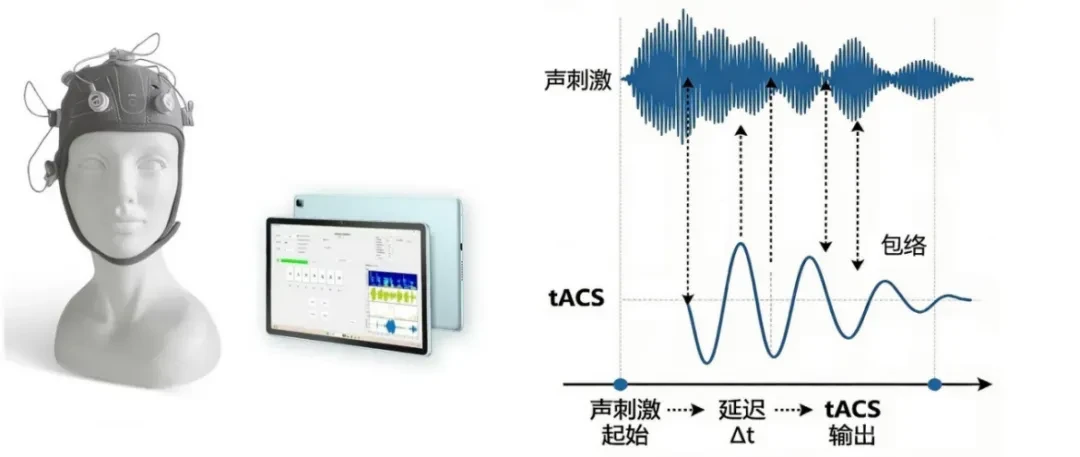
Figure 1. Schematic diagram of the digital-electrical combined therapy system and electrical stimulation for language neural encoding
However, from the perspective of therapeutic mechanisms, digital therapeutics that rely solely on training tasks still have limitations. Taking language cognitive rehabilitation as an example, while digital training tasks can induce corresponding neural activities in patients through visual and auditory stimuli, they struggle to directly identify and correct abnormal neural activities. For diseases requiring neural network remodeling, how to provide precise modulation at the right brain state and within the correct time window is becoming a key issue for further improving the efficacy of neurorehabilitation.
This is also a key reason why Nans Tech has extended its technological focus from digital therapeutics to integrated digital-electrical closed-loop therapy. The company aims to address not merely the issue of single product forms, but rather the systemic challenge of advancing neurological rehabilitation from “experience-driven” practices to a paradigm that is “data-driven, mechanistically interpretable, and closed-loop intervenable.”
“Time Target”: Identifying the Optimal Intervention Window Beyond Spatial Localization
Traditional neuromodulation places greater emphasis on stimulation location, i.e., the “spatial target.” However, brain activity is inherently dynamic. The same stimulation applied at different stages of neural processing may yield markedly different outcomes; furthermore, fixed-frequency and fixed-intensity stimulation paradigms are ill-suited to accommodate the real-time fluctuations of individual neural activity.
Nans Tech’s proposed “temporal targeting” aims to address two key questions beyond spatial targeting: “when to stimulate” and “what temporal sequence of stimulation to apply.” The former refers to the optimal time window for stimulation within dynamic neural activity, while the latter pertains to stimulation sequences that are adjusted in response to changes in neural activity. By integrating task-based stimulation, brain state identification, electrical stimulation modulation, and training data feedback, Nans Tech seeks to advance neuromodulation from relatively coarse, rigid paradigms toward more precise, interpretable, and dynamic closed-loop interventions.
Within this framework,Digital therapeutics are no longer merely rehabilitation training tools, but have become a critical gateway for inducing, predicting, and analyzing neural activity; electrical neuromodulation is no longer limited to unidirectional stimulation, but has evolved into a dynamic intervention strategy based on brain states, neural activity, and training tasks.. The integration of the two offers an opportunity to establish a new paradigm of combined digital and electrical therapy for neuropsychiatric rehabilitation.
Technology and Data Accumulation Form the Foundation for Platform-Based Expansion
Nans Tech’s deep expertise in this field stems from its long-term accumulation along two technological pathways: digital rehabilitation and neuromodulation. The company’s founding team possesses extensive experience in the industrialization of neurostimulation products, such as cochlear implants, and has years of accumulated practice with core technologies like dynamic neural coding strategies. Meanwhile, the company’s “Xiao Nan Ting Shuo” product series has reached over 1,300 hospitals and rehabilitation centers across China, serving more than 50,000 children with neurodevelopmental disorders and accumulating millions of hours of training and efficacy data.
These clinical scenarios and real-world data provide a critical foundation for the research and development of closed-loop brain-computer interface (BCI) technologies. On one hand, massive training datasets facilitate an understanding of rehabilitation patterns across different diseases, types of impairments, and intervention tasks. On the other hand, continuous care scenarios both within and outside hospital settings offer practical pathways for the clinical validation, parameter optimization, and large-scale implementation of new products. The goal is not to replace existing rehabilitation systems with a single hardware device, but rather to integrate perceptible, predictable, and interpretable regulatory measures into current rehabilitation workflows. This approach aims to real-time “correct” abnormal neural activity during rehabilitation training, thereby promoting neural network remodeling.
First Product Targets Language Barriers; Nans Tech’s Digital Health Portfolio Gradually Unfolds
Leveraging its “temporal target” closed-loop brain-computer interface (BCI) technology platform, Nans Tech’s first digital-therapeutic combination product will initially focus on addressing language disorders. The company disclosed that the product has already yielded promising preclinical data, with formal regulatory submission expected to commence by the end of this year, potentially qualifying for the expedited review pathway for innovative medical devices.
Language disorders have become a priority focus, closely tied to Nans Tech’s existing business accumulation. First, the market demand for language rehabilitation is enormous, with tens of millions of patients suffering from various speech and language disorders across China. Second, language rehabilitation involves multiple neural processing stages, including auditory perception, speech recognition, and semantic extraction, making it naturally suited for inducing distinct neural activities through training tasks and calculating corresponding "time targets" for regulation and therapeutic optimization.
In the future, Nans Tech plans to leverage the evolution of its digital therapeutics platform and closed-loop brain-computer interface technology to continuously upgrade rehabilitation systems for language disorders, autism spectrum disorder, attention-deficit/hyperactivity disorder (ADHD), and learning disabilities. The company will further expand into broader neuropsychiatric rehabilitation scenarios, including stroke, Alzheimer’s disease, depression, and sleep disorders, thereby forming a comprehensive product portfolio of integrated digital-electrical therapeutic solutions covering multiple diseases and clinical settings.
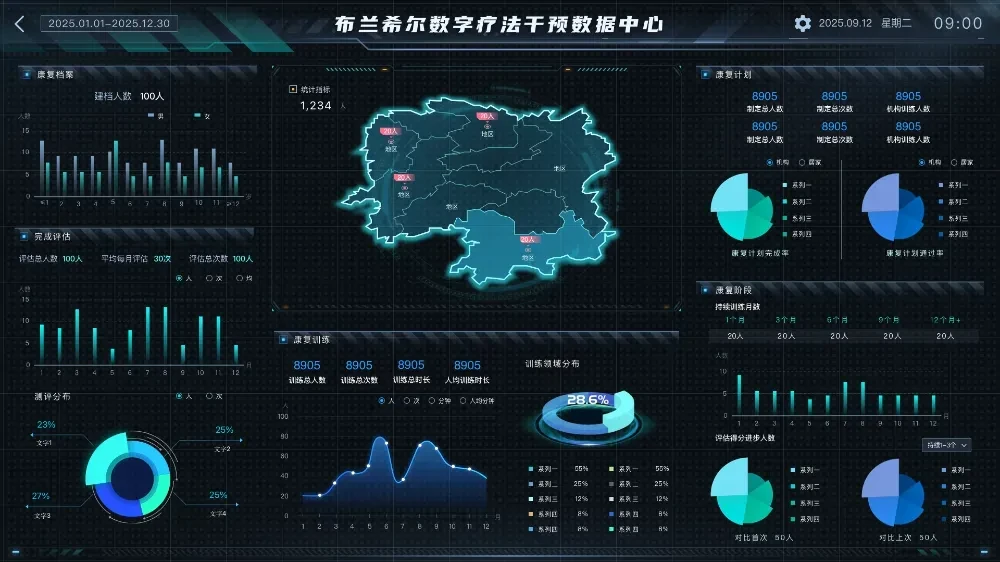 Figure 2 Nans Tech Digital Therapeutics Intervention Data Center
Building a Continuous Rehabilitation Service Network from Hospital to Home
The long-term value of neurological rehabilitation depends not only on the efficacy of individual treatment sessions, but also on the continuity of care, the consistency of data, and patient adherence. To address this challenge, Nans Tech is building an ecosystem network that connects in-hospital professional services with out-of-hospital home-based training.
Currently, the company’s digital therapeutics products have been deployed in over 1,300 hospitals and rehabilitation centers across China, including more than 100 Grade A tertiary hospitals. Meanwhile, Nans Tech has established its own Brainheal Internet Hospital, serving as a key hub connecting in-hospital assessments, institutional treatment, home-based training, and remote management.
This strategic layout enables Nans Tech’s products and services to extend further from B-side institutions to C-side households, while also providing more comprehensive scenario support for the clinical validation and commercial implementation of digital-electrical combination therapy products. For patients, physicians, and rehabilitation therapists, the continuous service network helps enhance the standardization, traceability, and collaborative efficiency of the rehabilitation process.

Brain-Computer Interface Community isChina's First Brain-Computer Interface (BCI) Industry Service Platform, Pioneer and Leader in Domestic Brain-Computer Interface New Media。We provide the following services to enterprises, research teams, investment institutions, and industry practitioners:
Publicity Report:Corporate updates, technical insights, and product introductions are reported through articles with images, short videos, and live streams to enhance exposure and industry influence.。
Resource Matching:Match resources such as capital, supply chains, clinical institutions, and channel partners based on demand, facilitate genuine connections, and promote collaboration.
Achievement Transformation:Assist the technical team in identifying industry partners, investors, and application scenarios to facilitate the translation of technology into products.
Event Planning and Execution:Undertake the planning and execution of online and offline roadshows, salons, forums, and other events.
Other Customization Requirements:Including personalized services such as customized reporting, market research, and recruitment support.
Cooperation Negotiation,Please contact WeChat: ZuoLeiLeiya
(Note: Name-Organization-Collaboration)
Submission | Become a Creator,Please contact WeChat: RoseBCI
?Star and Pin to Top?
Stay Updated on Every Frontier Advance in Brain-Computer Interfaces

One-click Triple Action: "Share," "Like," and "Mark as Read"
Feel free to chat in the comments section.