Medical Device Weekly Roundup (June 15–21, 2026): Funding, Approvals, and Strategic Collaborations

Hyus Meditec
Developer of High-Frequency Medical Ultrasound Technologies and Products

SYNRISE
Ultrasound Brain-Computer Interface Technology Researcher

MYOMED
Cardiovascular Device and Consumable R&D Developer

RaysightMed
Medical Imaging Product Developer

Vivolight
Developer of Biomedical Optical Imaging Systems

01
Hyus Meditec Completes Tens of Millions in Financing
Recently, Hyus Meditec, a domestic ultrasound platform enterprise based in Shenzhen, announced the completion of a new round of financing amounting to tens of millions of yuan, led by Hetang Investment. The completion of this financing marks a critical step for Hyus Meditec in the industrialization of its full-chain core ultrasound technologies and underscores strong recognition from the capital market for China’s high-end ultrasound innovation capabilities. The funds raised will primarily be used to accelerate the market promotion of intracardiac echocardiography (ICE) products, advance the clinical development of 4D-ICE, expand the commercialization of ultrasound brain-computer interface product lines, promote the mass production of ultra-high-resolution ultrasound/photoacoustic imaging integrated diagnostic and therapeutic systems, and expand production capacity for automated acoustic liquid handling products.
02
SYNRISE Completes Multi-Million Yuan Seed Funding Round
Beijing SYNRISE Announces Completion of Tens of Millions in Seed FundingRecently, Beijing SYNRISE announced the completion of its seed funding round, raising tens of millions of RMB. This round was jointly invested by InnoAngel Fund and the Tsinghua University Alumni Seed Fund. The proceeds will be primarily allocated to core technology research and development, the advancement of medical device products, the construction of an AI-driven brain science platform, and the recruitment of key talent. Concurrently, the company announced the official launch of its next angel funding round.The team comprises members from prestigious international institutions, including Tsinghua University, ETH Zurich, Peking Union Medical College, and Huawei’s “Genius Youth” program. Covering the key disciplines essential for building the next-generation ultrasound brain-computer interface (BCI) platform, SYNRISE is one of the few teams in China that integrates biomedical engineering, large AI models, and embodied intelligence into its ultrasound BCI solutions.
03
MYOMED Completes Tens of Millions in Angel and Angel+ Round Financing
Recently, Nuoding Xianshi Medical Technology Co., Ltd. announced the successful completion of its angel financing round, raising tens of millions of RMB. The round was led by Jiayu Ziniu Medical Fund, a renowned investment firm specializing in healthcare and technology, with participation from蒲公英 Fund, Hengqin Hongquan Investment, and several senior industry experts. The funds raised will accelerate the product development, clinical trials, and regulatory registration of its AI-driven acoustic energy platform, aiming to pioneer a new professional consumer medical ecosystem centered on technological innovation.
04
RaysightMed Completes Nearly 100 Million YuanSeries D Funding Deepens AI Surgical Robot Strategy
Shenzhen Raysightmed Co., Ltd. recently announced the completion of its Series D financing round, raising nearly RMB 100 million. This round featured coordinated investment from municipal and district-level state-owned capital platforms in Guangzhou, led by Guangzhou Biopharmaceutical and Health Industry Investment Co., Ltd., with participation from Guangzhou Yuefu Fund Management Co., Ltd. The raised funds will be used to deepen the deployment of AI-driven vascular interventional surgical robot systems and to build an integrated AI-plus-robotics diagnosis and treatment platform. Founded in 2017, RaysightMed focuses on the sector of precise cardiovascular diagnosis and treatment. In the same period, Shenzhen Vivolight Medical Device & Technology Co., Ltd. (Vivolight) announced the completion of a new round of financing amounting to hundreds of millions of RMB, co-led by Sino-US Green Yangtze River Delta Fund and Yifeng Capital. The funds will be utilized for the global commercialization of its core products, as well as for the R&D, registration, and clinical advancement of its innovative pipeline.
05
New Interventional Product ApprovedFDA
Recently, Edwards Lifesciences announced that Triformis Resilia has received FDA premarket approval. As a surgical bioprosthetic valve specifically designed for the tricuspid position, it breaks the long-standing status quo in the surgical tricuspid valve replacement market, where off-label use of other valve products was the norm. Given the complex anatomy of the tricuspid valve, traditional "general-purpose" valves present challenges such as difficult orientation and limited operational space. Triformis Resilia is redesigned around the specific anatomical features of the tricuspid valve, making surgical procedures more convenient and safer. Furthermore, key long-term data from its underlying Resilia tissue platform were released, demonstrating a 97.9% freedom from structural valve deterioration (SVD) at 10 years and a 97.8% freedom from reoperation due to SVD at 10 years, with stable hemodynamic performance over the decade. These findings provide strong supporting evidence for the durability of Triformis. The scarcity in the tricuspid valve market lies not in demand, but in dedicated devices; therefore, the approval of Triformis Resilia holds significant importance.
06
Haikou National High-Tech Zone: Three Innovative Medical Devices Approved Within a Month
Recently, three products from Hainan Lilisheng Medical Technology Co., Ltd. and Tuoren Holding Group Hainan Medical Device Co., Ltd., enterprises located in the Haikou National High-tech Industrial Development Zone, were successively approved as Class II innovative medical devices by Hainan Province. This marks a breakthrough with three innovative devices receiving approval within a single month. The approved products include the disposable fully electric endoscopic cutting stapler and components, the disposable composite-powered endoscopic cutting stapler and components, and the visualizable adjustable double-lumen bronchial tube. All these products target clinical pain points and overcome technical barriers.
07
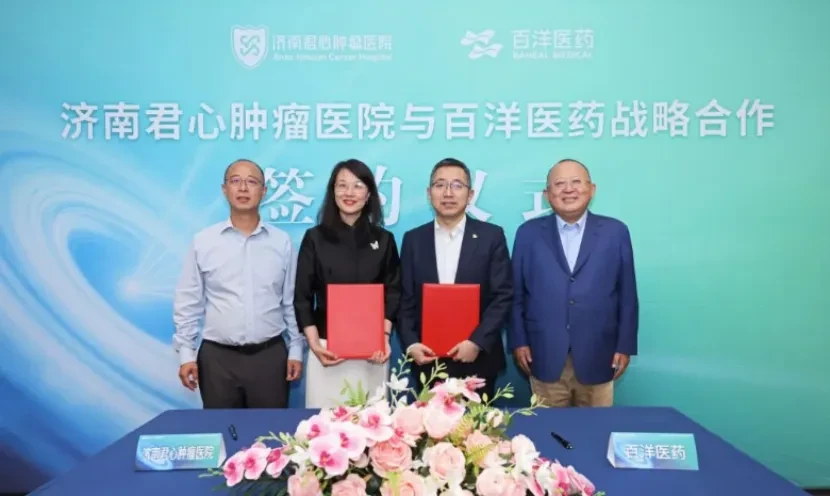
Baiyang Pharmaceutical Signs Strategic Cooperation Agreement with Jinan Junxin Oncology Hospital
On June 14, 2026, Baiyang Pharmaceutical Group and Jinan Junxin Cancer Hospital signed a strategic cooperation agreement. The two parties will jointly establish a Precision Radiosurgery Treatment Center centered around the ZAP-X® Mars Rover Radiosurgery Robot (hereinafter referred to as “ZAP-X”). This move marks a new phase of regional expansion and scaled-up clinical application of ZAP-X in China. As an advanced radiosurgery treatment device, the establishment of ZAP-X treatment centers will provide more precise and efficient radiosurgery services to cancer patients in the region. Currently, the ZAP-X radiosurgery treatment centers at Xuanwu Hospital of Capital Medical University and Peking University International Hospital have completed initial installation and are poised to commence clinical applications or related research.
08
TaiMei Medical Technology and United Imaging High-Tech Research Institute Reach Strategic Cooperation
Recently, Taimei Medical Technology and Shanghai United Imaging Healthcare High-Tech Research Institute have entered into a strategic partnership to jointly develop an AI-driven comprehensive solution for imaging endpoint assessment services. This collaboration aims to accelerate the clinical development of innovative pharmaceuticals and medical devices, thereby extending the benefits of these advancements to more patients. As the core R&D institution of the United Imaging Group, the United Imaging Research Institute has leveraged group resources to build a specialized and standardized medical imaging clinical research service system through its imaging CRO platform. Its services cover multiple disease areas and the entire lifecycle of drug and device development, offering customized, one-stop medical imaging solutions. As a leading domestic AI-powered clinical development platform, Taimei Medical Technology has cultivated deep expertise in imaging endpoint assessment services for many years. It has accumulated over 500 served projects and facilitated the market approval of more than 60 projects. In 2025, Taimei provided full or partial support for 60% of Class 1 innovative drugs approved in China. Furthermore, the company has pioneered the transition toward value-based multidisciplinary imaging assessment.
09
Chuangxin MedicalEasybridge Selected for EU EMA Breakthrough Devices Pilot Program
In June 2026, the Easybridge™ Endovascular Reconstruction System for Type A Aortic Dissection, independently developed by Chuangxin Medical, was successfully selected for the European Medicines Agency’s Pilot Program on Breakthrough Medical Devices. It is recognized as one of the “original Chinese” solutions in the field of minimally invasive treatment for the ascending aorta and stands among the first batch of Chinese cardiovascular innovative devices to be included in the program. This selection underscores the original innovation capabilities of China’s high-end medical devices in the field of aortic intervention, marking a leap from “technological following” to “original leadership.” During the application process, Chuangxin Medical collaborated closely with Xiyi Medicine, demonstrating the professional depth of Chinese CROs in facilitating global market access for complex innovative products. Type A aortic dissection is a life-threatening cardiovascular emergency, and traditional open-chest surgery has its limitations. The Easybridge™ system was specifically designed to address this clinical pain point, employing a modular design that balances perfusion requirements to achieve “precise reconstruction of the ascending aorta.”
10
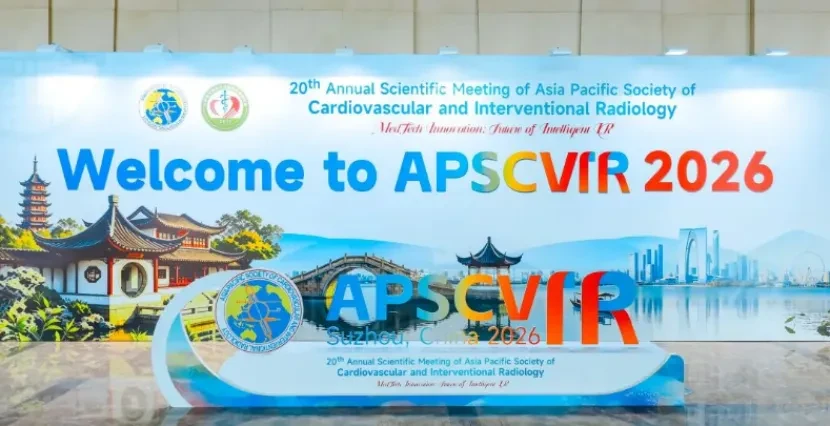
Ganawe Showcases Innovative Interventional Diagnosis and Treatment Achievements at APSCVIR
From June 11 to 14, 2026, the 20th Annual Meeting of APSCVIR was held in Suzhou, serving as a key academic platform for interventional radiology in the Asia-Pacific region. Ganaiwei showcased its CT-guided puncture navigation system, Irreversible Electroporation (IRE) ablation system, Radiofrequency Ablation (RFA) system for tumors, radiofrequency venous closure system, and a full range of biopsy and guidewire products, demonstrating its product portfolio and clinical solution capabilities in the field of image-guided precision intervention. Centering on image-guided interventional therapy, Ganaiwei has constructed an integrated solution framework encompassing “puncture–diagnosis–treatment,” with each product playing a distinct role. During the conference, Ganaiwei engaged in in-depth exchanges with experts from multiple countries, drawing significant attention to its CT-guided puncture navigation system and IRE non-thermal ablation technology. With the advancement of interventional radiology, Ganaiwei will continue to deepen its expertise in the field of precision intervention, promote technological innovation, and explore the boundaries of clinical value.
11
Nervonik Announces Completion of Groundbreaking First-in-Human Feasibility Study
On June 16, 2026, Nervonik, a clinical-stage medical device company developing next-generation peripheral nerve stimulation (PNS) technology, announced today the completion of its first-in-human feasibility study. The study demonstrated the ability to record key nerve-related biosignals from 16 peripheral nerves in eight patients with chronic pain, across multiple anatomical targets. The study was conducted in collaboration with physicians at Punta Pacifica Hospital in Panama City, Panama. Timothy Deer, M.D., President and CEO of the Virginia Spine and Nerve Center, implanted the neurostimulation leads in patients with chronic pain. Leveraging Nervonik’s technology, the system was able to record evoked compound action potentials (ECAPs—the electrical signals generated by nerves in response to stimulation) as well as myoelectric potentials. These signals serve as important biomarkers for therapy delivery and will support the future development of artificial intelligence- and biosensing-based functionalities for Nervonik’s peripheral nerve stimulation platform.

12
Fuzhou, Fujian Launches Drug“Precision Dialysis Supervision” New Model
Recently, the Market Regulation Administration of Fuzhou City, Fujian Province, issued the "Implementation Plan for 'Precision and Penetrating Supervision' of Drugs," aiming to enhance risk prevention and control across the entire supply chain and improve smart regulatory capabilities. The plan will launch pilot programs in chain pharmacy outlets, integrating multi-source data and employing intelligent risk identification technologies to generate a "Precision and Penetrating Supervision" list and implement dynamic classified regulation. For key varieties such as high-value medical insurance drugs, extended penetrating inspections covering both upstream and downstream entities will be conducted, along with full-chain tracking inspections throughout the distribution process. In terms of medical device regulation, Fuzhou will draft inspection guidelines for medical institutions at Level II and above to strengthen risk prevention and control at critical stages. Regarding smart regulation, Fuzhou will explore the development of intelligent regulatory programs for online drug sales and AI agents for medical device supervision. By leveraging AI algorithms for risk early warning, the city aims to establish a closed-loop system combining "online early warning + offline verification," thereby improving an integrated online-offline regulatory framework.
13
Beijing CPPCC Member Proposes Establishing Innovative Medical Devices"Clinical Co-Designer" System
Recently, the Beijing Municipal Committee of the Chinese People's Political Consultative Conference (CPPCC) held a special deliberative standing committee meeting, where members and experts offered recommendations for the innovative development of the medical device industry. Beijing has achieved remarkable results in the field of innovative medical devices. Yao Weihai suggested strengthening medical-engineering collaboration by establishing a “clinical co-designer” system to involve physicians in research and development, with pilot implementations in municipal and research-oriented hospitals. Ma Chunxiu stated that patient capital support is crucial during the critical period of industrial transformation. She recommended coordinating funds to optimize investment mechanisms, focusing on key sectors, piloting the establishment of advanced clinical evaluation centers, and expanding the scope of medical insurance pilots to promote product adoption. Ou Yunsong suggested addressing the “last mile” challenge for the hospital adoption of innovative devices by innovating procurement models to alleviate financial pressure, improving medical insurance pricing, and accelerating a smooth transition in medical insurance price policies to ensure patients have access to these technologies.
14
ThailandNew Regulations on Medical Device Labeling Implemented Starting June 20
Thailand’s Ministry of Public Health Adjusts Labeling and Instructions for Use Requirements for Medical Devices; New Regulations Take Effect on June 20, 2026Recently, Thailand’s Ministry of Public Health adjusted the rules governing the labeling and instructions for use (IFU) of medical devices, with the new regulations officially taking effect on June 20, 2026. The new rules mandate that manufacturers and importers of medical devices must provide products with clear, legible labels and comprehensive IFUs, strictly prohibiting false or exaggerated claims. For medical devices intended for use by the general public, labels and IFUs must be provided in Thai. For professional devices intended for use by healthcare professionals, labels and IFUs may be provided in either Thai or English. The new regulations support electronic IFUs, such as providing detailed information via QR code scanning, and have established specific guidance for software-based devices, mobile applications, and dental devices. Labels produced in accordance with the previous regulations prior to the effective date may continue to be used for no more than two years from the date the new rules take effect. As regulatory barriers for imported medical devices continue to rise in global markets, Chinese companies expanding overseas must carefully navigate and comply with the specific regulations of each target market.
Note: The information in this article is compiled from online news sources.
Featured Highlights
Recommended Articles Collection
Corporate News
2025 Annual Milestones ▏Zhongguancun Shuimu Medical|Shuimu Jingchuang|Chengdu Shuimu|Shuimu Jiheng|Shuimu Jinsheng|Shuimu Jingzhi
Recent News ▏Group Good News|Research Visit

END