

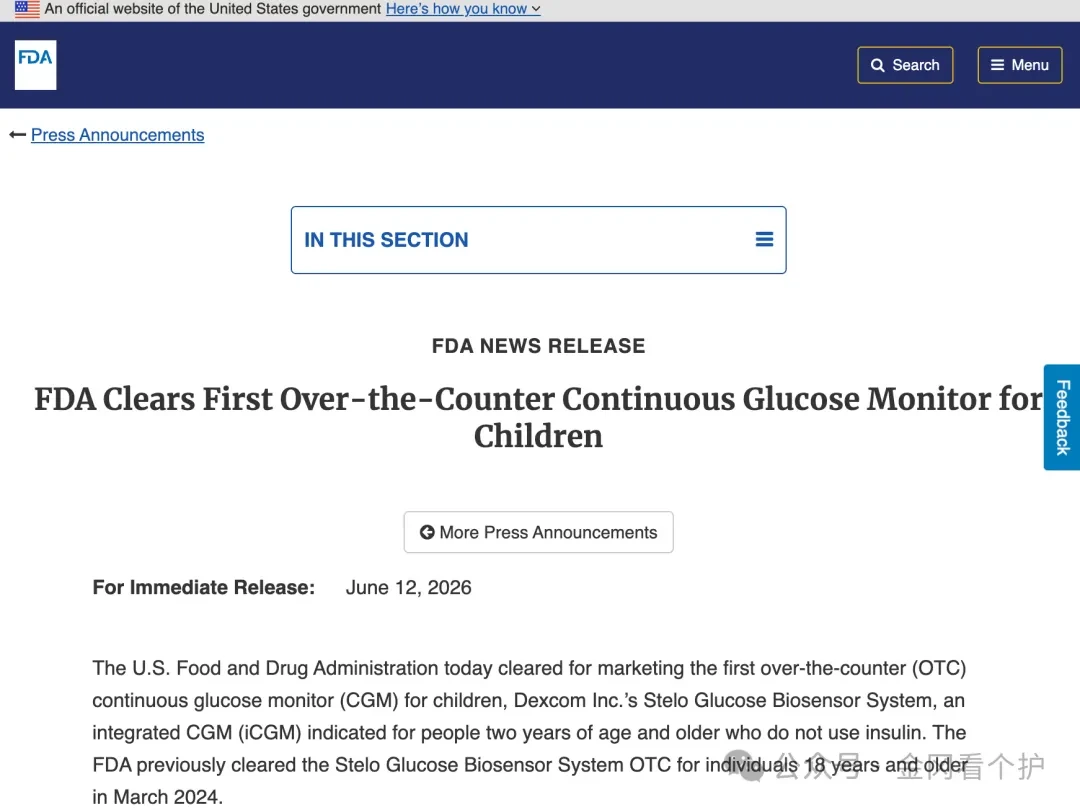
Dexcom's Stelo Becomes World’s First OTC Continuous Glucose Monitor Approved for Children as Young as 2

Decans
Developer of High-Performance Orthopedic Implants and Surgical Technique Systems

Pioneer in Media Coverage of Medical Devices
Sharing Professional Medical Device Knowledge
Core Event
On June 12, 2026 (U.S. local time), the U.S. FDA officially approved Dexcom Inc.’sStelo Glucose Biosensor SystemIt was launched, becoming the world’s first over-the-counter (OTC)-approved continuous glucose monitor (CGM) for children. This product is an integrated CGM (iCGM) indicated for individuals aged 2 years and older who do not use insulin.
This marks the second indication expansion for the Stelo product: in March 2024, it first received approval for over-the-counter (OTC) use in adults aged 18 and older. This launch represents the first time globally that the scope of OTC availability in the continuous glucose monitoring (CGM) sector has been extended to the pediatric population.
Core Product Parameters
1.Product Form: Composed of wearable sensors and companion applications for smart devices, it can be linked to the smartphones of children and their parents/caregivers, enabling synchronized viewing of blood glucose data.
2.Monitoring Capability: Updates blood glucose levels and fluctuation trends every 15 minutes, enabling continuous recording and analysis of blood glucose data to help users identify patterns in how diet and exercise affect their blood glucose.
3.Wearing Cycle: The nominal maximum wear time for a single sensor is 15 days; due to factors such as pediatric physiological characteristics and behavioral habits, the actual wear duration for pediatric users may be shorter than that for adults.
Key Highlights of Approval
This approval represents a typical application of real-world evidence (RWE) by the FDA to support regulatory decision-making:
Rather than conducting new large-scale pediatric clinical trials, Dexcom integrated prior clinical study data from adult and pediatric populations, supplemented with real-world data on daily use of iCGM in both groups, to verify the safety and efficacy of the product throughout the entire wear period in children. This approach ultimately facilitated regulatory approval and significantly shortened the timeline for implementing pediatric indications.
Target Population and Contraindications
Target Population
•Individuals aged 2 years and older who do not require insulin therapy, including pediatric patients with diabetes whose condition is controlled by oral hypoglycemic agents, and children with prediabetes;
•Healthy children interested in understanding the impact of lifestyle factors, such as diet and exercise, on blood glucose levels.
Contraindications and Precautions
1.Use in children must be supervised by an adult caregiver. Medication adjustments should not be made solely based on device data; consult healthcare professionals in advance before making any changes to medication.
2.It does not have a hypoglycemia warning function, is not suitable for high-risk populations with frequent hypoglycemia, and cannot be used for dialysis patients;
3.Individuals with a history of eating disorders should use this product only after evaluation by a physician;
4.Reported mild adverse reactions include local skin infections, irritation at the wearing site, and pain or discomfort during wear.
Industry and Public Health Significance
1.Public Health Value: The prevalence of prediabetes among children in the United States continues to rise, placing a large number of pediatric patients at risk of progressing to type 2 diabetes. Over-the-counter (OTC) pediatric continuous glucose monitoring (CGM) systems have eliminated prescription barriers, enabling families to identify abnormal blood glucose levels earlier and slow disease progression through lifestyle interventions, thereby aligning with the FDA’s industry initiative of “the family as the hub of healthcare.”
2.Industry Milestone Significance: This approval marks a pivotal milestone in the global CGM sector’s transition from “prescription medical devices” to “mass-market health management tools,” validating the application pathway of real-world evidence in the regulatory review of pediatric indications for medical devices. It provides a regulatory reference for global CGM companies seeking to expand into over-the-counter (OTC) markets and pediatric indications, and will further drive the expansion of CGM applications from insulin-treated populations to broader groups focused on chronic disease prevention and health management.