Baxter and Medtronic Bet on MediThinQ: What Are They After?

MediThinQ
Surgical Medical Imaging Equipment Developer

Medtronic
Medical Device Manufacturer

Recently, Baxter took action.
The microsurgery business of this global medical technology giantSynovis Micro Companies Alliance(Synovis MCA)Announce, withSouth Korean Innovative Enterprise MediThinQAchievementMulti-Year Global Exclusive Commercialization Cooperation Agreement, responsible for the global promotion and commercialization strategy of its SHIYA digital microsurgery platform.
For an Asian company established less than a decade ago, this is already a sufficiently impressive partnership. Yet what deserves even greater attention is that this is not the first multinational healthcare giant to choose MediThinQ.
Two years ago, Medtronic's headquarters began establishing a strategic partnership with MediThinQ.to jointly promote the market expansion and clinical application of its head-mounted surgical display device, SCOPEYE, in Europe and the United States.
Why Are Industry Giants Eyeing an Obscure Small Asian Company?
# What Two Giants Are Eyeing Is Actually the Same Direction
Facing the same company, the two giants are collaborating on different product lines with distinct application scenarios.
Medtronic choosesSCOPEYE, this is a head-mounted display system specifically designed for surgeons.
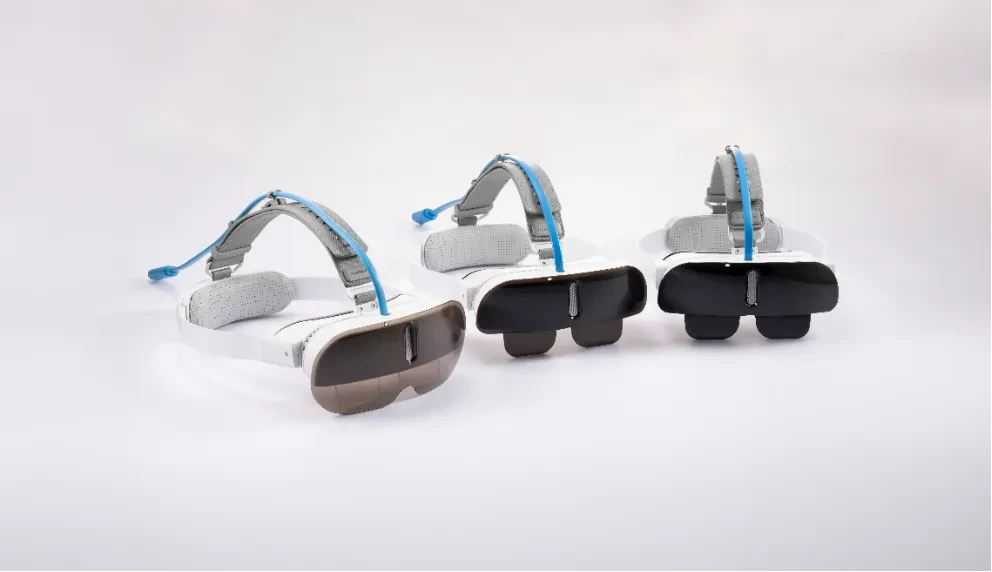
MediThinQ's Flagship Product: SCOPEYE Surgical Head-Mounted Display
In traditional operating rooms, surgeons often need to constantly shift their gaze between the patient, monitors, navigation systems, and robotic control interfaces. While information and screens proliferate, the time surgeons can truly dedicate to focusing on the patient does not necessarily increase. SCOPEYE aims to change this. It integrates data from endoscopes, navigation systems, robots, and various intraoperative imaging devices directly into the surgeon’s field of view via head-mounted 3D glasses, achieving a true sense of"Instant View"This product can be integrated with nearly all mainstream image display systems available on the market."Plug and Play", thus it can be widely applied in various fields such as spinal surgery, digestive surgery, urology, and plastic surgery.
An interesting detail is that if you visit Medtronic’s U.S. official website, you will find that SCOPEYE has been incorporated into itsAible™ Smart Ecosystem PortfolioAible is Medtronic’s intelligent surgical ecosystem designed for spinal and cranial procedures, integrating multiple modules such as navigation, intraoperative imaging, artificial intelligence, and digital workflows. The inclusion of SCOPEYE signifies that head-mounted display technology is being incorporated into a more comprehensive digital surgery system; its role has evolved beyond merely a display device to become a critical interactive interface connecting surgeons, imaging, and data.
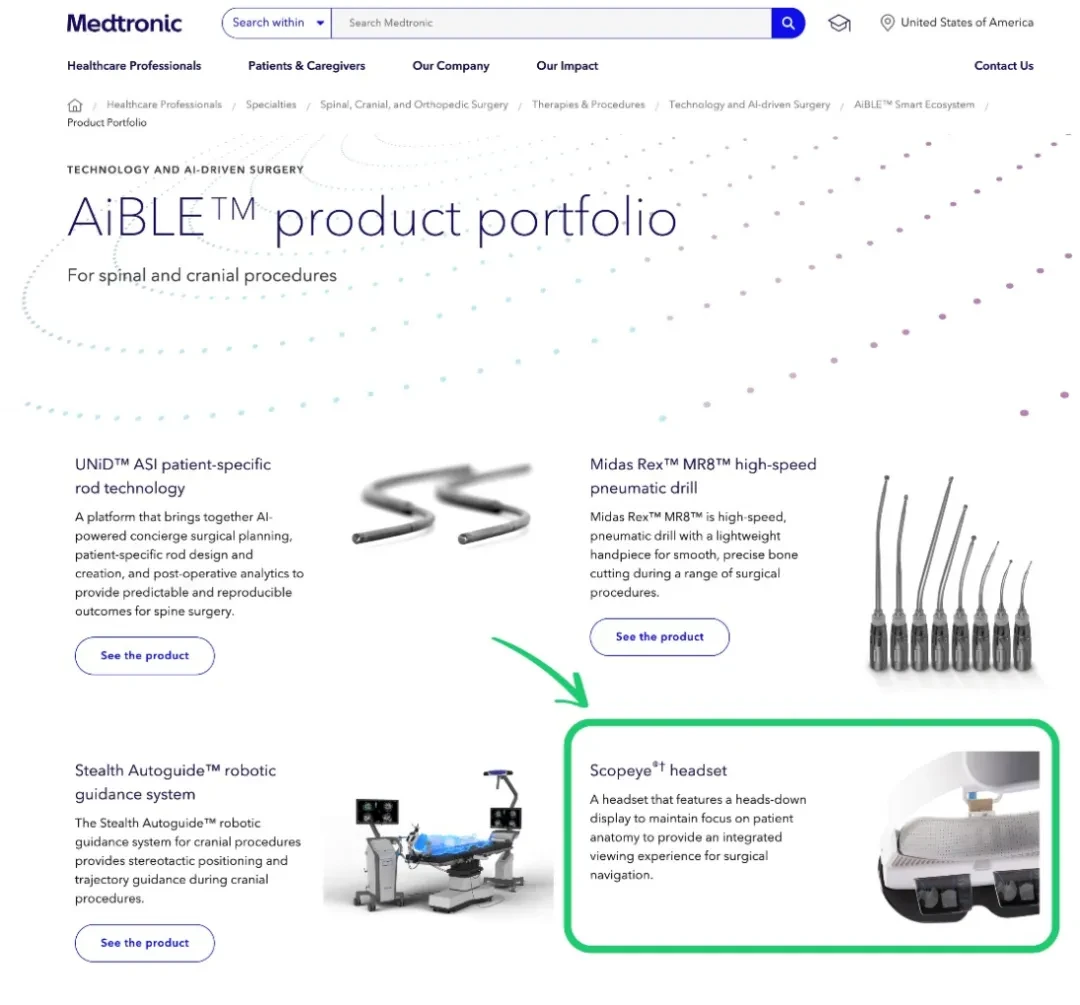
On the Medtronic official website, SCOPEYE is included in the Aible™ Intelligent Surgical Ecosystem portfolio.
and Baxter's collaboration this timeSHIYA, is another pathway.
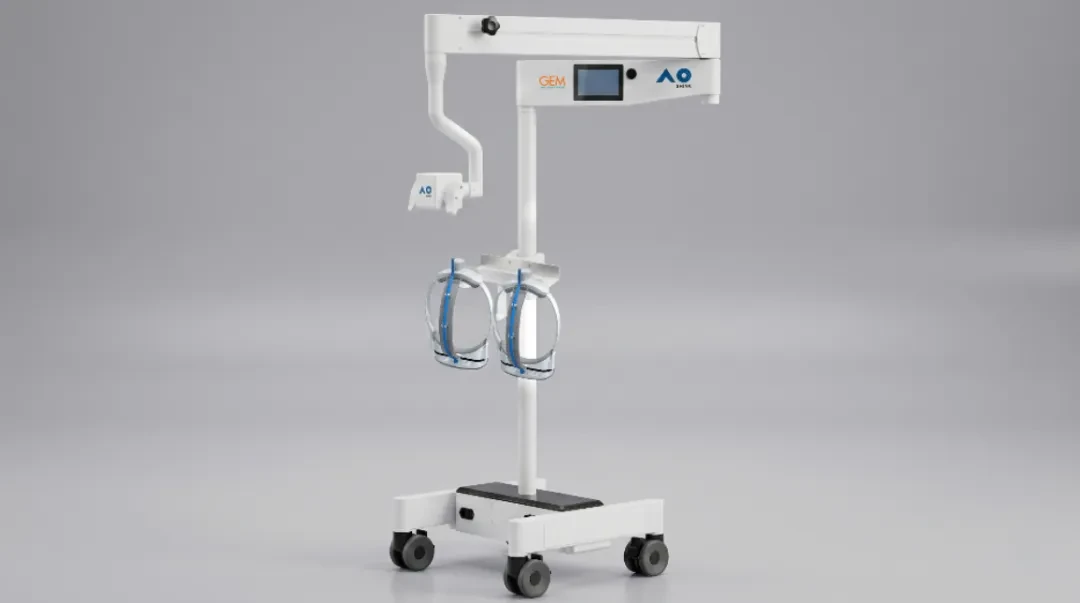
SHIYA Digital Microsurgery Platform consists of a digital exoscope and the SCOPEYE head-mounted display.
SHIYA consists of a digital microscopic exoscope and SCOPEYE, primarily designed for clinical scenarios requiring ultra-precise operations, such as microsurgery, neurosurgery, and otolaryngology. Unlike traditional optical microscopes that rely on fixed eyepieces, SHIYA allows surgeons to perform procedures and view the surgical field through paired head-mounted display devices, eliminating the need to bend their heads for prolonged periods.
More importantly, traditional microscopes are essentially an optical system, andSHIYA is a digital platform. Surgical footage can not only be shared in real time with the entire team but also recorded, stored, and analyzed, laying the foundation for remote teaching, AI-assisted decision-making, and the future development of robotic surgery.To some extent, it changes more than just doctors"How to View", and further determines the future of surgical data"How It Is Utilized"
Although the application scenarios differ, the underlying logic of the two products is highly consistent:Digitize optical imaging, transform individual visualization into team-based collaboration, and datafy the surgical process.. From this perspective, the two healthcare giants are actually targeting the same direction—Digital Intraoperative Imaging。

Michael Campbell, President of Baxter’s Synovis MCA (left), and Shengjun Ren, Founder and CEO of MediThinQ (right), jointly witnessed the establishment of an exclusive global commercialization partnership between the two parties.
# MediThinQ, Sought After by Two Giants Simultaneously: What Is Its Background?
This begins with the founderSeungjoon ImAs an expert in the field of display technology, he is also a serial entrepreneur. In his early career, he led the image display business at LG Electronics before traveling to France to found Neovia. In 2002, his company successfully listed on Euronext, reaching a valuation of €90 million.
The impetus for his second entrepreneurial venture arose from the genuine needs of a Japanese physician. At the time, this doctor told Ren Shengjun that although there were numerous smart glasses on the market, none could truly meet the demand for real-time, high-definition transmission in surgical scenarios—either the latency was too high, the image quality was insufficient, or they were uncomfortable to wear for extended periods. This seemingly simple clinical pain point pointed toward the field of digital surgical imaging, which had been dominated by traditional optical equipment for decades.
With this vision,In 2018, he returned to South Korea and founded MediThinQ., determined to truly introduce head-mounted displays and digital imaging technology into the operating room. Eight years later, SCOPEYE and SHIYA have completed their global rolloutOver 10,000 Clinical Surgeries, becoming a partner of the two giants.
# The "Simulation Era" of the Operating Room Is Coming to an End
Over the past two decades, robotics, navigation systems, and artificial intelligence have successively entered the operating room, yet the way physicians access information has remained virtually unchanged. Physicians still need to look down into microscopes and turn their heads to view monitors, switching back and forth between different devices.
Digital Intraoperative Imaging Is Changing This Paradigm. It not only redefines how physicians visualize, but more importantly, transforms previously underutilized intraoperative imaging into data. This enables the recording of surgical procedures, the replication of clinical experience, the participation of artificial intelligence in analysis, and lays the foundation for remote collaboration and robot-assisted decision-making.
If traditional microscopes address "seeing," then digital platforms address "understanding."
This is also why an increasing number of medtech giants are betting on this direction. Because the key to future competition in the operating room may no longer be who sees more clearly, but who can more efficiently acquire, share, and utilize information.
# Endorsement by Top Industry Experts
For the healthcare industry, it is always clinical practice that truly validates the value of technology. Behind MediThinQ stand several highly influential figures.
Among them, the most representative isProfessor Joon Pio Hong, President of the World Society for Reconstructive Microsurgery (WSRM). In the global field of microsurgical reconstruction, Professor Hong is recognized as one of the most representative experts in supermicrosurgery. Unlike traditional microsurgery, which deals with blood vessels ranging from 1 to 3 millimeters in diameter, supermicrosurgery requires performing anastomoses on lymphatic vessels and tiny nerves with diameters of less than 0.8 millimeters, or even as small as 0.3 to 0.5 millimeters. Such procedures pose extreme challenges for both surgeons and equipment, and Professor Hong is among the few experts worldwide who have long remained at the forefront of this technology.
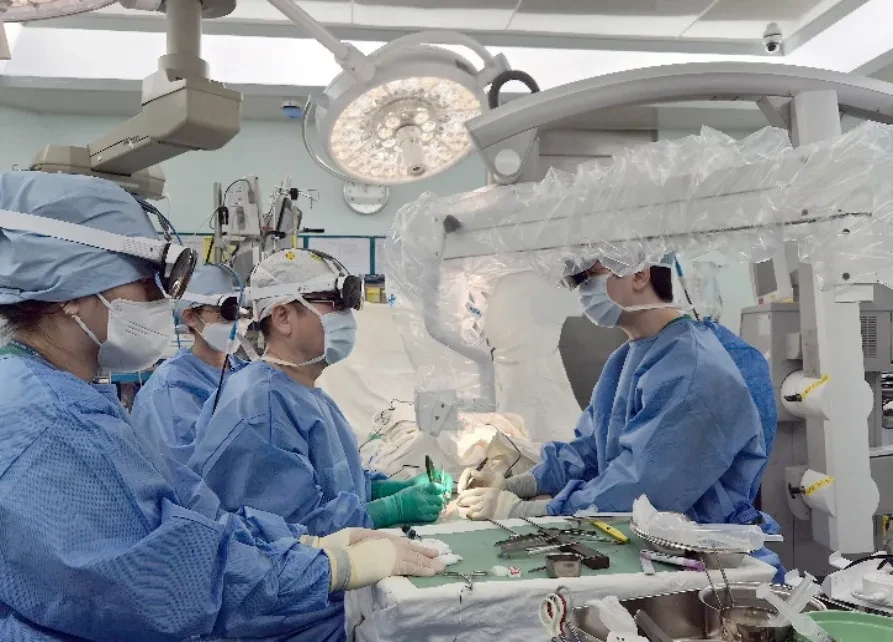
Professor Hong Jun-biao (third from left), Chief Medical Officer of MediThinQ, is performing microsurgery using the SHIYA system, which supports real-time sharing of the same surgical view for up to four surgeons simultaneously.
Professor Hong not only serves as MediThinQ'sChief Medical OfficerHe has also repeatedly utilized the SHIYA system to perform complex surgeries and conduct teaching sessions worldwide, even participating in charitable projects in countries such as Cameroon and Kyrgyzstan, where he carried out microsurgical procedures under extremely harsh conditions. Compared with traditional microscopes, which impose stringent requirements on space, transportation, and deployment, digital microscopy systems offer greater flexibility. When a microsurgical system can accompany physicians across borders and into diverse healthcare settings, it redefines not only the operating room but also the boundaries of medical resource accessibility.
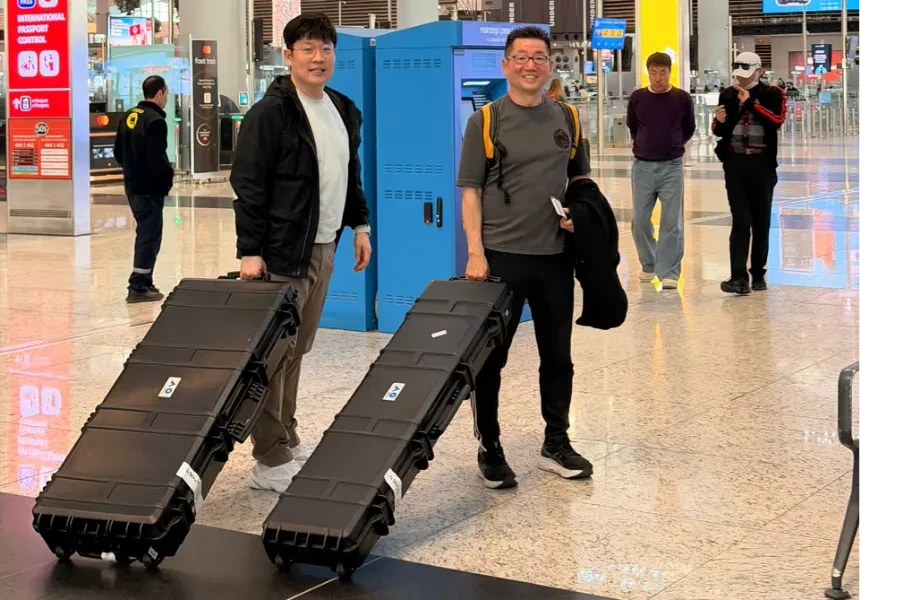
Professor Hong Jun-biao (right) and his team with the portable SHIYA, which can be packed into two suitcases
Departing for Africa to Conduct Charitable Surgical Procedures
In his 2025 study published in JPRAS OPEN, Professor Hong pointed out that,Digital exoscope technology is not only an upgrade to traditional microscopes but also has the potential to become a critical foundation for future augmented reality (AR), AI-assisted surgery, and data-driven surgical practices.。
Another heavyweight supporter isProfessor Peter NeliganIf Professor Hong represents the present state of microsurgery, Peter Neligan has witnessed nearly the entire developmental course of modern reconstructive microsurgery. As Professor Emeritus of Surgery at the University of Washington in the United States, he is regarded as one of the most influential experts in reconstructive microsurgery worldwide. The textbook Plastic Surgery, edited by him, has long been considered a classic reference in the field of plastic and reconstructive surgery, shaping the training systems for generations of surgeons globally. Following his participation in the SHIYA system evaluation, this luminary of the industry, who has observed decades of advancements in microsurgery, provided highly favorable remarks:"SHIYA represents the future of reconstructive microsurgery."
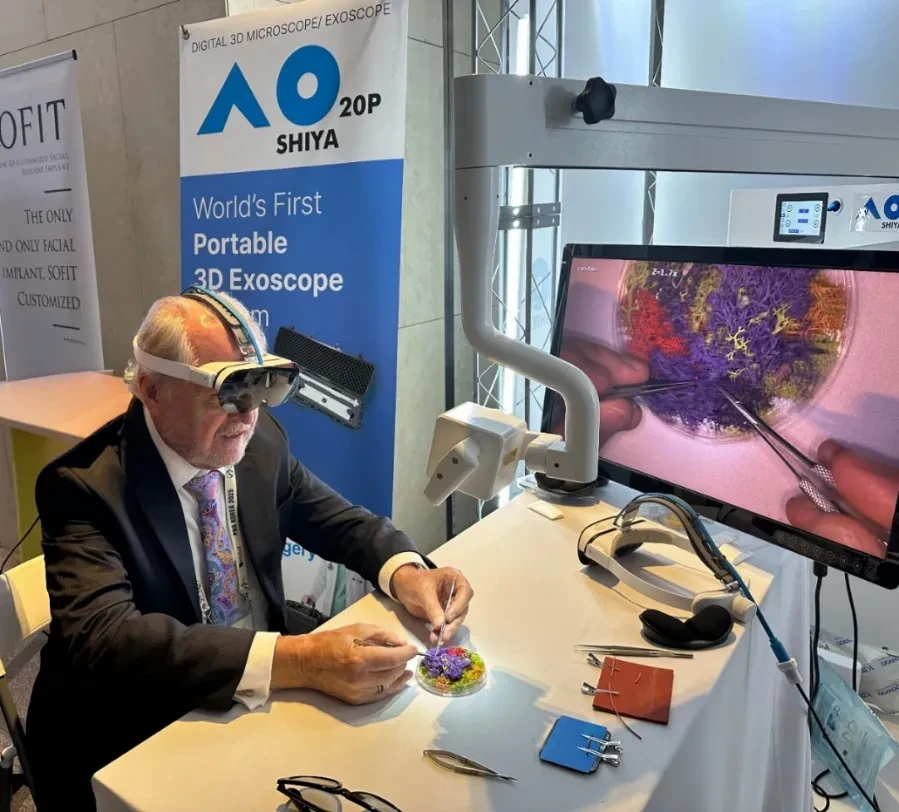
Professor Peter Neligan is trialing the SHIYA system

Professor Peter Neligan (left) and Ren Shengjun, Founder and CEO of MediThinQ (right)
Notably, in addition to endorsement from clinical experts, MediThinQ is backed by another name that is highly familiar within China’s healthcare industry.In 2024, Chris Lee, Founder and CEO of VentureBlick, announced his appointment as Chairman of the Board of Directors of MediThinQ.. Prior to founding VentureBlick, a healthcare globalization agency, Chris served successively as President of Greater China at Bayer and President of Greater China at Medtronic. In recent years, he has consistently driven Asian healthcare innovators into international markets, with MediThinQ standing out as one of the representative cases.

MediThinQ Founder and CEO Ren Shengjun (left) and Chairman of the Board Li Xilie (right)
From clinical leaders like Hong Junbiao, to academic authorities like Peter Neligan, and industry leaders like Chris Lee, their collective backing of the same company is itself a noteworthy signal for the industry. What they are betting on may not be just a single product, but the next-generation surgical ecosystem represented by digital intraoperative imaging.
# Will the Chinese Market Become an Important Destination?
In China, the sector for digital intraoperative imaging is also attracting numerous innovative enterprises and capital investments, with many local players already established in niche areas such as fluorescence imaging and AR navigation. MediThinQ, through its deep ties with international giants and direct involvement of top clinical experts, has forged a unique path that combines globalization with localization.
In fact, MediThinQ has begun to accelerate its strategic deployment in the Chinese market.In 2025, its core product SCOPEYE received approval from the National Medical Products Administration of China and entered into an exclusive strategic partnership with Sinopharm Holding Medical Devices.

Sinopharm Medical Devices and MediThinQ Launch Strategic Partnership in 2025
And this time, SHIYA has obtained BaxterSynovisGlobal commercial support, to some extent, reflects the transition of digital intraoperative imaging from innovative trials to mainstream adoption. As more international clinical centers begin to adopt this technology, the development process in the Chinese market is likely to be further accelerated. Currently, SHIYA’s complete system is advancing its introduction plan for the Chinese market. Given its mobile and lightweight design, it is expected to break down the barriers of traditional microscopes in terms of cost and deployment flexibility.
# Final Remarks
Many industrial transformations initially appear to be ordinary collaborations.
It was not until many years later that people realized this was actually the starting point of the industry's shift. Baxter and Medtronic chose different products, but their strategic bets were highly aligned.
As the operating room transitions from the optical era to the digital age, what truly changes may be not just the screen before the surgeon’s eyes, but the entire surgical world’s approach to acquiring information, accumulating experience, and creating value.
Digital Intraoperative Imaging May Be Becoming One of the Most Critical Infrastructures in Next-Generation Operating Rooms.
And this transformation has only just begun.