

MoonLake to Submit BLA for Sonelokimab in Hidradenitis Suppurativa Following Successful Phase 3 VELA Trial

Johnson & Johnson
Medical Device R&D and Manufacturer
▎Armstrong
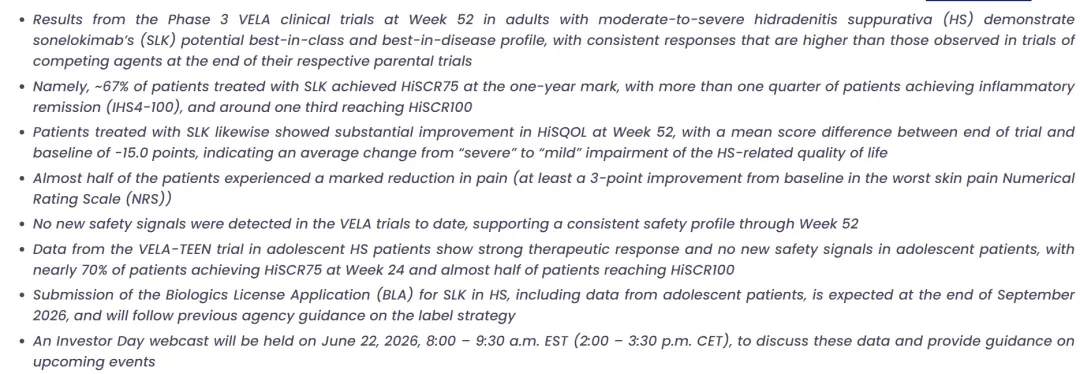
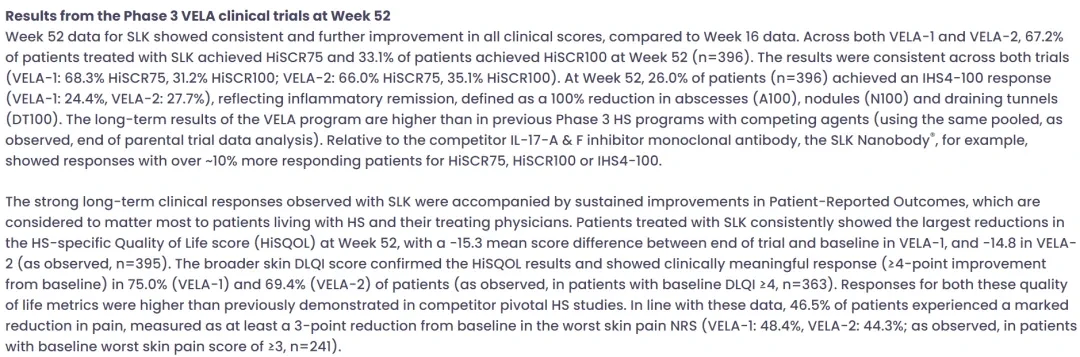
On June 21, 2026, Moonlake announced the 52-week Phase III clinical trial VELA data for sonelokimab, an IL-17A/F nanobody bispecific antibody, in the treatment of hidradenitis suppurativa. The data showed that after 52 weeks of treatment, 67.2% of patients achieved HiSCR75, and 33.1% achieved HiSCR100 (VELA-1:68.3% HiSCR75, 31.2% HiSCR100; VELA-2: 66.0% HiSCR75, 35.1% HiSCR100). After 52 weeks of treatment, 26.0% of patients achieved IHS4-100 (reflecting complete resolution of inflammation), with rates of 24.4% in VELA-1 and 27.7% in VELA-2. Interim data disclosed last September,The HiSCR rates at 16 weeks of sonelokimab treatment were 17.3% and 10.3%, respectively, and the HiSCR50 rates were 21.3% and 15.7%, respectively. The updated long-term data demonstrate a continued deepening of efficacy.
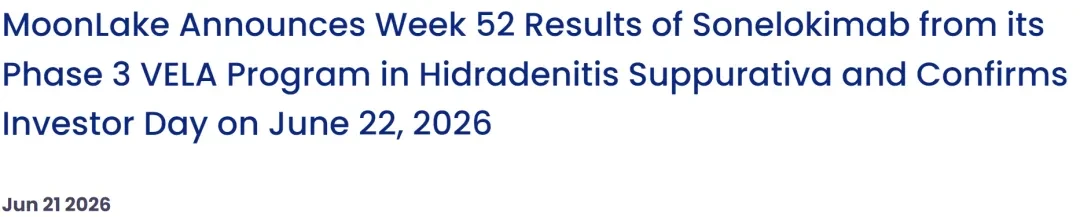
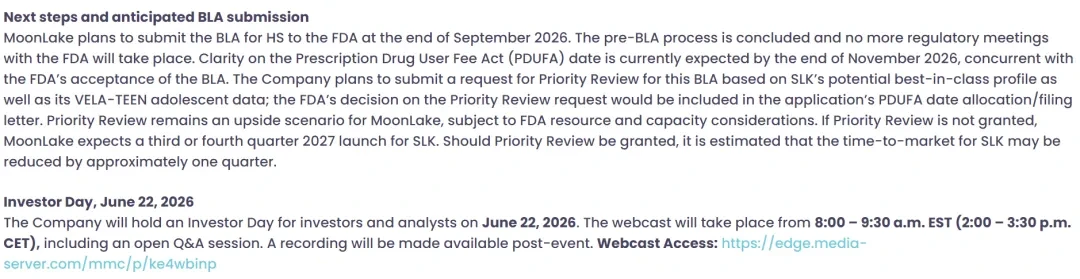
Moonlake plans to file its listing application this September, with the PDUFA date expected in November 2026.
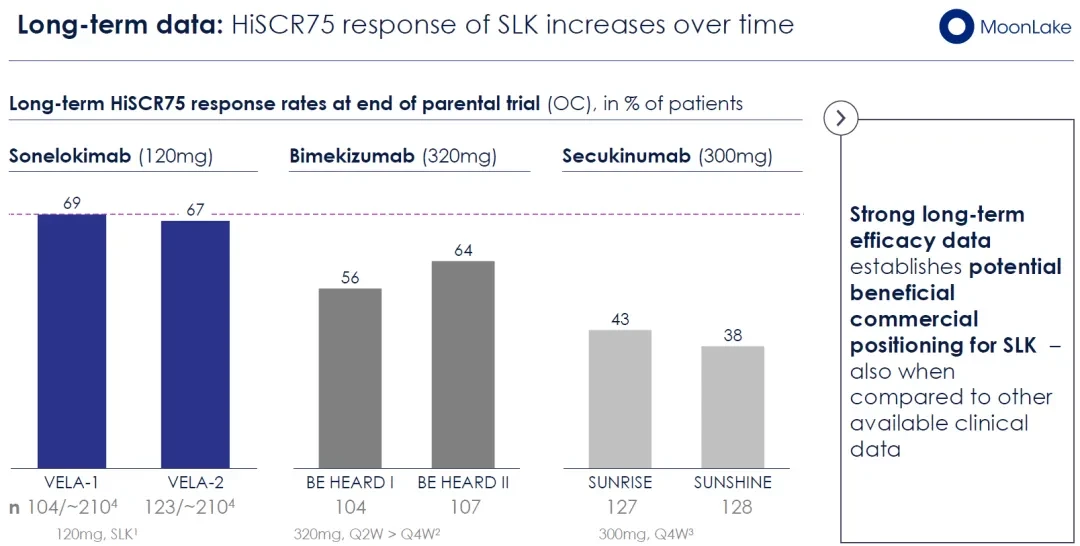
Sonelokimab demonstrates superior efficacy in HS compared to competitors (non-head-to-head).
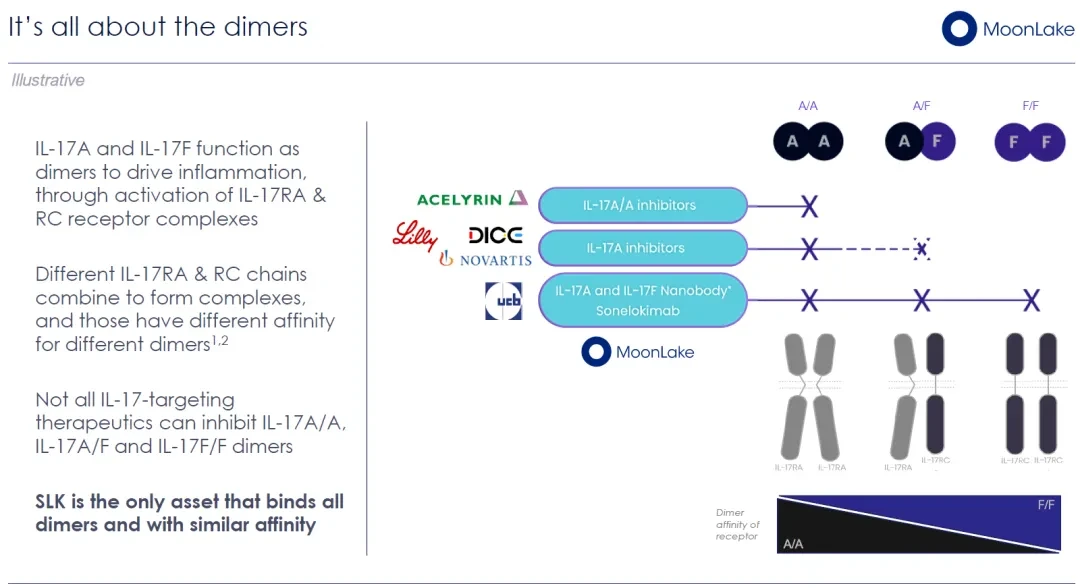
Sonelokimab can simultaneously inhibit IL-17A/A, IL-17A/F, and IL-17F/F dimers.
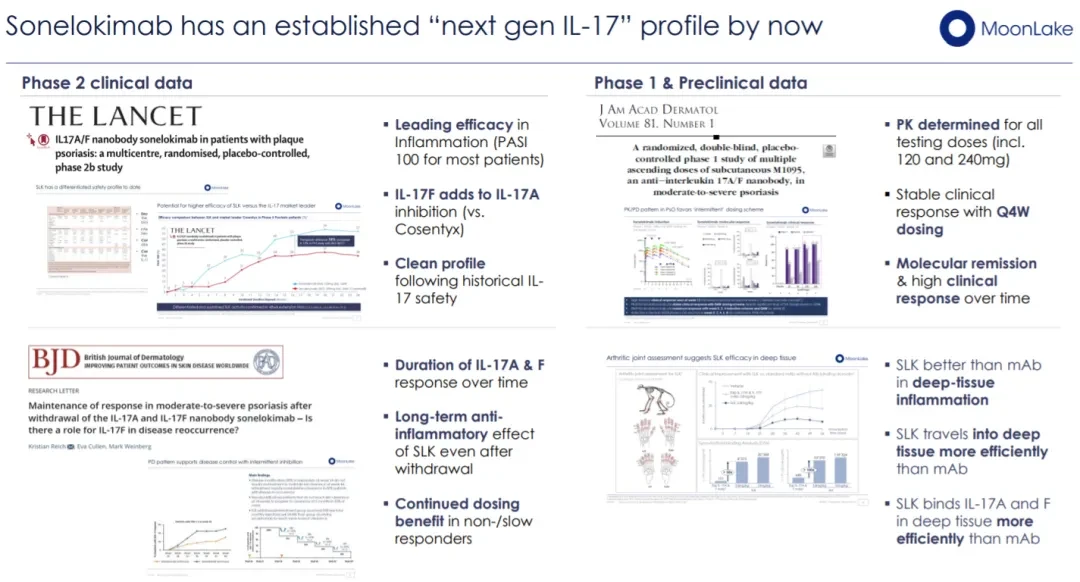
Preclinical studies indicate that sonelokimab, in its nanobody format, exhibits superior efficacy in targeting deep-tissue inflammation compared to conventional antibodies, owing to its lower molecular weight.
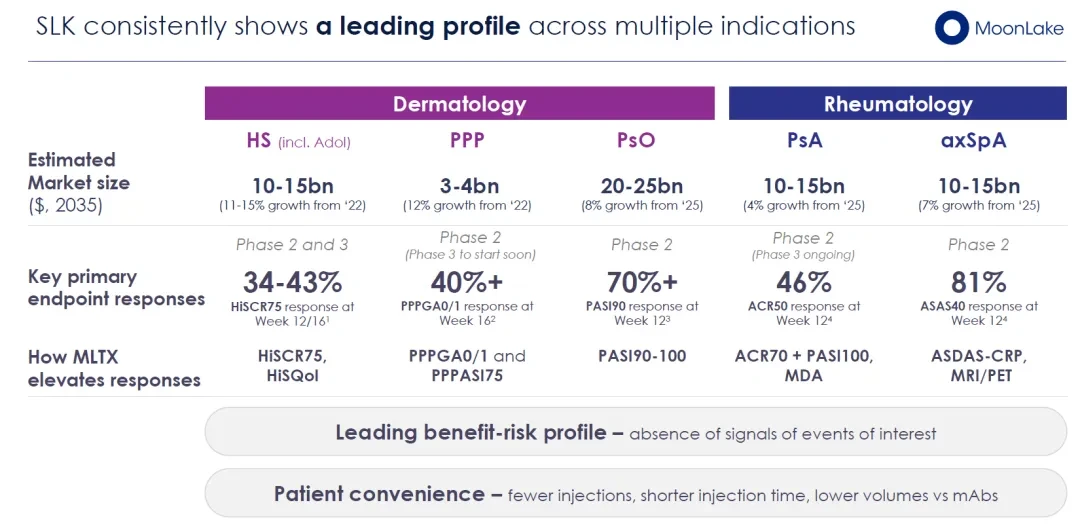
Sonelokimab is also being explored for multiple indications, including hidradenitis suppurativa, psoriatic arthritis, and psoriasis.
Summary
In the iterative development of Th17 pathway therapeutics, including nanobodies, oral cyclic peptides, and small molecules, Johnson & Johnson/Protagonist’s IL-23R oral cyclic peptide has already been approved for market launch, while Lilly’s IL-17 small molecule remains under clinical exploration, and Moonlake’s IL-17 bispecific nanobody is poised to submit its marketing application.

Armstrong Technology: A Comprehensive Review Series
A Comprehensive Review of Complement-Targeted Drug Technologies;
A Comprehensive Overview of Bispecific Antibody Technology in China;
A Comprehensive Review of CMS Pharmaceutical's Technologies;
A Comprehensive Review of Harbour BioMed's Technology; A Comprehensive Overview of RemeGen Biotechnology; A Comprehensive Review of Zai Lab’s Technology; A Comprehensive Review of WuXi Biologics; A Comprehensive Review of Hengrui Medicine's Technologies; Comprehensive Review of Hansoh Pharmaceutical's Technology; Comprehensive Technical Overview of Chia Tai Tianqing; A Comprehensive Review of GeneChem’s Technologies; Comprehensive Review of CStone Pharmaceuticals' Technologies; A Comprehensive Review of BeiGene's Technologies; A Comprehensive Review of BeiGene’s Technologies, 2nd Edition; A Comprehensive Overview of Innovent Biologics; A Comprehensive Review of Innovent Biologics, 2nd Edition; A Comprehensive Review of Akeso’s Technologies; Comprehensive Overview of Henlius Biotech's Technology; Comprehensive Review of Simcere Pharmaceutical's Technology; A Comprehensive Review of Junshi Biosciences; A Comprehensive Review of Genor Biotechnology; A Comprehensive Overview of Zhidao Biotechnology; A Comprehensive Review of Dole Biotechnology; Shangjian Biotechnology: A Comprehensive Overview; A Comprehensive Review of Alphamab's Technologies; Comprehensive Review of Keymed Biosciences' Technology; A Comprehensive Overview of Biocytogen; Comprehensive Overview of Li Jin Biotechnology; Comprehensive Review of Kangqiao Capital's Technology; Yu Guoliang's Antibody Drug Portfolio; A Comprehensive Overview of Quanxin Biotechnology; A Comprehensive Review of Anyuan Pharmaceutical Technology; A Comprehensive Review of 3SBio’s Technology; Comprehensive Overview of Renhui Biotechnology; Comprehensive Overview of Lepu Biotechnology; A Comprehensive Review of Tongrun Biotechnology; A Comprehensive Review of ImmuneOnco’s Technology; A Comprehensive Overview of PegBio Biotechnology; A Comprehensive Overview of Mabwell Bioscience Technology; A Comprehensive Review of Momenta’s Technology; A Comprehensive Overview of NGM Technology; A Comprehensive Overview of Pumas Biotechnology; Comprehensive Review of Pumi Biotech 2.0; Comprehensive Overview of Clover Biopharmaceuticals; Comprehensive Review of Zeling Pharmaceutical's Antibody Drugs; Comprehensive Review of Hengrui Medicine's Antibody Drugs; A Comprehensive Review of Qilu Pharmaceutical's Antibody Drugs; Comprehensive Overview of CSPC Pharmaceutical Group's Antibody Drugs; Comprehensive Overview of Hansoh Pharma’s Antibody Drugs; Comprehensive Overview of Huahai Pharmaceutical’s Antibody Drugs; Comprehensive Overview of Kelun Pharmaceutical's Antibody Drugs; A Comprehensive Review of Bio-Thera’s Technologies; Comprehensive Review of Vanish Technologies。