

MedTecX Completes First Patient Enrollment for Its Ultra-Minimally Invasive Implantable Tibial Nerve Stimulation System, Achieving Another Milestone in Its Platform Layout

MedTecX
Medical Technology Developer
On June 9, 2026, the first patient was successfully enrolled in the registration clinical trial for MedTecX's independently developed ultra-minimally invasive implantable tibial nerve stimulation system, performed by Professor Zhang Yaoguang's team at Beijing Hospital.
As the world's first implantable tibial nerve stimulator integrating “miniaturization, battery-free operation, and closed-loop adaptive control,” this product addresses the long-term management needs of patients with overactive bladder (OAB). Through innovative designs including single-session minimally invasive implantation at the ankle, wireless external power transmission, and closed-loop adaptive algorithms, it overcomes the limitations of traditional sacral neuromodulation—such as high invasiveness, the need for two-stage surgeries, limited battery life, and reliance on manual parameter adjustment by clinicians. This offers a new neuromodulation pathway for patients with refractory OAB or those intolerant to medications, balancing efficacy, convenience, and long-term adherence.
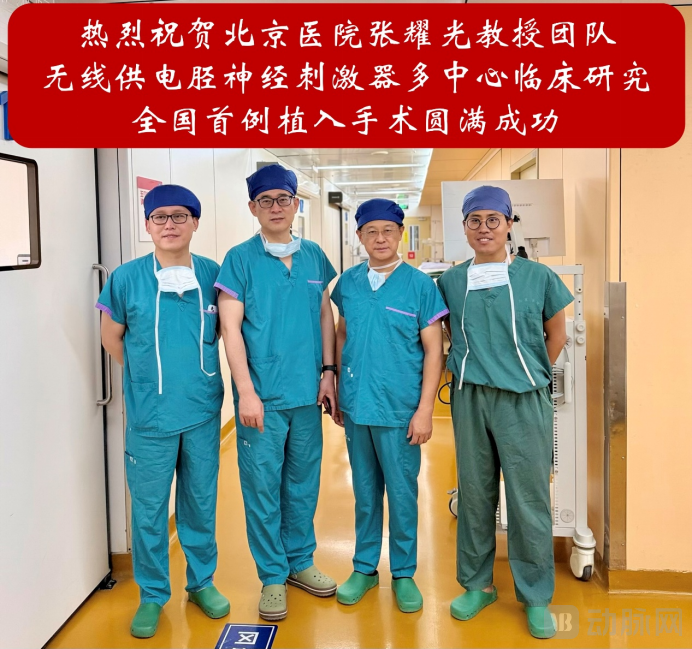
Professor Zhang Yaoguang from the Department of Urology, Beijing Hospital, commented: MedTecX's implantable tibial nerve stimulation system offers an ultra-minimally invasive and long-lasting therapeutic option for patients with overactive bladder (OAB). The procedure is performed under local anesthesia at the ankle within 30 minutes, with a short learning curve for surgeons. Patients enjoy rapid postoperative recovery and favorable tolerability. Compared with traditional sacral neuromodulation devices, this system features a safer implantation site and minimal trauma, with markedly reduced risks of infection and device migration. Its integrated design truly delivers instant treatment after implantation and removes concerns over battery replacement. It bears high clinical value for patients seeking stable long-term symptom control, those who wish to avoid drug side effects, or individuals reluctant to undergo conventional sacral neuromodulation surgery.
Notably, this enrollment in the registrational clinical trial represents another pivotal breakthrough for MedTecX in the field of chronic urological dysfunction treatment, following its approval of China's first domestic thermal steam prostate therapeutic device last February. The company's platform layout spanning energy ablation to neuromodulation continues to deliver tangible results.
Overactive bladder (OAB) is one of the most prevalent functional disorders in urology, characterized primarily by urinary urgency, often accompanied by frequency, nocturia and urge incontinence. According to data from the Chinese Guidelines for the Diagnosis and Treatment of Overactive Bladder (OAB) (2025 Edition) released by the Urology Branch of the Chinese Medical Association, the prevalence of OAB among Chinese adults aged 40 and above has reached 23.9%, and the figure keeps rising with age. Since there is no curative therapy to date, all existing OAB treatments focus on symptom relief and long-term disease management.
Pharmacotherapy is a cornerstone of current overactive bladder (OAB) management; however, its efficacy is limited in patients with moderate-to-severe disease, and it is frequently associated with adverse effects and poor long-term adherence. Furthermore, the lack of precision medications tailored to specific OAB subtypes hinders the implementation of individualized, precision therapy. For patients with inadequate response to pharmacotherapy, intravesical botulinum toxin injection serves as an alternative option, but it necessitates repeated administrations and carries risks of urinary retention and urinary tract infections, thus failing to meet the requirements for long-term disease management.
Against this backdrop, neuromodulation has gradually emerged as a critical therapeutic pathway bridging pharmacological treatment and traditional surgical intervention. The current mainstream clinical techniques are Sacral Neuromodulation (SNM) and Tibial Nerve Stimulation (TNS).
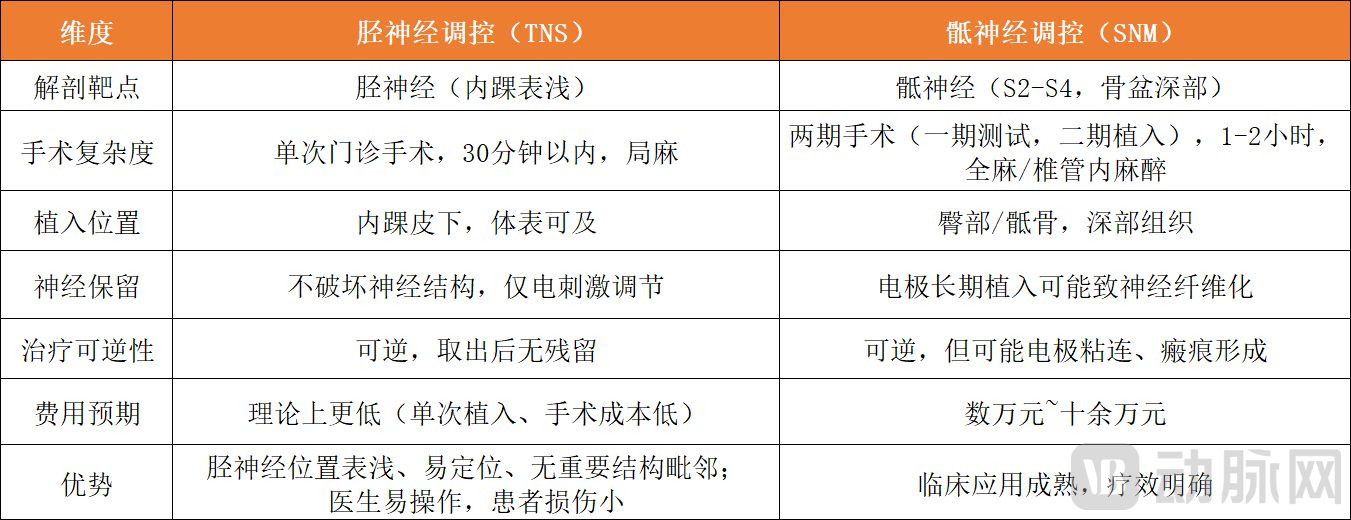 Comparison of Tibial Nerve Stimulation (TNS) and Sacral Neuromodulation (SNM)
The sacral nerve, located deep in the pelvis, serves as a critical neural pathway regulating bladder function. Sacral Neuromodulation (SNM) delivers consistent modulation of nerve signals by implanting electrodes adjacent to the S3 foramen and a subcutaneous implantable pulse generator (IPG) in the buttocks, yielding proven and durable therapeutic effects. Nevertheless, SNM requires two separate surgical stages: a trial stimulation phase followed by permanent implantation, leading to high overall treatment costs. The built-in battery of the IPG generally only lasts 5 to 7 years, necessitating replacement surgery afterward. Additionally, most existing devices adopt open-loop stimulation modes, whose parameters rely on manual adjustment by clinicians. These drawbacks result in high barriers to treatment access and hinder widespread clinical adoption.
In the search for safer and more convenient alternatives, researchers have turned their attention to the tibial nerve. The tibial nerve shares a common nerve root origin with the sacral nerves that govern bladder function. By stimulating the tibial nerve near the ankle, relevant neural pathways can be indirectly modulated, thereby improving bladder function.
Numerous clinical studies have validated that Percutaneous Tibial Nerve Stimulation (PTNS) can effectively alleviate symptoms of refractory overactive bladder (OAB). More importantly, PTNS can be administered either non-invasively via surface electrodes or through minimally invasive puncture procedures. Its therapeutic pathway avoids central nervous structures, featuring simpler operation and superior safety, making it particularly suitable for outpatient and at-home treatment settings. Nevertheless, conventional PTNS requires patients to return to hospitals regularly for percutaneous electrical stimulation, and treatment compliance tends to decline gradually as the therapy cycle extends. Fundamentally, while PTNS lowers operational complexity and surgical trauma associated with neuromodulation, it fails to fully address the challenges of long-term disease management.
Implantable Tibial Nerve Stimulation (ITNS) has thus emerged. By implanting a miniature stimulator near the tibial nerve through a single minimally invasive procedure, ITNS allows patients to receive continuous treatment at home without frequent hospital visits. This approach retains the safety and minimally invasive advantages of tibial nerve stimulation while addressing the compliance challenges associated with Percutaneous Tibial Nerve Stimulation (PTNS) through a "one-time implantation, long-term management" model, making it an important development direction in the field of neuromodulation.
In April 2026, Boston Scientific completed its acquisition of Valencia Technologies, incorporating the implantable tibial nerve stimulation device eCoin into its urology product portfolio. Back in October 2025, Boston Scientific also purchased Nalu Medical, a developer of miniaturized, batteryless neuromodulation solutions, for USD 600 million. This series of strategic M&A moves signals that implantable tibial nerve stimulation and miniaturized neuromodulation technologies are emerging as key growth trajectories for the global neuromodulation industry.
The ultra-minimally invasive implantable tibial nerve stimulator, which has now entered registered clinical trials, is a key innovative product developed by MedTecX in alignment with the long-term development trends of neuromodulation. The system comprises an implantable electrode lead, a neurostimulator, physician programming software, and a patient programmer.
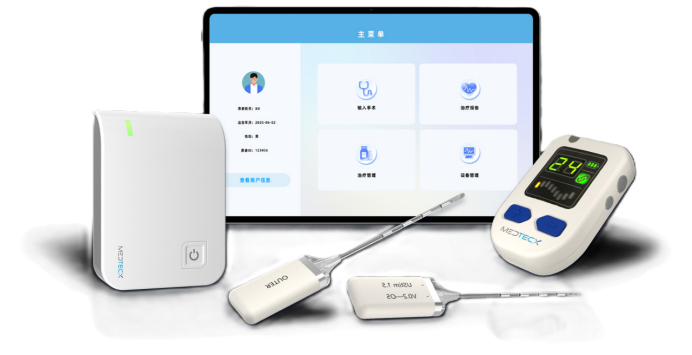
MedTecX's Self-Developed Ultra-Minimally Invasive Implantable Tibial Nerve Stimulation System
During the procedure, under local anesthesia and ultrasound guidance, the physician implants a miniature passive stimulator subcutaneously near the tibial nerve at the patient's ankle through an incision of approximately 1 cm. The entire process takes about 20 to 30 minutes. Postoperatively, the patient wears the neurostimulator at the ankle and initiates stimulation according to a preset program via NFC (Near Field Communication) wireless power transfer. This modulates bladder-related neural pathways, thereby improving symptoms of overactive bladder (OAB). Meanwhile, physicians can utilize programming software to review treatment records, voiding diaries, and changes in symptoms, continuously optimizing therapeutic parameters to achieve long-term follow-up and personalized management.
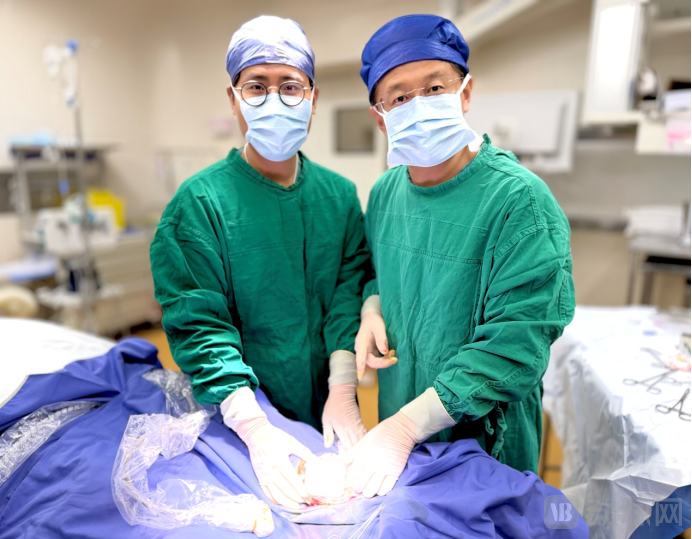
Neuromodulation Enters the Era of Ultra-Minimally Invasive Ambulatory Surgery and Personalized Therapy
The core enablers behind this technology paradigm lie in its three groundbreaking innovations: miniaturization, batteryless design, and closed-loop adaptive control.
First comes the miniaturized design. For implantable neuromodulation devices, device volume directly determines implantation trauma, patient acceptance and clinical operational difficulty. Conventional implantable pulse generators (IPGs) generally have a volume of over 10 cubic centimeters, roughly the size of a grape. By adopting chip integration, circuit optimization and advanced packaging technologies, MedTecX has shrunk its implant to approximately 1 cubic centimeter, equivalent to a capsule. The entire system can be implanted via an incision of only around 1 centimeter, drastically lowering surgical complexity for clinicians and reducing trauma for patients.
However, the miniaturization of precision devices often entails an exponential increase in engineering complexity—reduced dimensions lead to decreased coil coupling efficiency, power compensation introduces thermal management challenges, and requirements for encapsulation hermeticity and long-term reliability rise concurrently. It is by continuously breaking through key technologies under these multiple constraints that MedTecX has ultimately achieved a balance among power transfer efficiency, output stability, and biocompatibility.
Second is the batteryless architecture paired with external wireless power supply. For a long time, built-in batteries have served as the core component of implantable neuromodulation devices, yet they also stand as a major bottleneck restricting further miniaturization. As battery capacity degrades over time, patients may be forced to undergo secondary surgeries for device replacement down the line.
To address this pain point, MedTecX has devised an ingenious architecture consisting of a passive implant and an external wearable controller. Relying on near-field communication (NFC) wireless power transfer technology, the external neuromodulator delivers continuous power to the implant on demand, allowing the implantable device to operate long-term without an internal battery. This design not only enables further miniaturization of the device but also eliminates surgical risks associated with battery replacement. In addition, patients can flexibly adjust treatment frequency and duration in accordance with doctors'instructions, which better caters to the long-term management needs of chronic conditions such as overactive bladder (OAB).
Most importantly, the system is equipped with closed-loop adaptive control capability. In conventional neuromodulation therapy, stimulation parameters are mainly adjusted by physicians based on patients’ subjective feedback. However, patients vary widely in disease severity, nerve sensitivity and treatment response, making fixed stimulation regimens unable to meet the long-term demands of personalized therapy.
To tackle this issue, MedTecX has built a closed-loop management system that collects multi-dimensional data including impedance monitoring, temperature feedback, electromyography signals, voiding logs and symptom fluctuations. The system continuously captures and analyzes patient physiological status, dynamically evaluates therapeutic efficacy, and adaptively optimizes stimulation parameters via proprietary algorithms, while supplying objective evidence for clinicians’ subsequent device programming decisions.Compared with the conventional parameter adjustment model that relies heavily on doctors'experience, this multi-data closed-loop framework is expected to further boost treatment response rates and long-term therapeutic outcomes, enabling personalized, precise therapy and adaptive management with customized regimens tailored to each individual patient.
Compared with international competing products, the ultra-minimally invasive implantable tibial nerve stimulation lead developed by MedTecX requires no lead penetration through the epidermis, featuring a simpler implantation workflow and less trauma, with greater potential for outpatient deployment and large-scale clinical promotion. Meanwhile, this product can form a tiered complementary lineup with MedTecX's already launched non-invasive neuromodulation devices, delivering a comprehensive portfolio of neuromodulation treatment options for patients at distinct disease stages and with varying treatment compliance demands.
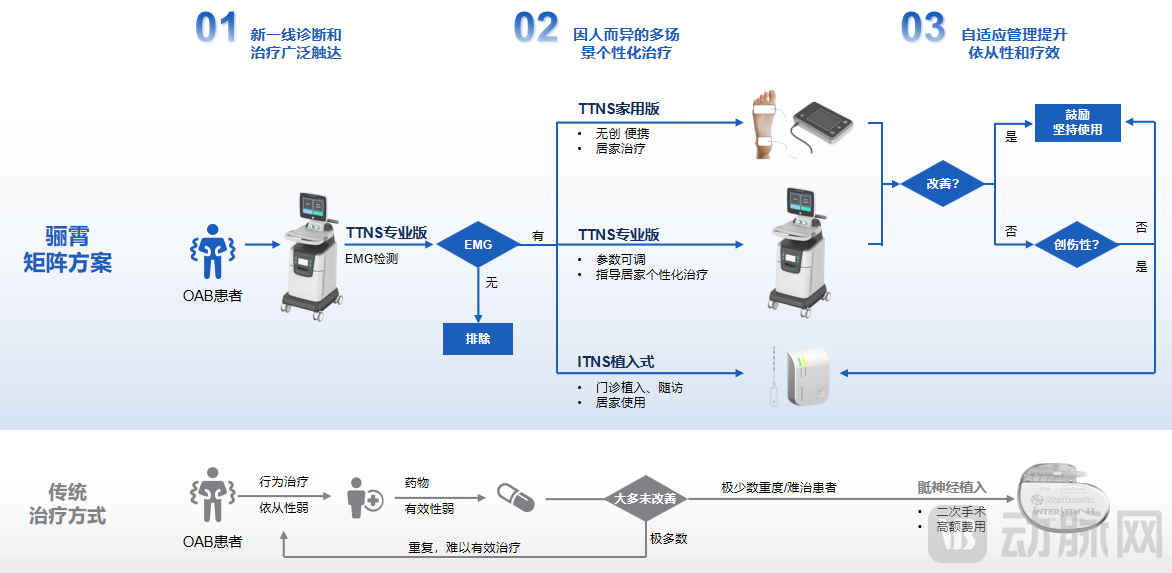
MedTecX's Product Portfolio Provides Full-Cycle Disease Management for Patients with Urinary Incontinence
Whether a new medical technology can truly achieve widespread adoption is determined not solely by its efficacy, but also by factors such as the ease with which physicians can master it, the feasibility of its implementation in hospitals, and patients'willingness to accept it. The same holds true for neuromodulation.
In the past, neuromodulation was mostly limited to highly invasive implantation, complicated surgeries and treatment in large medical centers. Although its clinical value has been fully validated, its penetration rate has remained low. In recent years, as technologies including miniaturization, wireless power supply and intelligent control have matured, neuromodulation is evolving toward lightweight, long-term and widely accessible solutions.
Future neuromodulation is not only a therapeutic technique but also holds promise as an important tool for chronic disease management.
From this perspective, the ultra-minimally invasive implantable tibial nerve stimulator that has entered registrational clinical trials is not only an innovative product targeting OAB but also a comprehensive demonstration of MedTecX's neuromodulation platform capabilities. Centered on core technologies such as non-invasive neuromodulation, miniaturized implantation, wireless power transmission, battery-free operation, closed-loop feedback, and algorithmic control, MedTecX has established a relatively comprehensive technological foundation.
Leveraging this platform, MedTecX will expand to additional neural targets in the future, exploring treatments across a broader spectrum of chronic diseases. Through a tiered product portfolio combining “non-invasive therapy” and “ultra-minimally invasive implantation,” the company aims to provide more precise, personalized treatment options for patients at different stages of disease progression.
This inaugural clinical enrollment is merely the beginning. From overactive bladder (OAB) to the broader field of chronic diseases, MedTecX is exploring not only the clinical application of an innovative product but also a new pathway for long-term disease management through neuromodulation. As neuromodulation becomes sufficiently minimally invasive, intelligent, and widespread, its value may extend beyond treatment itself, becoming an integral component of chronic disease management systems.