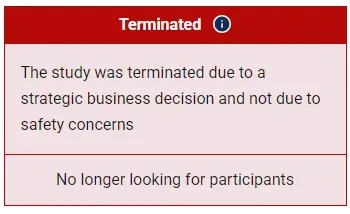
Gene and cell therapy for hemophilia has indeed encountered significant challenges in commercialization; previously, Pfizer,BioMarinLet’s not even mention the delistings; now another company has withdrawn.Recently inU.S. Clinical Trials WebsiteClinicalTrials.govBe Biopharma updated the latest status of the Phase I/II clinical trial (BeCoMe-9) of its core pipeline candidate BE-101 for the treatment of hemophilia B.Displayed as "Terminated".Termination reason marked as“Strategic business decisions, not driven by safety considerations”。As of press time,Be BioThe company has not commented on this matter nor released any related information.
New Technologies Also Seem Unable to Succeed in the Commercialization of Hemophilia Treatments
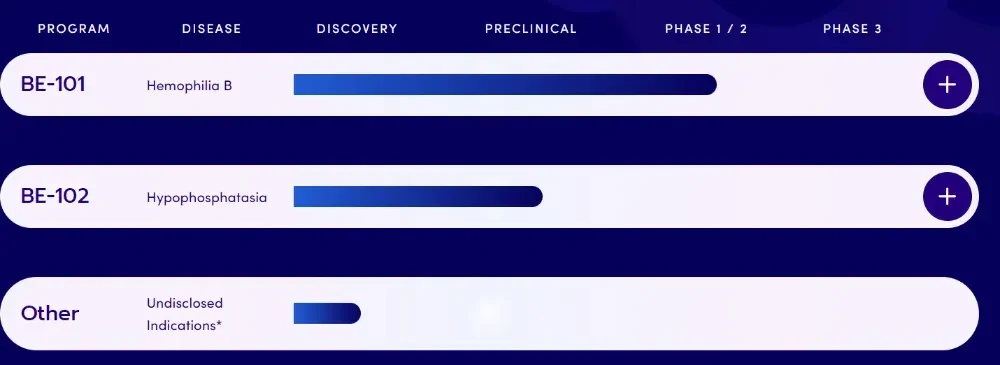
The termination of BE-101 has drawn industry attention, closely tied to its underlying technology platform.What is certain is that the cost of this therapy is undoubtedly substantial.Be Biopharma was founded in 2020 by Dr. David Rawlings and Dr. Richard James, pioneers in B-cell engineering at the Seattle Children’s Research Institute.The company's core technology lies inEngineered B Cell Medicines (BCMs), belonging to autologous cell therapy.It is also a fully customized product that requires extracting cells from the patient, precisely inserting transgenes encoding therapeutic proteins into specific chromosomal loci of the B-cell genome, and then converting them into plasma cells through in vitro expansion and altered culture conditions. After infusion back into the patient, these plasma cells naturally migrate to the bone marrow, where they engraft long-term and continuously secrete therapeutically active proteins.Since each patient constitutes an independent batch, large-scale mass production akin to traditional pharmaceuticals is unfeasible. Furthermore, given the inherent processes of personalized therapy, the costs are evidently exorbitant.However, the advantage of this therapy is that it allows for repeated dosing. In contrast, AAV gene therapy is not suitable for pediatric patients, as it cannot be re-administered or titrated to meet the increasing demand for clotting factor as children grow.Be Biopharma's Core PipelineBE-101Specifically targeting hemophilia B, this approach aims to enable engineered B cells to continuously secrete functional coagulation factor IX (FIX), providing patients with a one-time infusion therapy that offers long-term efficacy.However, it is currently unknownBE-101How high is the persistence... The CEO saidThe BE-101 design is for one year or longer, which certainly does not reach the level of a lifetime.Therefore, the durability of this therapy clearly does not reach the level of “one treatment, lifelong benefit.”From a more realistic perspective, in December 2024, Be Biopharma officially launched the first-in-human Phase I/II clinical trial of BE-101—BeCoMe-9 (NCT06611436). In July 2025, the company announced the completion of dosing in the first patient... From July 2025 to the announcement of termination in June 2026, is it just under one year?Has the persistence not reached one year?Reference Source:https://clinicaltrials.gov/study/NCT06611436https://be.bio/investors-media/news-releases/\