Medtronic's Strategic Pivot in 2026: Precision Acquisitions and Portfolio Streamlining

Medtronic
Medical Device Manufacturer
▲Source: Medical Device Hub
▲ Please credit the above source when reposting.
Recently, medical device giant Medtronic announced the completion of its full acquisition of Scientia Vascular.
Reviewing Medtronic’s capital moves over the past six months, this “aircraft carrier” of the medical device industry is undergoing a profound course correction:Aggressively acquire assets in the cardiovascular, neuroscience, and chronic pain management sectors; simultaneously spin off the 40-year-old diabetes division to the capital markets。
A New Dawn for AI in Cardiovascular Care
The $585 Million Endgame for CathWorks
To understand Medtronic’s roadmap for the first half of this year, we must turn back the clock toApril 20, 2026On this day, Medtronic officially announced the completion of its full acquisition of CathWorks, an innovative digital healthcare company specializing in coronary arteries, with a transaction value of up to $585 million.
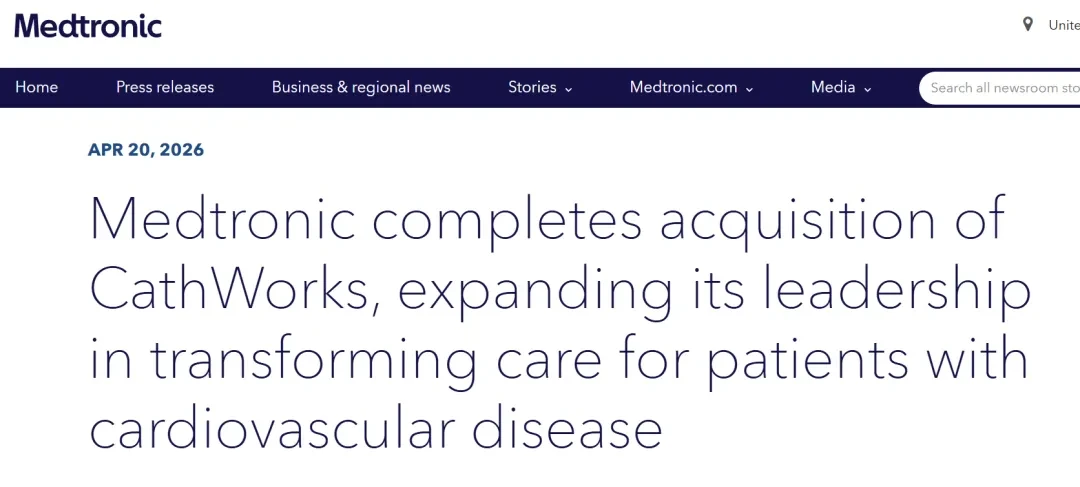
As early as 2022, the two parties signed a strategic cooperation agreement. After years of clinical validation and market preparation,Medtronic announced in February this year that it would exercise its acquisition option, and successfully passed regulatory approval in April, completing the final closing loop.。
CathWorks 's core ace is FFRangio SystemIn traditional cardiovascular interventional procedures, physicians need to use expensive invasive pressure wires and administer pharmacological stress to patients in order to assess the impact of coronary artery stenosis on myocardial blood flow. This not only increases procedural risks but also prolongs operation time.
CathWorks’ system leverages artificial intelligence and advanced computational science to directly generate fractional flow reserve (FFR) values for the entire coronary tree in real time from conventional coronary angiography (X-ray imaging).。
Shortly after completing the acquisition of CathWorks, Medtronic quickly made another strategic move in the neuroscience field by acquiring Scientia Vascular, as mentioned at the beginning.
In neurointerventional procedures such as the treatment of stroke and cerebral aneurysms, the greatest challenge for physicians is often not how to deploy the stent, but how to successfully deliver the devices to the lesion sites deep within the brain. The cerebral vasculature is intricate and highly tortuous; if the “navigational capability” of the microwire and microcatheter is insufficient, the devices cannot be delivered, no matter how perfectMedtronic's therapeutic stents also have no room for application.
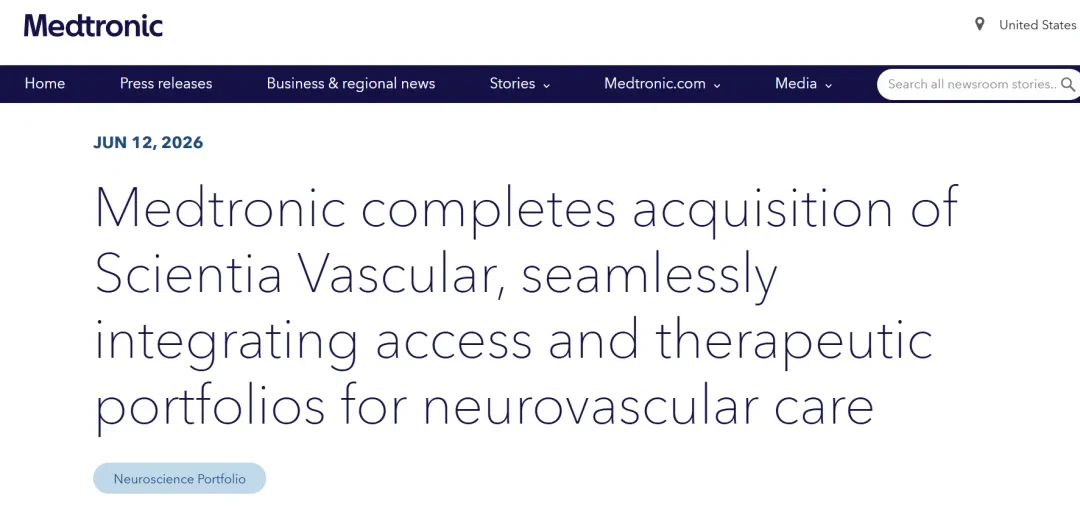
Scientia’s Precision Manufacturing Platform for Micro-Guidewires and Catheters,It perfectly complements Medtronic’s weaknesses in access devices, achieving a full-process closed loop of “access + therapy” and significantly enhancing overall clinical competitiveness.。
In addition to vascular access, Medtronic also made significant moves in the field of neuromodulation during the first half of this year.

From a $585 million investment in cardiovascular AI, to a $550 million reinforcement of cerebrovascular access solutions, and then a $650 million strategic positioning in pain management,Medtronic’s investment thesis for the first half of 2026 demonstrated a high degree of consistency.:Target private companies valued between $500 million and $700 million with mature technologies and digital or minimally invasive moats for precise acquisition, rapidly building operational capability.。
If Medtronic’s first half of 2026 were characterized solely by “buy, buy, buy,” it would merely constitute a conventional expansion narrative. What truly impressed the healthcare industry during this period was Medtronic’s decisiveness in its “sell, sell, sell” strategy.
As the three major mergers and acquisitions advance in full swing, Medtronic’s diabetes business is undergoing its most dramatic identity transformation in over 40 years since its establishment.
On March 6, 2026, the long-rumored spin-off of Medtronic’s diabetes business was finally finalized. The newly independent legal entity, MiniMed, officially listed on the Nasdaq under the stock ticker “MMED.”In this IPO, MiniMed issued 28 million shares of common stock, successfully raising $560 million. Following the IPO, Medtronic, the parent company, retained an absolute controlling stake of approximately 90% in the independent entity.。
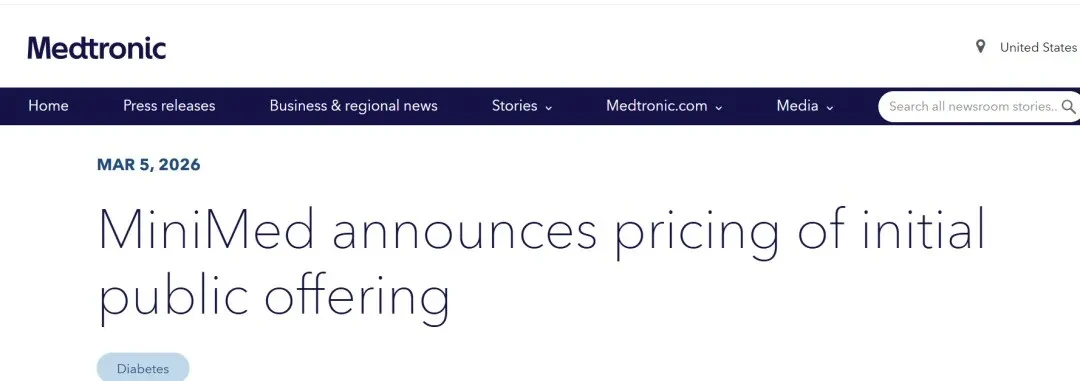
For Medtronic’s parent company, this amounted to a sophisticated piece of “financial magic”: not only did it successfully recoup hundreds of millions of dollars in cash through the IPO, partially shifting the diabetes segment’s substantial R&D and operational expenses off the parent company’s core financial statements, thereby improving the group’s overall gross and net profit margins; but also, by retaining nearly 90% of the equity, Medtronic remains poised to reap the benefits of future capital appreciation as MiniMed soars independently.
Medtronic is able to allocate these valuable released resources,Seamlessly transition to companies like CathWorks, Scientia, and SPRThis better aligns with the parent company’s strategic vision of entering core growth markets characterized by high gross margins and high technological barriers.。
Conclusion:
Over the past decade and more, global medical device giants have been enamored with the all-encompassing “department store” model, attempting to secure the top position in every niche segment through boundless mergers and acquisitions. However, this has led to bloated organizational structures and diluted core profit margins.
Medtronic’s 2026 performance sends a clear signal: the era of “big and comprehensive” is coming to an end, while structural optimization focused on “fewer but more refined” offerings has become the mainstream.

Based onChina, Connecting the World
Zero Inventory GroupFocused on one-stop centralized procurement and global supply chain services for medical devices.
Aggregating a vast array of high-quality devices and consumables (CE/FDA certified).
Sincerely seeking partners/trading companies with overseas hospitals, clinics, and medical channel resources for collaboration to monetize resources and jointly expand into overseas markets.