

Johnson & Johnson's Flagship Product Impella Launches in China, Igniting a $10B+ High-End Emergency Cardiac Support Market

Johnson & Johnson
Medical Device R&D and Manufacturer

Abiomed
Cardiac System Medical Device Developer

Source: Medical Device Business Review
Author: Qiu Qiu
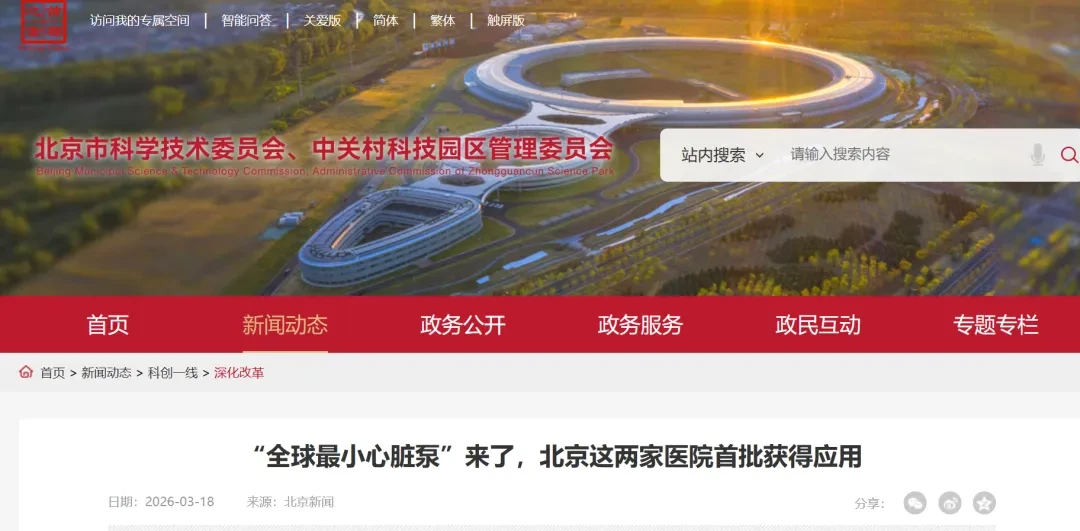
Recently, the Impella CP with SmartAssist percutaneous left ventricular assist device from Abiomed, a subsidiary of Johnson & Johnson, has been introduced for clinical application in China. Previously, official information from Beijing indicated that this device, known as"The World's Smallest Heart Pump" device, has entered the green channel in accordance with Beijing’s “Interim Management Requirements for Temporary Import of Clinically Urgent Medical Devices by Medical Institutions,”The first batch was delivered to Fuwai Hospital and Anzhen Hospital.
What truly deserves attention in this matter is not just the entry of Impella into China.
More importantly,Percutaneous ventricular assist devices, with over 600,000 cumulative applications globally, are finally entering real-world clinical practice in China.
For the domestic market, it is not merely the launch of an imported innovative medical device, but rather resemblesFilling a long-standing gap in circulatory support for critical care scenarios such as high-risk PCI, cardiogenic shock, and low cardiac output following cardiac surgery.
The Global Gold Standard Enters China
Bolstering the “Last Line of Defense” for High-Risk Surgeries in China
Impella Series Heart Pump, Known as the "World's Smallest Heart Pump." Its core principle involves percutaneous insertion through the femoral artery into the left ventricle, actively pumping blood from the left ventricle into the aorta to provide short-term support for the patient's circulatory system.
Impella CP with SmartAssistPeak flow rate up to 4.3 L/min, equivalent toSecure a window of hemodynamic stability for patients when the heart is at its most vulnerable and critically compromised.
This differs from traditional IABP and ECMO.
IABP insertion is convenient and associated with a lower complication rate, but it can only increase cardiac output by approximately 10%–20%, offering limited circulatory support. ECMO can significantly enhance cardiac output; however, it involves complex operation and may increase left ventricular afterload, making it more suitable for critically ill patients with concurrent respiratory failure or cardiac arrest.
The core value of Impella lies in:More directly unloads the left ventricle, improves coronary perfusion, and provides active circulatory support for high-risk patients through minimally invasive interventional approaches.
For clinicians, these products address not merely incremental improvements, but critical needs in scenarios such as high-risk PCI, acute myocardial infarction complicated by cardiogenic shock, and low cardiac output following cardiac surgery.The question of whether the patient has a chance to survive the most critical window.
High-Risk PCI, Cardiogenic Shock
Propelling a multi-billion-dollar essential market
Given the large population of high-risk cardiovascular patients in China, the available options for short-term mechanical circulatory support remain limited.
Taking high-risk PCI as an example, the volume of PCI procedures in China continues to grow rapidly. Public data predict that,The volume of high-risk PCI procedures in China is expected to reach 772,000 by 2033.Such patients often present with concomitant left main coronary artery disease, multivessel disease, low ejection fraction, and complex calcified lesions, posing an extremely high risk in the event of intraoperative circulatory collapse.
Next, let's look at cardiogenic shock.Approximately 308,000 patients in China suffer from acute myocardial infarction complicated by cardiogenic shock each year, and cardiogenic shock remains one of the scenarios with the highest mortality rates among cardiovascular emergencies and critical illnesses.Even at top-tier global centers, in-hospital mortality rates have remained persistently high.
Acute decompensated heart failure, low cardiac output syndrome after cardiac surgery, and support during off-pump coronary artery bypass grafting all present a need for short-term mechanical circulatory support.
This means that,pVAD is not a niche tool in China, but rather a critical therapeutic device for high-risk PCI, cardiogenic shock, the acute phase of heart failure, and the perioperative period of cardiac surgery.
Green Channel Entrance
Payment System Determines Volume Growth Rate
A key backdrop to Impella’s recent entry into the Chinese market is Beijing’s temporary import policy for clinically urgent medical devices.
According to official information from Beijing, Impella is the first clinically urgent medical device approved in the Beijing area through the national green channel. It was among the first to be deployed at Fuwai Hospital and Anzhen Hospital. Its successful importation demonstrates that China is adopting more flexible regulatory mechanisms to introduce high-value innovative devices that have been validated overseas but are not yet approved domestically.
For Impella, this means that Chinese clinicians have the opportunity to access the global gold standard for percutaneous ventricular assist devices (pVADs) at an earlier stage; for domestic manufacturers, it also signifies that future competition will become more direct.
However, whether pVAD can truly achieve significant volume growth depends not only on product performance but also on pricing, reimbursement, and hospital adoption pathways.
National Healthcare Security Administration has been advancing the project establishment guidelines for medical service pricing items in recent years,New price items, including ventricular assist device implantation, ventricular assist device removal, and fitting of cardiac implantable devices, have been added to cardiovascular system-related project approvals to address pricing and billing issues for artificial heart-related surgeries.Some regions have also established pricing for related procedures, specifying fee standards for artificial heart implantation, explantation, and postoperative device programming.
The establishment of such pricing items is critical. For high-value innovative medical devices to enter clinical practice, it is not sufficient to merely possess a product registration certificate; hospitals must be able to charge for them, patients must have payment pathways, and physicians must have compliant grounds for their use.
However, DRG/DIP payment reforms will also make hospitals more cautious about high-cost devices. pVADs are used for critically ill patients and involve high per-treatment costs; if the payer system fails to reflect their comprehensive value—such as reducing mortality, shortening ICU stays, and improving resuscitation success rates—hospitals will face pressure in adopting them routinely.
As for centralized procurement,In the short term, pVAD is unlikely to be rapidly included in large-scale volume-based procurement like mature consumables.With few domestically approved products, clinical applications still in their early stages, and indications and patient selection criteria yet to be fully established, there are significant product differences. Consequently, the conditions for volume-based procurement—namely, "sufficient competition and homogeneous substitution" typical of mature medical consumables—are not yet met.
However, pricing pressure will not dissipate. As domestically produced products gain successive approvals and institutional experience accumulates, percutaneous ventricular assist devices (pVADs) will inevitably face more stringent price evaluations in the future. Ultimately, competition will hinge not on low prices, but on value-based pricing driven by clinical efficacy.
Not based on flow parameters
The Era of System-Level Capabilities in pVAD Competition
Frost & Sullivan predicts,By 2033, the market size for short- to medium-term ventricular assist devices in China will exceed RMB 11 billion, with a compound annual growth rate (CAGR) of 16.7%.This market includes various types of products such as pVAD, IABP, and ECMO.However, percutaneous left ventricular assist pumps are undoubtedly one of the most promising growth areas.
The reason is that,It addresses several high-value clinical scenarios: high-risk PCI, cardiogenic shock, perioperative support in cardiac surgery, and bridging therapy for acute heart failure.
However, this competitive landscape will not be defined solely by the notion that “the higher the pump flow, the better.” True competition will revolve around support flow rates, access cannula size, hemolysis control, duration of support, weaning management, bedside management, physician training, center development, and clinical evidence.
The Advantage of Impella: Not Just the Pump Itself, but the Comprehensive Clinical Evidence, Training System, and Application Pathway Behind It
Domestic players are already on the way
Impella Sets the True Benchmark for Pressure
Impella has long been the representative product in the global pVAD market, but the domestic market is not entirely blank.
Public information shows that,Core Medical’s interventional left ventricular assist device and catheter pump kit have received NMPA approval for market launch, becoming the first approved interventional artificial heart product in China;Xinqing Medical, Fengkaili, Xin Hengrui, and Huanqing Medical, among other enterprises, are also advancing the research, development, and clinical validation of transcatheter ventricular assist systems at various stages.
The table below provides a clearer view of the competitive landscape among major domestic players:
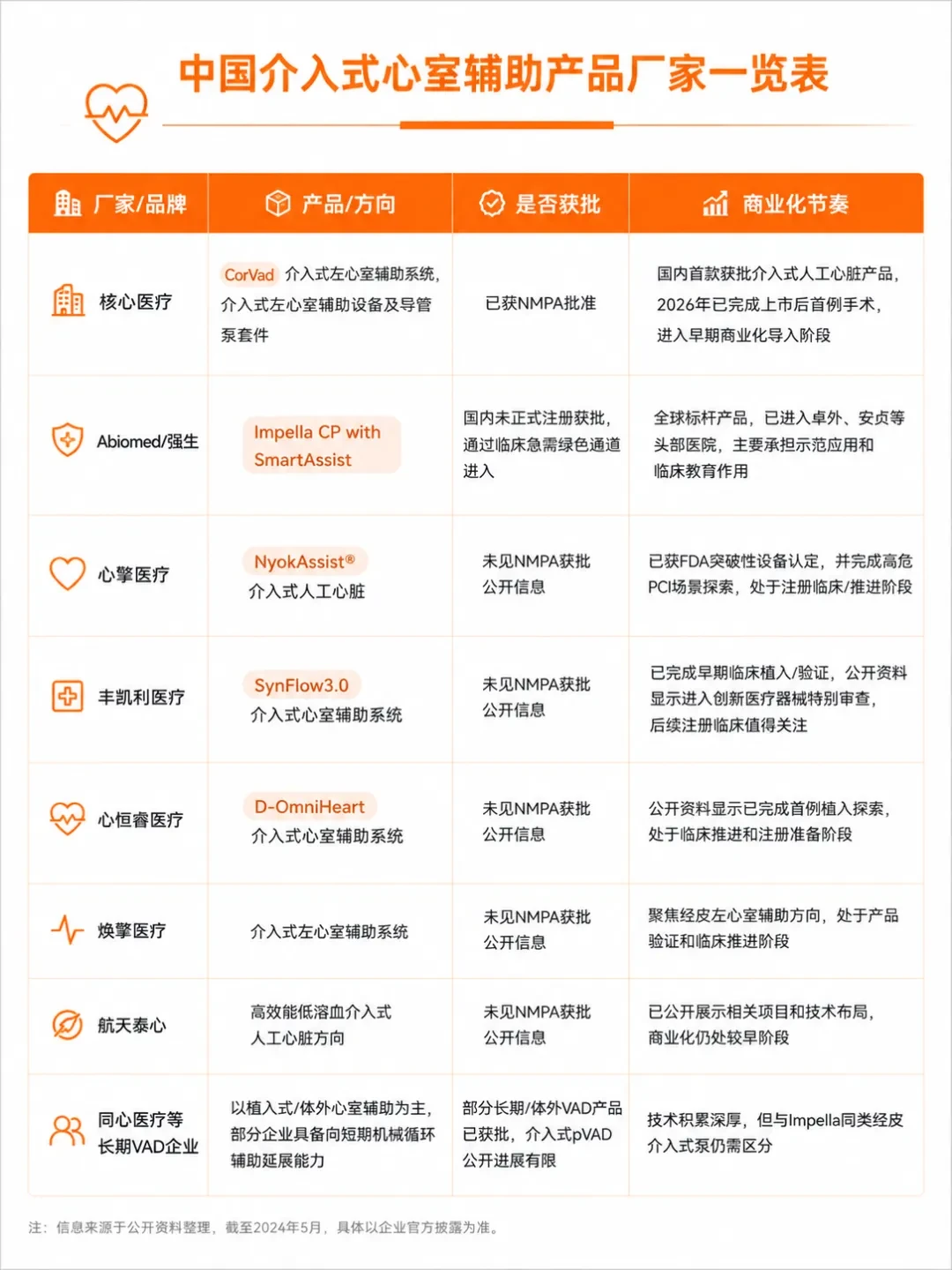
This means that Impella’s entry into the Chinese market is not entering a completely blank slate, but rather directly introducing the global gold standard into a rapidly emerging competitive landscape of domestically produced alternatives.
In the future, competition in this sector will not depend solely on “who gains approval first,” but rather on who can deliver a comprehensive solution encompassing pump flow rates, catheter dimensions, hemolysis control, duration of support, weaning management, clinical training, and center development.
For domestic players,Impella serves as both a competitor and a key benchmark for clinical education and market launch.
Impella Has Arrived
The pVAD Market Is on the Eve of an Explosion
Impella’s Launch in China: On the surface, it represents an imported innovative device entering clinical practice through a green channel; at a deeper level, it signifies that China’s short-term mechanical circulatory support market is entering a new phase.
In the past, percutaneous ventricular assist devices (pVADs) in China remained largely in a stage characterized by “clinical need, product scarcity, and unclear pathways.” Now, with the global gold-standard pVADs being introduced into leading centers such as Fuwai Hospital and Anzhen Hospital,Chinese clinical practice has the opportunity to establish standardized usage experience at an earlier stage, and domestic players will also face a clearer frame of reference.
What truly merits attention in this shift is not merely the arrival of Impella, but rather its potential to propel the entire sector from “product approval” toward “clinical standardization, centralization, and commercial scale-up.”
In high-value scenarios such as high-risk PCI, cardiogenic shock, and perioperative support for cardiac surgery, the door to the pVAD market is truly opening.