Fourier Intelligence Secures Landmark Multi-Million-Dollar Order in Southeast Asia, Pioneering Global Embodied Care and Rehabilitation

Fourier
Intelligent Robot Developer
June 2026,Rehabilitation Center of the Social Security Organization (PERKESO) of MalaysiaOfficially launched.As the core technology and solutions provider for this collaboration, Fourier showcased its “Intelligent Rehabilitation Port” application solution, humanoid robots, and cutting-edge embodied AI technologies at the event., partnering with Malaysia’s Social Security Organization (PERKESO) to set a new benchmark for intelligent rehabilitation in Southeast Asia.
At the event, Fourier’s GR-3 humanoid robot demonstrated its application in cognitive training scenarios for elderly care and rehabilitation. Leveraging capabilities such as visual recognition, voice interaction, and task guidance, the robot assisted in completing cognitive training and interactive tasks, vividly showcasing the potential of embodied AI technology in future rehabilitation services. Sultan Nazrin Shah of Perak, Malaysia, presided over the opening ceremony, witnessing both the inauguration of this national-level rehabilitation center and the official launch of the deep cooperation project between Fourier and PERKESO.
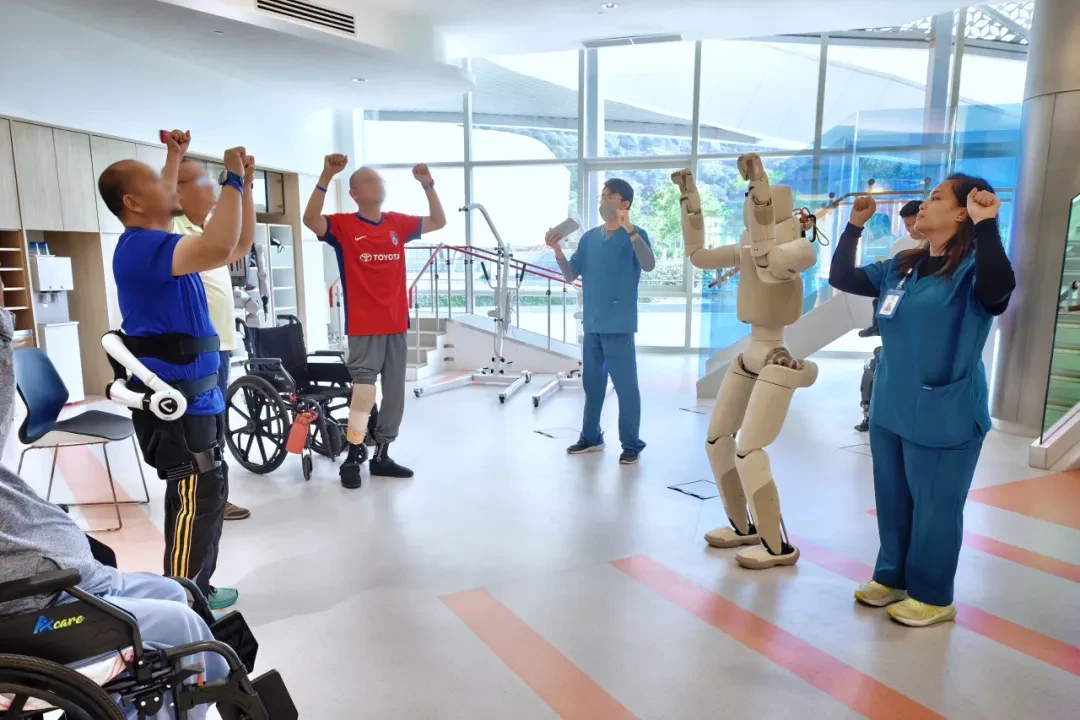
At the newly opened rehabilitation center, the GR-3 humanoid robot guides patients through rehabilitation exercises.
As an important component of the center’s overall intelligent rehabilitation system construction,PERKESO has fully integrated Fourier’s self-developed MetaMotus™ Galileo Biomechanical Analysis and Training System, along with the “Smart Rehabilitation Hub” application solution, to provide intelligent rehabilitation services covering assessment, training, and functional recovery for patients with spinal cord injuries, brain injuries, stroke, and other conditions.
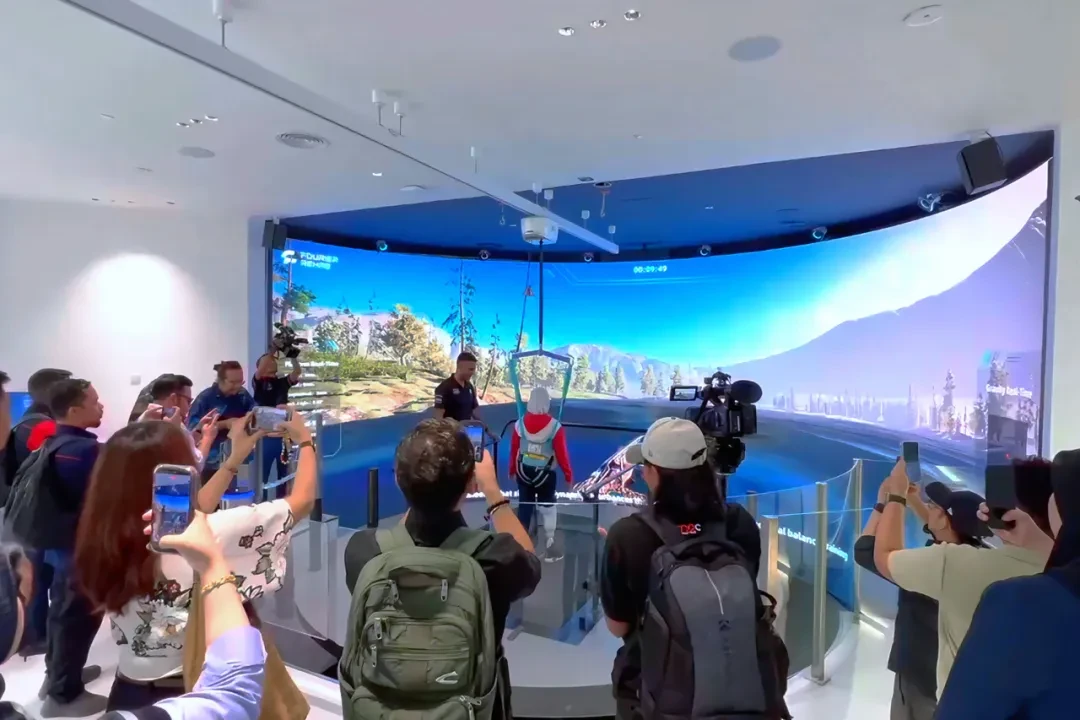
Attendees Experience the Galileo System
Both parties have simultaneously established a deep strategic partnership. The center will concurrently introduce the Fourier GRx series of humanoid robots, leveraging clinical resources and advanced rehabilitation technologies to jointly promote frontier exploration of embodied intelligence in clinical rehabilitation applications.
This implementation is not merely a delivery of products and solutions, but also a significant milestone in Fourier’s global strategy, underscoring that Chinese rehabilitation robotics technology is transitioning from an industry follower to a shaper of global development.
Breaking Monopolies, Rooted in Independent R&D
In 2015, at the inception of Fourier Intelligence, the global high-end rehabilitation robotics market had long been dominated by European and American companies. At that time, China’s core technologies, clinical applications, and market channels in the rehabilitation sector remained heavily dependent on imported products. A single imported exoskeleton robot often cost over one million yuan, making rehabilitation robotics a cutting-edge technology accessible only to a select few medical institutions in China.
In the face of substantial clinical needs and technological gaps, Fourier chose medical rehabilitation as the entry point for the application of robotics technology, embarking on a path of independent research and development.
In 2017, Fourier launched its first lower-limb exoskeleton robot, the X1, achieving comprehensive independent breakthroughs in drive systems, control algorithms, and human-machine interaction technologies. Leveraging China’s mature industrial chain foundation and rapid iteration capabilities, the product cost was significantly reduced, with a price point amounting to only one-third that of comparable international products.This breakthrough has not only altered the long-standing reliance on imports in the domestic market, but also serves as a vivid microcosm of Chinese rehabilitation robots beginning to compete in the global market.

Fourier's First Lower Limb Exoskeleton Robot X1
In the following years, Fourier continuously expanded its product portfolio, gradually building a comprehensive product system covering the entire rehabilitation cycle. It formed a matrix of over 40 intelligent rehabilitation products, including upper and lower limb rehabilitation, motor balance training, and physical factor therapy, and achieved full commercialization in 2020.
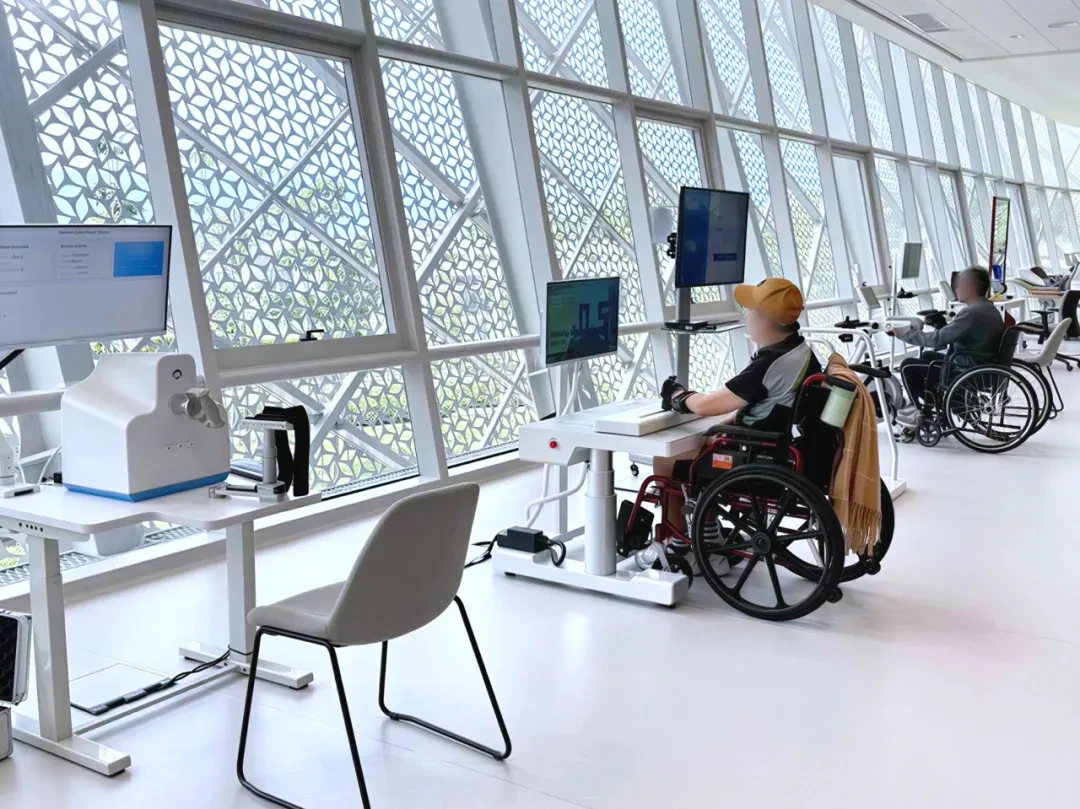
Malaysia's National Social Security Organization Rehabilitation Center Deploys Fourier Intelligence Rehabilitation Port Solution
To date, Fourier’s products have obtained 12 international certifications, including U.S. FDA clearance and EU CE MDR certification, providing product and technical services to more than 2,000 healthcare institutions and partners across over 40 countries and regions worldwide, with cumulative user engagements exceeding one million.From Catching Up to Breakthrough: China’s Rehabilitation Robotics Industry Begins to Establish Its Own Technological Path and Innovation Capabilities.
Globalization: More Than Just Products Going Global
In 2018, Fourier established its overseas headquarters in Singapore, officially launching its global expansion strategy.
Through long-term practice, the team has gradually formed a key judgment: although healthcare systems, payment models, and market environments vary across different countries and regions, the core logic and clinical demands of rehabilitation medicine exhibit a high degree of consistency.Building on this characteristic, Fourier has progressively established an integrated global system encompassing products, training, clinical support, academic collaborations, and operational services, while continuously enhancing its localized service network.
Taking the National Healthcare Group (NHG) in Singapore as an example, since the establishment of a strategic partnership between the two parties in 2021, Tan Tock Seng Hospital under NHG has served as a routine clinical pilot site. Products such as the EMU 3D upper-limb rehabilitation robot have been progressively introduced, facilitating the integration of the “Smart Rehabilitation Port” solution into Singapore’s public healthcare system.
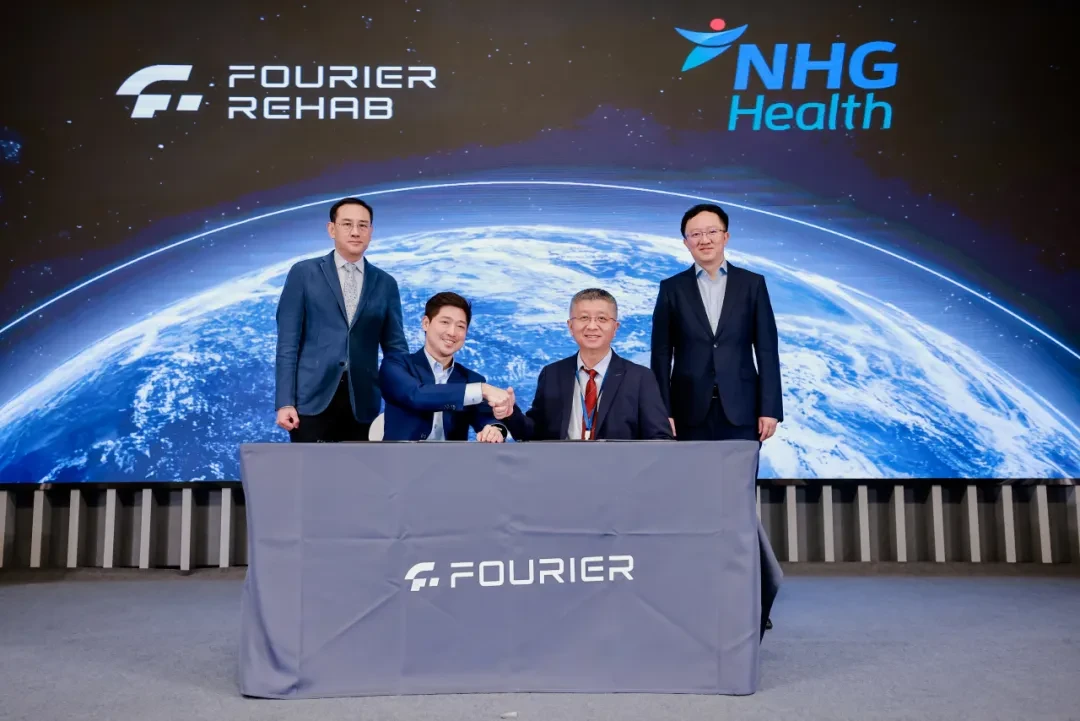
In May 2026, Fourier Renewed Strategic Cooperation Agreement with Singapore National Healthcare Group
In 2025, Fourier, in collaboration with NHG and its partners, launchedResearch on the Integration of Humanoid Robots and Remote Photoplethysmography (rPPG) Technology, exploring the real-time monitoring of vital signs such as heart rate and blood pressure through non-contact visual perception, thereby extending rehabilitation services from functional recovery to comprehensive, full-cycle health management. In May 2026, the two parties renewed their strategic cooperation agreement, planning to jointly establish a Joint Rehabilitation Innovation Center to promote the large-scale implementation of advanced rehabilitation technologies and accelerate the global translation and application of innovative achievements.
This long-term collaboration model has been further validated in the Malaysian PERKESO project.
By systematically introducing the MetaMotus™ Galileo Biomechanical Analysis and Training System and intelligent rehabilitation solutions,and adapt training scenarios and optimize content based on the actual needs of local patients, integrating rehabilitation training with real-life scenarios, while enhancing the efficiency of functional recovery, it helps patients rebuild their social participation abilities more quickly.To date, the system has served over 1,000 local patients with functional impairments due to spinal cord injuries, brain injuries, and other conditions, providing a replicable practical pathway for the intelligent upgrading of rehabilitation systems in Southeast Asia.
For Fourier, globalization is not merely about exporting products,It represents a systematic output of the technical framework, clinical expertise, and service capabilities.
From Rehabilitation Robots to Embodied Intelligence
With the development of artificial intelligence and embodied AI technologies, Fourier’s global expansion has entered a new phase of growth.
Over the past decade, Fourier has focused on addressing efficiency and accessibility challenges in rehabilitation therapy through robotics;Over the next decade, Fourier will further explore the value of robots in elderly care and companionship, proactive interaction, and long-term health management.
Based on years of accumulated expertise in human-computer interaction, multimodal perception, and high-precision motion control technologies, as well as extensive experience in clinical deployment, Fourier has gradually builtA Hardware-Software Integrated Robotics Technology Platform Centered on Proactive Interaction。
2025,Fourier Officially Releases Third-Generation Humanoid Robot GR-3, and positions it as a “Care-bot.” The product enhances anthropomorphic interaction capabilities and environmental awareness, with system design centered around two core conceptual scenarios: social companionship and assisted caregiving.At the application level, Fourier combines the GR-3 with the “Intelligent Rehabilitation Hub” application solution to explore validation in tasks such as intelligent triage, upper-limb functional training, and cognitive rehabilitation., driving the evolution of robotic technology applications from specialized rehabilitation tools to intelligent partners with enhanced proactive understanding capabilities and service value.
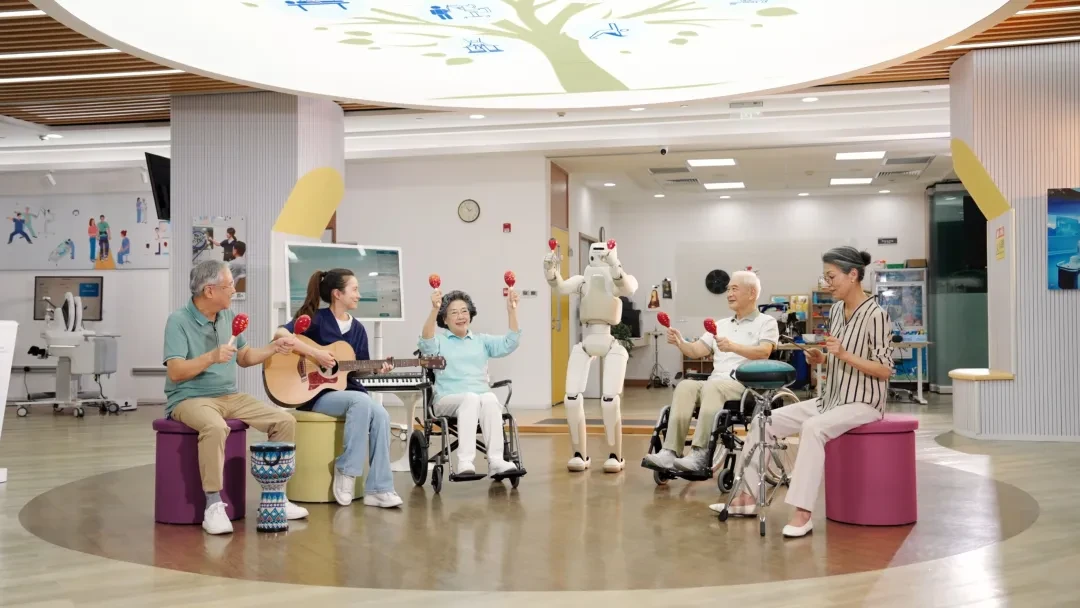
GR-3 Humanoid Robot Assists Therapists in Implementing Music Therapy
Building a Global Community of Innovation in Health and Wellness
Clinical research and academic collaboration have always been key drivers in advancing medical and healthcare technologies. For many years, Fourier has consistently upheld an open and collaborative approach, continuously strengthening partnerships with top-tier universities, medical institutions, and research organizations worldwide to jointly promote the validation and translation of robotics and artificial intelligence technologies in clinical settings.
Since 2020, Fourier has continuously heldGReAT Global Rehabilitation and Robotics Technology Summit, and established an International Scientific Advisory Board, inviting experts from renowned universities and medical institutions worldwide to participate in technological innovation and clinical research planning, thereby promoting the formation of a collaborative innovation system integrating “industry, academia, research, and medicine.” This May, at the latest summit, Fourier Intelligence signed a strategic cooperation agreement with Nagoya University, a top-tier Japanese research institution, to further deepen global collaboration in embodied health and wellness innovation and accelerate the clinical translation of rehabilitation and robotics technologies.
As of now,Fourier has established ecosystem partnerships with more than 20 leading institutions, including the Shirley Ryan AbilityLab (formerly the Rehabilitation Institute of Chicago), ETH Zurich, and Carnegie Mellon University, to jointly explore the development directions of embodied intelligence, human–computer interaction, and rehabilitation robotics technologies.These partnerships have also helped Fourier gain a deeper understanding of overseas markets and the specific needs of international users for different products.
From product implementation to joint innovation, and from technology export to collaborative standard-setting, Fourier is working with global partners to participate in and drive the development of a global innovation ecosystem.
From Made in China to Defined by China
According to data from the United Nations Population Development Commission, the global population aged 60 and above is projected to reach 2 billion by 2050. Population aging is becoming a common challenge worldwide, bringing unprecedented development opportunities to the health and wellness robotics industry.
In the face of this opportunity,Fourier’s goal is no longer just to create leading products,but rather to drive robotics technology into hospitals, communities, and homes, becoming an important component of the global health and wellness system.
Looking Back on the Development Journey: Fourier has progressed from breaking overseas monopolies to competing globally; it has moved beyond the single-product export model to achieve an ecosystem-based global layout.Starting from rehabilitation robots, we continue to advance toward an embodied intelligence health and wellness platform.
Fourier’s development trajectory is a true microcosm of the Chinese robotics industry’s journey from catching up, to breaking through, to leading. As more and more Chinese technologies enter the global clinical frontline, a globalized era for the Chinese robotics industry is rapidly approaching.