

Impella Arrives in China: A Billion-Dollar Market Poised for Takeoff

Johnson & Johnson
Medical Device R&D and Manufacturer

Pioneer in Medical Device Media Coverage
Sharing Professional Medical Device Knowledge
Recently,Johnson & Johnson'sImpella CP with SmartAssistInterventional Left Ventricular AssistThe pump witnessed its first implantation in China.From Beijing"Medical Institutions"Urgent Clinical Need"Administrative Requirements for the Temporary Import of Medical Devices"Since the implementation of policies establishing green channels,Impella, this globalUltraWith 600,000 cases of application experiencePercutaneousVentricular Assist Device (pVAD), finally embarking on its clinical application journey in China, benefiting Chinese patients through innovative policies。
ImpellaSeries of cardiac pumps, also known as"The World's Most Compact Heart Pump",is currently the only one globally approvedFDA-Approved Percutaneous Ventricular Assist Device (Percutaneous Ventricular Assist Device, pVAD)。
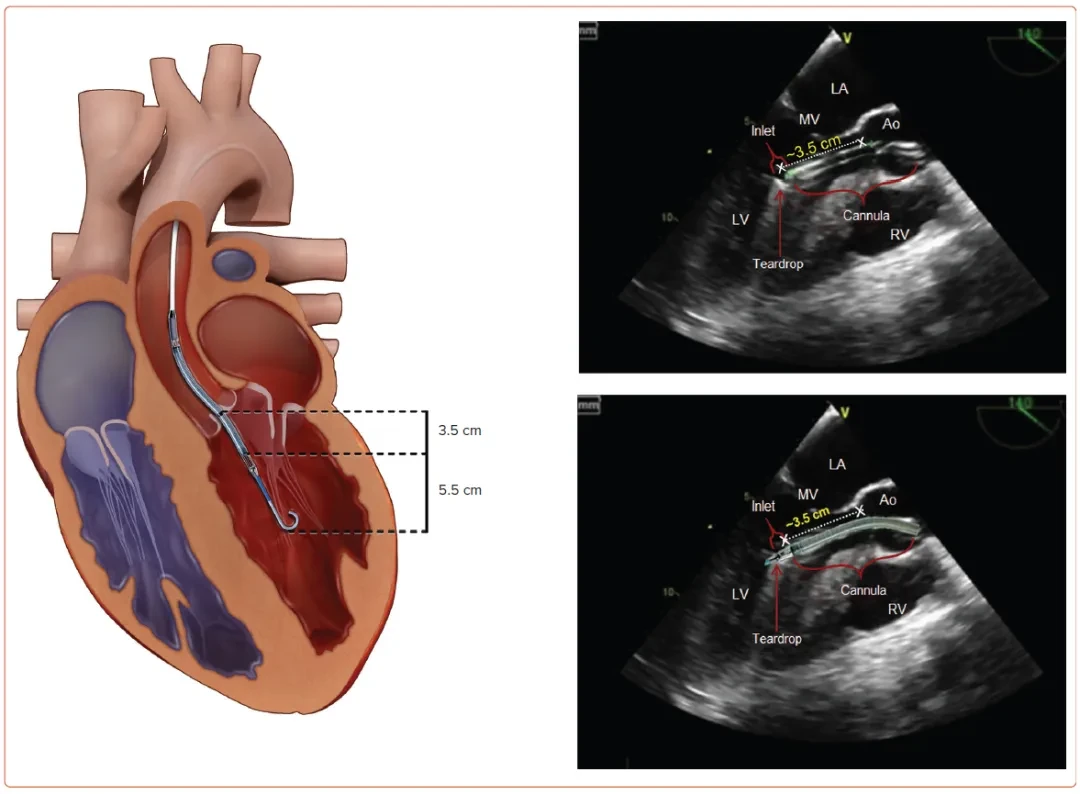
Its core principle isJingPitongguoFemoral artery access into the left ventricle, independent of intrinsic heart rhythm and blood pressure, actively pumps blood from the left ventricle into the aorta.,Peak Flow Rate Up to4.3 L/min, providing stable support for the patient's circulatory system.
Impella CP with SmartAssistInterventional Left Ventricular AssistPump, optionalIn high-risk percutaneous coronary intervention (PCI) to provide circulatory support; it is also applicable to patients with left ventricular dysfunction, such as those post-cardiac surgery, those with low cardiac output syndrome, those with acute myocardial infarction complicated by cardiogenic shock, or for myocardial protection after acute myocardial infarction; as well as for circulatory support during off-pump coronary artery bypass grafting, particularly in patients with reduced preoperative ejection fraction and a high risk of postoperative low cardiac output syndrome.
High-Risk PCI:
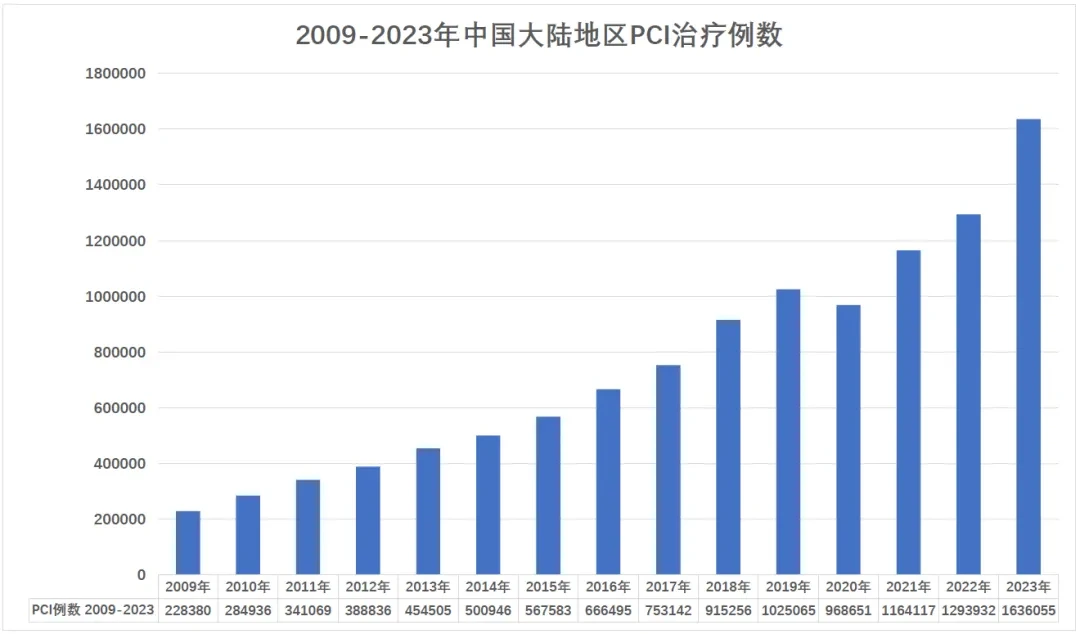
In China, the number of PCI procedures reached 1.906 million in 2024, with approximately 10–15%,RequiredpVAD provides intraoperative hemodynamic support. The volume of high-risk PCI procedures in China is projected to increase to 772,000 by 2033, indicating a substantial market opportunity.
Cardiogenic Shock:
Cardiogenic shock is a critical cardiovascular emergency.In-hospital mortality rates at top global centers remainhovering around 50%. Among all mechanical circulatory support devices for the treatment of cardiogenic shock, Impella is the only device proven to reduce patient mortality through large-scale, global, multicenter randomized controlled trials (RCTs).China annuallyAcute Myocardial Infarction Complicated byPatients with Cardiogenic Shock Approximately308,000 people,ImpellaIt can effectively improve patient prognosis, with urgent market demand.
Acute Decompensated Heart Failure:
Among hospitalized heart failure patients in China, acute decompensated heart failure accounts for approximately65%, pVAD can serve as a short-term support measure to help patients through the acute phase, bridging to the next stage of treatment。
Intraoperative Support for High-Risk Cardiac Surgery and Postoperative Low Cardiac Output Syndrome:
The Three Major Global Cardiothoracic Surgery Societies in HistoryThe European Association for Cardio-Thoracic Surgery (EACTS), the Society of Thoracic Surgeons (STS), and the American Association for Thoracic Surgery (AATS) jointly issued guidelines on short-term mechanical circulatory support, assigning a Class I recommendation to Impella for postoperative low cardiac output syndrome, failure to wean from cardiopulmonary bypass (CPB), and cardiogenic shock following multidisciplinary team assessment, and a Class IIa recommendation for circulatory support during the perioperative period of high-risk surgical procedures.
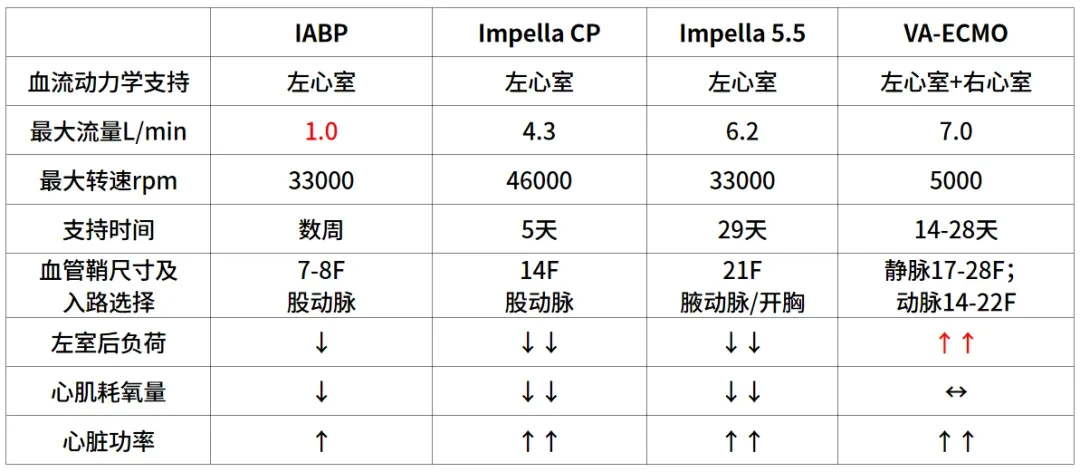
ImpellaProviding hemodynamic support via minimally invasive interventional approaches, compared to traditionalIABP (Intra-Aortic Balloon Pump),withHigher Flow Rate、More Direct Left Ventricular Unloading Capability; compared toECMO (Extracorporeal Membrane Oxygenation),Impella reduces cardiac workload by supporting blood flow in the body’s natural direction.Significant ReductionLeft ventricular afterload,ImprovementCoronary Perfusion, smaller vascular access (14F) and fewer complicationsand other advantages。Clinical guidelines on its use in acute coronary syndrome and cardiogenic shock, Postoperative Low Cardiac Output SyndromeThe recommended level in scenarios such as these continues to rise.
After all, for clinicians, cardiac arrest during percutaneous coronary intervention (PCI) is undoubtedly a thorny situation that no one wishes to encounter. Even if the patient can be weaned off the procedure,Even with several days of support from an intra-aortic balloon pump (IABP) and extracorporeal membrane oxygenation (ECMO), along with the administration of vasopressors, patients may still fail to stably survive the acute phase long enough to undergo coronary artery bypass grafting (CABG). In such CABG procedures performed without any “fallback” options, how can the risks be effectively controlled? Should mechanical complications such as free wall rupture, ventricular septal rupture, or papillary muscle rupture occur intraoperatively, the consequences would be catastrophic.
Mature coronary intervention and equipped withFor operators performing transvalvular procedures such as TAVR, the process of inserting an Impella device via the femoral artery takes only a few minutes. Additionally, intraoperative echocardiography can assist with positioning during the procedure and manage device position while the patient is supported by the pump. The 14-French sheath size requires only one or two vascular closure devices or manual compression. For high-volume structural heart teams, this approach to access site management poses no significant challenge, carries a low risk of complications, and contributes to improved patient outcomes.
GlobalThe pVAD market is expected to maintain rapid growth. According to Frost & Sullivan’s forecast, by 2033, China’s medium- and short-termVentricular AssistThe market size will exceedRMB 11 billion, with a compound annual growth rate of 16.7%.It should be noted that, in addition topVAD products such as Impella also include IABP and ECMO.
Intra-Aortic Balloon Pump System (IABP) is a pulsatile pump assist device that can increase cardiac output by 10%-20%. It has the advantages of easy insertion and low complication rate, and is currently one of the more commonly used percutaneous mechanical circulatory support methods in China.
Extracorporeal Membrane Oxygenation (ECMO) is a form of extracorporeal life support that significantly increases cardiac output, but it also raises left ventricular afterload, does not substantially improve coronary perfusion, and involves complex operations. It is suitable for emergency situations such as heart failure combined with respiratory failure and cardiac arrest.
Given the vast population of high-risk patients, precise identification of eligible candidates is a prerequisite for clinical implementation, based on domestic and international guidelines and evidence-based medicine.The clinical benefit scenarios for Impella are becoming increasingly clear.
For high-risk and complexPCI Cases (CHIP Patients): The risk of circulatory collapse during conventional PCI procedures is extremely high. The PROTECT I–III series of studies have confirmed that prophylactic Impella insertion can provide stable circulatory support during critical steps such as vasodilation, rotational atherectomy, and stent deployment, ensuring operators have sufficient time to achieve complete revascularization and significantly improving patients' long-term clinical outcomes.
Cardiogenic shock is the most lethal complication of acute myocardial infarction, with in-hospital mortality rates as high as under conventional treatment50%, Impella actively unloads the left ventricle, reduces myocardial oxygen consumption, and increases systemic perfusion.U.S. National Cardiogenic Shock Initiative (NCSI) Statement: Early implantation of Impella helps improve patient survival rates. Meanwhile, DanGer Shock, the first and only positive RCT study in the AMICS field, revealed that using Impella CP in conjunction with standard care significantly reduces postoperative mortality in patients.
Current Clinical ConsensusAlreadyFrom“To use or not to use”Trend“WhichsomeFor Patient UseGreatest Benefit, How to Standardize Management”,PrecisionPersonalized Customized Treatmentrather thanFormulaicUse isImplementationImpellaThe Key to Clinical Value.The 2025 American Heart Association Guideline for the Management of Patients with Acute Coronary Syndromes has upgraded the recommendation for implanting micro-axial flow pumps in appropriate patients from Class IIb to Class IIa, while downgrading the recommendations for intra-aortic balloon pump (IABP) and extracorporeal membrane oxygenation (ECMO) from Class IIa to Class III. In the same year,European Association for Cardio-Thoracic Surgery (EACTS), the Society of Thoracic Surgeons (STS), and the American Association for Thoracic Surgery (AATS) jointly launched the first comprehensive tMCS guidelines,Listing the use of temporary mechanical circulatory support in appropriate patients asClass I recommendation; the Impella axial-flow pump is regarded as an independent and effective therapeutic option for ventricular unloading and is listed as a Class IIa recommendation. The concept of protective cardiac surgery is introduced for the first time in the guidelines, with the Impella axial-flow pump serving as a critical tool for bridge-to-surgery, bridge-to-recovery, bridge-to-decision, and subsequent therapy.。
Even ifDominating the Global Market for DecadesInterventionalVentricular Assist Pump,CurrentlyMore than ten domestic companies are also simultaneously laying out their strategies.With the global gold standardWith the arrival of Impella, coupled with one product already approved in China and several others pending approval, the pVAD sector is poised to accelerate into a highly competitive landscape marked by intense rivalry among multiple players. It is worth noting thatActually, the pump'sHigher flow rates are not necessarily better.Clinical application competitions are by no means limited to parameters alone,but rather requires integration withPatient Status,Product Dimensions, Supported Duration,Application Scenariosacross multiple dimensions, providing solutions that meet requirementsOptimalSolution。
The Recommendation Levels in Domestic and International Guidelines Are Gradually Increasing,The Green Channel Policy for Clinically Urgent Needs Continues to Gain Momentum,“Impella is Here”Not Just Product Arrival, but a Quiet Shift in Treatment Paradigm. The first case performed at Beijing Anzhen Hospital was successfully completed, followed by subsequent cases, which willis the prologue to this transformation. The futureIt has arrived; let us wait and see.