

Subretinal rAAV2-based VEGF-Trap Gene Therapy for Neovascular AMD Shows Safety and Sustained Efficacy in Phase 1 Trial

Innostellar Biotherapeutics
Innovative Gene Therapy Drug Research, Development, and Manufacturing

By Wang Cong
Editor | Wang Duoyu
Layout | Shui Chengwen
Neovascular Age-Related Macular Degeneration(nAMD),Commonly known as "wet age-related macular degeneration,"is a leading cause of irreversible blindness, posing a significant challenge to global vision health. Vascular endothelial growth factor(VEGF)Plays a key role in driving neovascularization in AMD, making anti-VEGF drugs the cornerstone of treatment.
However, frequent injections lead to fluctuations in anti-VEGF protein levels, resulting in inconsistent drug exposure within the dosing interval. Furthermore, the need for regular hospital visits places a substantial burden on patients, physicians, and healthcare systems, often leading to poor treatment adherence and an increased risk of losing initial therapeutic benefits. This issue persists in both developed countries and low- and middle-income countries, and is particularly pronounced in regions with limited medical resources. Coupled with the accelerating aging of the population, the management of neovascular age-related macular degeneration (nAMD) is increasingly becoming an urgent public health concern. Therefore, there is an urgent need to develop therapies capable of achieving long-term suppression of VEGF.
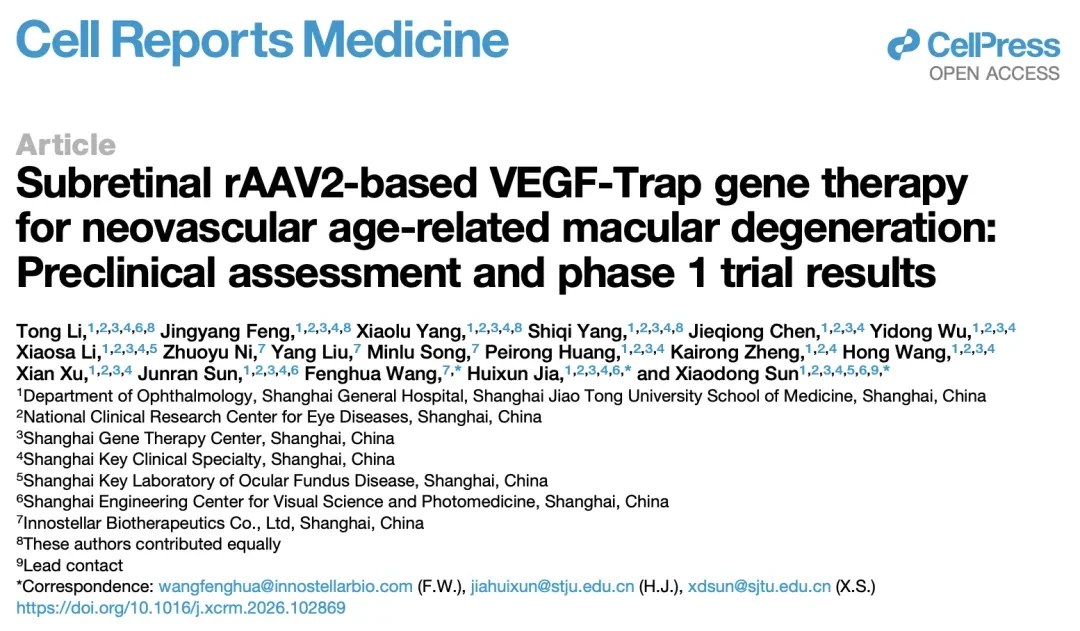
June 12, 2026Shanghai Jiao Tong University School of Medicine Affiliated Shanghai No.First People's HospitalSun XiaodongProfessor、Jia HuixunProfessor & Innostellar BiotherapeuticsWang Fenghuaet al., in a Cell subsidiary journalCell Reports Medicinepublished an article titled:Subretinal rAAV2-based VEGF-Trap gene therapy for neovascular age-related macular degeneration: Preclinical assessment and phase 1 trial resultsresearch paper.
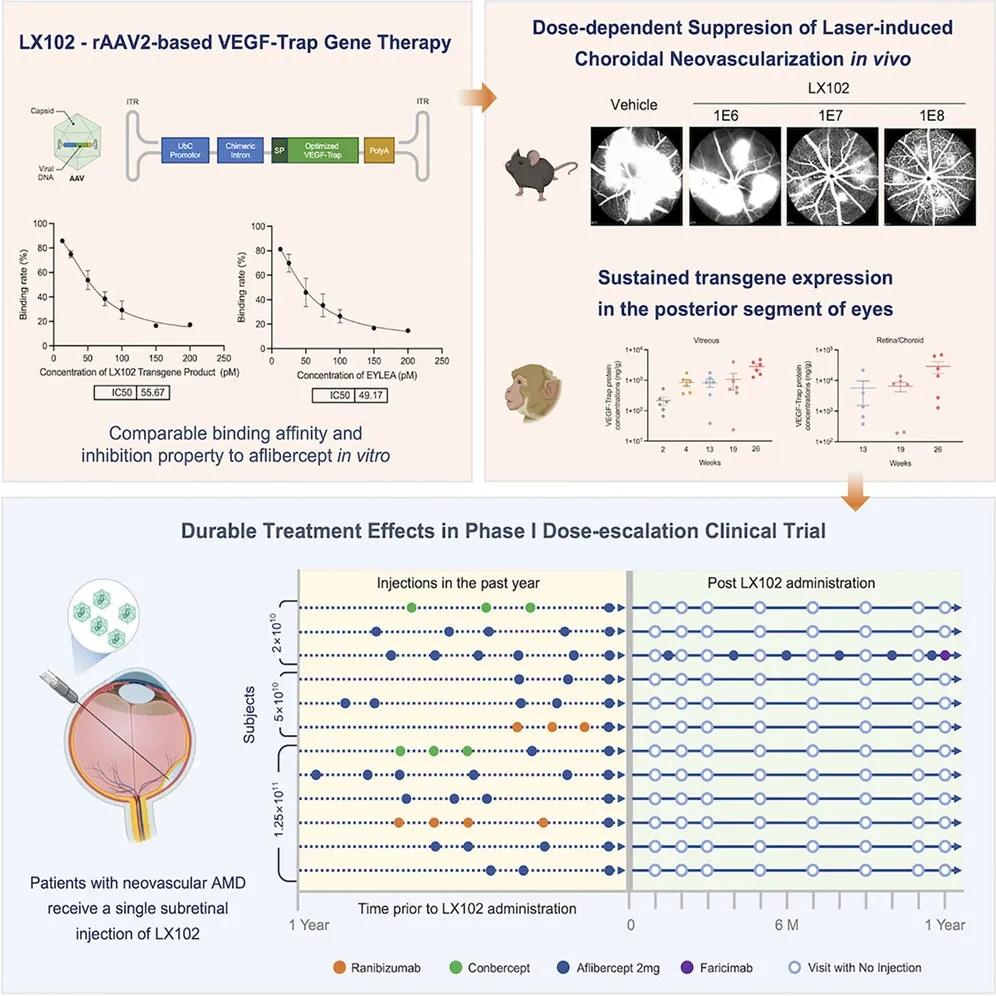
This paper reports on rAAV2-based VEGF-Trap gene therapy inNeovascular Age-Related Macular Degeneration(nAMD)the Phase I clinical trial results, showingFavorable safety profile, at 91.7%(11/12)demonstrated sustained efficacy for one year in patients.
Core Findings of the Study:
LX102 is an rAAV2-based gene therapy encoding a VEGF-Trap with a signal peptide;
LX102 Demonstrated long-term efficacy in both mouse and non-human primate models;
Phase I Clinical Trial ConfirmedLX102 possessesGood safety profile with no significant inflammatory response;
Single LX102 injection in 91.7%(11/12)demonstrated efficacy lasting one year in patients.
Paper Link:
https://www.cell.com/cell-reports-medicine/fulltext/S2666-3791(26)00286-7









PointWatching, Convey Your Taste