

ZhiLiang Smart Control Launches World's First Centralized Ultra-Low-Temperature Biobank Based on Air-Expansion Cascade Refrigeration Cycle, Combining Green Sustainability and High Efficiency
Biological resources, encompassing animal, plant, and microbial resources, are strategic assets essential for human survival and the sustainable development of the socio-economy, serving as a critical foundation for socioeconomic progress. Among these, disease and population biobanks are indispensable prerequisites for achieving precision medicine; animal and plant biobanks form the basis for superior breeding programs; and pathogenic bacterial and viral strain repositories are vital safeguards for biosafety.
With the rapid advancement of genetic technologies, the demand for biological resource data is increasingly growing in fields such as precision medicine, national health initiatives, modern agriculture, biodiversity, marine aquaculture, and microbial research and application. The volume of biological samples is increasing at an average annual rate of tens of millions, which has objectively promoted the development of biobanks based on cryopreservation technology. The biobank sector and its industrial chain are emerging with significant potential.
Biological samples are primarily stored in low-temperature environments below 4°C, namely in biobanks. For the majority of biological samples, mid- to long-term low-temperature storage temperatures are set at -86°C (ultra-low temperature) and -196°C (cryogenic temperature), utilizing cascade refrigeration and liquid nitrogen refrigeration technologies, respectively.
“Traditional refrigerants cause a certain degree of damage to the ozone layer and exacerbate the greenhouse effect, making the adoption of environmentally friendly refrigerants imperative. The energy efficiency of cascade refrigeration technology at ultra-low temperatures is relatively low, and the operational energy efficiency of low-temperature biobanks over medium- to long-term periods needs further improvement. Cascade refrigeration systems require a prolonged cooling time, typically taking several hours to reach the temperature requirements for low-temperature biological sample storage. Temperature regulation within the storage space responds slowly during sample access, leading to a lag in rewarming. The system structure is complex, requiring specialized defrosting equipment and cold-air fans. There is an urgent need for the domestic upgrading of key refrigeration components. The storage environment is harsh, characterized by high compressor noise and elevated indoor temperatures. Meanwhile, the massive volume of biological samples and the high frequency of access urgently necessitate automation in low-temperature biological sample storage,” stated Dr. Zhao Jun, CTO of Zhiliang Intelligent Control Biotechnology Co., Ltd. (“Zhiliang Intelligent Control”).
In September 2020, China explicitly set the goals of “carbon peaking” by 2030 and “carbon neutrality” by 2060, integrating them into the overall layout of ecological civilization development and the broader context of economic and social development. This has also imposed stringent requirements on the operational energy consumption of cryogenic biobanks, which operate continuously. “Cascade refrigeration, currently the mainstream ultra-low temperature refrigeration technology, is not yet the optimal choice; there is significant room for improving the energy efficiency of ultra-low temperature refrigeration systems. Meanwhile, refrigerants must also meet environmental protection standards,” said Dr. Zhao Jun.
On April 15, 2021, the Biosecurity Law of the People’s Republic of China officially came into effect, significantly elevating the importance and urgency of biosafety in China. Consequently, establishing biobanks with fully independent intellectual property rights has become a critical component of national biosafety infrastructure. In response to the national “Dual Carbon” and biosafety policies, and to meet the growing demands of translational and precision medicine, Zhiliang Intelligent Control was established in Shandong Province in 2022. The company was founded by Xing Zhiqing, founder of Pansheng Group, with Dr. Zhao Jun, a Ph.D. graduate from the University of Shanghai for Science and Technology, serving as its Chief Technology Officer (CTO).
Over 20 Years of Deep Expertise in Cryogenic Engineering: The Perfect Integration of “Aerospace Refrigeration Technology” and “Cryobiology”
The emergence of advanced technologies is rarely an overnight achievement; it is invariably the culmination of long-term scientific research. Furthermore, advanced technologies are often the product of the organic integration of multiple disciplines, resulting from consensus, sharing, resonance, and win-win collaboration among interdisciplinary R&D teams.
In 1989, a research team at the University of Shanghai for Science and Technology successfully carried out cryopreservation of human skin and bone marrow cells, marking the first such case in China. “At that time, hardly anyone in China was engaged in the low-temperature storage of human cells, due not only to technological limitations but also to the lack of sufficiently robust clinical demand,” said Dr. Zhao Jun.
University of Shanghai for Science and Technology (USST) is one of the first three universities in China to establish a refrigeration program. It has cultivated a large number of professionals for China’s air conditioning and refrigeration industry, achieved remarkable scientific research outcomes, and is particularly renowned in the industry for its capability in developing new technologies. As one of the earliest R&D teams in China to conduct research and applications in aerospace refrigeration technology, the team has long been involved in a series of ultra-low-temperature refrigeration projects, including outer space low-temperature environment simulation (-70°C), life support systems for space environments, and aviation refrigeration freezers. These efforts have laid a solid foundation for the subsequent successful application of ultra-low-temperature refrigeration technology in the fields of cryogenic storage of biological samples and frozen preservation of food. “At that time, ultra-low temperatures were achieved using cascade refrigeration technology, which had low refrigeration efficiency. Although it was known that air refrigeration was theoretically the optimal choice, the theoretical high-efficiency performance of air refrigeration could not be realized due to the constraints of low speed and low efficiency in the compression-expansion process.”
As the first institution in China to establish a discipline in cryobiology, the University of Shanghai for Science and Technology has successfully preserved pancreatic islet cells, organs, tissue-engineered skin, human umbilical cord blood, oocytes, organs for transplantation, and clinical biospecimens since 1989. As early as 1998, it successfully developed the first low-temperature microscopic differential scanning calorimetry (DSC) system, achieving remarkable accomplishments in the interdisciplinary field of medicine and engineering. To date, although research on key technologies for the cryogenic access and storage of biospecimens ranks among the world’s leading levels, the domestication of ultra-low temperature refrigerated storage equipment for biospecimens remains a long-standing concern.
Meanwhile, as a long-established university ranking among the top in China for turbomachinery, the University of Shanghai for Science and Technology has made outstanding contributions to the theory of three-dimensional flow in turbomachinery and to the design and R&D of high-efficiency impellers. It has successively received the Second Prize of the National Natural Science Award (for “Establishment and Systematic Research on a New Theoretical Framework of Turbomachinery Aerodynamics”) and the Second Prize of the National Science and Technology Progress Award (for “Research on Key Technologies of Curved and Twisted Blades and Their Engineering Application in Large Steam Turbines”).
Dr. Zhao Jun, a seasoned practitioner in the field of turbomachinery, has witnessed the revolutionary era marked by a leap in the rotational speed of impeller-driven motors from thousands to tens of thousands of revolutions per minute (rpm). In response, high-speed, high-efficiency, and high-pressure (high-expansion) centrifugal turbomachinery has emerged. His research acumen, honed through years of frontline R&D work, has spurred the drive for interdisciplinary integrated applications. A clear R&D pathway has thus taken shape: high-speed and high-efficiency turbomachinery → efficient air refrigeration → cryogenic storage of biological samples → automated biobanks. To achieve this shared goal, a “hybrid team” comprising experts in ultra-low temperature refrigeration, custom low-temperature automation, high-speed and high-efficiency turbomachinery, and low-temperature biology has been formed. The team is dedicated to developing non-standard automated cryogenic storage equipment for biological samples, centered on air refrigeration technology, to comprehensively address all pain points in the current field of cryogenic biological sample storage.
ZhiLiang Intelligent Control Air Cooling Technology: The Ideal Choice for Ultra-Low Temperature Storage of Biological Samples
“Cryogenic storage at -196°C utilizes liquid nitrogen cooling, a mature refrigeration technology. The key challenges to address are the impact of material deformation in low-temperature environments on the precise operation of automated systems, as well as issues such as equipment frosting. In contrast, ultra-low temperature biobanks require air-based refrigeration to maintain temperatures at -86°C, thereby achieving theoretically maximum cooling efficiency while addressing the major issues currently faced by ultra-low temperature biobanks,” said Dr. Zhao Jun. According to him, the most critical technology in air expansion refrigeration lies in the compression-expansion components, which must meet the requirements for compression and expansion ratios while ensuring efficient recovery of expansion work.
“The R&D team has been engaged for many years in the design and development of turbomachinery, air cycle units, and other equipment for national aerospace and military applications, accumulating extensive experience. This expertise has been effectively applied to the design of high-speed, high-pressure turbomachinery for air refrigeration, yielding excellent results,” added Dr. Zhao Jun. “Since the entire refrigeration system operates as a closed loop, any change in the operating conditions of one component affects the performance of other components within the system. Building on our long-term R&D experience, the refrigeration team has developed rapid and precise, detailed control strategies through system operation simulations, ensuring that the system maintains dynamic balance under optimal operating conditions and operates with high efficiency.”
“To address prominent issues in the current use of ultra-low temperature biobanks, such as severe compressor heat dissipation and high noise levels, we have designed a centrally refrigerated ultra-low temperature biobank. This system relocates noise and heat sources outdoors and employs our proprietary advanced dynamic vacuum pipeline technology to deliver cooling capacity to individual biobank units, thereby further simplifying equipment structure and expanding effective storage space.”
Dr. Zhao Jun led the R&D team to overcome significant technical challenges, creatively applying air refrigeration technology to the cryopreservation of biological samples and achieving full domestic production of low-temperature biobanks. It is reported that, compared with currently mainstream ultra-low temperature refrigeration technologies, air refrigerants are completely environmentally friendly and readily available; the overall energy efficiency of the refrigeration system is doubled; the cooling time for the biobank is reduced by 75%; and the effective storage space for samples is increased by 30%. Additionally, the equipment structure is simpler, eliminating the need for external defrosting units. The system operates at lower pressure, ensuring safer and more reliable performance, while offering exceptional cost-effectiveness.
Ultra-Low Temperature + Deep Cryogenic: Zhiliang Intelligent Control Launches Full Series of Biological Sample Low-Temperature Storage Equipment
Beyond technological maturity, numerous other factors influence the commercialization of research achievements. “In the field of air refrigeration technology, we may have met the conditions for commercialization early on, but we have been waiting for market and other factors to mature,” said Dr. Zhao Jun.
With market dynamics, policy frameworks, and other factors becoming increasingly certain, reaching a consensus with Xing Zhiqing, founder of Pansheng Group, was a logical next step. Pansheng Group focuses on the regeneration of skin tissues and organs, a field closely tied to cryopreservation technology. “Cell therapy and regenerative medicine products have a highly unique industrial chain, where cells must maintain their viability and functionality throughout the entire value chain. Thus, cryopreservation has become a critical component of the logistics and supply chain for regenerative medicine products,” said Dr. Zhao Jun.
Through immediate mutual agreement, Zhiliang Intelligent Control has successfully established its presence in Shandong. Currently, Zhiliang Intelligent Control offers multiple product lines, including the standalone automated cryogenic biobank developed under the leadership of Dr. Zhao Jun; China’s first truss-machine-based liquid nitrogen tank array for large-scale biobanking; and a comprehensive series of automated cryogenic storage and retrieval solutions, such as automatic cooling and rewarming instruments. Additionally, the company is poised to launch the world’s first air-cooled series of ultra-low temperature biobanks.
In ultra-low temperature storage centered on liquid nitrogen refrigeration technology, Zhiliang Intelligent Control offers a standalone vapor-phase liquid nitrogen automated storage system capable of fully automatic access to individual tubes or entire racks. Additionally, by integrating multiple vapor-phase storage tanks with fully automatic deep-cryogenic tube pickers, three-axis truss robots, and automated pass-through windows, it enables a liquid nitrogen tank cluster biobank that achieves fully automatic sample inventory management, tube picking, and fragment organization. According to reports, this biobank has a storage capacity of 500,000 samples (2 ml), which is scalable as needed. The storage temperature is maintained below -185°C, while the temperature rises to -130°C during retrieval, with tube picking and transfer occurring at -150°C, ensuring consistent deep-cryogenic conditions for samples throughout the entire process.
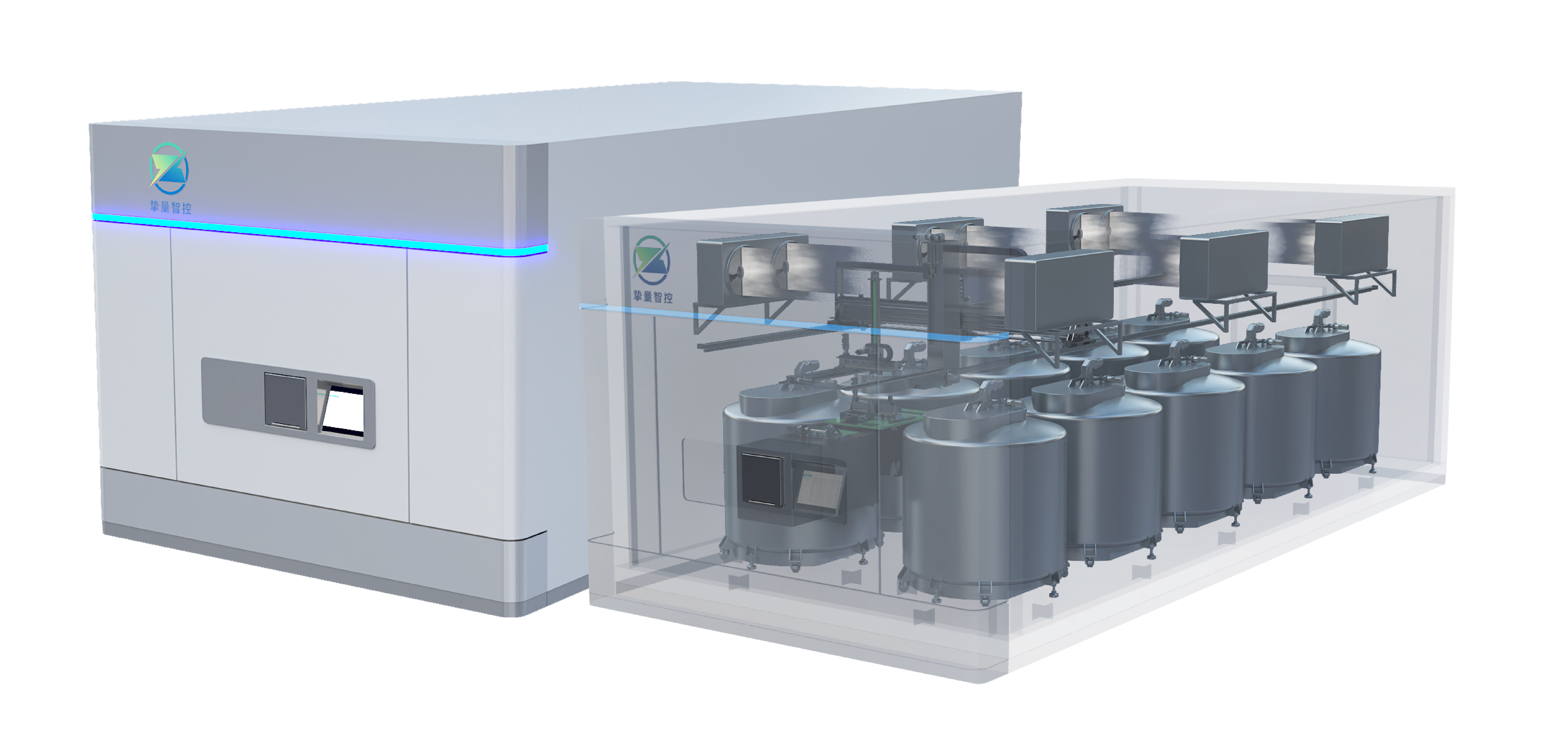
Truss-Mounted Large-Scale Biobank. Image source: Zhiliang Intelligent Control
At the core of air refrigeration technology, the world’s first set of air-cooled ultra-low temperature biobanks to be launched completely eliminates the environmental impact of non-eco-friendly refrigerants. By using natural refrigerant—air—it is safer, more environmentally friendly, cost-effective, and readily available. The low-temperature field is more uniform; cooling efficiency is significantly improved; compared with existing ultra-low temperature technologies, the cooling rate has increased by an order of magnitude. It can enable one refrigeration unit to simultaneously drive dozens of storage devices, making it more suitable for the usage scenarios of large-scale biobanks.
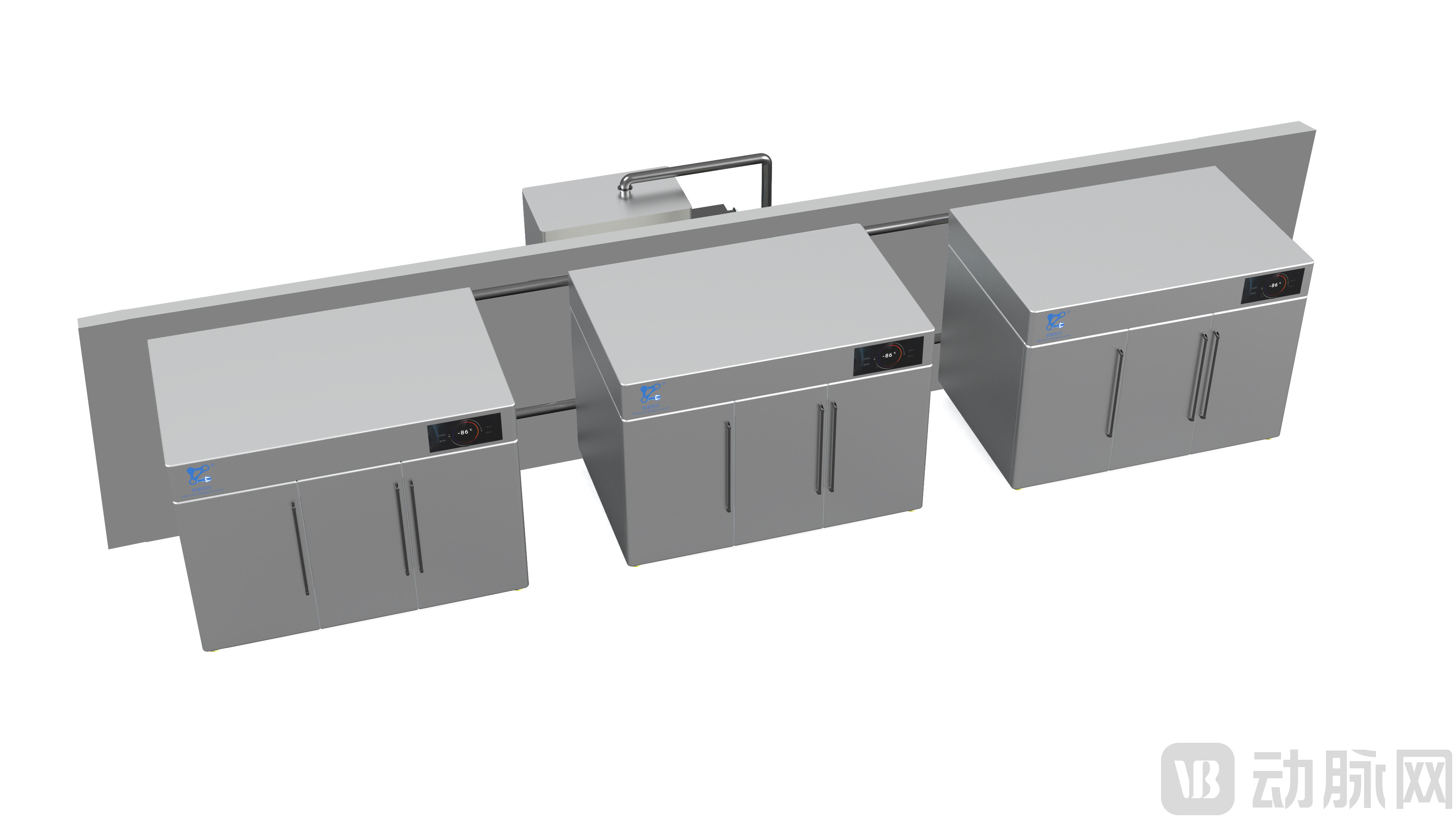 Air-Cooled Ultra-Low Temperature Biobank Series Image Source: Zhiliang Intelligent Control
“With social development and technological advancement, the application of ultra/deep cryogenic refrigeration technology has extended from aviation to civilian use, and further into the medical field. Whether driven by the growing demand for regenerative medicine due to population aging or by rising expectations for quality of life, this technology is bound to have broader application prospects in the future,” said Dr. Zhao Jun. “The R&D team has already begun leveraging air-cooling technology to support the pre-prepared food sector, a market with a scale of trillions of yuan.”
As a university faculty member, Dr. Zhao Jun also has his own insights into the commercialization of research achievements. “Engineering disciplines must maintain close and deep integration with industry. Advanced technologies from various fields should be continuously cross-disciplinarily combined, optimized, and upgraded into cutting-edge solutions for emerging domains, thereby meeting the needs of healthcare, food safety, and broader societal sectors. This is the intrinsic driving force behind research translation, as well as a reflection of researchers’ social responsibility.”