

Ronovo Surgical's Modular Surgical Robot 'Haishan One' Completes First-in-Human Clinical Trial, Marking a Milestone for China’s Surgical Robotics Industry

Ronovo
Minimally Invasive Surgical Robot Developer
Recently, China's first modular surgical robot, Haishan Yi®Completed the first-in-human (FIH) clinical trial, marking a milestone for China’s surgical robotics industry. This innovative product, independently developed by Ronovo Surgical—a pioneer in laparoscopic surgical robotics innovation in China—holds proprietary intellectual property rights and breaks the monopoly of foreign integrated surgical robots. The commercialization of this domestically produced modular surgical robot has set a new benchmark in the field.
Hai Shan Yi®The first-in-human clinical trial was successfully conducted at Fudan University Shanghai Cancer Center by a team led by Professor Ye Dingwei, who served as the lead surgeon. Professor Ye is the Chairman of the Urologic and Male Genital Oncology Committee of the China Anti-Cancer Association, Vice President of Fudan University Shanghai Cancer Center, and a renowned expert in urology. Since Haishan Yi®Since its inception, Professor Ye Dingwei and his team have been deeply involved, leveraging innovations at the intersection of medicine and engineering to explore the most suitable surgical robotic solutions for minimally invasive surgery in China.
Regarding the successful completion of the FIM, Professor Ye praised:“Modular surgical robots fully leverage the advantages of robotic surgical systems, featuring a concise and efficient operating system, as well as dexterous and highly precise robotic arms. This significantly enhances the operability of robot-assisted surgery for urological tumors, marking a major step forward for domestically produced robotic platforms.”
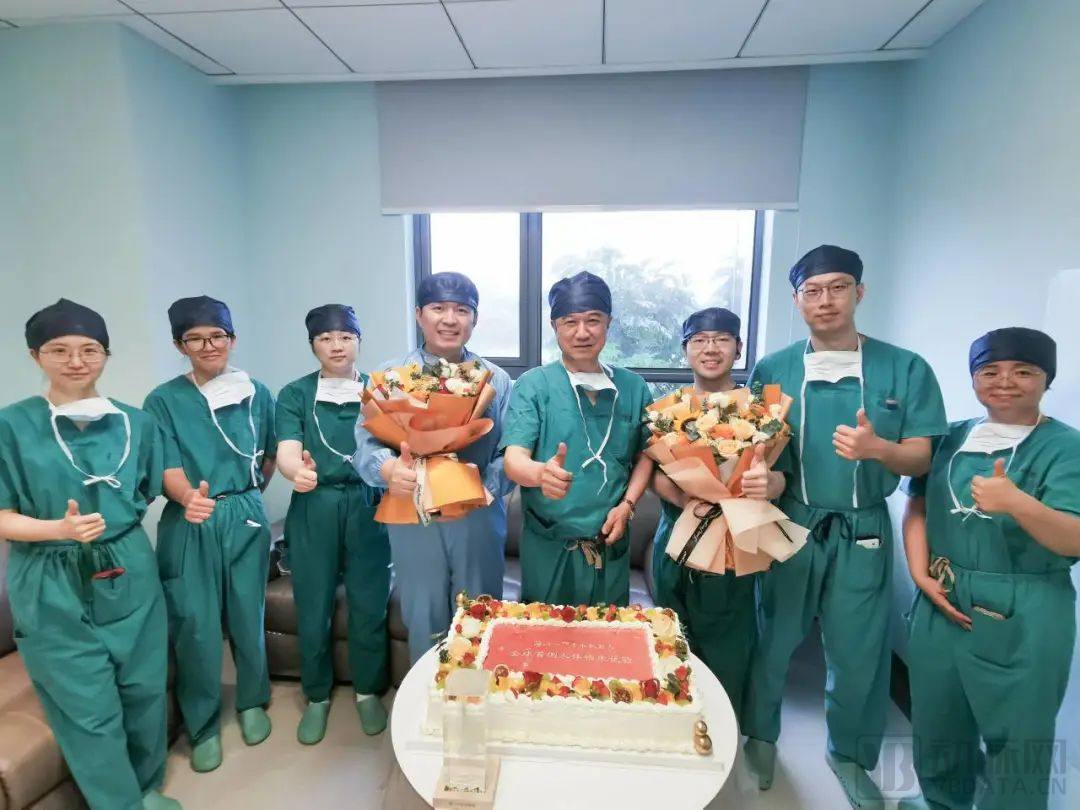
The patient in this first-in-human clinical trial was a 66-year-old male diagnosed with prostate cancer via prostate needle biopsy, with a Gleason score of 4+4=8. Radical prostatectomy was recommended.
After the surgery commenced, Professor Ye Dingwei operated the Hai Shan Yi®Laparoscopic surgical robot: Precisely dissecting the retropubic space, exposing the prostate, and freeing and suturing/ligating the dorsal venous complex (DVC) within the confined pelvic cavity. Subsequently, Professor Ye meticulously dissected the bladder neck, freed the posterior aspect of the prostate and bilateral seminal vesicles, ligated and severed the bilateral lateral prostatic ligaments, and after mobilizing the apical urethra, transected it to successfully complete the prostatectomy. Leveraging the flexible wristed instruments of the robotic system, he seamlessly performed the bladder neck-urethral anastomosis. The entire procedure flowed smoothly, taking just over an hour, fully demonstrating the Haishan Yi®System Stability and Superiority.
Postoperatively, the patient experienced mild pain. In the following days, the pelvic drainage tube was sequentially removed, ambulation was initiated, and a normal diet was resumed. The postoperative recovery was favorable, and the patient was discharged without complications.
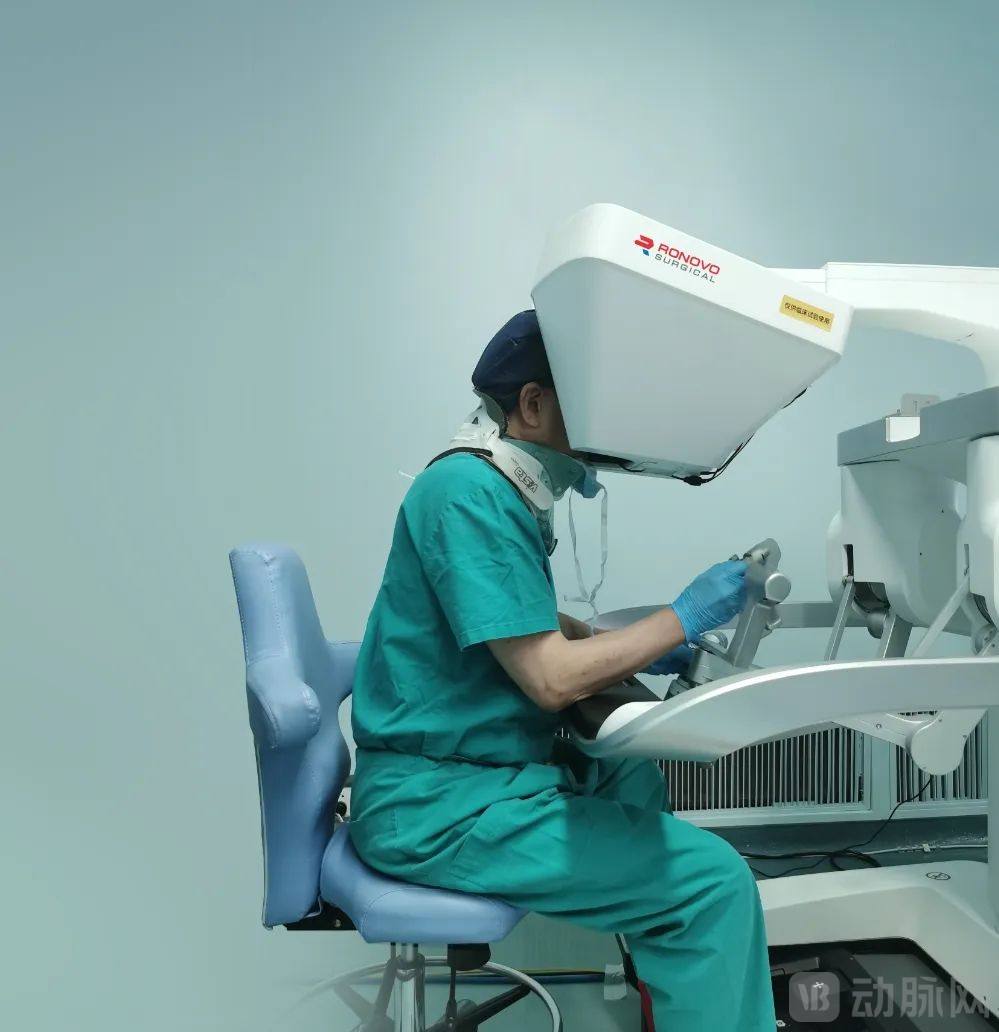
Previously, Haishan One®Multi-specialty, multi-procedure animal trials have been completed. With the completion of this first-in-human clinical trial, Ronovo will rapidly advance Haishan Yi®The initiation of clinical trials on human subjects for the surgical robot marks the official commencement of a new chapter for domestically produced modular surgical robots.
Pioneering Innovation Drives Major Breakthroughs in Modular Surgical Robots
The successful completion of the FIM trial was made possible not only by the Ronovo team’s years of dedicated and diligent efforts, but also by the invaluable contributions of leading clinical experts both in China and abroad to Haishan Yi®Valuable insights provided for the research and development of surgical robots.
Since its establishment, Ronovo has been deeply integrated with clinical practice, adhering to source innovation and strengthening foundational technologies. Under the model of medical-engineering collaboration, the support of clinical experts has accompanied Haishan I®The entire process of system development. Prior to the initiation of human clinical trials, Ronovo invited numerous domestic and international clinicians to conduct extensive animal and cadaveric experiments. These experts included Professor Luigi Boni, a renowned Italian surgical specialist, and Professor Vipul R. Patel, who later joined Ronovo’s Clinical Advisory Board after participating in the initial system testing. Based on feedback from physicians across various specialties during these trial runs, the company continuously summarized, validated, and refined the system. By adopting a pragmatic approach to research and development, Ronovo has enhanced its Haishan One system through ongoing optimization and iteration.®performance and stability, laying a solid foundation for empowering clinical practice.
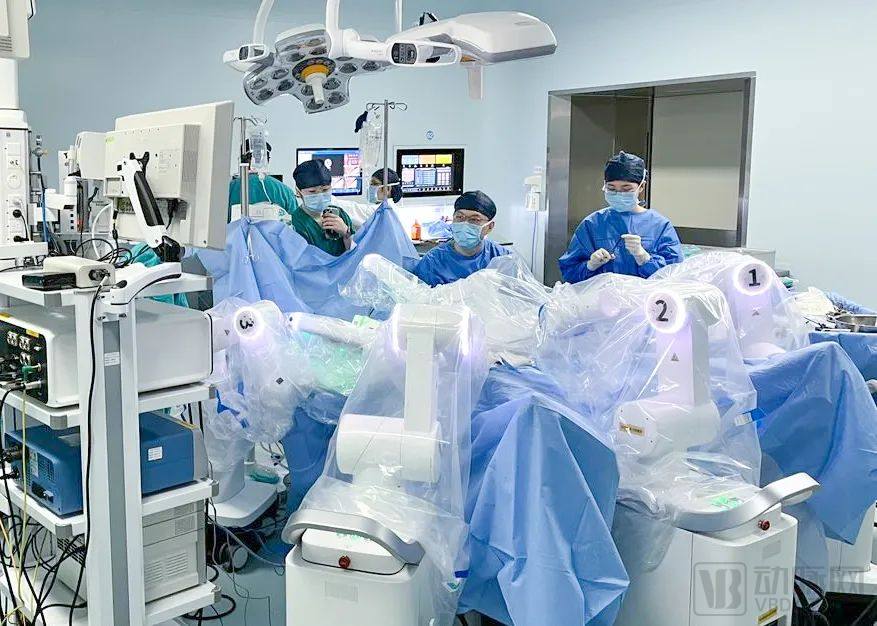
Haishan One, the first modular surgical robot in China®Standard modular carts feature a small footprint and easily controllable costs, allowing hospitals to configure the number of carts as needed and flexibly adapt to existing spaces without expanding operating rooms; meanwhile, Haishan Yi®configurability, supporting both the use of Ronovo’s proprietary single-use wristed instruments and functional imaging systems, as well as compatibility with mainstream laparoscopic surgical instruments and vision systems available on the market. This flexibility in selection and modular combination meets the multidimensional needs of hospitals with varying configurations and surgeons at different stages of proficiency.
Haishan Yi®Its differentiated modular, dexterous, and configurable design offers unique advantages for broad applicability across multiple departments and surgical procedures. This not only shortens the learning curve for physicians but also helps reduce hospital acquisition costs for surgical robots and patient surgical expenses, truly engineered to achieve the widespread adoption of robotic surgery.
The Trend Is Clear: Domestic Innovative Surgical Robots Are on the Rise
With a vast number of cancer patients in China, the demand for minimally invasive surgery is surging, driving rapid growth in the surgical robotics market.
In 2020, there were 4.57 million new cancer cases in China, accounting for 23.7% of the global total, which exceeds the country’s share of the global population (18%). The population of cancer patients in China is large and continues to increase year by year. For early-stage cancer, radical resection is one of the most effective treatments. Minimally invasive surgery has become the preferred approach for radical tumor resection due to its advantages, including minimal trauma, reduced pain, less bleeding, and faster recovery, with the annual number of such procedures having long surpassed ten million.
With the entry of the da Vinci Surgical System into the Chinese market in 2006, robot-assisted minimally invasive surgery (RAS) gradually gained recognition in China. Driven by numerous advantages—such as improved patient outcomes, reduced physician workload, and increased hospital bed turnover—the surgical robotics sector in China began to heat up. With growing favor from capital markets, the domestic surgical robotics industry has subsequently flourished.
The Chinese government has strongly supported the development of domestically produced laparoscopic surgical robots, with a continuous stream of favorable policies. In 2018, the National Health Commission reclassified laparoscopic surgical robots from Class A to Class B in the catalog for the management of large-scale medical equipment. In 2021, Shanghai took the lead in including four types of robot-assisted surgical procedures in its medical insurance reimbursement list, thereby enhancing the affordability of robotic-assisted surgery (RAS). In 2023, the guidelines for configuration standards of Class B large-scale medical equipment further relaxed the hospital configuration requirements for laparoscopic surgical robots, changing the criterion from “provincial leadership” to “strong comprehensive surgical capabilities.” Additionally, the “14th Five-Year Plan” for the Configuration of Large-Scale Medical Equipment raised the national planned total number of laparoscopic surgical robots to 819 units.
According to Frost & Sullivan data, the market size of surgical robots in China was approximately RMB 3.05 billion in 2020, with the laparoscopic surgical robot segment accounting for RMB 2.28 billion, or 75% of the total. Forecasts indicate that by 2026, the market size of surgical robots in China will reach RMB 25 billion, and its share of the global market will increase from 5.1% in 2020 to 11.4%. Meanwhile, the market size of laparoscopic surgical robots in China is projected to reach RMB 15 billion in 2026, representing a compound annual growth rate (CAGR) of 36.9%, which underscores significant growth potential.
Surgical robotics is a high-barrier, hard-tech sector that imposes stringent demands on companies’ foundational innovation capabilities, comprehensive R&D strength, responsiveness to clinical needs, and commercialization operations. As an innovative representative of next-generation surgical robotics companies, Ronovo will rapidly advance Haishan Yi, the first domestically produced modular surgical robot.®Achieving More New Milestones, Accelerating the Rise of Chinese Innovative Surgical Robots.