

Jingjie Bio Passes ChiNext IPO Review, Aims to Raise RMB 500 Million for Proteomics Innovation
During the first decade of the 21st century, amid the booming industrialization of global genomics, proteomics has emerged as a rising field. By integrating scientific and technological advances from bioinformatics, epigenetics, and other disciplines, proteomics is increasingly recognized by both academia and industry as a key pillar of the “post-genomics” era.
Against this backdrop, PTM Bio was founded in 2011, leveraging the founding team’s internationally leading technologies in proteomics and epigenetics, as well as their profound insights into industry development. The company has established an “integrated” business model that prioritizes antibody development, centers on proteomics technical services, and is driven by bioinformatics data analysis.
For 12 years, Jingjie Bio has been committed to building a complete industrial closed-loop ecosystem in the field of proteomics technical services, encompassing both “discovery” and “validation.” It innovates clinical diagnosis and treatment through biomarker discovery and new drug development, promotes the application of life sciences, basic medical research, and translational medicine, and accelerates the industrialization of proteomics in China.
As the era of “proteomics-driven precision medicine” dawns and the field stands on the verge of entering an industrial “blue ocean,” how can proteomics carve out a distinct path for industrialization and innovation, different from that of genomics? VCBeat interviewed Dr. Cheng Zhongyi, Co-founder and CEO of Jingjie Bio, which has just passed the review process for listing on the ChiNext board, to gain insights into the future blueprint of proteomics.
The concept of the proteome was formally proposed in 1994, referring to all proteins expressed by the genome of an organism or biological sample, along with their modes of existence. Proteomics is dedicated to studying the types, expression, interactions, and modification states of the entire complement of proteins within an organism under specific conditions, at specific times, and in specific spatial contexts.
Protein Post-Translational Modifications (PTMs) refer to enzyme-catalyzed chemical modifications of proteins that occur after translation in vivo. These modifications regulate protein activity, localization, folding, and interactions with other biological macromolecules. PTMs constitute a crucial molecular basis for the dynamic responses and interactions of proteins and serve as key targets in the regulation of cellular signaling networks.
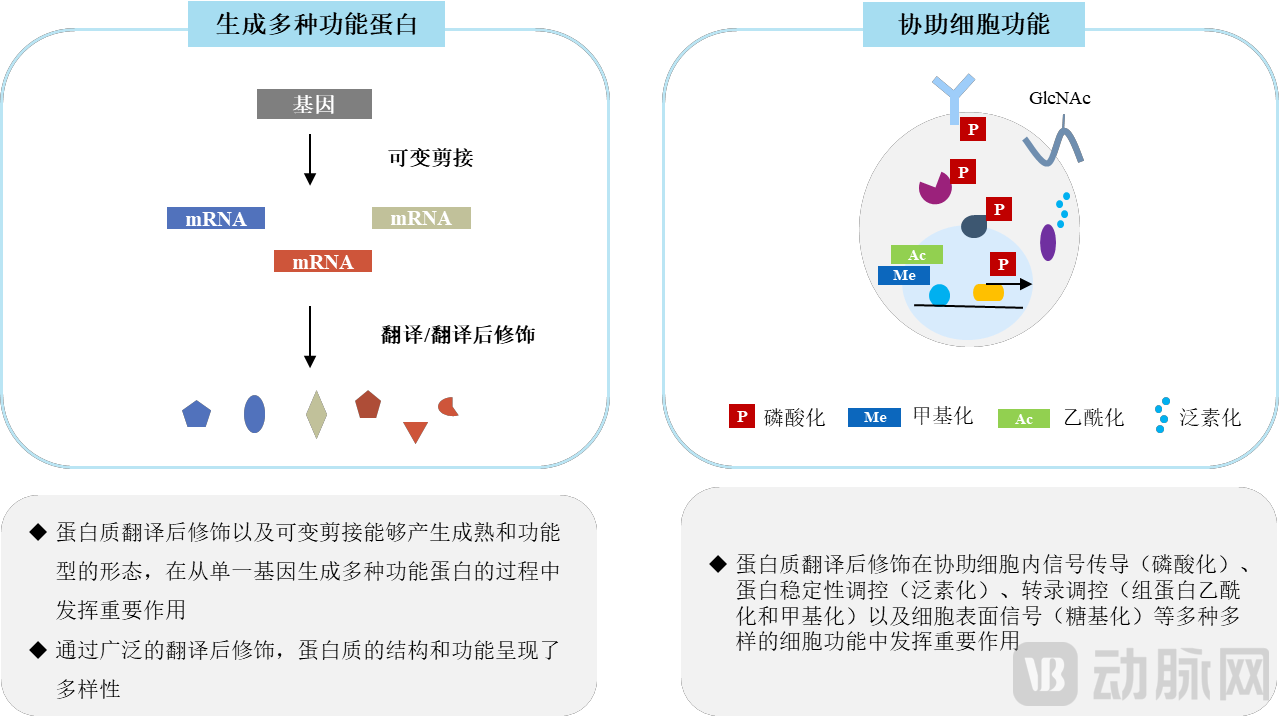
Schematic Diagram of Post-Translational Modifications of Proteins (Source: Prospectus)
The status and profile of protein modifications can reveal the functions of differential proteins in specific cells, at specific developmental stages, and under dysfunctional disease states. Therefore, identifying and understanding post-translational modifications (PTMs) of proteins is crucial for research in cell biology as well as in the treatment and prevention of diseases. With the large-scale discovery of PTMs and further advancements in detection and analytical technologies, incorporating PTM analysis at the omics level is gradually becoming a frontier trend.
“Taking combat sports as an example, an individual’s weight and height represent the most fundamental fighting capabilities, which can be likened to basic proteomics analysis. However, if different weapons are wielded, their combat effectiveness increases exponentially. These weapons can be analogized to various chemical modifications occurring on proteins, namely post-translational modifications (PTMs). Jingjie Bio’s strength lies in developing antibodies that recognize these ‘weapons’ and in proteomic technologies for detecting and analyzing them,” introduced Dr. Cheng Zhongyi, CEO of Jingjie Bio and Vice Chairman of the Chinese Human Proteome Organization (CNHUPO).
Compared with proteomic analysis, post-translational modification (PTM) proteomic analysis imposes higher requirements across multiple dimensions:
Mass Spectrometry Technology Level—Imposes more stringent requirements on the optimization of mass spectrometers and subsequent data analysis;
Sample Processing Level—It is necessary to develop compatible affinity reagents (commonly pan-antibodies against protein modifications) to achieve highly selective affinity enrichment of modified peptides, and to optimize the enrichment conditions accordingly.
In terms of technology transfer, Jingjie Bio has adopted"Product-First Strategy", it took the lead in entering the antibody reagent product segment, and subsequently established a business framework centered on “high-throughput proteomics analysis + high-specificity antibody development.”
In response to the market reality where upstream raw materials are monopolized by a few overseas suppliers, Jingjie PTM BioLab has independently developed antibody reagents for proteomics of post-translational modifications (PTMs) since its inception. To date, it has successively developed 11 novel PTM antibody reagents and, based on these, established corresponding analytical technical services for 11 new types of protein modification proteomics. Currently, the company offers a total of 26 types of protein modification proteomics analysis technologies.
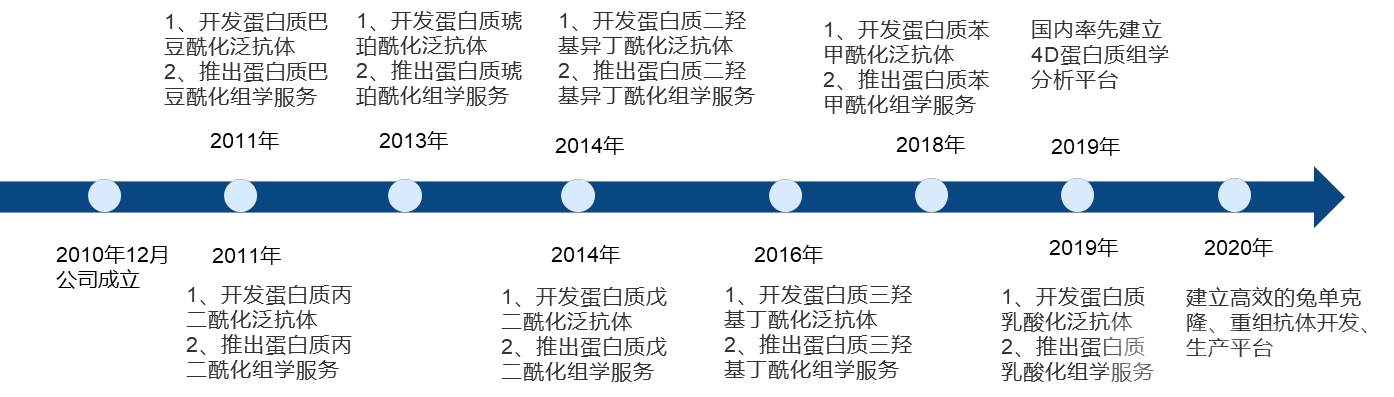
Jingjie Bio’s R&D Roadmap (Source: Prospectus)
Furthermore, Jingjie Bio is one of the pioneers in utilizing proteomics to analyze the histone code, and the proprietary development of antibodies against histone code modifications is also its core technology.
Jingjie Bio has developed a comprehensive workflow spanning antigen design, antigen synthesis, immunization strategies, antibody purification, and antibody validation. Leveraging its proprietary antibody development platform and rigorous cross-validation processes, the company has launched pan-antibodies against protein modifications with high affinity and specificity, as well as site-specific antibodies against histone modifications characterized by high specificity and sensitivity.
On one hand, these antibodies serve as complementary reagents for proteome modification analysis, significantly driving the growth of our proteomics technology services. On the other hand, as independently applicable research-grade antibody products, they are widely used by downstream customers in fundamental life science research and constitute one of our core competitive advantages.
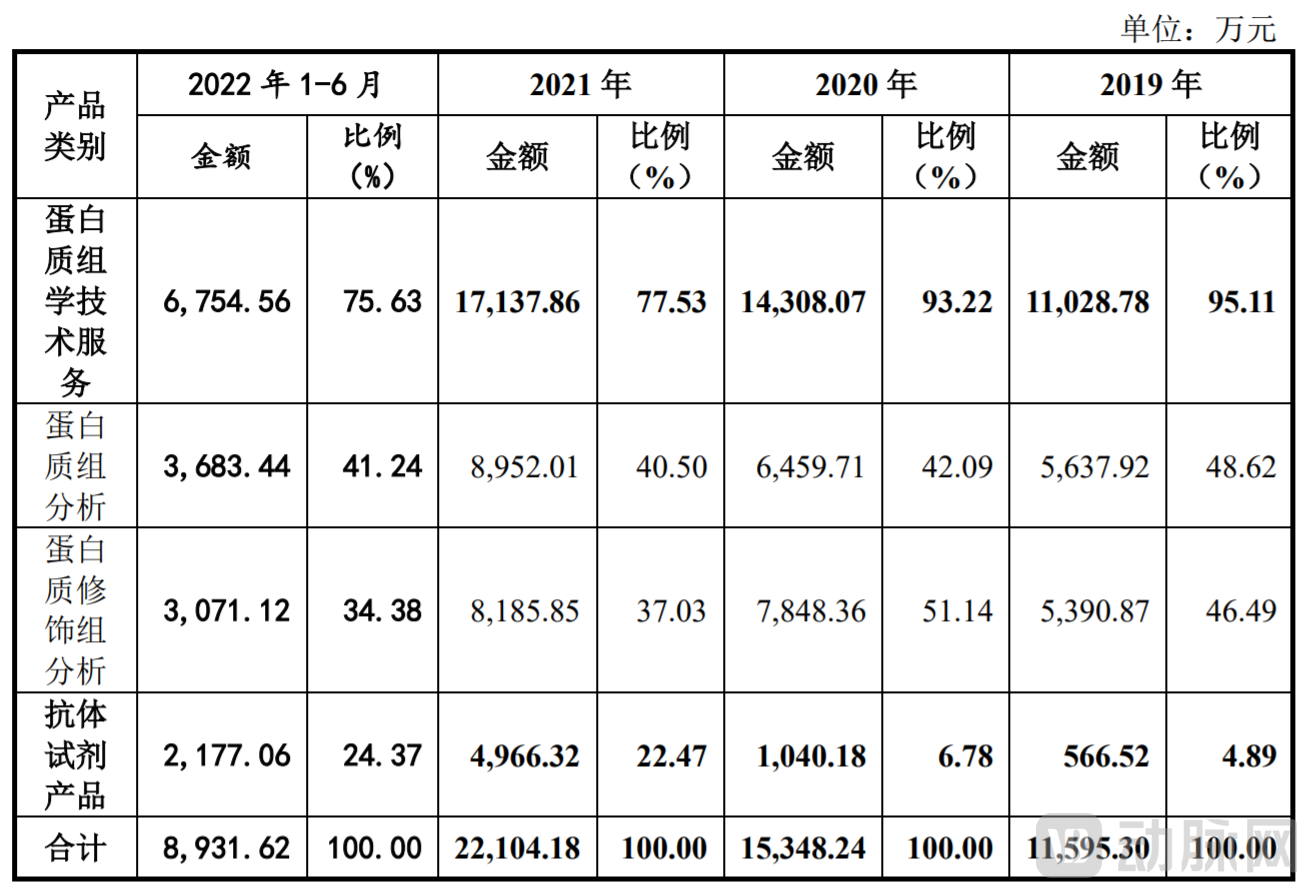
Jingjie Bio's Revenue Composition from Core Operations (Source: Prospectus)
The prospectus reveals that in recent years, the revenue and proportion of Jingjie Bio’s antibody reagent products have gradually increased. The company’s business positioning is shifting from internally synergistic proteomics technical services to external market-oriented sales, emerging as a second growth pillar for its revenue.
Starting with early-stage technology development, Jingjie Bio launched antibody reagent products and progressively advanced the deep integration of its foundational technologies, supporting technologies, and instruments. By pursuing these two parallel tracks, it has evolved into a one-stop service provider.
The prospectus shows that the gross profit margin of Jingjie Bio’s main business showed a slight upward trend from 2019 to 2021, mainly due to changes in product structure. Since 2020, the revenue proportion of antibody reagent products with relatively higher gross profit margins has increased, driving a slight increase in the overall gross profit margin.
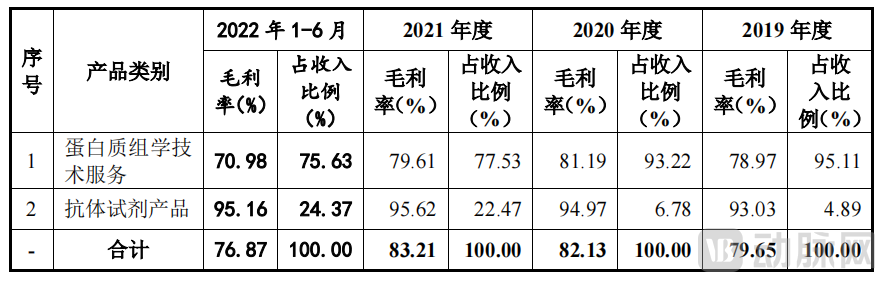
Gross Profit Margin by Product Category for Core Business (Source: Prospectus)
Overall, Jingjie Bio’s high gross profit margin is primarily attributable to the high technical barriers of its proteomics and antibody reagent products, as well as its prominent competitive advantages in the field of post-translational modification (PTM) proteomics. This is closely linked to Jingjie Bio’s emphasis on research and development and its commitment to continuous innovation.
Prioritizing R&D innovation is a critical component of the “product + technical services” development path, often serving as an indicator of whether a company can capture future potential growth opportunities.
The prospectus reveals that as of June 30, 2022, Jingjie Bio had 310 employees, among whom 225 held master’s degrees or higher, accounting for 72.58% of the workforce, including 27 PhD holders. Currently, Jingjie Bio holds 13 invention patents (both domestic and international) and six software copyrights. It has successively established a Provincial High-Tech Enterprise Research and Development Center, the Zhejiang Jingjie Proteomics Institute, and the Zhejiang Engineering Research Center for Proteomics and Precision Medicine. Additionally, the company participated in the sub-project on “Clinical-Grade Quantitative Proteomics and Innovative Reagent R&D” under the National Health and Family Planning Commission’s “National Major Project on Precision Medicine.”
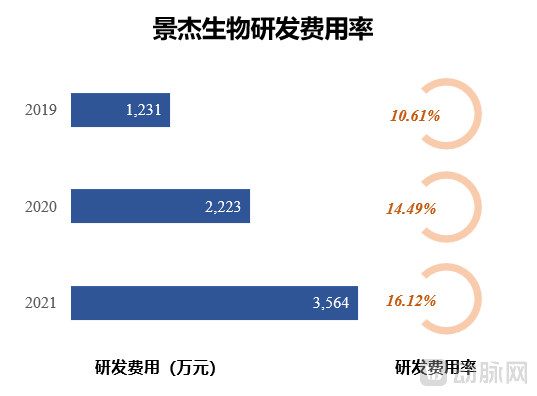
Jingjie Bio’s R&D Expense Ratio (Source: Prospectus)
As revenue increased year by year, Jingjie Bio’s R&D expenditure also continued to rise, with the R&D intensity increasing rather than decreasing—from 10.61% in 2019 and 14.49% in 2020 to 16.12% in 2021.
A high R&D investment strategy aligns with the early stage of the proteomics industry. As cutting-edge technologies in the field continue to evolve rapidly, applications of proteomics are gradually shifting from academic research to industrial and commercial use. By integrating multi-layered, personalized antibody products with technical services, Jingjie Bio is continuously exploring new application scenarios.
According to Frost & Sullivan data, the market size of China's proteomics research services reached RMB 580 million in 2020, with Jingjie Bio ranking first with a revenue of RMB 140 million, accounting for 25.0% of the market share.
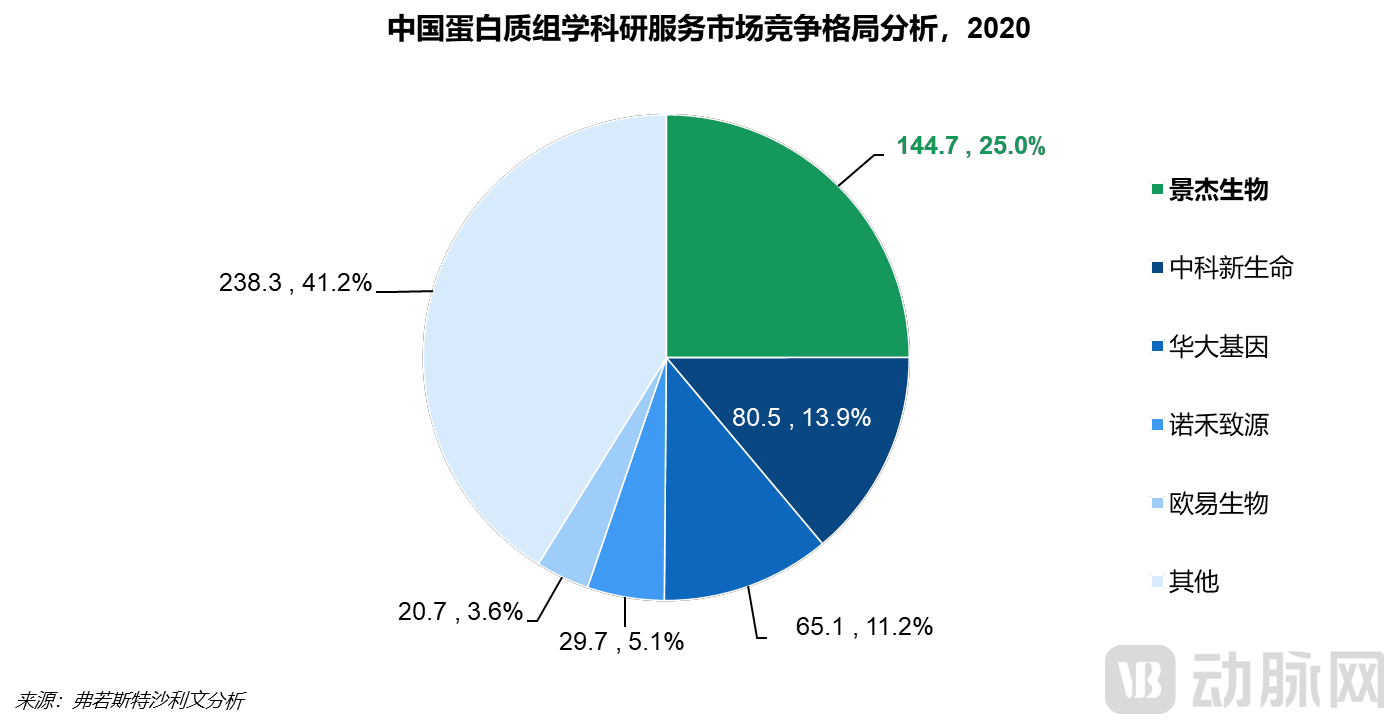
(Source: Jingjie Bio's prospectus)
With the largest market share, Jingjie Bio has established business collaborations with over 2,000 renowned institutions domestically and internationally, including universities, research institutes, and hospitals. During the reporting period, revenue from basic research clients and hospital clients accounted for more than 90% of Jingjie Bio’s total revenue.
Meanwhile, Jingjie Bio is actively embracing change by expanding its client base in industrial sectors such as biotechnology and new drug development enterprises. It has established business collaborations with companies including BeiGene, Kunyuan Gene, and Chia Tai Tianqing.
Exploring four major application scenarios is also a key component of Jingjie Bio’s downstream application strategy.
Scenario 1: Applications in life science exploration involving humans, animals, plants, agriculture, and related fields.
“For instance, how do the critical regulatory roles of proteins and protein modifications exert their effects? What are the underlying mechanisms? What gives rise to inter-individual differences? Proteomics enables more in-depth detection and analysis of these aspects. This application is not limited to medicine but also holds broader significance in biology and value across other industries.”
Scenario 2: Succeeding Genomics to Facilitate Clinical Diagnosis in Precision Medicine.
“The Genomics 1.0 Era of Precision Medicine Is Evolving into the Proteomics 2.0 Era. For instance, a growing body of scientific research and clinical evidence indicates that genomic approaches alone cannot directly address how tumors originate, progress, and metastasize. As the ultimate effector molecules in functional regulation, proteomics can explain and resolve certain challenges that remain unaddressed by genomics.”
Scenario 3: Advancing Translational Medicine to Identify Next-Generation Biomarkers.
“Taking cancer as an example, by leveraging proteomics and post-translational modification profiling, researchers can identify differentially expressed proteins and differential protein modifications between tumor tissues and normal tissues, as well as between metastatic and non-metastatic lesions, thereby highlighting potential diagnostic and therapeutic biomarkers. Following antibody development and large-scale validation, such biomarkers will attain clinical utility.”
Scenario 4: Discovering New Drug Targets to Accelerate New Drug Evaluation and Drug Screening.
“Through in-depth analysis of clinical samples, bioeconomic data mining, validation of biological functions, and integration with animal experiments, it is highly likely to identify new drug targets based on proteomics and post-translational modification proteomics, and even discover specific drug candidates. Meanwhile, drug sensitivity-related biomarkers can be identified within patient subpopulations, deepening the understanding of pathology and pharmacology. This lays a solid foundation for biopharmaceutical companies in drug screening and efficacy evaluation, thereby playing a significant role in advancing new drug development.”
According to Frost & Sullivan data, the market size of proteomics research services in China expanded from RMB 120 million in 2016 to RMB 580 million in 2020, representing a compound annual growth rate (CAGR) of 49.1%. The Chinese proteomics research services market is projected to continue its expansion, reaching RMB 2.26 billion by 2025 at a CAGR of 31.3%. The global proteomics services market is expected to reach USD 6.8 billion.
In Dr. Cheng Zhongyi’s view, the development of proteomics is tangible: “When Jingjie Bio was just founded, the proteomics sector was only in its infancy. Compared to that time, the market size has certainly grown more than tenfold. Over the past decade, Jingjie’s business has expanded rapidly, and companies of various types and scales have sprung up like mushrooms within the sector, all reflecting the continuous expansion of the proteomics field.”
The growth of proteomics lies not only in its competitive landscape, but more so in its broader application scenarios and potential for innovation.Globally, pharmaceutical discovery and development companies based on proteomics have begun to emerge. For example, Frontier Medicines, founded in 2018, has identified over 150,000 protein surface binding pockets and previously “undruggable” drug targets through its proprietary chemoproteomics platform, with its first small-molecule covalent drug having entered the preclinical stage.
Dr. Cheng Zhongyi shares a similar vision: “Jingjie Bio is an integrated, platform-driven enterprise. In the future, as a flagship in the proteomics industry, Jingjie will proactively and rapidly shape customer awareness through innovative products and technologies, steer the sector toward faster and higher-quality development, and contribute to the advancement of global life sciences and precision medicine.”
The future is already here. Can proteomics seize the opportunity for takeoff and introduce disruptive new methods for drug discovery? As Jingjie Bio prepares to make its A-share market debut in the proteomics sector, whether it can continue to lead industry breakthroughs and achieve strong performance in the capital market remains to be seen. VCBeat will continue to monitor these developments.