

Boenruier Secures China's First Approval for Absorbable Hemostatic Fluid Gel, Leading the High-End Hemostatic Materials Market
China’s First “Absorbable Hemostatic Fluid Gelatin” Has Arrived!
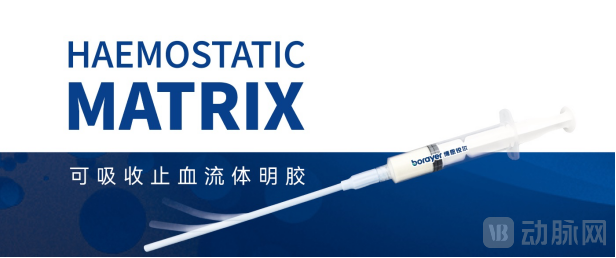
Recently, Jiangxi BORAYER Biotechnology Co., Ltd. (hereinafter referred to as “BORAYER”), a company committed to its mission of “enabling tissue regeneration” and striving to become a leader in the field of biomaterials, has officially received approval from the National Medical Products Administration for its independently developed Class III medical device product, “Absorbable Hemostatic Fluid Gelatin” (National Medical Device Registration No. 20233141303). This marks it as the first domestically produced absorbable fluid hemostatic material approved for market launch in China.
BORAYER holds full independent intellectual property rights for this product, breaking the monopoly of foreign manufacturers and achieving import substitution for similar products for the first time, thereby providing a more convenient and efficient method for hemostasis.
BORAYER’s self-developed “Absorbable Hemostatic Fluid Gelatin” is an absorbable surgical hemostatic agent. Its mechanism of action leverages the body’s natural coagulation cascade. The fluid formulation enables rapid distribution around bleeding sites and thorough contact with irregular wound surfaces, overcoming the application limitations of conventional solid hemostatic materials such as gauze, sponges, and powders. It is particularly suitable for achieving hemostasis in deep wounds, narrow spaces, and tiny cavities where solid materials are difficult to apply. The product has demonstrated excellent clinical performance across various surgical specialties, including orthopedics (such as spinal surgery), obstetrics and gynecology, general surgery, and otolaryngology. Furthermore, it is easy to use, safely and reliably absorbed by the human body within 4–6 weeks.
As the volume of surgical procedures in China increases year by year and minimally invasive surgery rapidly gains prominence, the clinical demand for cost-effective, domestically produced hemostatic materials suitable for minimally invasive applications has become particularly urgent.
Traditional hemostasis typically employs methods such as direct pressure, suture ligation, tourniquet application, and electrocoagulation. These approaches have varying degrees of limitations, including the risk of muscle and nerve tissue injury, introduction of foreign bodies, susceptibility to postoperative complications, and inefficient use of valuable anesthesia time. Particularly when conventional hemostatic methods are ineffective or impractical, reliance on novel hemostatic materials is required to assist in controlling bleeding.
Currently, hemostatic materials commonly used in clinical practice include hemostatic gauze, hemostatic sponges, hemostatic dressings, and hemostatic microspheres. Fluid hemostatic materials, characterized by their fluid properties and ease of clinical application, overcome the limitations associated with solid hemostatic materials. However, due to the high technical barriers involved, these materials had not previously been manufactured domestically in China.
The introduction of hemostatic fluid materials has provided an excellent solution for intraoperative hemostasis in clinical settings; however, the high domestic retail prices of imported products and their limited product specifications have prevented broader patient access.
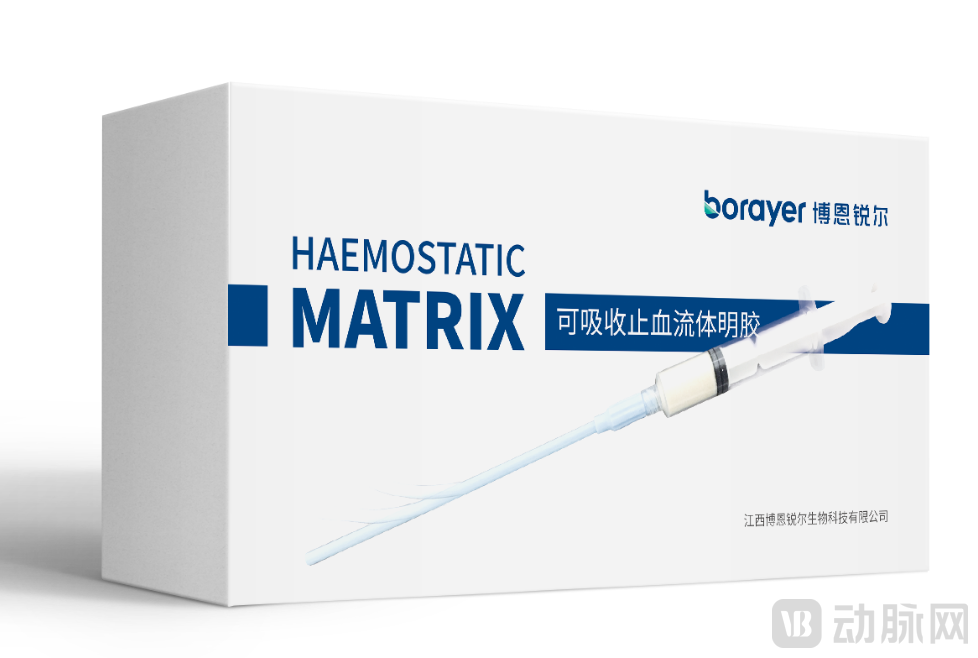
"Absorbable Hemostatic Gelatin Fluid"
BORAYER’s independently developed “Absorbable Hemostatic Gelatin Fluid” uses gelatin as its primary raw material and exhibits excellent biocompatibility. Manufactured using BORAYER’s proprietary technology and validated through pre-market clinical trials, it fully demonstrates the safety and efficacy required to replace imported products of the same category.
This product features optimal fluidic properties, enabling precise injection into complex bleeding sites. It rapidly distributes around the hemorrhage points and achieves thorough contact with irregular wound surfaces, offering a wound-contact area nearly four times greater than that of traditional solid gelatin. Meanwhile, its expansion coefficient is less than 20%, significantly lower than that of cellulose (130%) and collagen (260%), thereby greatly minimizing unnecessary space occupation and compression, which substantially enhances surgical safety.
In terms of tool design, the system is equipped with accessories such as bendable and trimmable injection catheters, facilitating precise delivery to target sites by allowing flexible adjustment of angle and length to accommodate various application scenarios. Meanwhile, BORAYER has also developed compatible laparoscopic drug delivery catheters to better support use in a variety of minimally invasive surgical settings.
Clinically, this product demonstrates excellent performance. For instance, it can easily access narrow spaces to control oozing from the spinal venous plexus and surface bleeding from bone wounds during spinal surgery. When used for diffuse oozing in various obstetric and gynecological procedures, it avoids damage to surrounding organs (such as the bladder, fallopian tubes, and ovaries) caused by excessive electrocoagulation. In general surgical settings, such as managing oozing from liver resection surfaces, venous bleeding, and bleeding from cholecystectomy sites, it efficiently covers large wound areas or poorly exposed deep regions of the liver, achieving high hemostatic efficiency and superior outcomes.
Given the limited variety of specifications and models in imported products, BORAYER has developed seven different specifications based on clinical needs, enabling doctors to select the most appropriate option according to surgical conditions, thereby minimizing material waste and reducing surgical costs.
Leveraging its end-to-end in-house control from raw materials to finished products, BORAYER ensures dual stability in quality and production capacity, while also poised to further reduce costs through economies of scale, thereby benefiting more patients.
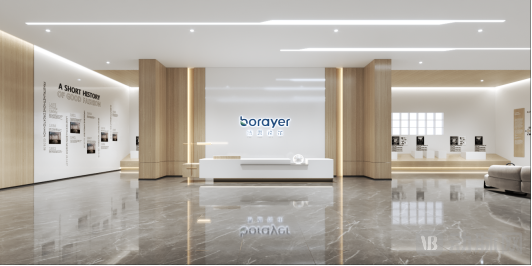
BORAYER is a high-tech enterprise founded by a Tsinghua University team, dedicated to the research and development of biomedical materials. Established in 2017, the company specializes in the R&D and production of biomaterials and has pioneered several domestically leading polymer biomaterial technology platforms, including those for polysaccharides, protein extracts, acrylic compounds, biodegradable polyurethanes, and polyethylene glycol derivatives. It provides a series of high-end medical consumables for clinical applications, such as rapid hemostasis, wound repair, and tissue regeneration.
The company previously secured nearly RMB 100 million in its Series B+ financing round, with investments from Matrix Partners China, DT Capital Partners, and Yuansheng Venture Capital.
After years of development, the company is now equipped with a 10,000-square-meter biomaterials laboratory, testing laboratory, animal laboratory, and Class 10,000 cleanroom workshop, and collaborates withTsinghua University, Beihang Universityand other related laboratories have established academic collaborations; withChina-Japan Friendship Hospital, Beijing Friendship Hospital, Eye & ENT Hospital of Fudan University, Shanghai Renji Hospital, Nanjing Drum Tower Hospital, The First Affiliated Hospital of Zhejiang University, The First Affiliated Hospital of Nanchang University, The Second Affiliated Hospital of Nanchang Universityestablished close academic ties with renowned Grade 3A clinical institutions, building a comprehensive R&D ecosystem.
Focusing on scenarios such as rapid hemostasis, wound repair, and tissue regeneration, the company has established a rich and multidimensional product portfolio, possessingHemostatic Materials, Tissue Adhesives, Tissue Regeneration Consumables, Cell Culture Scaffolds, Gelatin Microcarriers, Collagen Fillersand other products. Additionally, we have reserved more than 10 high-value consumable products with significant market potential, among which several have already initiated registration applications with China’s NMPA, the EU CE, and the US FDA.
In the future, BORAYER will continue to deepen its engagement in the field of biomaterials, targeting clinical application pain points and leveraging technological innovation to continuously develop biomaterials that meet clinical needs.