

MingYi Genomics Unveils Low-Cost, Localized High-Throughput Sequencer Powered by Proprietary Single-Color Fluorescence Technology
ME Instruments
Gene Sequencing Analysis Platform and Related Technology R&D Provider
Gene sequencing refers to the process of determining the order of DNA bases using sequencing equipment to decipher the genetic code, thereby providing guidance for life science research, clinical diagnosis, and treatment. Specifically, interpreting gene sequences can uncover and explain a wealth of critical information related to human disease and health, supporting applications in clinical diagnosis, drug development, and pathological research.
Precisely due to its cutting-edge nature and broad clinical application potential, gene sequencing technology has been rapidly adopted and iterated, forming a long-chain industrial system in a very short time. This system comprises upstream sectors focused on gene sequencers and consumables, midstream sectors providing sequencing and data services, and downstream sectors dedicated to research and clinical applications.
After years of market cultivation and application development, the clinical value of gene sequencing has gradually become clear, with demand growing rapidly. However, high costs have long hindered the further promotion and application of high-throughput sequencing. In 2022, significant capital flowed into the sector of domestically produced gene sequencers, bringing forth the possibility of miniaturization and cost reduction for high-throughput sequencing.
In the United States, Ultima Genomics has emerged as a disruptive force, reducing the cost of whole-genome sequencing from $1,000 to $100. In China, ME Instruments has launched a single-color fluorescence high-throughput gene sequencer, developed over four years, which similarly addresses the challenges of high startup costs and operational barriers associated with high-throughput sequencers through miniaturization and cost efficiency.
Recently, ME InstrumentsSelf-developed Real-time Fluorescent Quantitative PCR Instrument MQ96-X4Obtained CE-IVDR certification, gaining market access to the European Union.The first gene sequencer, UniSeq2000™, was also successfully unveiled at the 2023 AACR Annual Meeting, officially launching its international market promotion.
With a Portfolio of Independent Innovation and International Intellectual Property, How Can Chinese-Made Gene Sequencers Catch Up with Global Standards? What Are the Next Steps for Localization? To Address These Questions, VCBeat Interviewed Dr. Chen Bin, Assistant to the President and Marketing Director at ME Instruments.
ME Instruments, founded in Shenzhen in 2018, was co-established by Professor Jingyue Ju, a renowned scientist in the field of gene sequencing and Director of the Center for Genome Technology at Columbia University, along with Dr. Wu Jian and others. It is a technology company specializing in the research and development, translation, manufacturing, and application of gene sequencing analysis platforms and related technologies.

Professor Jingyue Ju, Founder and Chief Scientific Officer
As one of the Top 20 Global Translational Researchers in 2020, Professor Jingyue Ju has long been deeply engaged in the field of gene sequencing, having developed technologies such as four-color Sanger fluorescence resonance energy transfer (FRET)-based first-generation sequencing and single-molecule nanopore-based second-generation sequencing by synthesis. His patented technologies have achieved commercialization and have been licensed to companies including Intelligent Biosystems (acquired by Qiagen) and Singular Genomics (which went public on NASDAQ in May 2021). Additionally, Genia, a company he co-founded with Professor George Church of Harvard University, was acquired by Roche for $450 million.

Dr. Wu Jian, Chairman
Dr. Wu Jian, Chairman, has 18 years of experience in the development of genetic testing technologies and applications. He also serves as the Chairman and Chief Scientist of Beijing Genesky Biotechnologies Inc. Genesky specializes in molecular diagnostics for genetic disorders, providing comprehensive high-throughput gene sequencing solutions that cover research and development, manufacturing, and sales. It is also one of the downstream customers of ME Instruments.
Based on its team distribution, ME Instruments has established a global footprint spanning “Columbia University (USA) – Shenzhen R&D Center – Beijing R&D Center – Chongqing Production Base.” The Shenzhen R&D Center primarily houses teams focused on nucleic acid synthesis, sequencing chips, and optical design. Enzyme engineering, sample processing, and system integration are centralized in Beijing. The production of sequencing raw materials and sequencing kits, as well as the final assembly of sequencers, is located at the company’s production headquarters in Chongqing.
Currently, ME Instruments has established a Class 10,000 cleanroom for chip production, an enzyme engineering laboratory, a chemical synthesis laboratory, and an R&D laboratory for system integration, assembly, and testing, thereby building a fully self-developed platform with comprehensive manufacturing facilities.
Currently, ME Instruments has applied for and been granted more than 30 invention patents.In addition, there are 6 PCT international patent applications and 5 patents granted by Columbia University.These include high-efficiency mutant polymerases, precise long-read NGS sequencing systems, single-color NGS sequencing systems, single-molecule optical sequencing systems, and single-molecule nanopore electronic sequencing systems.
In May 2022, ME Instruments launched the UniSeq2000™, a single-color fluorescence high-throughput gene sequencer. This is aAutonomyInnovation, Possessing Independent Intellectual Property Rightshigh-throughput gene sequencer, realizing the sequencerComplete localization of related hardware, software, reagents, and consumables。
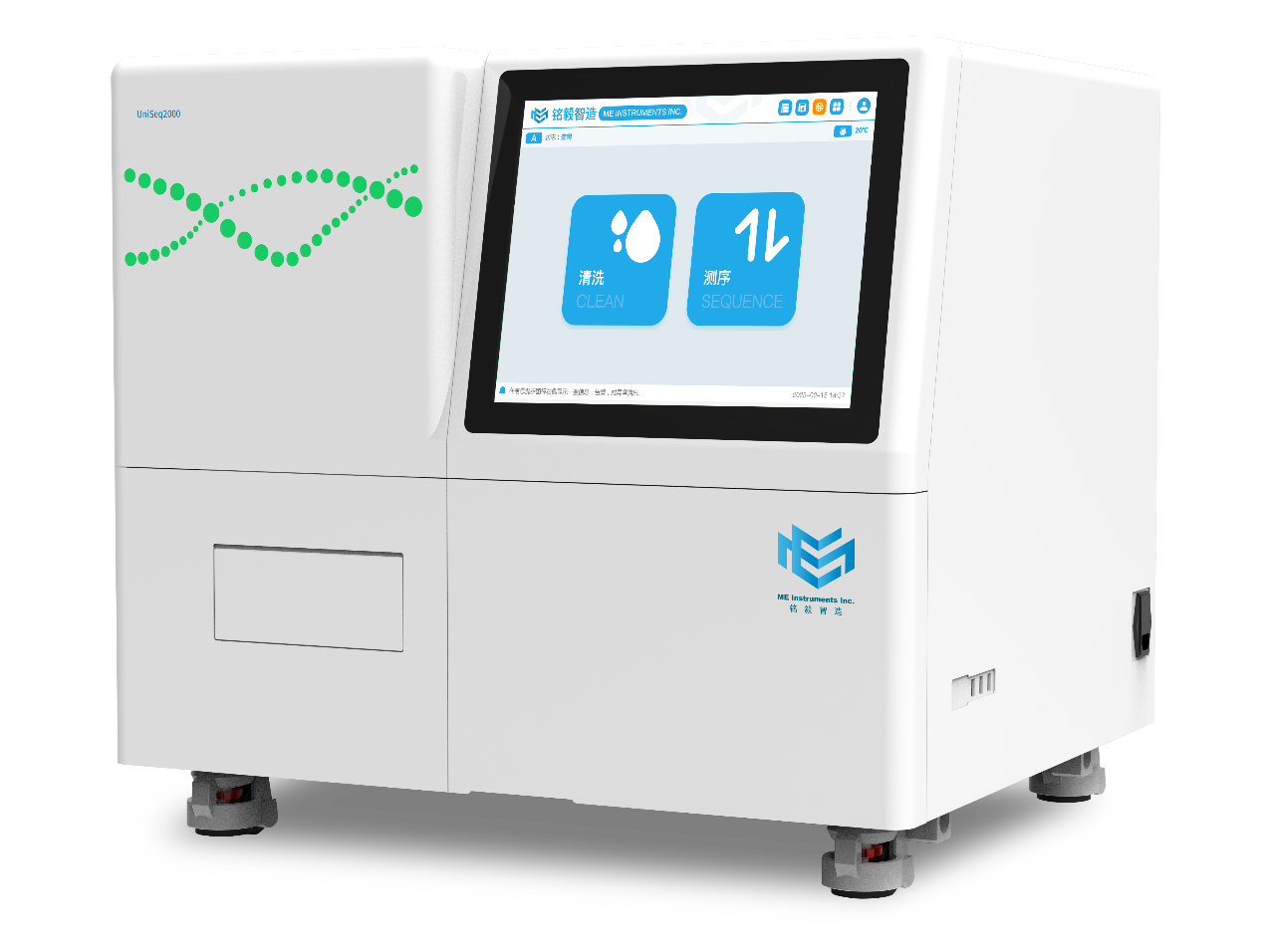
Uniseq2000TM
Uniseq2000: The First Monochromatic Fluorescence High-Throughput Gene Sequencing PlatformTMThe sequencing principle is derived from the patent “Monochromatic Fluorescent MRT Gene Sequencing Reagents and Methods Based on Environment-Sensitive Dyes.” This new patent, disclosed in March 2022, represents a further optimization of the SBS sequencing method developed by Professor Ju.
In simple terms, it is a monochromatic sequencing chemistry system based on environment-sensitive or pH-sensitive dyes. This method employs monochromatic fluorescence sequencing using a pair of “same-color” fluorescent molecules, where the signal from one molecule changes significantly in response to simple condition variations, thereby enabling monochromatic detection of different bases.
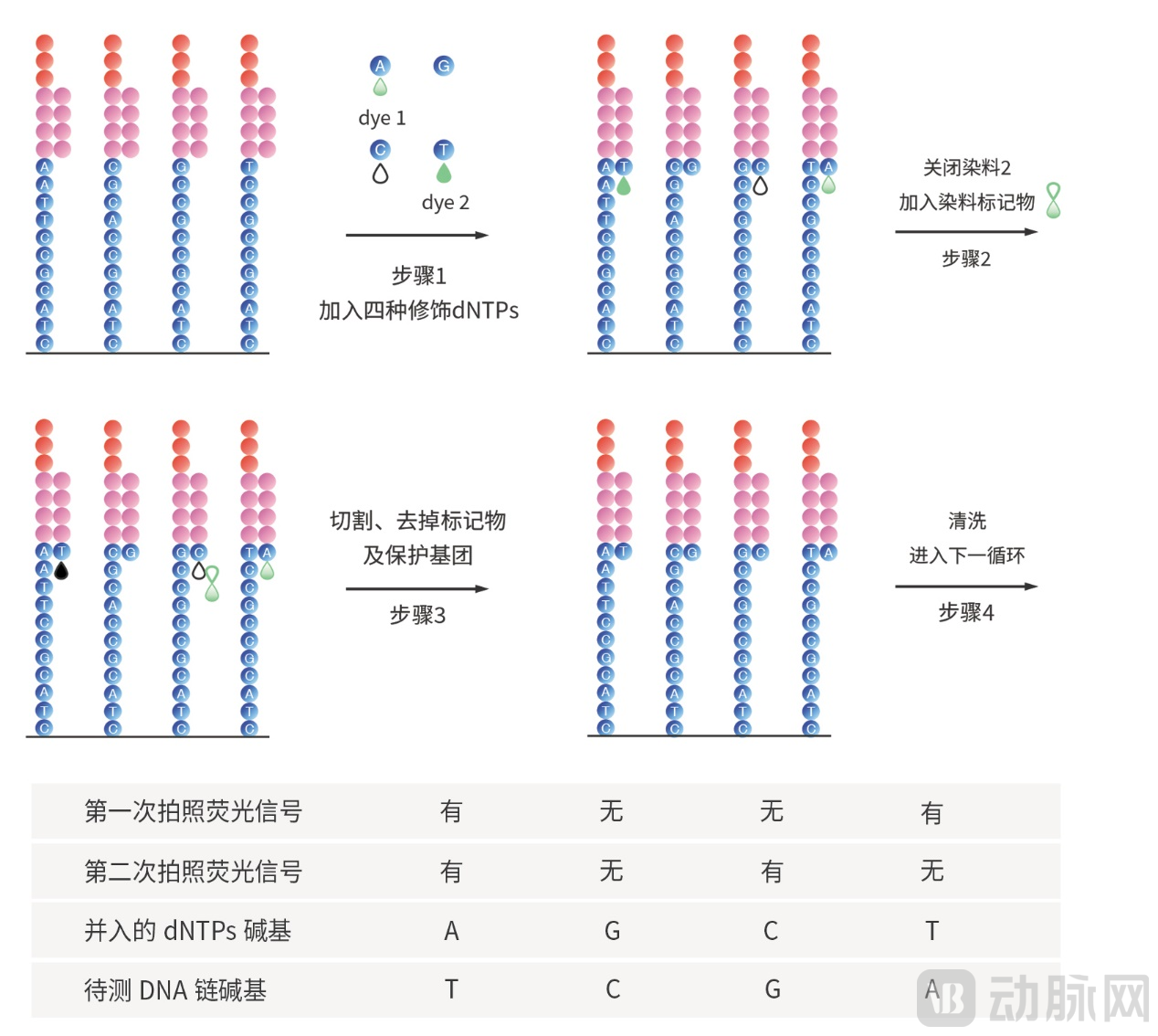
Principles of Monochromatic Sequencing Chemistry Systems
Monochromatic Fluorescence Sequencing System Addresses High-Cost Challenges. Dr. Chen Bin explained, “The cost of building sequencing platforms was previously very high, primarily due to the underlying detection principles: the more expensive optical systems involved and the more complex the motion control, the higher the overall instrument price. Therefore, Uniseq2000TM simplifies the detection method by employing only a single set of optical systems with monochromatic fluorescence technology, significantly reducing the price of each sequencer.”
Meanwhile, the monochrome fluorescence sequencing system requires only a kit with monochrome fluorescent labels, reducing the consumable cost per run. Moreover, Uniseq2000TMAdopting a one-step workflow with direct library loading, the system fully automates chip preparation, sample sequencing, and data processing and storage without the need for operator attendance. This enables faster onboarding and addresses the shortage of specialized personnel in small testing agencies and hospitals, making it well-suited for localized clinical applications.
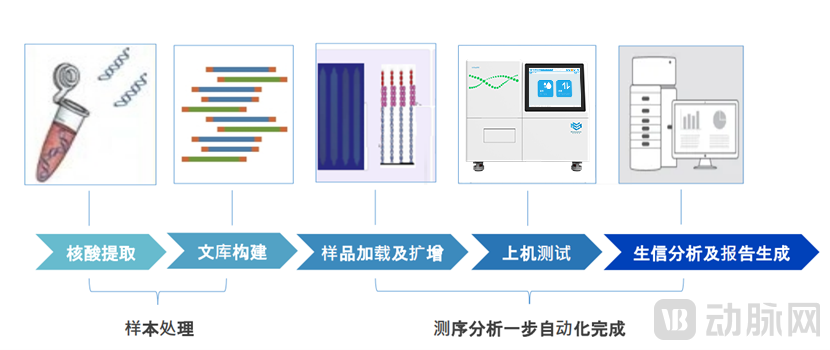
Uniseq2000TMAutomated Workflow
To better achieve localized implementation, Uniseq2000TMA strategy of miniaturization and desktop integration was adopted, resulting in a compact and mid-sized design. Specifically, the Uniseq2000TMIt features four throughput tiers—10M, 20M, 40M, and 80M reads—enabling turnaround times ranging from 10 to 28 hours. Based on sample volume and application requirements, intelligent switching can be achieved with a single click.
For Uniseq2000TMWith the implementation of its solutions, ME Instruments has introduced two business models: direct sales and deployment partnerships. Under the latter, ME Instruments retains ownership of the equipment while collaborating with hospitals and laboratories to jointly establish regional and municipal/county-level centers. Furthermore, leveraging its portfolio of international patents and CE certification, ME Instruments is actively cultivating overseas marketing channels to target the global market.
Dr. Chen Bin emphasized, “The localization strategy for genetic testing established by ME Instruments involves not only miniaturized, desktop instruments but also the provision of comprehensive solutions to end customers, ensuring that sequencers are truly utilized in practice.”
Currently, Uniseq2000TMComprehensive solutions, including pathogen-targeted sequencing and CNV-Seq genetic screening, have been provided. The flexible selection of sequencing throughput and compatibility with Tru-seq library preparation adapters enable the Uniseq2000TMenabling the exploration of more application scenarios, including collaborating with front-end and back-end customers to develop solutions for early cancer screening and disease monitoring.
From a strategic layout perspective, ME Instruments’ choice of a localized, market-penetration strategy aligns with the low-cost trend in high-throughput gene sequencing. Meanwhile, the user growth driven by this localization strategy will feed back into ME Instruments, empowering it to explore comprehensive solutions across more application scenarios and achieve sustainable organic growth.
As envisioned by ME Instruments, “to make sequencers that every hospital can power on daily.” As low-cost, desktop NGS sequencers, bundled with comprehensive solutions, become widely available in city- and county-level hospitals, enabling localized high-throughput genetic testing, they will see broader application in frontline clinical practice.
In the field of domestically produced high-throughput gene sequencers, miniaturization, flexibility, and convenience are gradually becoming major trends. This requires Chinese gene sequencing companies to possess dual capabilities in both equipment manufacturing and ecosystem development.Creating and optimizing differentiated application scenarios and comprehensive solutions will be the next competitive frontier in gene sequencing.