

SonoScape Launches China's First Bronchoscopic Ultrasound Probe with 1.4mm Ultra-Miniature Outer Diameter
Over the past five years, the wave of independent research and development of medical equipment in China has been increasingly surging. Many niche sectors are accelerating the pace of domestic substitution, with progress faster than expected. As of July this year, China has cumulatively approved 130 innovative drugs and 217 innovative medical devices.
As technological breakthroughs accelerate, domestically produced medical devices are breaking the monopoly held by imports and beginning to make their mark in the high-end market. SonoScape, which developed China’s first fully digital portable color Doppler ultrasound system with independent intellectual property rights, stands at the forefront of this wave of domestic self-research and development.
On September 16, 2023, SonoScape “Scored Another Victory” with Its Official LaunchUM-1720 Ultrasound Probe for Bronchial Endoscopy, becoming the first company in China and the third globally to receive approval and truly apply endobronchial ultrasound probes for clinical use.
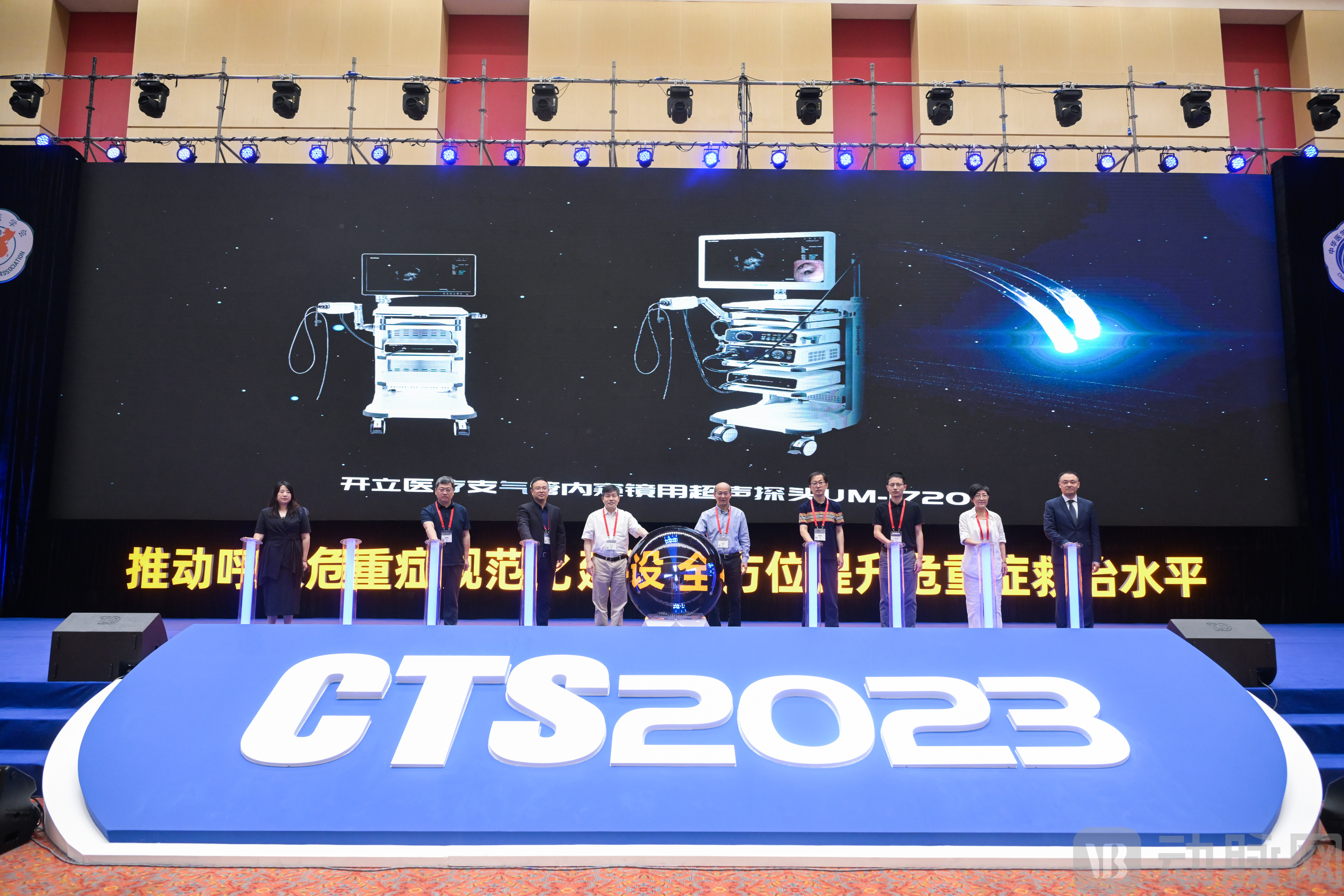
This product, with its user-friendly operation and clearer imaging, will help clinicians address the diagnostic challenge of characterizing peripheral pulmonary lesions.Advancing the Diagnosis and Treatment of Pulmonary Diseases into the "Precision Era"The launch of the UM-1720 not only signifies that SonoScape has overcome the technical bottlenecks of traditional bronchoscopes, potentially further enhancing the global influence of Chinese-made bronchoscopes, but also marks a critical step for domestic medical device manufacturers on the path of “independent R&D in China.”
First Approved,
UM-1720 Propels the Diagnosis of Pulmonary Lesions into the “Era of Precision”
The UM-1720 is a “novel powerhouse” developed by SonoScape for the diagnosis of pulmonary lesions.
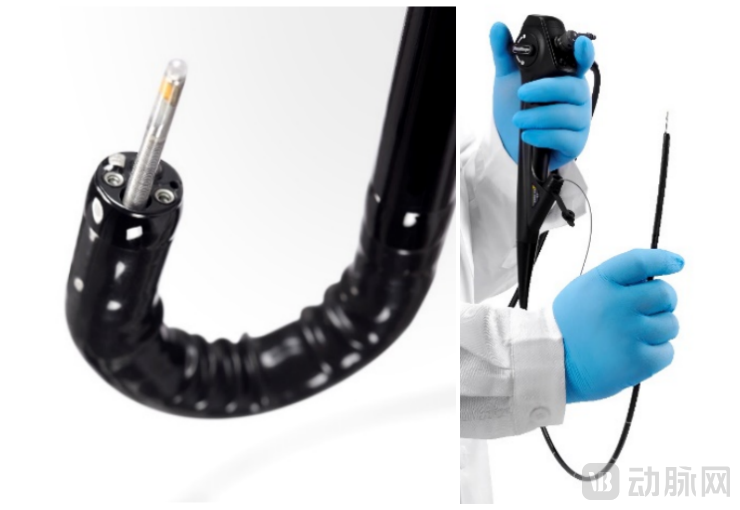
UM-1720
In April this year, the product officially received approval from the National Medical Products Administration (NMPA). This event marked the official debut of UM-1720 at the 2023 Chinese Thoracic Society Annual Conference. On the day of the product launch, numerous experts, scholars, and industry professionals attended, with the venue nearly filled to capacity.
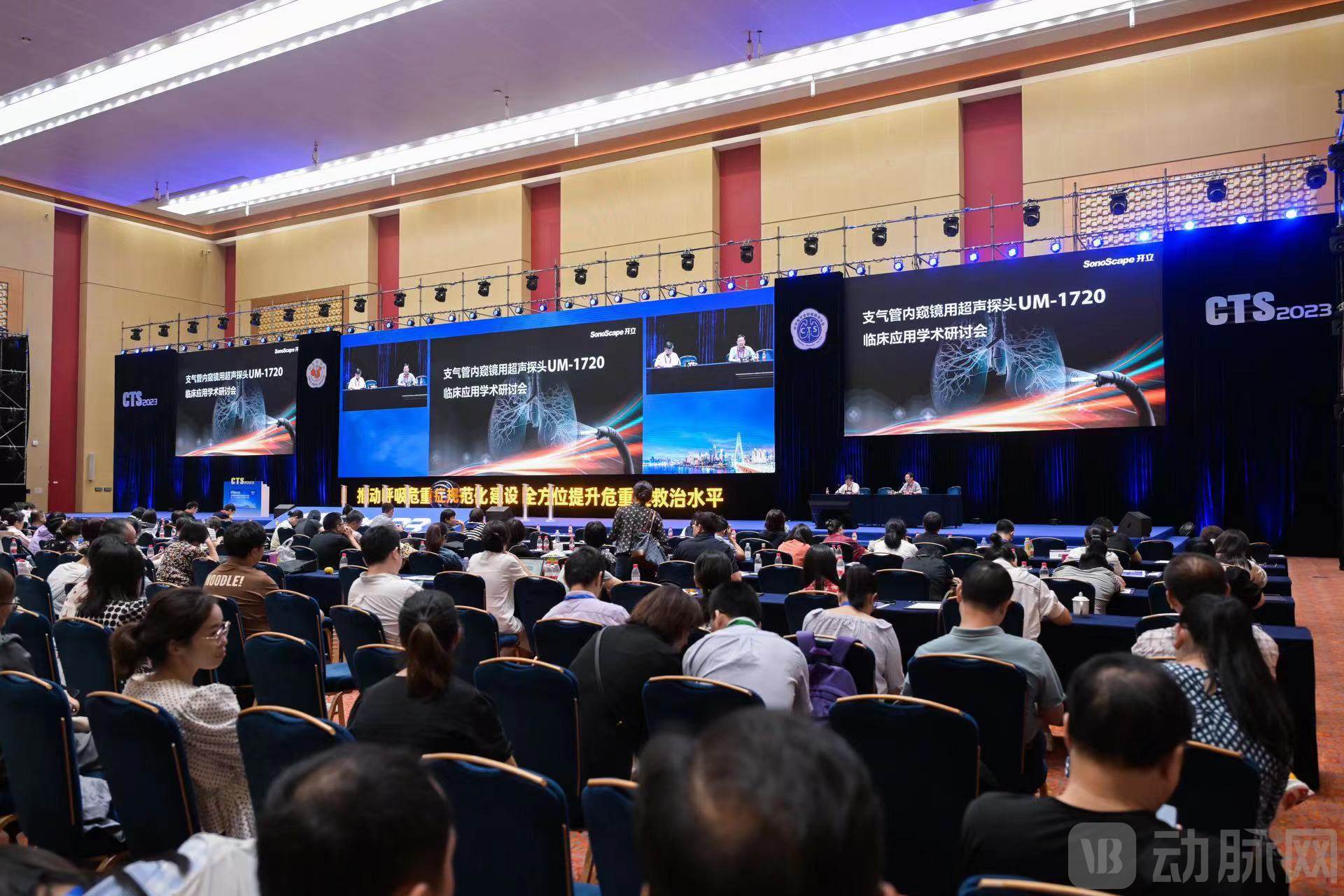
The most distinctive feature of this product lies in itsConvenient operability and high-definition imaging。
Generally, conventional bronchoscopy is difficult to effectively biopsy peripheral lung lesions, resulting in a low positive rate. In contrast, endobronchial ultrasound (EBUS) overcomes this limitation by advancing a miniature ultrasound probe into the distal bronchi to reach peripheral pulmonary lesions. Real-time ultrasound scanning then enables visualization of the various layers of the tracheal and bronchial walls, as well as adjacent surrounding structures, thereby facilitating procedures such as biopsy, brushing, and needle aspiration.
The breakthrough of UM-1720 lies inIts insertion section has a minimum outer diameter of only 1.4 mm, allowing it to reach close to the lesion., effectively expand the scope of disease screening while ensuring safety.
Not only that, but this product alsoCompatible with standard bronchoscopes featuring a working channel of 1.4 mm or larger, as well as procedures such as peripheral bronchial navigation-guided biopsy. The probe achieves a rotational speed of up to 900 rpm, enabling enhanced visualization of lesion details and assisting physicians in “seeing through” the lesion and its surrounding morphology.. It is an excellent diagnostic tool for characterizing peripheral pulmonary nodules, ground-glass opacities, and mass lesions.
Meanwhile, UM-1720 also hasHigh Image Resolution, High Frame Rate. Image freeze captures up to 750 frames, facilitating easier image selection; pseudo-color processing enhances image comparison; quad-screen display allows for simultaneous visualization of four lesion views; and multi-plane comparative analysis of lesions can be completed in a single scan. In terms of operation, the UM-1720 featuresPortable Standalone Host Design, offering greater flexibility, can be used with a standalone cart, and the micro-probe’s independent system facilitates easy mobility.
This product overcomes the technical bottleneck of traditional bronchoscopes, which are limited to accessing only larger bronchi, thereby expanding the scope of bronchoscopic examination. It assists clinicians in resolving the diagnostic challenges associated with characterizing peripheral pulmonary lesions, facilitating the entry of pulmonary disease diagnosis and treatment into the “era of precision,” and represents a significant breakthrough in interventional techniques for the early diagnosis of lung cancer. As the first domestically launched miniature probe for endobronchial ultrasound, this innovation will further enhance solutions in this field.
However, SonoScape has not stopped there. The company currently not only hasInitiated validation of the 1.0mm endobronchial ultrasound probe; further enhancements to ultrasound technology and the ecosystem for endoscopes and interventional instruments will continue., further meeting the clinical needs of hospitals, achieving the leap of medical devices from "domestic substitution" to "industry first," and propelling Chinese-made medical devices onto the global stage.
Endoscopy business scenarios continue to expand,
Revenue increased by 38.40% year-on-year
Due to factors such as high technical barriers, medical endoscopes have long been one of the niche sectors with a low domestic production rate.
Fortunately, in recent years, policies have issued detailed guidelines focusing on technological innovation, regulatory approval and certification, domestic substitution, and standardization of clinical applications, thereby promoting the development of medical endoscopes from multiple dimensions. Coupled with continuous breakthroughs in core technologies by domestic enterprises, the gradual maturation of the supply chain, and enhanced marketing capabilities, domestically produced medical endoscopes have entered a period of rapid growth. Traditional reusable endoscopes are quickly closing the gap with international standards, advancing from “me too” to “me better.”
A glimpse into the endoscopy market share reveals telling insights. According to VCBeat’s “2023 Medical Endoscope Industry Research Report,” the market share of domestically produced medical endoscopes in China increased from 10% in 2020 to 26% in 2022, with an average annual growth rate exceeding 60%.
Focusing on SonoScape,In 2022, the company’s endoscopy and endoscopic therapeutic devices generated RMB 612 million in revenue, representing a year-on-year increase of 42.98%, with a gross profit margin of 69.57%. In the first half of 2023, revenue from endoscopy and endoscopic therapeutic devices continued to grow, reaching approximately RMB 377 million, a year-on-year increase of 38.40%, while the gross profit margin rose by 4.60 percentage points year on year., with impressive performance.
The core driver of its rapid business growth lies in the company’s sustained self-sustaining capability, built upon the solid foundation of its existing products. In the first half of this year, multiple new products gained prominence, marking the successful implementation of its multi-product line strategy.
The launch of the UM-1720 exemplifies SonoScape’s R&D strength and the successful implementation of its multi-product-line strategy. After years of high-proportion R&D investment,In the endoscopy field, SonoScape’s product portfolio has expanded beyond conventional gastrointestinal endoscopes to include multiple high-end models such as bronchoscopes, optical magnification endoscopes, endoscopes with adjustable stiffness, echoendoscopes, and duodenoscopes.
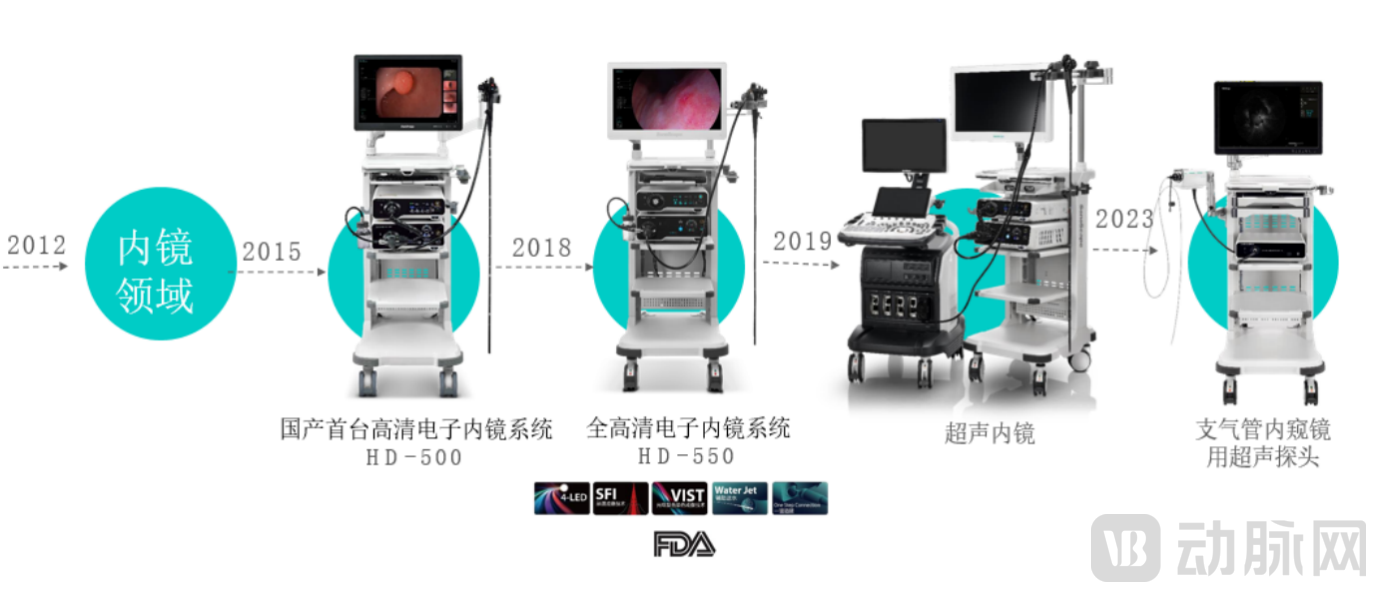
The Development History of SonoScape Endoscopy
The continuous expansion of endoscopy application scenarios has enabled the company’s endoscopic products to enter more hospital departments and higher-tier hospitals, covering a broader range of applications and surgical procedures. As the addressable market continues to grow, business development has entered a stage characterized by economies of scale. Currently, the rapid growth of SonoScape’s endoscopy business is driving a swift increase in the company’s overall revenue.
“Ultrasound + Endoscopy” Dual-Engine Drive,
Intensify R&D efforts to refine the closed-loop multi-disciplinary integrated clinical solutions.
SonoScape’s ability to achieve multiple breakthroughs in the fields of ultrasound and endoscopy, while maintaining continuous revenue growth, is attributable not only to its team’s breakthroughs and exploration of core technologies, but also to the company’s dedication to and emphasis on research and development.
According to SonoScape's annual report and prospectus data,The Company Continues to Increase R&D Investment, R&D investment has increased from RMB 71.4286 million in 2013 to RMB 328.9577 million in 2022.
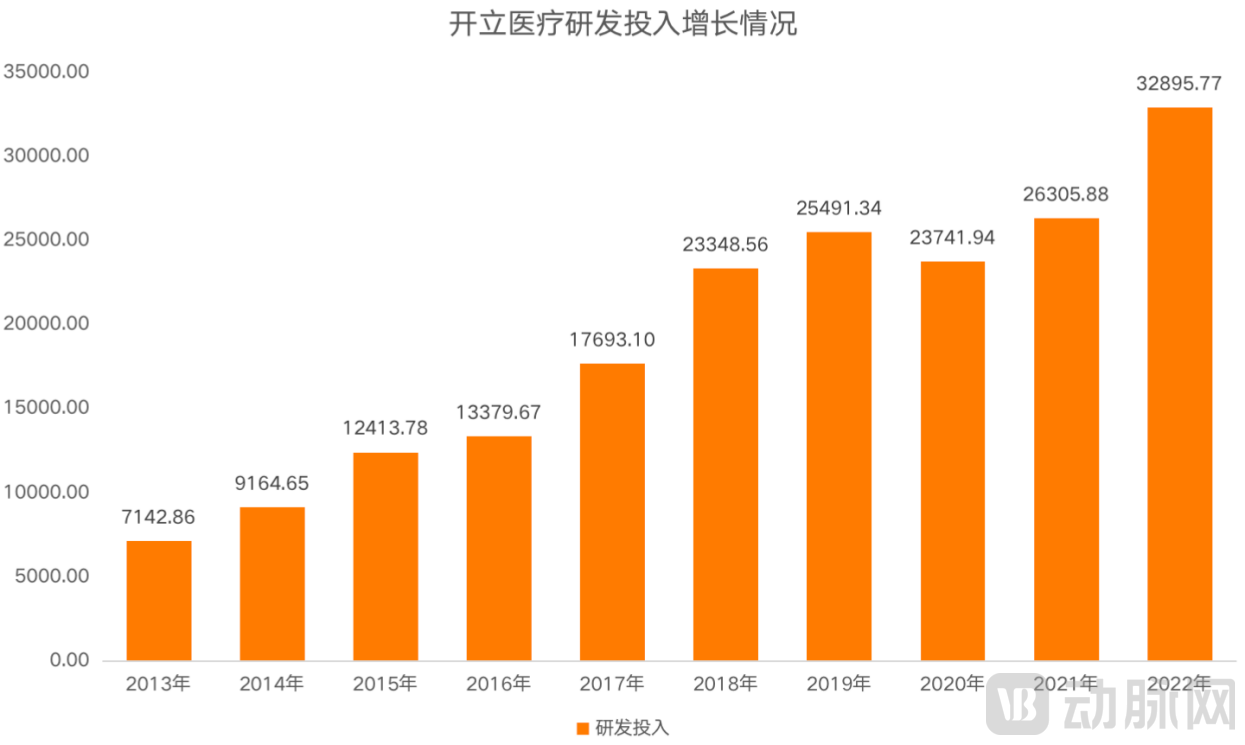
Growth in SonoScape's R&D Investment (Unit: 10,000 Yuan)
Data Source: SonoScape Annual Report, Prospectus
VCBeat Graphic
As the world’s first company to offer a comprehensive ultrasound imaging solution spanning transthoracic, endoscopic (via natural body orifices), and intravascular ultrasound, while achieving technological breakthroughs such as transitioning from single-mode imaging to multimodal diagnostics combining optical and acoustic imaging, SonoScape has made technological innovation and R&D its core competitiveness since 2002, continuously driving technological advancement and industrial upgrading. At a time when China’s medical infrastructure was underdeveloped, ultrasound systems were considered high-end equipment, and black-and-white ultrasound dominated the market, the SonoScape team embarked on the exploration of ultrasound technology and, within two years, successfully developed the SSI-1000, China’s first fully digital portable color Doppler ultrasound system with independent intellectual property rights.
Since then, building on independent R&D and technological innovation has become part of SonoScape’s “DNA.”
As SonoScape has progressively mastered multiple core technologies, including color Doppler ultrasound systems and transducers, the company has experienced rapid growth and increasingly diversified its portfolio in the ultrasound sector. Its product lineup now encompasses cart-based color Doppler ultrasound systems, veterinary ultrasound devices, portable color Doppler ultrasound systems, and ultrasound transducers, with applications spanning obstetrics and gynecology, cardiovascular care, interventional minimally invasive procedures, out-of-hospital emergency care, pediatrics, and urogenital medicine.
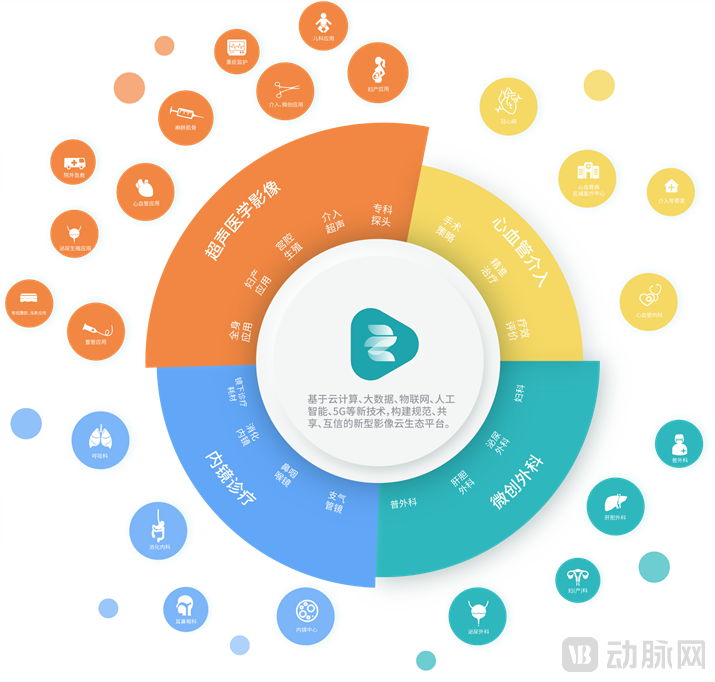
SonoScape's Multi-Department Integrated Clinical Solutions
After establishing a solid foothold with its ultrasound equipment, SonoScape turned its attention in 2012 to digestive endoscopes, which had an extremely low domestic production rate, thereby launching its exploration into the endoscopy business. Although shifting course is challenging for a large enterprise and cross-sector exploration requires courage, SonoScape continued to expand the boundaries of its capabilities, focusing on research and development with the goal of advancing the domestic production of high-end medical devices.
Soon, the company achieved a breakthrough in transitioning from standard-definition to high-definition endoscopes. Its endoscope series now comprehensively covers the high-, mid-, and low-end markets for flexible endoscopes, as well as the rigid endoscope market. It has made significant advancements in magnifying endoscopes, ultra-slim endoscopes, and endoscopes with adjustable stiffness, filling gaps in the domestic market and gradually taking the lead in China. According to the semi-annual report released by the company this year, SonoScape has also made notable achievements in endoscopy and endoscopic therapeutic devices, with this business segment generating RMB 377 million in revenue.
At“Ultrasound + Endoscopy” Dual-Engine Drive, the company will build upon its existing products, strengthen its self-sustaining revenue generation capabilities, intensify R&D efforts, and continuously expand its business scope.Focusing on four product pipelines: ultrasound medical imaging, endoscopic diagnosis and treatment, minimally invasive surgery, and cardiovascular intervention., leveraging new technologies such as cloud computing, big data, the Internet of Things (IoT), artificial intelligence, and 5G to build a standardized, shared, and mutually trusted new imaging cloud ecosystem platform, perfecting the closed-loop multi-department comprehensive clinical solutions, facilitating scalable business growth, and leading the breakthrough of domestically produced medical devices.