

Ned+ Vision Introduces Glasses-Free, Drug-Free Myopia Control Innovation with Desktop-Based Optical Solution
When it comes to myopia prevention and control, what is the first thing that comes to your mind?
Is it the over 600 million myopia patients in China, the vast market demand, the market size exceeding RMB 100 billion, the successive myopia prevention and control policies, or the currently mainstream myopia prevention and control products in the market, such as orthokeratology lenses (OK lenses), multi-point defocus lenses, and low-concentration atropine?
However, despite being mainstream in the industry, orthokeratology lenses (OK lenses), defocus spectacle lenses, and low-concentration atropine each have their own drawbacks—such as complex fitting procedures, high costs, cumbersome wear leading to poor compliance, potential impact on central distance visual acuity, or the risk of inducing complications.
Furthermore, these three products are indicated for children and adolescents who already have myopia. For those who have not yet developed myopia, can they truly achieve effective myopia control through voluntary compliance alone?
The answer is obviously no. So,Is there a technology or product capable of simultaneously preventing and controlling myopia in children and adolescents, both those who have not yet developed myopia and those who already have?
Many experts and scholars in the field of optometry have turned their attention to optical technology, or more accurately, to far-image technology.Professor Wang Ningli, Director of the Beijing Tongren Eye Center, has stated that shifting focus from near to distant objects—prioritizing distance viewing over near work—is entirely feasible from an optometric perspective. This approach helps alleviate ciliary muscle fatigue and reduces hyperopic defocus caused by accommodative lag.
In the field of optics, a professor also adheres to this view and has integrated it into his entrepreneurial journey, creating an entirely new category of myopia prevention and control products: desktop-style distance-viewing devices.
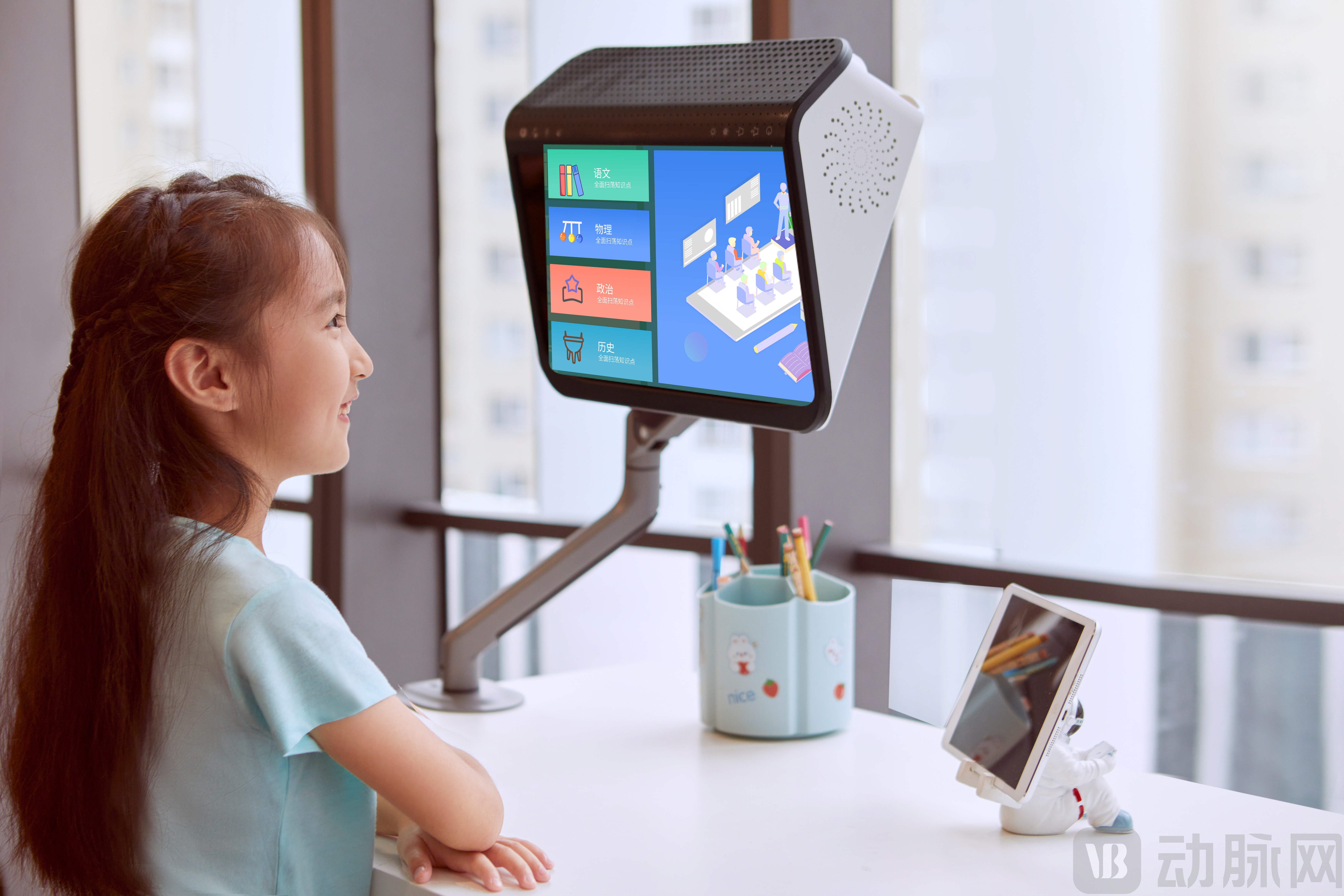
According to the professor,Current Market TrendsInnovative products such as distant-image screens, long-distance optical screens, fogging screens, and distance-viewing screens can be collectively referred to as “distant virtual image devices.” Their primary principle involves using freeform surfaces combined with Birdbath optical technology to project and magnify small, close-range images into virtual images at a distance of 5–12 meters. This adjusts the retinal imaging distance, induces myopic defocus, and thereby achieves myopia prevention and control effects.
To date, the Shi Yuan Xiang products under the enterprise founded by this professor have reached their second generation, with the third generation currently in development. Alongside performance upgrades, this progress once again demonstrates the company’s technical prowess and industry standing.
“The word ‘again’ is not a typo, because anyone familiar with the AR/VR industry has certainly heard of this company and this professor—Nai Dejia and Cheng Dewen.”
Nai Dejia is China’s leading enterprise specializing in the design, R&D, and optometric research of AR/VR head-mounted display devices. It has received investment from Lenovo Capital, Tailong Group, Aijian Capital (Juneyao Group), Goertek, Zhongguancun Collaborative Innovation Fund series, Zhencheng Investment, Wenhua Haihui, Guoding Capital, Liding Optoelectronics, and other institutions. As an optical module supplier, Nai Dejia provided solutions for Qualcomm’s three generations of AR glasses reference designs and Xiaomi’s two generations of single- and dual-eye AR glasses. Its partner brands also include Lenovo, HP, BOE, Sony, and ASUS.
andCheng Dewen, founder of Nai Dejia, is a professor and doctoral supervisor at the School of Optics and Photonics, Beijing Institute of Technology, and a recipient of the National Science Fund for Excellent Young Scholars.
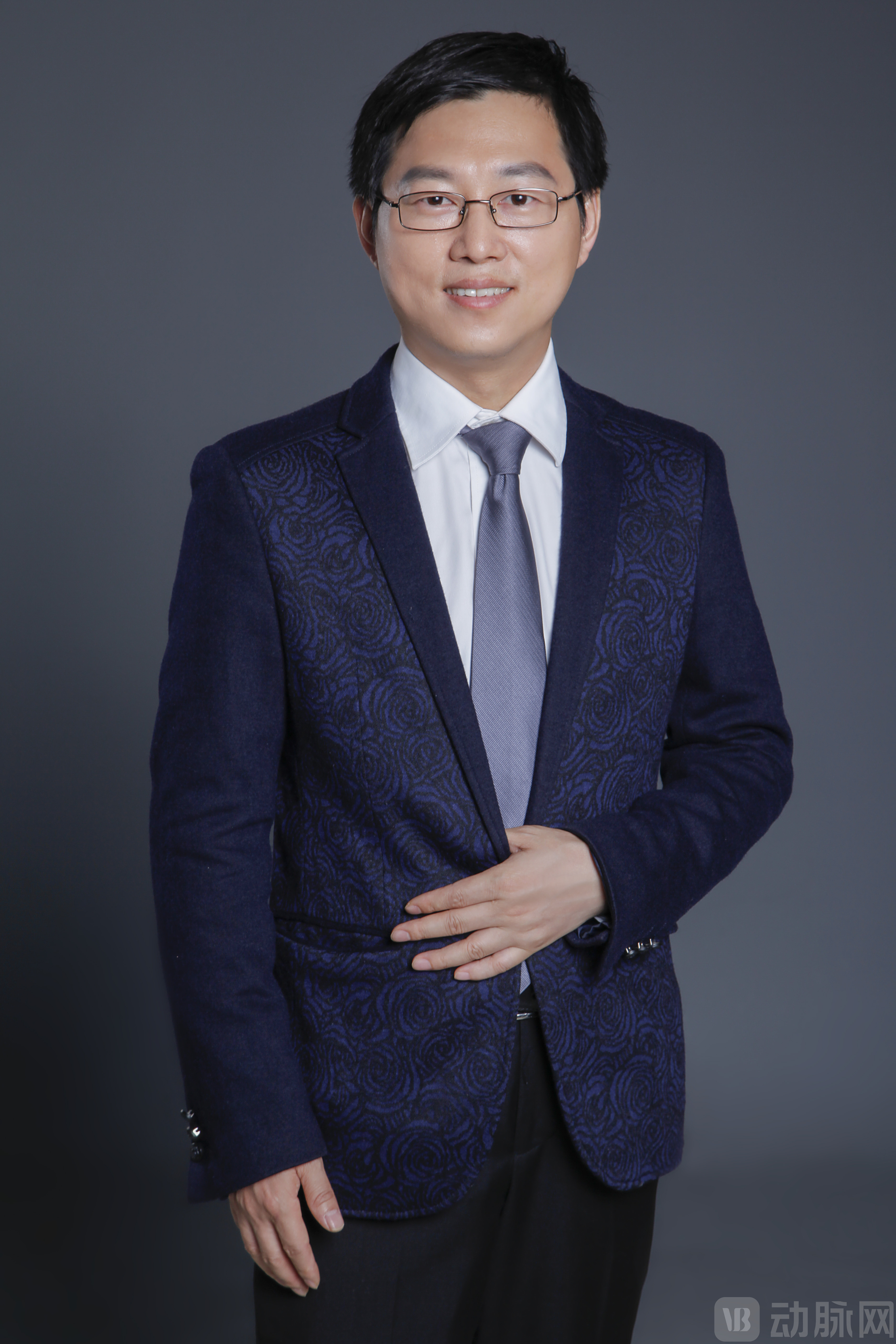
Optical system design, VR/AR head-mounted display technology, and optometry are Cheng Dewen’s primary research areas. He consecutively won the highest award in the field of optics (SPIE) in 2009 and 2010 (with only one recipient globally each year).Its research achievements were recognized as a “Key Achievement in Chinese Optics” in 2011, and it subsequently received the First Prize for Innovative Technology from the Optical Engineering Society in 2017, the First Prize of the Beijing Municipal Science and Technology Invention Award in 2019, the First Prize of the China Invention Entrepreneurship Award (Achievement Category) in 2020, the China Patent Excellence Award in 2022, and the First Prize of the China Association for Promoting Science and Technology’s Scientific and Technological Innovation Award. It is widely regarded as a leading academic and technical authority in VR/AR head-mounted display technology and optometry.
AndIn the interview, Cheng Dewen emphasized: “Since the day Nai Dejia was founded, our positioning has been to become an internationally leading display company.”
This is akin to comparing the entire AR/VR product to a computer, where the contribution made by Nai Dejia is equivalent to the screen.This means that Nai Dejia's business model is to serve B-end customers.
andThis “significance” has carried over from Nai Dejia’s AR/VR optical module business to its vision health business.It is referred to as the vision health business, becauseNai Dejia’s eye health product pipeline extends beyond myopia control to include amblyopia treatment and vision relief products.
In 2016, Nai Dejia launched its first-generation commercial binocular AR smart glasses, the X2, and collaborated with top-five global clients in the amblyopia sector to develop enhanced display devices for amblyopia adjunctive therapy, bringing benefit to tens of millions of individuals with amblyopia and low vision.
Returning to Nai Dejia’s current core product pipeline focused on myopia prevention and control, Cheng Dewen candidly admitted that the company had “taken some detours” in its development journey.
Everything begins with why Nai Dejia shifted from the VR/AR headset sector to the vision health sector.
“In fact, from the very beginning, we have been pursuing two parallel tracks: VR/AR headsets and visual health.“The rationale for entering the vision health sector is straightforward. First, while developing our head-mounted display (HMD) business, we identified a demand among B2B clients for related product development. Second, given the intrinsic link between HMD devices and ocular function, expanding into the vision health track was a natural progression,” said Cheng Dewen.
This indicates that,From the very beginning, Nai Dejia’s vision control products have been closely and inseparably linked to AR/VR devices.
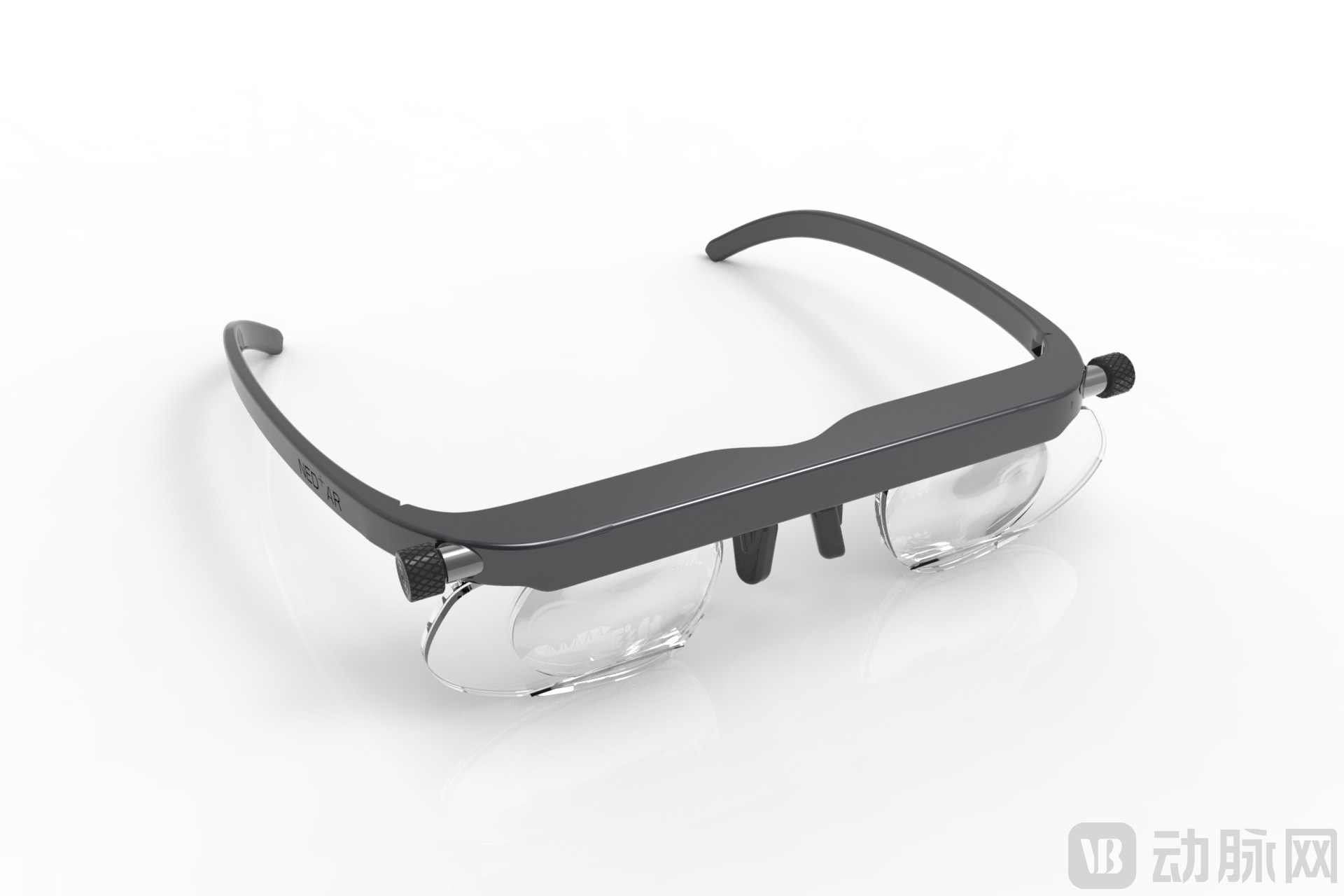
As early as 2016, Nai Dejia collaborated with brand partners to jointly develop an intelligent training device for the prevention and control of myopia in adolescents. The device employs an Alvarez zoom system, which adjusts refractive power through the displacement of dual freeform lenses, thereby enabling freeform zoom vision training to prevent the onset of pseudomyopia. The product entered large-scale mass production in 2018, with shipments reaching tens of thousands of units.
In 2018, Nai Dejia once again integrated AR glasses with myopia prevention and control for children and adolescents, developing China’s first head-mounted myopic defocus AR glasses. By leveraging the principle of myopic defocus and freeform optical technology, the device shifts myopia prevention and control in adolescents from “near-distance visual tasks to distance-based visual activities.”
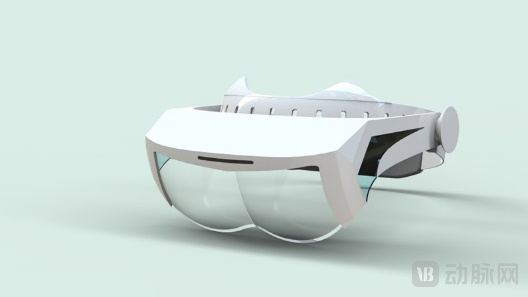
But soon,Cheng Dewen began to notice some drawbacks of head-mounted myopia control devices, or AR glasses with myopia control functions—
First, the approach to achieving myopia prevention and control effects through AR glasses requires children to wear these glasses for an extended period. This is inherently a logical paradox.——“Children who are not yet nearsighted are required to wear glasses, with the claim that wearing glasses can prevent myopia. This is something many parents find hard to accept.”
Secondly, no matter how lightweight AR glasses are, they cannot be lighter than conventional frame glasses. The heaviness of the glasses directly leads to a decrease in children's compliance.
Thus, despite investing nearly ten million yuan and iterating through countless technical solutions, Nai Dejia ultimately abandoned its head-mounted myopia prevention and control device. This experience led Cheng Dewen to realize that rather than creating new usage scenarios that add to children’s burden, the focus should be placed on daily visual habits, ensuring a burden-free eye care process.
This also provides new ideas for the technological leap of Nai Dejia’s products—shifting from head-mounted to desktop devices. Specifically, based on the form factor of desktop display devices, it achieves physical near-vision and virtual distance vision.Thus, Nai Dejia’s desktop myopia control display device—Shi Yuan Xiang—was born.
Specifically,"Distance-viewing products can project small, close-up images into enlarged virtual images at a distance of 5 to 12 meters, with display sizes ranging from 120 to 200 inches."Furthermore, the Shi Yuan Xiang product has received professional guidance and support from Professor Wang Yongtian, the Chief Scientist of the National Basic Research Program (973 Program) in Virtual Reality. Built upon a series of related medical validations, patient trials, and real-world studies, the Shi Yuan Xiang product has garnered positive market feedback as well as high praise from students and parents.
andThe recently launched Nai Dejia Far-View Image 2.0 product has undergone comprehensive enhancements in optical performance, display quality, aesthetic design, and learning assistance features.
In terms of optical performance, thanks to the tireless efforts of Naidijia’s top-tier experts in freeform optical design, more than 10 PhDs in optical design, and over 20 optical engineers, the Naidijia Shi Yuan Xiang 2.0 product not only delivers optimal display quality (high definition, long viewing distance, flat image, and no distortion), a wider field of view, and higher eye-box brightness, but also addresses stray light issues present in the first-generation Shi Yuan Xiang. The Naidijia optical technology team has redesigned the optical scheme to ensure the Shi Yuan Xiang is free from stray light, water ripple effects, and distortion, achieving the best display performance while reducing product thickness.
Taking the anti-glare film as an example, Nai Dejia tested dozens of versions across price ranges from 5,000 to 50,000 yuan, conducting repeated comparative trials. “Whenever we identified the propagation path of each stray light beam and successfully suppressed or eliminated it, we felt a sense of accomplishment akin to leveling up in a game,” an optical engineer at Vision Like told VCBeat enthusiastically.
In the interview, Cheng Dewen also candidly shared with VCBeat: “From a purely technical perspective, the optical technology applied in our first-generation product is not overly complex. However, one of the main challenges lies in how to integrate these technologies to achieve image magnification while ensuring clarity and field flatness (field curvature). Additionally, internal stray light and ghost images must be effectively eliminated, and issues such as water-ripple patterns and image jumping need to be resolved. Thanks to our team’s more than ten years of accumulated expertise in optical technology, all these challenges have been successfully overcome. This constitutes one of our core competitive advantages. The second advantage stems from the extensive experience and industry insights we have gained through several iterations of vision health products, along with valuable guidance from ophthalmology experts and positive feedback from optometrists and users. Based on this foundation, although the market’s perception of us remains focused on our first-generation product, we have already established long-term strategic planning and development roadmaps for vision prevention and control products. The third advantage is our robust manufacturing, testing, and mass-production capabilities.”
“Optical components are subject to the principle that a tiny error in fabrication can lead to a massive deviation in performance. Therefore, since our inception, we have placed great emphasis on investing in the manufacturing and production aspects of optical display technology,” said Cheng Dewen.
It is reported that,To meet the optical display requirements of next-generation computing platforms and myopia prevention and control, Nai Dejia has adopted an IDM (Integrated Device Manufacturer) model, achieving a closed-loop industrial layout that spans from optical technology innovation to precision manufacturing and inspection.
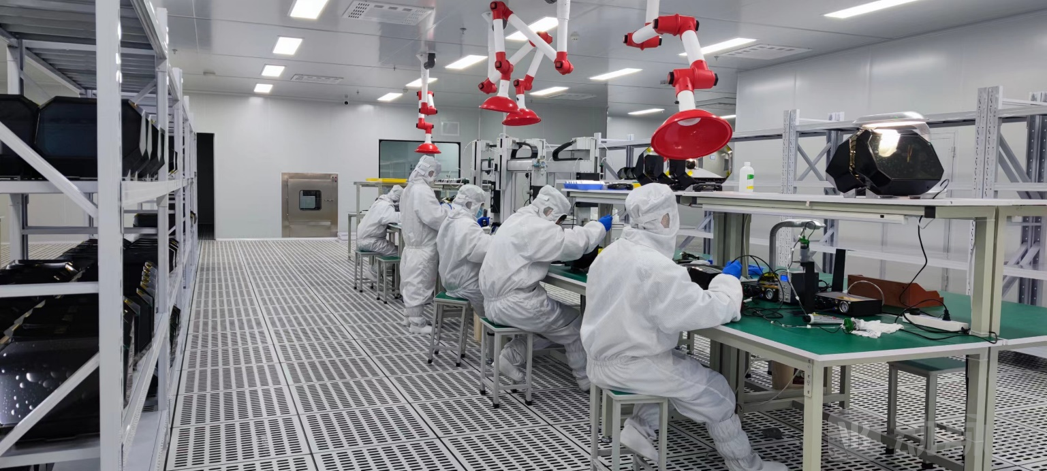
In 2018, Nai Dejia established its first intelligent manufacturing base, Dejia Intelligence, in Zhenjiang, Jiangsu Province. It built a domestically leading production platform for freeform surfaces and assembly of head-mounted display modules, achieving a multiple-fold expansion in the production capacity of freeform optical modules and establishing a stable supply capability for high-quality products in the optical field.
In late 2021, Nai Dejia established a wholly-owned subsidiary, the Future Optics Research Institute, in Shangrao, Jiangxi Province, to assist in the development of the Jiangxi Provincial Product Quality Supervision and Inspection Center for Optical Lenses and Lens Products, thereby creating a leading optical inspection and testing platform in China.
In addition,To ensure the stable production and supply of its long-distance imaging product series, Nai Dejia established Decheng Optoelectronics in October 2022. Adhering to medical device manufacturing standards, the company constructed multiple Class 10,000 cleanrooms with automated environmental control systems and implemented a comprehensive, omnidirectional product quality control framework and processes.
Meanwhile,Leveraging the robust technical and expert capabilities of the Shangrao National Optical Testing Center and the Future Optics Research Institute, Nai Dejia also provides design, R&D, and manufacturing services for distance-viewing display products in the field of visual health, with an annual production capacity exceeding 100,000 units.
Since entering the optometry field in 2016, Cheng Dewen, as the true pioneer of distance-viewing technology for myopia prevention and control, has devoted significant effort and dedication to this cause. Looking ahead, Cheng Dewen will remain true to his original aspiration and lead the team at Beijing Nai Dejia Display Technology Co., Ltd. to establish technical standards and specifications, regulate market entry requirements for distance-viewing technology products, and enhance the quality and safety of myopia prevention and control products based on distance viewing. This will help prevent chaotic and unregulated growth in the distance-viewing product market, thereby promoting the healthy development of the myopia prevention and control sector and truly benefiting a larger number of myopia patients.
In fact, VCBeat has observed a shining quality in Cheng Dewen beyond commercial and technical value—namely, the “special drive” that spurred his entrepreneurial journey. He firmly believes that superior optical technology should create value for society, rather than merely pursuing commercial profits. As for his transformation from a scholar to an entrepreneur, and the continuous evolution of myopia prevention and control solutions from head-mounted devices to desktop-style distance-viewing products, the path was fraught with “countless hardships and dangers.” Nevertheless, he has maintained keen insight into market demands while staying true to his original aspiration, dedicating the most advanced technologies and products to society to ensure that every consumer can benefit.