

Eacin Bio Raises Tens of Millions in Angel Funding Led by Xinhang Capital to Pioneer AI-Driven Organ-on-a-Chip Platform

Neux Capital
Investment Firm in the Interdisciplinary Field of Intelligent Computing and Life Sciences
On September 26 in Guangdong, Guangzhou Yixin Life Science Co., Ltd., an emerging company in the field of AI and organ-on-a-chip technology, announced that it had successfully completed a tens-of-millions-yuan angel financing round led by Neux Capital, with participation from Future Light Cone Frontier Technology Fund.
Yixin focuses on AI-integrated organ-on-a-chip microphysiological systems. Leveraging expertise in biomaterials, stem cells, and microfluidic chip technologies, it has built the world’s first fully integrated, commercialized, standardized, and intelligent R&D platform for organ-on-a-chip technology. The company is actively promoting the application of organ-on-a-chip systems in precision medicine, innovative drug development, disease modeling, and regenerative medicine.
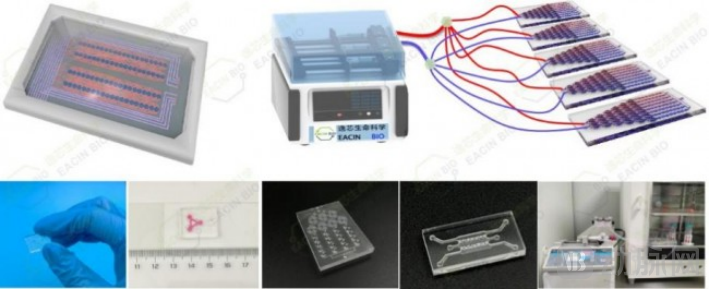
Organ-on-a-chip is listed among the “Top 10 Emerging Technologies” by the World Economic Forum in Davos. By leveraging engineering technologies such as microfluidics and 3D bioprinting, and using stem cells or patient-derived tissue cells as seed cells, it constructs miniature, dynamic organ models in vitro that closely recapitulate fundamental human physiological functions. This approach enhances the tools and methodologies for investigating life phenomena and medical issues in vitro, exerting a disruptive impact on both basic research and applications in the life sciences.
Historically, new drug research has relied primarily on 2D cell models and animal models. However, 2D cell models are overly simplistic, while animal experiments suffer from long cycles, poor reproducibility, high costs, and an inability to accurately predict human responses, severely hindering the drug development process. Organ-on-a-chip technology allows researchers to reconstruct the microenvironment of human organs in a controllable and scalable manner and to simulate various disease models, thereby overcoming the limitations of both 2D cell and animal models. This approach holds promise for accelerating the development of new drugs for thousands of diseases. In August 2022, the FDA approved the first investigational new drug (NCT04658472) to enter clinical trials without traditional efficacy data from animal studies, relying entirely on preclinical efficacy data derived from organ-on-a-chip research. This event marked a significant milestone in the application of organ-on-a-chip technology, leading to 2022 being designated as the “Year One of Organoid Standardization.”
After more than a decade of rapid development, the organ-on-a-chip industry is now entering a golden period of opportunity. According to projections by market research firm Mordor Intelligence, the global organ-on-a-chip market is expected to grow rapidly at a compound annual growth rate (CAGR) of 30% from 2022 to 2027. Data from the U.S. Food and Drug Administration (FDA) also shows a sharp increase in recent years in the number of new drug and biological product applications enabled by artificial intelligence (AI), indicating that the integration of AI-driven drug discovery and organ-on-a-chip technology will unlock an even broader market.
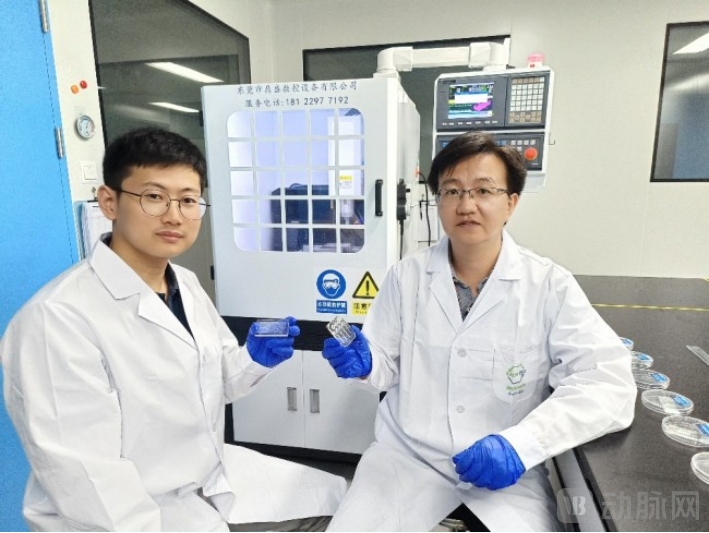
Liu Jie, founder of Yixin, holds a Ph.D. from Yale University and serves as a Distinguished Professor under the Yat-Sen Scholar Program at Sun Yat-sen University. He has long been engaged in research on tumor-targeted therapy and organ-on-a-chip in vitro microphysiological systems. He proposed and developed a class of globally leading novel materials for nanocarriers enabling efficient gene delivery, and pioneered the construction of China’s first organoid three-dimensional culture system based on naturally derived polymeric materials. He has published nearly 100 high-impact papers in top-tier domestic and international journals, including Nature Materials. As early as 2018, Professor Liu led a team with backgrounds in biomedical engineering and multidisciplinary expertise into the field of organ-on-a-chip technology. The team has accumulated extensive capabilities in organoid and microfluidic chip technologies, pharmaceutical experience, and strong engineering implementation skills, allowing it to provide personalized customized services to meet diverse industry needs.
Yixin develops novel bioactive materials and organ-on-a-chip platforms in vitro to engineer microphysiological systems. By constructing various organ-on-a-chip models—including barrier tissues, biomimetic tumors, vascularized tissues, and rare disease models—it replicates in vivo microphysiological environments. These technologies and products hold significant potential for high-throughput applications in personalized precision drug screening, rare disease modeling, organ regeneration, cosmetics R&D, and innovative drug development.
Yixin has also innovatively integrated organ-on-a-chip technology with AI, bringing greater transformative momentum to the field of innovative drug development. Yixin is currently engaging in joint R&D with AI-driven drug discovery companies, combining organ-on-a-chip and AI pharmaceutical technologies to develop an end-to-end AI system for innovative drug discovery. Previously, while AI has accelerated the pace of drug development, it has also generated a vast number of candidate compounds during the process. Validating these in silico results through high-throughput wet-lab experiments has become an essential step. Organ-on-a-chip technology possesses unique capabilities for high-throughput organoid culture and drug screening, enabling close integration with AI to form a closed-loop “dry-wet” workflow. This facilitates rapid design, validation, and iteration, further enhancing R&D efficiency and success rates, and accelerating the market entry of more innovative drugs.
Meanwhile, Yixin leverages AI and automation technologies to promote the standardization and automation of organ-on-a-chip systems, replacing traditional manual laboratory operations. This enables users to construct desired simulated organ microtissues in a simpler and more reproducible manner, thereby significantly reducing application costs.
Liu Jie, Founder of YixinIt stated: “Organoids and organ-on-a-chip represent a transformative new technology that constructs physiological microsystems of organs on chips. Their emergence provides a novel in vitro evaluation platform for clinical precision medicine and drug development. Leveraging its unique advantages in interdisciplinary fields such as biomaterials, microfluidics, and targeted drug development, Guangzhou Yixin Life Science Co., Ltd. will build the world’s first market-oriented, standardized, and intelligent end-to-end R&D platform for organ-on-a-chip technology. This platform will span underlying materials and technologies, in vitro disease modeling, and drug evaluation and development, enabling industrial applications in precise drug screening, rare disease modeling, innovative drug development, and organ regeneration. Furthermore, it will provide a transformative R&D paradigm for new drug development, precision therapy, and AI-driven drug discovery. In the future, Yixin will integrate organ-on-a-chip technology with AI and organoid technologies, ushering in a new era of intelligent biological computing with organoids as the hardware.”
Xu Jing, Founding Partner of Neux CapitalHe stated, “Professor Liu Jie is a rare and distinguished scholar in the industry who possesses extensive experience in both targeted drug development and organ-on-a-chip engineering. Over the past two years, Neux Capital has continuously supported the early-stage R&D of this transformative technology, and we have deeply appreciated the innovative spirit and strong execution capabilities of the Guangzhou Yixin Life Science team. We look forward to seeing Guangzhou Yixin integrate organ-on-a-chip technology with artificial intelligence and automation in the future, thereby building a more comprehensive understanding of drug molecules and creating a next-generation high-throughput drug discovery platform. By adopting the ‘AI + Patient-on-a-Chip’ model, it aims to redefine the drug development process over the next decade and accelerate innovation in new drug development, precision medicine, and AI-driven pharmaceuticals.”
Ji Shisan, Founding Partner of Future Light Cone Frontier Technology Fund and CEO of Guokr“He stated: ‘The acceleration of the pharmaceutical industry faces numerous bottlenecks. I believe that partially replacing animal testing with organ-on-a-chip technology in preclinical studies is a key step toward embracing the upcoming era of AI-driven drug discovery. Research in this area remains an emerging field globally. Professor Liu Jie’s team possesses a rare interdisciplinary background spanning medicine, engineering, and pharmaceuticals, along with a strong commitment to entrepreneurship and mature industrial thinking. We look forward to their contributions to advancing innovative drug development in China.’”
About Neux Capital
Neux Capital is dedicated to building an early-stage incubator platform at the intersection of “AI + Life Sciences,” focusing on identifying and supporting startups in the biotechnology sector. It drives exploration and innovation in frontier interdisciplinary areas of life sciences, delivering novel and transformative solutions. Neux Capital concentrates on AI-driven innovative biologics and therapies, gene editing, synthetic biology, AI-powered biological computing platforms, and biochips. To this end, it has established an investment network spanning China and the United States, connecting with top-tier laboratories and elite project teams from prestigious institutions such as MIT, Harvard, Stanford, Carnegie Mellon University, Caltech, Tsinghua University, Peking University, and the University of Science and Technology of China. Committed to attracting outstanding overseas students to return to China for entrepreneurship, Neux Capital injects fresh, top-tier talent into the long-term development of China’s biotech industry. Leveraging China’s rich academic and industrial foundations, it aims to usher in a new era of grand exploration in intelligent life sciences.
About the Future Light Cone Frontier Technology Fund
Future Light Cone is a frontier technology fund initiated by Guokr. It possesses scientific and academic momentum, communication influence, and the ability to link multiple industries. The fund focuses on early-stage projects driven by cutting-edge technologies, with particular attention to those featuring interdisciplinary attributes, addressing critical bottlenecks in vertical sectors, or demonstrating significant technological foresight. It is committed to becoming a super connector in the era of sci-tech innovation.