

Thorough Future Launches Thorough Brain Pathology Foundation Model, Ushering in a New Era of AI-Powered Precision Diagnostics

THORUGH FUTURE
Artificial Intelligence Pathology Image Diagnosis Technology Developer
Since the National Development and Reform Commission (NDRC) and seven other ministries first proposed the construction of “Smart Hospitals” in August 2014, clinical medicine in China has transitioned from the traditional eras of empirical and evidence-based medicine to the era of precision diagnosis and treatment.
However, it is regrettable that the pathology sector, which serves as the “gold standard” for disease diagnosis and is particularly critical for cancer diagnosis, faces challenges such as prolonged training periods, extensive knowledge requirements, difficulties in talent development, and uneven distribution of resources. Encouragingly, however, advancements in artificial intelligence technology and the establishment of numerous outstanding enterprises have enabled China’s pathology industry to make steady progress on the path toward digitalization and intelligent transformation, yielding promising results.
Nowadays, smart pathology plays a significant role in improving the efficiency of pathological diagnosis and reducing missed diagnoses. As an essential component of building smart hospitals, it effectively meets the current clinical demands for precision diagnosis and treatment.
Currently, numerous major internet companies are actively developing general-purpose large model technologies and embarking on the commercialization of these models. However, in the medical field, particularly in pathology, the development of large pathology models faces significant challenges due to the need for highly specialized knowledge, the accumulation of massive amounts of pathological slide data, and stable collaborative relationships with medical resources.
Yet the industry is never short of aspiring talents, and many companies have invested significant effort and capital to overcome challenges. Thorough Future is one such example.
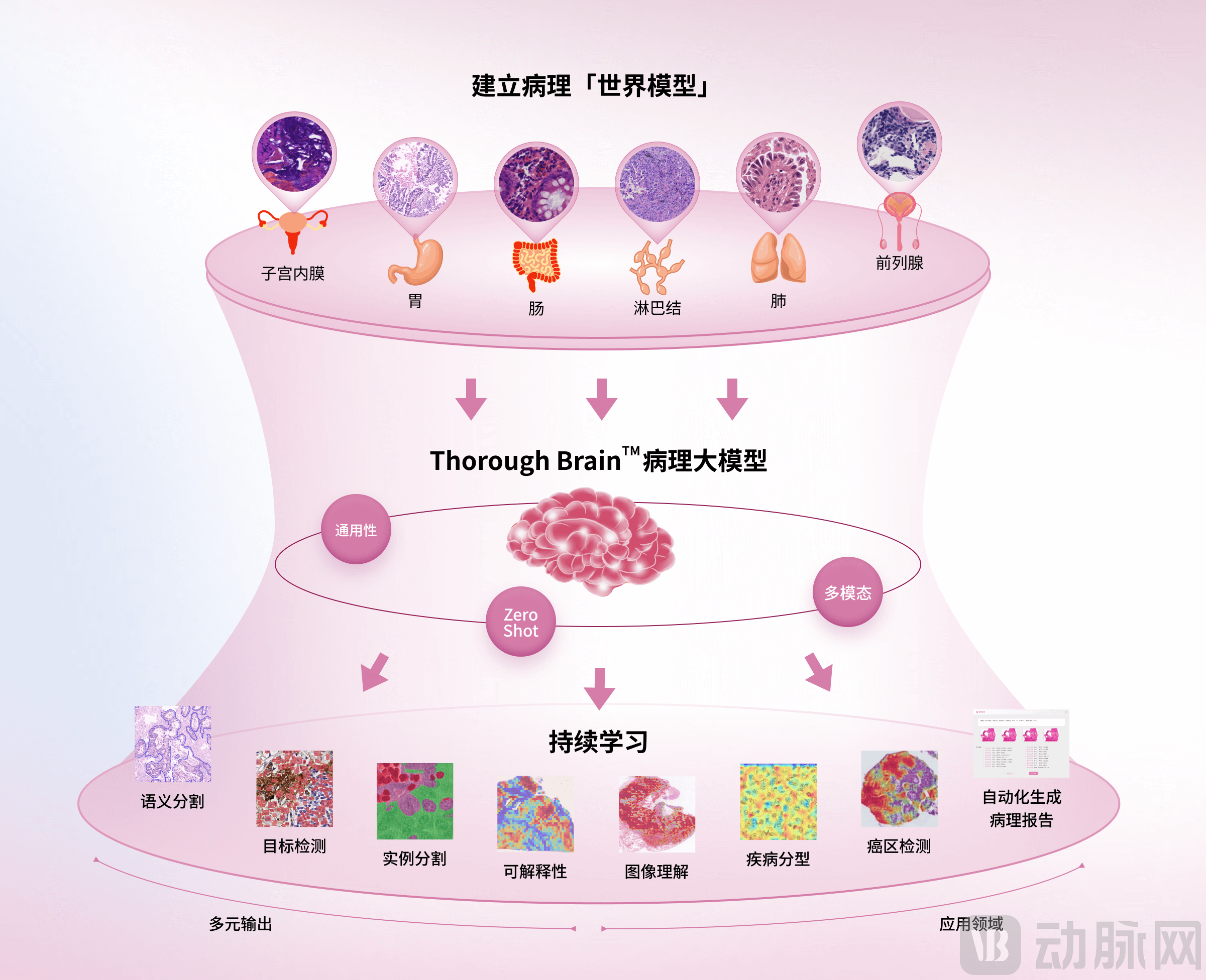
VCBeat has learned that Thorough Future recently launched its “Thorough Brain” pathology large language model. This pathology LLM not only enables intelligent diagnosis of digital pathology slides from various organs but also generates human-like pathology diagnostic reports, thereby providing a strong impetus to the development of the intelligent pathology diagnostics industry.
It is reported that this pathological model, built on the Transformer architecture and leveraging massive pathological data accumulated by Thorough Future over many years, has learned from digital pathology data of dozens of human organs. It has established a foundational understanding of the morphological characteristics of lesioned tissues across various organs, enabling it to serve as the technical foundation for diverse applications.
Through subsequent continuous learning, the model can also perform downstream tasks such as semantic segmentation, object detection, and instance segmentation, and is even capable of reading pathological slides in an anthropomorphic manner to automatically generate pathological diagnosis reports.
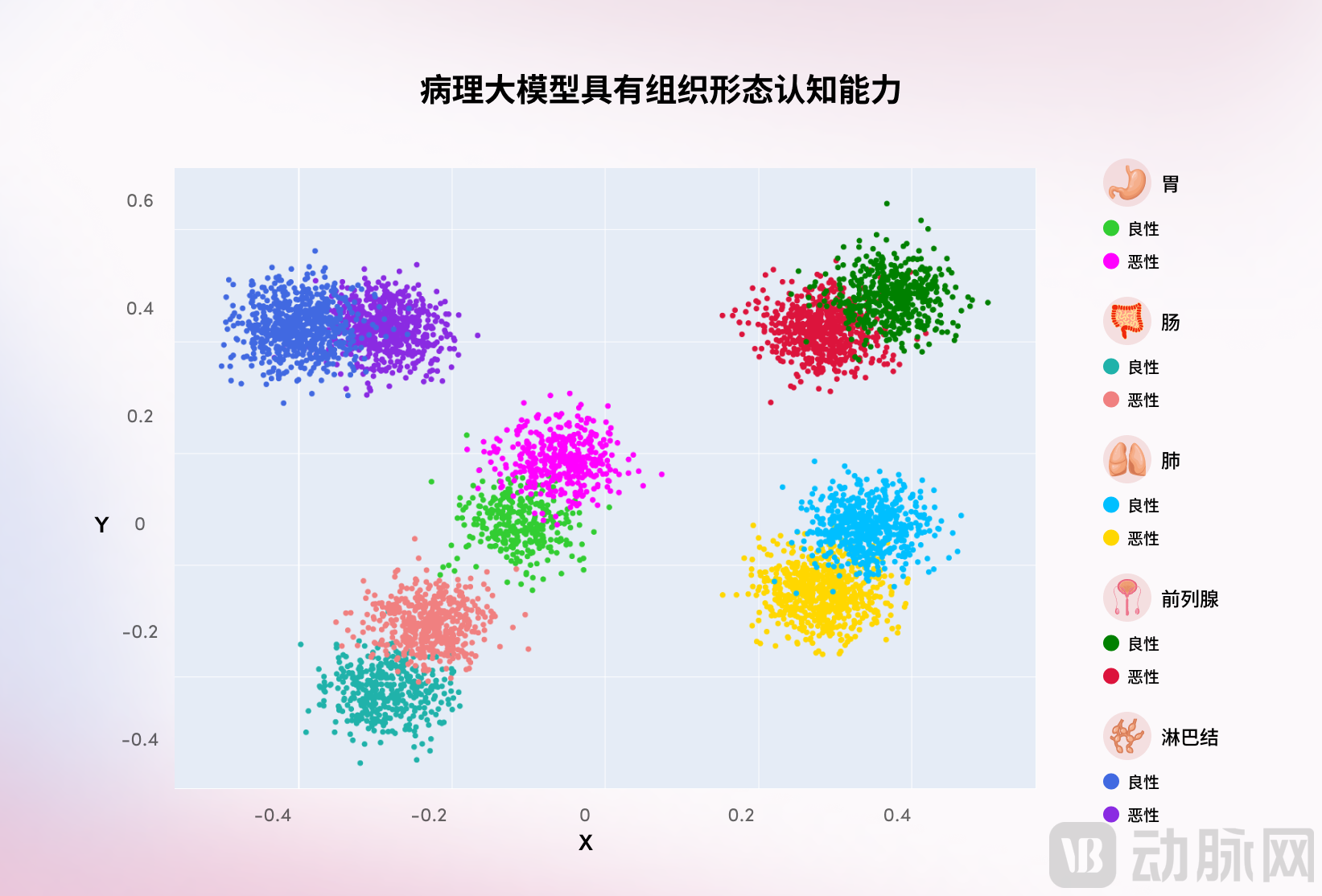
By employing representation vector visualization methods, Thorough Future has conducted in-depth research into the capability of large pathology models to identify tissue types and malignant tumors. For input pathological images, these large models can extract essential diagnostic features through multi-layered feature extraction. The mathematical representation of these features is referred to as “representation vectors.”
By extracting features from nearly 10,000 malignant and benign pathological images of organs such as the stomach, intestine, and lungs using the Thorough Future large pathology model, and then reducing the dimensionality to a two-dimensional encoding space via the t-SNE algorithm, visualization of the representation vectors can be achieved. Relevant research results indicate that the Thorough Future large pathology model demonstrates excellent discriminative and cognitive capabilities regarding tissue types and malignant tumor characteristics.
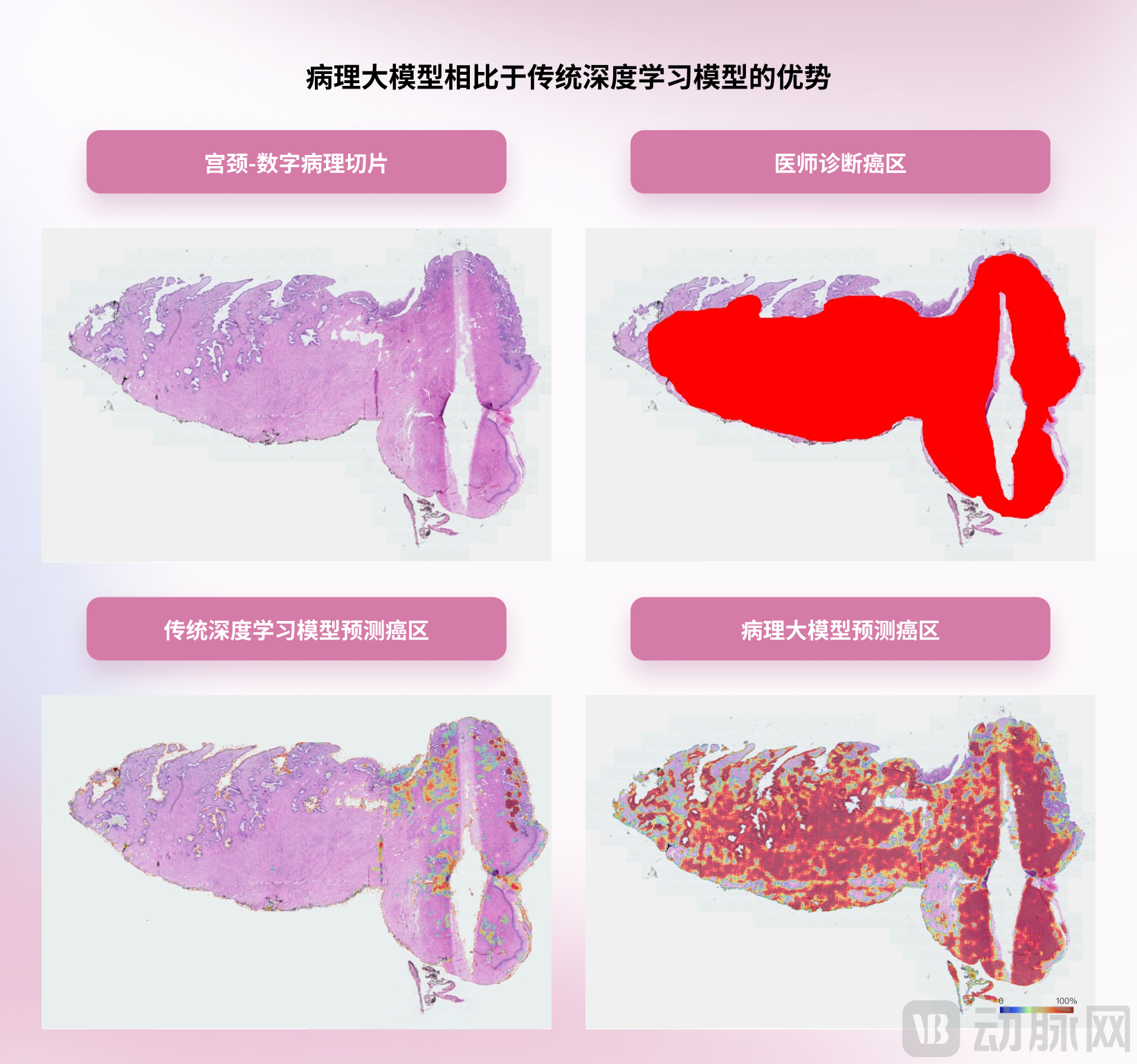
Meanwhile, for malignant tumors, the large pathology model developed by Thorough Future has also achieved intelligent identification of malignant tumor regions. By learning from massive amounts of multi-organ and multi-lesion pathological data, this large model has acquired a comprehensive understanding of the morphological features of various organ tissues.
Notably, gastric and intestinal digital pathology slides exhibit high morphological similarity, which is also reflected in the encoding space. Compared with traditional deep learning models designed for a single organ, large pathology models achieve more precise identification and localization of malignant tumors, thereby enhancing model interpretability and reliability.
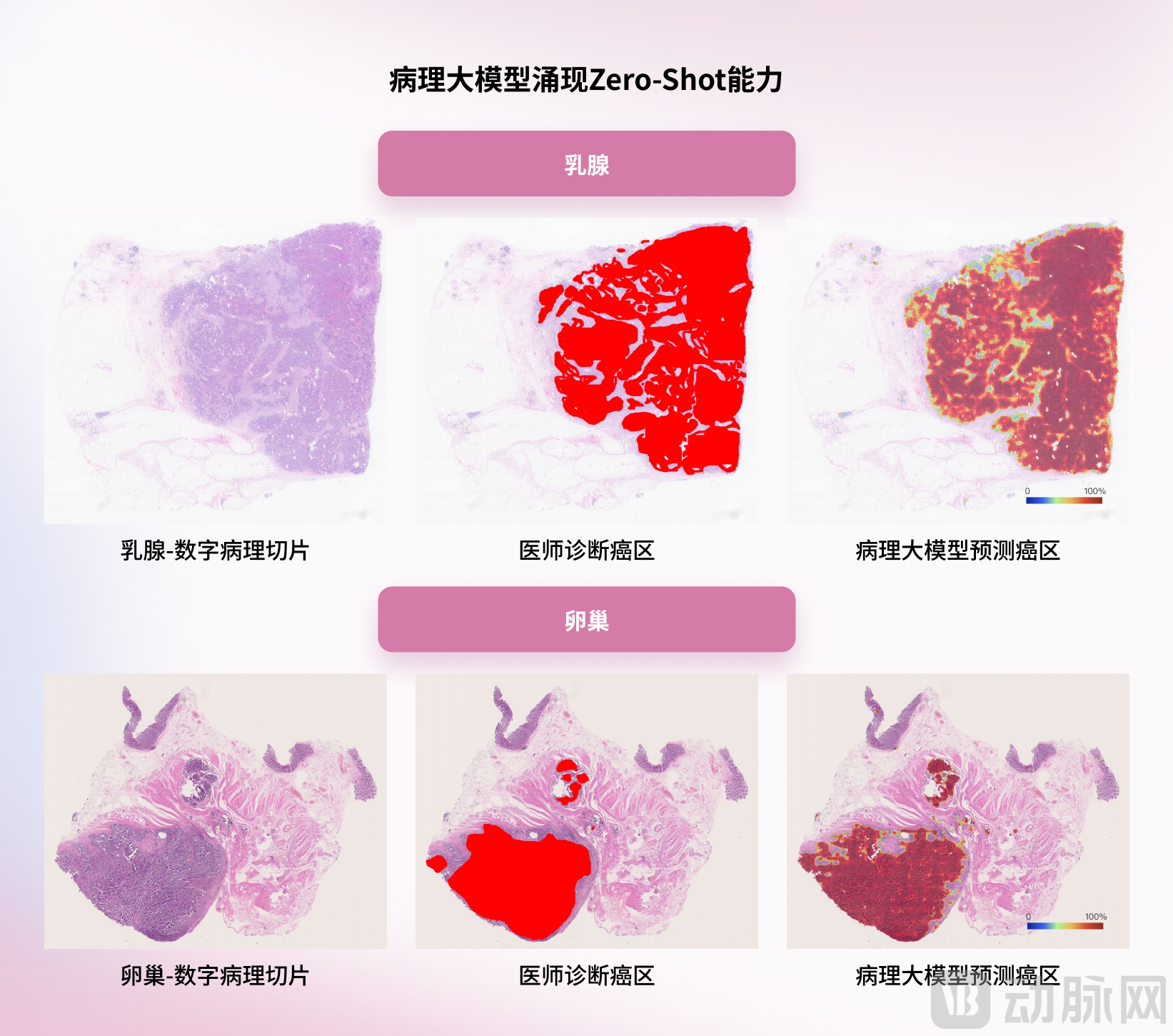
Furthermore, researchers have discovered that large pathology models have emerged with zero-shot learning (Zero-Shot) capabilities.
The so-called "Zero-Shot" capability refers to evaluating a model on data types it has never encountered before, demonstrating diagnostic accuracy comparable to that of expert pathologists. During the training of the large pathology model, researchers deliberately excluded data from breast and ovarian tissues; nevertheless, the model still accurately identified and localized malignant regions in test data from these two organs. This finding is truly exciting. It suggests, to some extent, that Thorough Future’s large pathology model has begun to exhibit characteristics of higher-order intelligence.
In terms of generating diagnostic reports, researchers employed latent space embedding representation learning using digital pathology slides and physicians’ diagnostic text data, successfully achieving automated output of pathology diagnostic reports. This means that the model can not only perform automated analysis for disease subtyping but also describe the findings in a human-like manner.
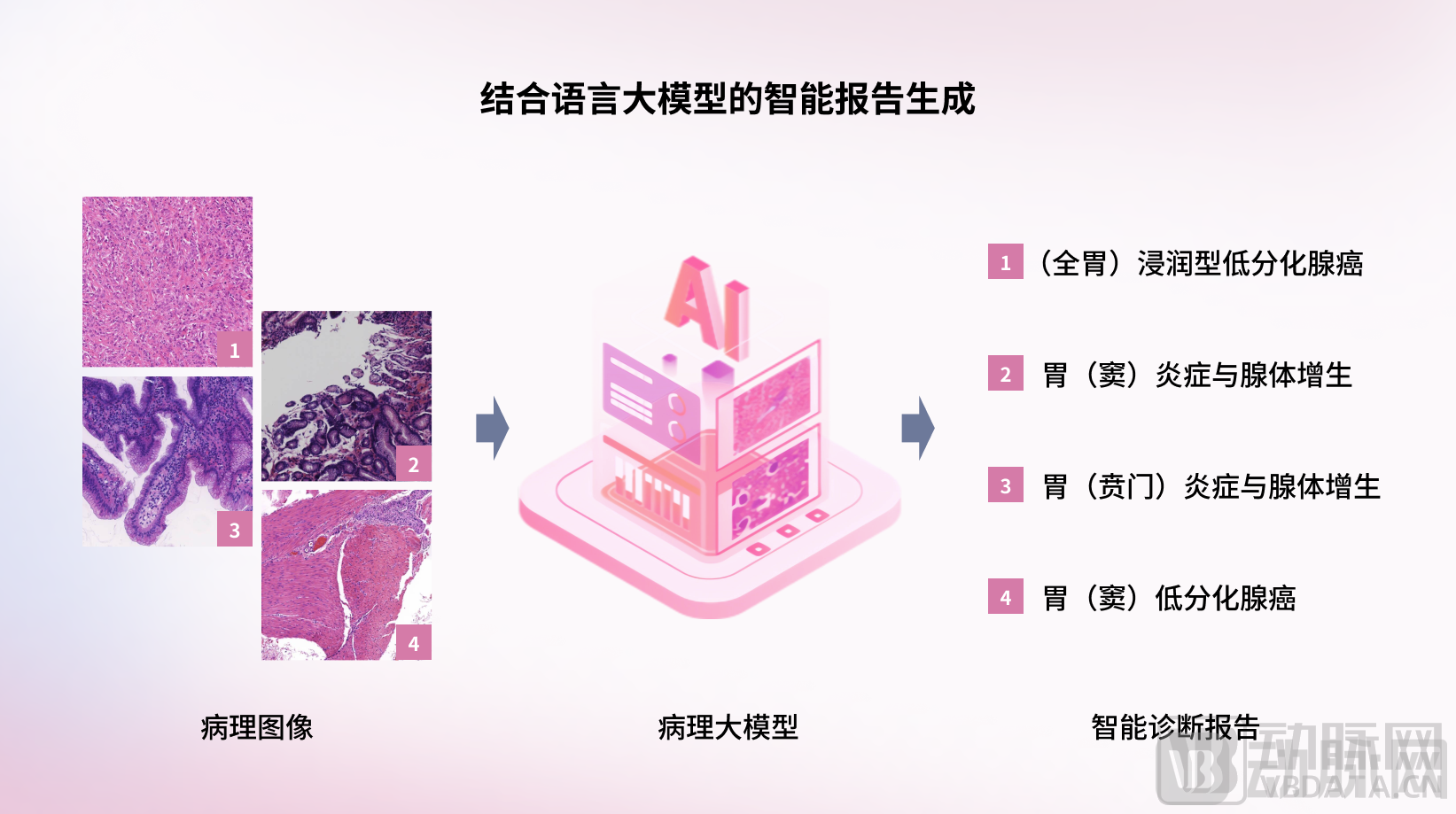
It is foreseeable that large pathology models will play a broad role across various fields, including pathological diagnosis, scientific research, and education. These models not only enhance the accuracy and efficiency of pathological diagnosis but also assist researchers in investigating disease mechanisms through conversational interactions integrated with natural language models. Furthermore, they can serve as educational tools to help students and teachers better understand and learn about pathological diagnosis.
Looking ahead, large pathology models will not only assist pathologists in identifying new disease spectra but also serve as foundation models for multimodal applications in broader oncology research, such as prognosis prediction and drug efficacy analysis, thereby truly realizing the value of pathological diagnosis as the “gold standard” for disease diagnosis.

THOROUGH FUTURE has stated that it will collaborate with numerous medical, research, and educational institutions both in China and abroad to jointly promote the application and development of large pathological models. Meanwhile, the company will actively explore new technological directions, bringing more innovation and breakthroughs to the field of medical artificial intelligence and making positive contributions to the advancement of healthcare.