

Digital Health Community: Empowering Primary Care Institutions with Intelligent Technologies to Build China's Accountable Care Organization
On September 22–23, the 2023 Intelligent Computing in Medicine Conference was grandly held in Beijing, focusing on the integration of digital intelligence with pharmaceuticals and healthcare, and leading the development of the pharmaceutical and health industries. The conference invited numerous Nobel laureates, academicians from the Chinese Academy of Sciences and the Chinese Academy of Engineering, academic experts, entrepreneurs, and senior executives from investment institutions both domestically and internationally to discuss the current status and future development of intelligent computing in medicine, and to explore the new landscape and opportunities in the digital intelligence health industry.
As a representative of the healthcare industry, Ms. Yan Jinhong, Senior Vice President of WeDoctor Group and President of WeDoctor Internet General Hospital, was invited to deliver a keynote speech at the conference. Under the title “Digital Intelligence Empowerment: Accelerating the Upgrade of One Million Primary Healthcare Institutions in China and Integratively Building China’s Accountable Care Organizations,” Ms. Yan shared WeDoctor’s innovative practices in establishing a Digital Health Community through institutional and technological innovation, thereby facilitating the upgrading of the primary healthcare service system and integratively building China’s Accountable Care Organizations.
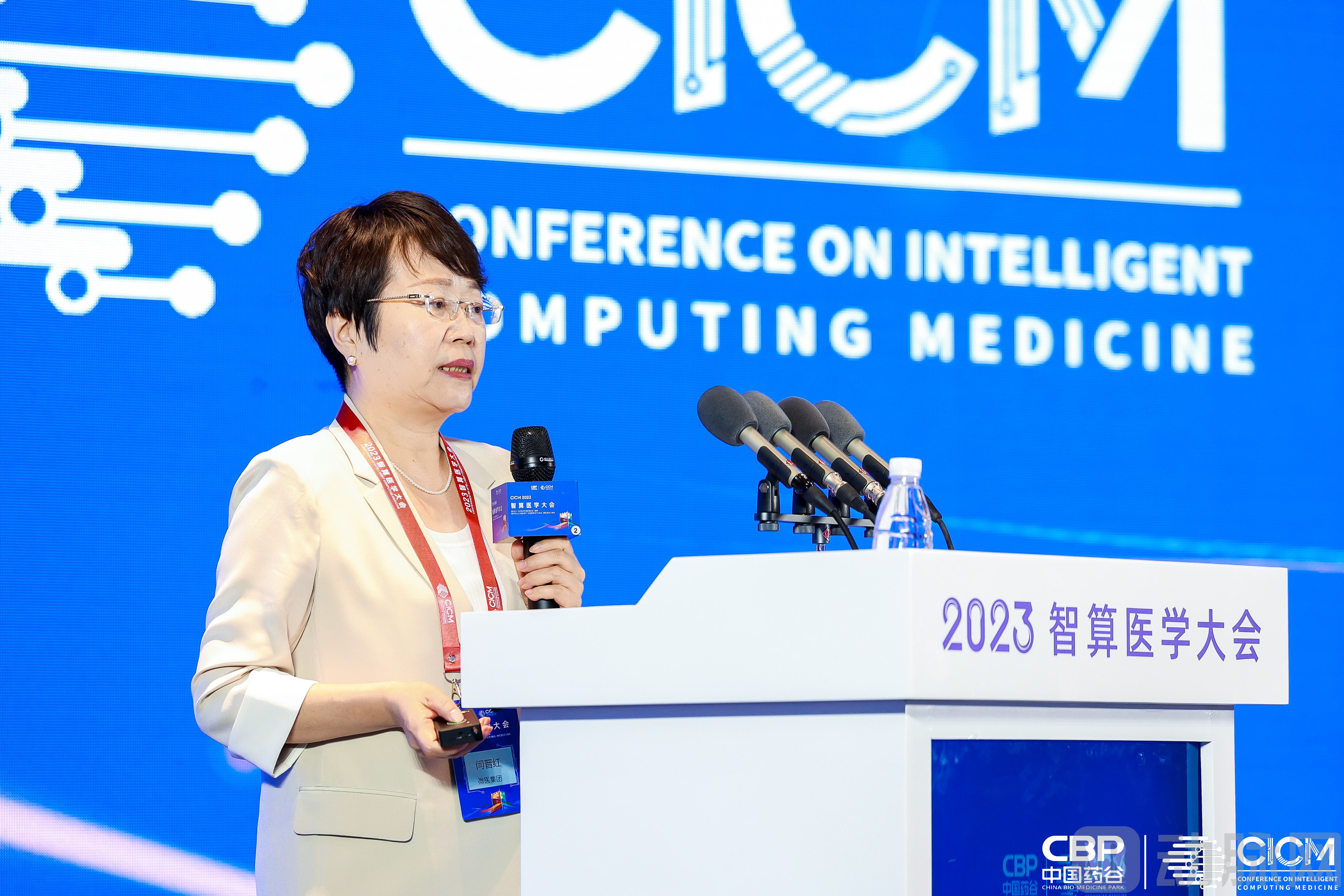
Figure | Yan Jinhong, Senior Vice President of WeDoctor Group and President of WeDoctor Internet General Hospital, Delivers Keynote Speech
“We have focused on completing three key tasks to assist the government in advancing healthcare reform: first, promoting the implementation of tiered diagnosis and treatment; second, facilitating a shift from a disease-centered approach to a health-centered one; and third, improving the efficiency of medical insurance fund utilization.” In his keynote speech, Yan Jinhong introduced the innovative practices of the Tianjin Primary Care Digital Health Community, which was co-established with the Tianjin Municipal Government and led by WeDoctor, detailing how it has gradually explored system construction and task implementation.
The Digital Health Community has five stages of development: “Building an Integrated Healthcare Service System,” “Digitally and Intelligently Upgrading Primary Healthcare Services,” “Implementing Standardized Single-Disease Management,” “Carrying Out Multi-Disease Management for Key Populations,” and “Exploring Diversified Services Combining Medical Insurance and Commercial Insurance.” Led by WeDoctor Internet Hospital, the Tianjin Primary Care Digital Health Community has formed a close-knit medical consortium with 266 primary healthcare institutions in Tianjin. It is progressively integrating data across healthcare services, pharmaceuticals, and medical insurance to create a “Cloud Platform” offering cloud-based management, cloud pharmacy, cloud services, and cloud diagnostics. Meanwhile, it is upgrading and building a Digital Intelligence General Hospital, establishing a Digital Intelligence Medical Center, Digital Intelligence Pharmaceutical Center, Digital Intelligence Cloud Diagnostics Center, Digital Intelligence Health Management Center, and Digital Intelligence Supervision Center. This empowers primary healthcare services with five digital intelligence capabilities—“medical care, pharmaceuticals, diagnostics, health management, and supervision”—forming a citywide integrated healthcare service system. Furthermore, through reforms in medical insurance payment methods, it implements bundled payments by disease type and per capita, adopts a policy allowing retention of surpluses without covering deficits, and provides diversified services that integrate basic medical insurance with commercial health insurance.
As the first region in China to implement a provincial-level Digital Health Community, Tianjin has established a novel health management and care system through the construction of its grassroots Digital Health Community. This initiative has achieved the “Two Increases and One Decrease” outcome: improved resident health indicators, enhanced diagnostic and treatment capabilities at primary healthcare institutions, and reduced medical insurance expenditures. Within the Health Community, among enrolled outpatients with special chronic diseases (diabetes), the glycated hemoglobin (HbA1c) compliance rate increased by 22.9%, the blood pressure control rate by 19.9%, and the blood lipid control rate by 13.3%. From January to June 2023, the overall surplus rate of medical insurance funds for contracted diabetes patients exceeded 20%.
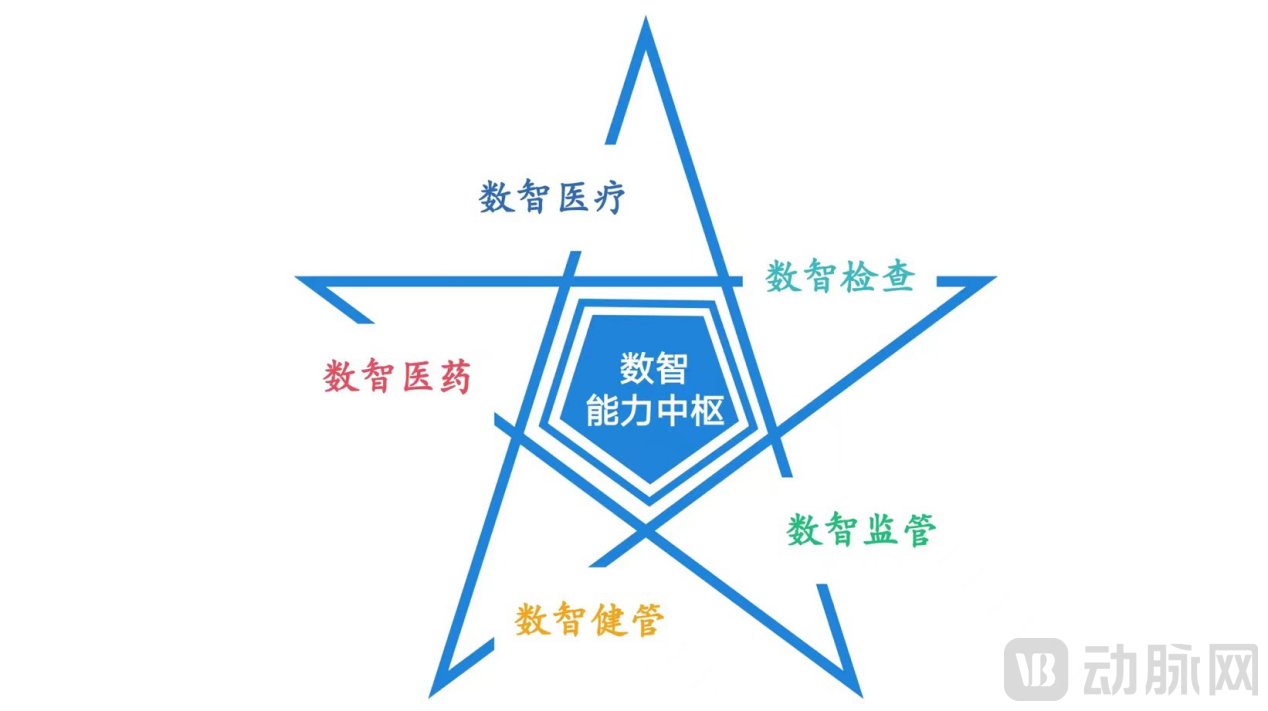
Figure | The Digital Health Community Establishes Five Digital-Intelligence Capabilities
A Digital Health Community is a health-oriented community built on digital and intelligent technologies, leveraging mechanism innovation, with health insurance payment as a lever and health accountability as the driving force. It achieves breakthroughs in reshaping primary healthcare service processes, service models, and management models, while comprehensive digital intelligence significantly enhances the efficiency and quality of medical services.
As a digital health stewardship organization, the Digital Health Consortium has built five digital-intelligence capability hubs—“medical care, pharmaceuticals, testing, health management, and care coordination”—through the digital and intelligent empowerment of the RealDoctor open platform for medical AI. The Digital Health Consortium has achieved large-scale application of general artificial intelligence technologies.
RealDoctor, jointly developed by WeDoctor and the RealDoctor Medical AI Research Center at Zhejiang University, leverages expert knowledge from tertiary hospitals and dynamic data from integrated healthcare communities as its training data sources, with large language models and Reinforcement Learning from Human Feedback (RLHF) as its core algorithms. Based on the RealDoctor platform, the digital integrated healthcare community has implemented AI-driven diagnosis and treatment systems for specific diseases to enhance the capabilities of primary care physicians, introduced AI-assisted diagnostics to empower primary care laboratories, adopted AI-powered prescription review and other pharmaceutical services to reduce costs and improve efficiency, and utilized AI-enabled health management tools to boost the productivity of health managers. Additionally, a digital intelligence regulatory “command center” has been established to monitor in real time the operations of medical services, pharmaceuticals, and medical insurance within the integrated healthcare community.
Empowered by innovative mechanisms and digital-intelligence capabilities, the Tianjin Digital Healthcare Community has significantly improved its medical service efficiency and increasingly demonstrated its revenue-generating capacity. Within less than 30 months of construction and operation, its daily outpatient visits have exceeded 10,000, reaching a service scale comparable to that of large Grade A tertiary hospitals. Meanwhile, the Digital Healthcare Community has successfully piloted and implemented the payment reform based on capitation.
The reform achievements of Tianjin’s Digital Health Community have been widely recognized by multiple stakeholders. Guided by the Department of System Reform and the Department of Publicity of the National Health Commission, Tianjin ranked first among the “Top Ten New Initiatives for Advancing Healthcare Reform to Serve Public Health” in 2020, with its initiative titled “Innovatively Building the ‘Four Clouds’ Platform to Promote the Development of Grassroots Digital Health Communities.” In April 2022, five ministries and commissions, including the National Development and Reform Commission, jointly issued a document proposing to “guide localities in exploring the development of grassroots digital health communities.” Owing to its numerous innovative achievements, Tianjin’s Grassroots Digital Health Community was featured in the 2023 China Think Tank Report on New Social Governance—“Digital Transformation and Governance Reform.”
Leveraging its substantial operational achievements and standardized delivery capabilities, the Digital Health Community is accelerating its replication and construction across China. Yan Jinhong introduced that the Digital Health Community has already been implemented in five provinces and municipalities—Tianjin, Shandong, Shanghai, Zhejiang, and Jiangxi—and is expanding into more than a dozen other provinces nationwide.
“WeDoctor is able to collaborate with regional governments to co-establish and lead the operation of digital health communities, relying on WeDoctor’s comprehensive industrial ecosystem and operational system,” said Yan Jinhong.
After more than a decade of development, WeDoctor has established three core business segments: the Digital Health Community, the Digital Pharmaceutical and Medical Device Trading Platform, and Digital Traditional Chinese Medicine. With a focus on AI applications in healthcare, WeDoctor is integrating a closed-loop ecosystem encompassing “medical care, pharmaceuticals, and intelligence.” Currently, WeDoctor is advancing its “Digital Health Community Open Cooperation Plan,” seeking to onboard innovative partners in fields such as digital therapeutics, AI-based medical imaging, and digital medical devices.
At the China Enterprise Future Stars Annual Conference, Liao Jieyuan, founder of WeDoctor, stated that China’s healthcare system faces three major challenges: imbalance, lack of transparency, and the absence of a health accountability mechanism. The digital and intelligent transformation of the healthcare industry is not merely about enhancing productivity as in other sectors; it is a systematic endeavor aimed at carving out “tunnels” through these three formidable obstacles.
The successful model of the Digital Health Community has been implemented to establish an efficient, health-centric healthcare management system, enforce health accountability, and form a digitally intelligent urban accountable care organization. As an internationally leading digital health platform, WeDoctor continues to deepen its three core business segments and accelerate the integration and development of Chinese-style accountable care organizations.