

Oxsight Files IPO Prospectus: Oxford-Originated Bionic Glasses Transforming Lives of Low Vision Patients

Oxsight
Wearable Solutions Provider
According to the latest statistics from the World Health Organization (WHO), more than 2 billion people worldwide live with varying degrees of visual impairment. A significant proportion of these patients progress to vision loss due to various diseases. Three common scenarios include: “loss of peripheral vision” caused by conditions such as advanced glaucoma and retinitis pigmentosa (RP); “loss of central vision” resulting from diseases like age-related macular degeneration (AMD); and “generalized vision loss” (tunnel vision) associated with conditions such as diabetic retinopathy (DR). Healthcare professionals are continually striving for breakthroughs in early screening, surgical interventions, and pharmacological treatments.
In today’s digital age, technological innovation is continuously driving a revolution in the healthcare sector, bringing new hope to those who face the challenge of visual impairment in their daily lives. Oxsight, a UK-based company, stands out as a prominent representative in this field, with its innovative products aiming to improve the lives of people with visual impairments.
1Originating from the University of Oxford
The story of Oxsight began with the University of Oxford undertaking a key research project on “how the brain interprets visual information,” an interdisciplinary study spanning neuroscience and brain science. However, the initial objective was not to develop vision-assistive glasses, but rather to gain a deeper understanding of how the brain processes visual information. This research was led by Dr. Stephen Hicks, a neuroscience researcher at the University of Oxford.
Dr. Hicks’ research quickly became linked to real-world clinical challenges. After years of dedicated work aimed at improving the quality of life for visually impaired patients, Dr. Hicks and his team won the Google Impact Challenge award in 2014, receiving a £500,000 prize. With this cash grant, the team continued to refine their product prototype.
In 2016, Oxsight was officially established, spinning out of an Oxford University laboratory. Joining the company at that time was Philip Torr, Professor of Computer Science at the University of Oxford. He is a Fellow of both the Royal Academy of Engineering and the Royal Society, a recipient of the Marr Prize, and one of the five inaugural awardees of the “Turing AI World-Leading Researcher” fellowship in 2021. Professor Torr has provided substantial expertise in image recognition algorithms and in shaping the future development roadmap for Oxsight’s AI-driven visual technology.
2Concise Software and Hardware
Patients suffering from visual impairments, such as loss of visual field, often face significant challenges in their daily lives.
Here, Chen Xuesong, Head of Oxsight China, shared a common real-life example: if a piece of transparent glass is placed on a table, it can be difficult to discern, as many individuals with visual impairments are unable to recognize object edges or distinguish between different objects.
Oxsight’s technology detects objects through image recognition and then uses image processing algorithms to highlight edges or enhance colors, enabling users to locate objects and distinguish colors. Its core advantage lies in its unique visual assistance technology, which offers multiple modes, including edge enhancement and color enhancement. Both modes share the common goal of maximizing assistance for visually impaired individuals in interpreting their immediate surroundings while operating within limited computational resources.
In Chen Xuesong’s words, Oxsight enables patients to identify doors and windows, maximizing their ability to regain convenience in daily life by leveraging their remaining vision and enhancing their independence in society.
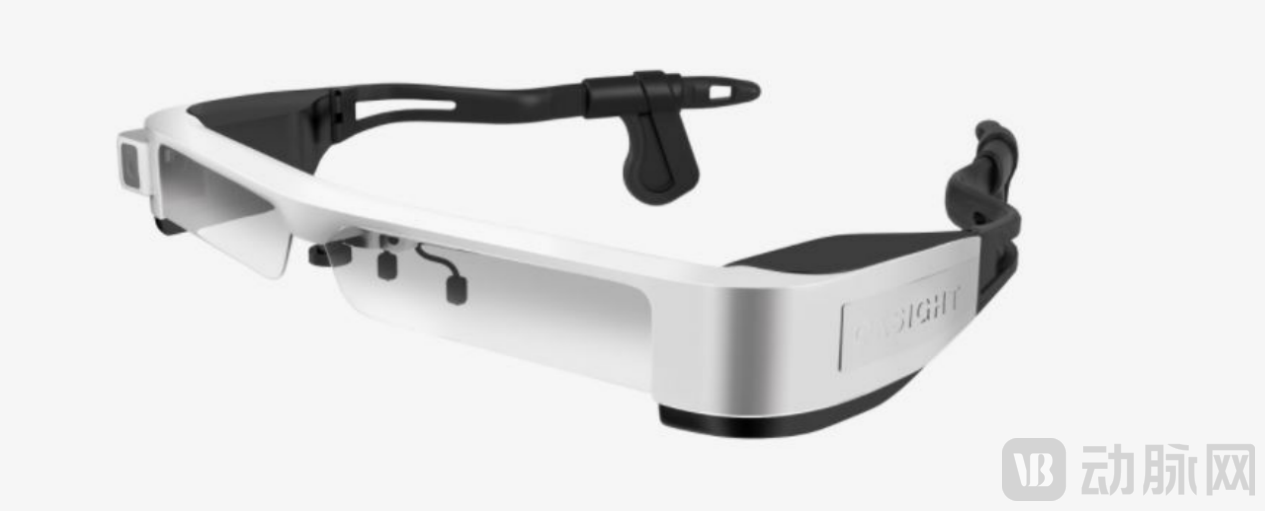
C Series Products, Photos Provided by Oxsight

O Series Products, Photos Provided by Oxsight
It is worth noting that Oxsight’s image processing algorithms deliver outstanding performance, offering two distinct benefits to patients. First, the simplicity of the algorithms accelerates image processing and reduces latency, which is a primary cause of dizziness when wearing head-mounted devices. Second, the streamlined algorithms lower energy consumption, eliminating the need for large-capacity batteries and thereby improving the weight and bulk of the head-mounted device.
3Differences and Competition
Oxsight has not only achieved technological breakthroughs but also demonstrated uniqueness in wearability, ease of use, and functionality. Powered by lightweight batteries, Oxsight’s devices are compact and comfortable, making them suitable for extended wear. Furthermore, the user interface (UI) is designed with human-centric principles, enabling users to operate the device with ease. Most importantly, Oxsight devices offer multi-mode visual assistance capabilities, including on-demand recognition of images, text, and faces, as well as night vision, thereby meeting diverse user needs across various scenarios.
Oxsight faces varying competitive landscapes across different types of visual field loss. In the realm of central visual field loss, Oxsight stands alone with virtually no competitors. For peripheral visual field loss caused by glaucoma, although competition exists, clinicians report that Oxsight demonstrates superior clinical efficacy. Additionally, Oxsight holds an unchallenged position in the area of retinitis pigmentosa–related visual field loss.
Regarding the emergence of mainstream head-mounted devices represented by Apple’s Vision Pro, Chen Xuesong stated that Oxsight sees opportunities far outweighing the challenges. The participation of major manufacturers can expand supply chain scale and improve production efficiency, thereby reducing costs. In the long run, this will help Oxsight further control production costs and optimize product functionality and weight. Moreover, in terms of core functionality, the two are not competing in the same crowded market segment.
4Future Plans
Oxsight’s future is promising. The company plans to further expand its production capacity and seek high-quality manufacturing partners in China to better meet market demand. Additionally, it intends to broaden its sales channels and promote its products in end-user settings such as hospitals and rehabilitation centers, enabling more visually impaired individuals to benefit from its innovative technology.