

Xinjing Technology Secures World's First VR-Based Medical Device Approval for Sleep Disorder Treatment
On September 25, 2023, Xinjing Technology’s software for adjunctive treatment of sleep disorders was approved in China, becoming the first medical device registration certificate based on virtual reality (VR) for sleep disorders in China and globally, and it is regulated as a Class II medical device.

The adjunctive therapy software for sleep disorders consists of a USB flash drive, an SD card, and the product manual. The product software system is pre-installed on the USB flash drive for delivery, with the delivered version being V1. The software system comprises the Sleep Disorder Therapy Software, the Therapy Terminal Software, and the Launcher Home Screen Software. The Sleep Disorder Therapy Software includes modules for patient management, therapy center, therapy records, and system settings; the Therapy Terminal Software includes a scenario playback module; and the Launcher Home Screen Software includes a home screen interface module.
By leveraging virtual reality (VR), therapeutic approaches commonly used for insomnia—such as relaxation techniques, hypnotic suggestions, and cognitive therapy—can be adapted into interventions delivered within virtual environments. In these virtual scenarios, audiovisual stimuli can modulate the autonomic nervous system to induce positive emotions and relaxation experiences, thereby reducing somatic and cognitive arousal levels that interfere with sleep. Guided relaxation and hypnosis facilitate subconscious suggestion, helping to alter negative cognitions and emotions affecting sleep, ultimately achieving therapeutic effects for insomnia.
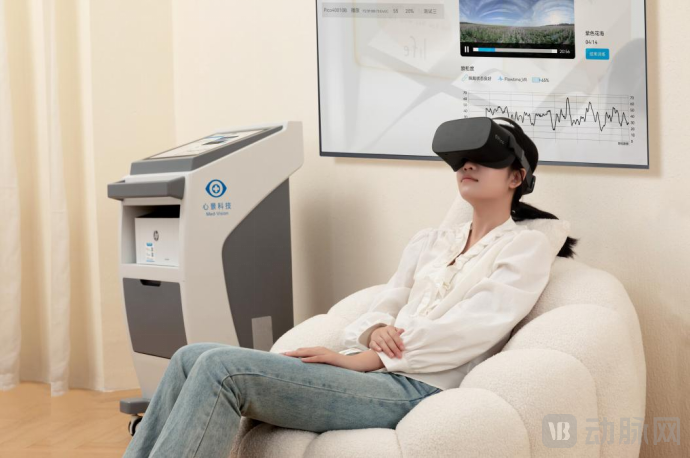
Device Usage Scenarios
According to the Good Clinical Practice for Medical Device Trials, a multicenter clinical trial led by Xiangya Second Hospital of Central South University (National Clinical Research Center for Mental Disorders) and conducted in collaboration with multiple participating centers, including Sir Run Run Shaw Hospital Affiliated to Zhejiang University School of Medicine, has demonstrated its safety and efficacy.
Currently, nearly 300 million people in China suffer from insomnia. In modern society, irregular daily routines and high work-related stress have become the primary factors affecting sleep quality. Research has confirmed that chronic sleep deprivation can lead to physical discomfort, trigger mental health issues such as mental confusion and hallucinations, and may even result in death.
According to the Chinese Guidelines for the Diagnosis and Treatment of Insomnia in Adults (2017 Edition), the current main interventions for insomnia include psychological therapy, pharmacological therapy, physical therapy, and traditional Chinese medicine (TCM) therapy. Psychological therapy primarily consists of sleep hygiene education and cognitive behavioral therapy for insomnia (CBT-I).
The short-term efficacy of pharmacological treatment for insomnia has been confirmed by clinical trials. Currently, commonly used hypnotics or sedative antidepressants in clinical practice are associated with side effects such as cognitive and behavioral changes and addiction. In contrast, physical therapy, dietary therapy, and aromatherapy lack rigorous validation through clinical trials and can only serve as complementary treatments.
Cognitive Behavioral Therapy for Insomnia (CBT-I) is currently recognized as an effective treatment modality. The Guidelines state that CBT-I should be the first-line treatment for patients with chronic insomnia, based on the establishment of good sleep hygiene practices. CBT-I can effectively correct erroneous sleep-related cognitions and inappropriate behavioral factors in patients with insomnia, thereby helping to eliminate psychophysiological hyperarousal, enhance sleep drive, reconstruct proper sleep-wake cognitive patterns, and sustainably improve clinical symptoms. More importantly, compared with pharmacological therapy, CBT-I has virtually no adverse reactions, making it widely accepted by most patients with insomnia.
Digital therapeutics (DTx) are software-based interventions that deliver evidence-based therapeutic interventions, such as Cognitive Behavioral Therapy for Insomnia (CBT-I), to prevent, manage, or treat diseases. In July 2017, the U.S. Food and Drug Administration (FDA) granted its first approval for a digital therapeutic as part of a clinical treatment program for substance use disorder (SUD). Since then, digital therapeutics have entered the public spotlight as a novel therapeutic modality. Beyond existing pharmacological treatments, non-pharmacological interventions (such as surgery, radiation therapy, and physical therapy), and psychological and behavioral therapies, digital therapeutics offer a new approach to evidence-based treatment and disease management.
Somryst is currently the only FDA-approved digital therapeutic for treating sleep disorders. The software for adjunctive treatment of sleep disorders, approved for Xinjing Technology, is also the world’s only digital therapeutic based on virtual reality technology for the adjunctive treatment of sleep disorders.
The market size of psychotherapy in China grew from RMB 27.24 billion in 2015 to RMB 66.82 billion in 2022, with a compound annual growth rate (CAGR) of 16.1%. Frost & Sullivan projects that the market size will reach RMB 106.10 billion by 2025, with a CAGR of 16.7%. Currently, there are few digital therapeutic products for psychological conditions approved as medical devices, with a penetration rate of only 0.4% in 2022. As the professionalism of digital therapeutics improves, more medical-grade digital therapeutic products are expected to be deployed, potentially raising the penetration rate to 1.0% by 2025.
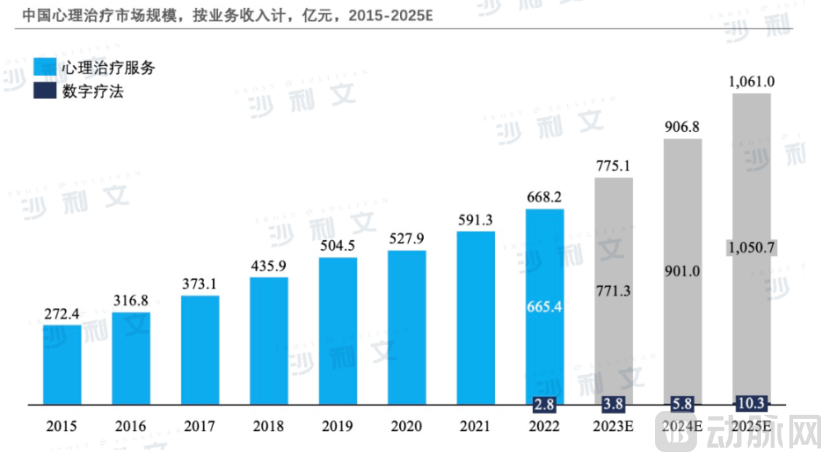
Source: Frost & Sullivan
Digital therapeutics based on VR technology have broader medical applications, such as in the management of pain and amblyopia. Globally, several VR-based digital therapeutics have received FDA marketing approval. In 2021 alone, two products were approved: AppliedVR’s RelieVRx (formerly EaseVRx), indicated as an adjunctive treatment for chronic low back pain (CLBP), which remains the only FDA-authorized VR therapy for chronic pain; and Luminopia One, developed by Luminopia, indicated for the treatment of binocular amblyopia in children aged 4–7 years, which was the first FDA-approved digital therapeutic for neurovisual disorders.
Hangzhou Xinjing Science and Technology Co., Ltd. is a leader in the field of non-pharmacological virtual reality (VR) digital therapeutics (DTx) for mental health. The company aims to address unmet clinical needs by leveraging technologies such as virtual reality, internet cloud platforms, and big data, providing innovative therapeutic approaches for rehabilitation in the neurological and psychiatric domains. Xinjing Technology has developed three core product lines focusing on mental health (insomnia, anxiety), cognitive disorders (neurodevelopmental disorders in children), and substance dependence (alcohol use disorder). It has conducted nearly 100 real-world studies at national, provincial, municipal, and hospital levels, continuously validating the safety and efficacy of its products to ensure that safe and effective digital therapeutics can effectively reach and intervene for more patients in need.