

Shanghai Shuyao Intelligence Submits IPO Prospectus as Its ADHD Digital Therapeutic Gains Commercial Traction

SDODT
Developer of Digital Therapeutics for Neurological Diseases
In the past two years, China's digital therapeutics industry has attracted increasing attention from industry participants.
I. The Institute of Electrical and Electronics Engineers (IEEE) has established a Digital Therapeutics Working Group and officially begun recruiting domestic and international experts to participate in drafting the first international standard for digital therapeutics.
II. The National Institutes for Food and Drug Control (NIFDC) convened a technical seminar on the classification and determination guidelines for digital therapeutics medical devices. There is now broad consensus among stakeholders that digital therapeutics constitute an emerging category of medical devices, and the process for developing corresponding standards has been initiated.
3. Hainan Province released the world’s first full-lifecycle support policy for digital therapeutics, titled “Several Measures of Hainan Province to Accelerate the Development of the Digital Therapeutics Industry,” thereby implementing specific details to foster the growth of its digital therapeutics sector. Meanwhile, certain provinces and cities are intensifying their efforts in the digital health domain, aiming to establish unique industrial chain advantages during the current surge in “digital healthcare.”
Whether it is the active development of global industry standards for digital therapeutics or the implementation of favorable policies, bothProvides fertile ground for the development and implementation of digital therapeutics.Therefore, since the domestic digital therapeutics industry officially launched in 2021, nearly 100 companies have entered this field, with product types covering disease areas such as ophthalmology, mental disorders, behavioral and cognitive disorders, chronic respiratory diseases, and oncology, resulting in rich application scenarios. Furthermore, as of November 2022, the National Medical Products Administration (NMPA) had issued a total of 30 Class II medical device certificates that meet the definition of digital therapeutics, indicating rapid industrial development.
Amidst these opportunities, China’s digital therapeutics industry has achieved growth from zero to one and is gradually advancing toward commercialization. For instance, after nearly two years of sustained accumulation and breakthroughs, SDODT’s “Attention Enhancement Training Software” obtained a Class II Medical Device Registration Certificate from the National Medical Products Administration (Registration No.: Xiang Xie Zhu Zhun 20232210315), becoming one of the first “electronic prescription drugs” in China for attention-deficit/hyperactivity disorder (ADHD). With this regulatory hurdle cleared, SDODT is on the verge of large-scale commercialization.
Due to the current lack of payer reimbursement pathways commensurate with the value of digital therapeutics, the commercialization of digital therapeutics in China continues to face challenges.In an era where demand for digital health solutions is higher than ever, how to successfully navigate commercialization remains a critical question worthy of deep reflection for both payers and digital therapeutics companies.
Zhang Yuming, Director of the East China Center for Medical Health Big Data and Network Research at the China Academy of Information and Communications Technology (CAICT), previously proposed that the development path of digital therapeutics should consist of three stages:
Phase I: Clearly define digital therapeutics products, focus on areas familiar to the enterprise, and ensure application scenarios with matching resources;
Phase II: As part of the registration and clinical validation process for digital therapeutics (DTx) products, it is essential to adhere to the fundamental principles of medical device product development and research from the initial design phase. This approach differs fundamentally from the rapid-iteration model typical of internet-based product development. Rigorous DTx products cannot undergo direct, rapid iterations based on market demand after regulatory approval and market launch. Therefore, for DTx products, it is imperative to first comply with regulatory principles. Based on established rules and requirements, the product must be clearly defined and justified before initiating research and development, ensuring a well-structured product development architecture.
Phase III: In the process of jointly developing resources, identify commercial channels across various stages. The path to commercialization does not involve direct profitability; rather, it requires positioning one’s services, identifying appropriate platforms, empowering value across the industrial chain on these platforms, and further seeking partners to explore viable revenue models. In other words, the digital therapeutics industry must establish a complete closed-loop service ecosystem.
These three phases have provided directional guidance for the commercialization of the digital therapeutics industry. Focusing on SDODT’s “Attention Enhancement Training Software,” the team has essentially completed exploration across all three phases, laying a solid foundation for commercialization.
Building a Digital Therapeutics Platform for Neurological Disorders,
Lay the Foundation for Commercialization
First, SDODT has developed the "Attention Enhancement Training Software," focusing on attention-deficit/hyperactivity disorder (ADHD), a neurodevelopmental disorder that originates in childhood. Relevant data indicate that the prevalence of ADHD among children in various provinces and municipalities across China currently ranges from 3% to 6%, with only about 10% seeking medical consultation. The global prevalence of ADHD in children is approximately 7%, and around 50% of individuals with ADHD continue to experience symptoms into adulthood.
However, the treatment principles and recommendations for children with ADHD advocate for the concurrent use of psychosocial interventions and pharmacotherapy. Psychosocial interventions are primarily delivered through parent training, behavioral therapy, and behavioral intervention. The disease management faces limitations such as prolonged medication courses, potential impacts on physical development, and delays in implementing behavioral interventions. Behind the large patient population lies significant unmet market demand.
It is precisely for this reason that, under the category of clinical trial centers established in the Several Measures for the Development of the Digital Therapeutics Industry in Hainan Province, one can observe the creation of digital therapeutics clinical trial centers across nine key areas: chronic disease management, rehabilitation, oncology, sleep disorders, orthopedics, mental, behavioral and cognitive disorders, ophthalmology, nutrition, and the Boao Lecheng International Medical Tourism Pilot Zone’s Clinical Research and Translation Base for Digital Therapeutics. ADHD is a key focus area within the “mental, behavioral and cognitive disorders” category.
In response to the significant gap in the market, SDODT has stepped forward to develop China’s first batch of “digital prescription drugs” for ADHD. By leveraging the advantage of real-time feedback during gameplay, these digital therapeutics promote the reactivation of cognitive neural networks and induce physiological changes in the brain, thereby improving cognitive function. Additionally, adaptive algorithms are designed to automatically adjust the “dosage” according to individual needs, delivering a personalized treatment experience. Physicians and caregivers can continuously monitor and evaluate therapeutic efficacy, providing more treatment options for children aged 6–12 with ADHD in China.
Secondly,, SDODT has adhered to the fundamental principles of medical device product development and research since the product design phase. Prior to the approval of its "Attention Enhancement Training Software," the company conducted multiple Investigator-Initiated Trials (IITs) and multi-center Good Clinical Practice (GCP) clinical trials at the Children's Hospital of Zhejiang University School of Medicine, the National Center for Children's Health at Children's Hospital of Fudan University, and Hangzhou First People's Hospital, thereby validating the product's safety and efficacy. These efforts laid a solid foundation for regulatory approval and subsequent commercialization initiatives.
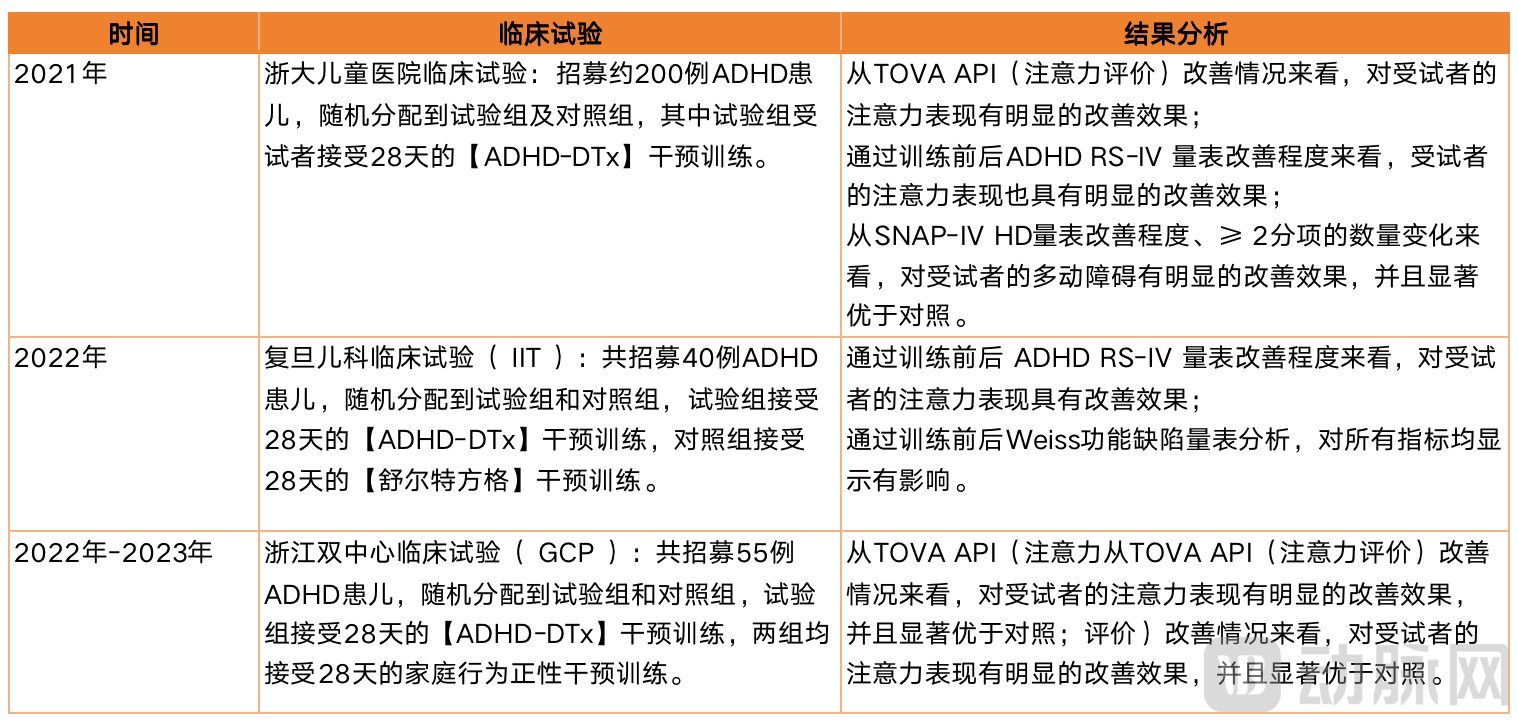
SDODT Product Clinical Trial Status (Partial)
Finally, Reviewing the development journey of SDODT, it is evident that the company has continuously leveraged industry resources and engaged in joint development initiatives throughout its growth. By identifying commercial pathways at different stages, refining its service positioning, seeking strategic partners, exploring profitable business models, and enriching its product pipeline, SDODT has established a comprehensive service loop, thereby further empowering value creation across the industrial chain.
“Attention Enhancement Training Software” was jointly developed with the Brain Science Academy of Zhejiang University and the Children's Hospital of Zhejiang University School of Medicine, incorporating design recommendations from researchers and physicians, and completed by the SDODT product team.
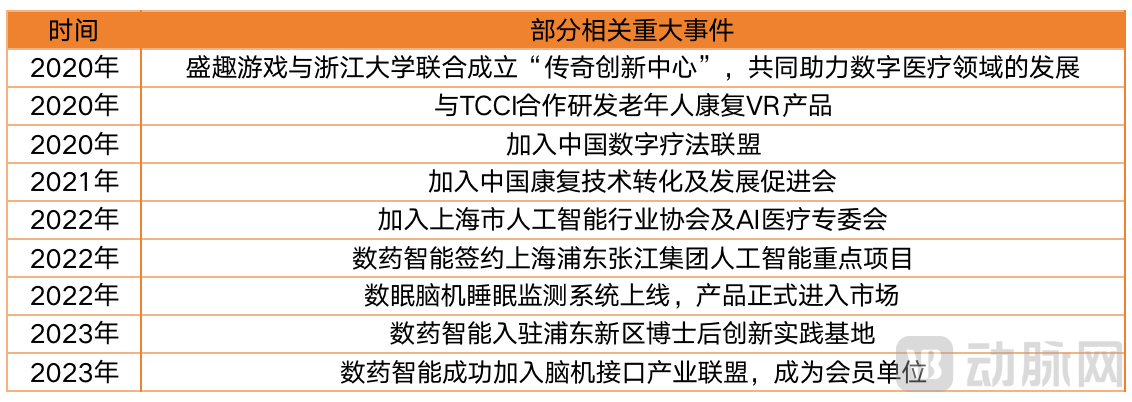
SDODT Milestone Events
In summary, SDODT leverages its in-depth understanding of the principles underlying brain function assessment and intervention for psychiatric disorders to ensure the correctness of its overall R&D direction and to drive rapid innovation. The company not only possesses a family of EEG signal processing algorithms capable of continuous new algorithm development but also maintains close collaborations with clinical institutions and experts to guarantee robust clinical validation of its products. Notably, SDODT sustains tight partnerships with universities, such as Zhejiang University, to foster continuous product innovation and iteration while consistently enhancing product efficacy. In terms of implementation, SDODT relies on its team’s capabilities in product commercialization and game development design to ensure overall product quality and user experience.
To date, SDODT has established three product pipelines focused on cognitive assessment and intervention for children, sleep health intervention, and intervention for neurodegenerative diseases. Its products have been applied in scenarios involving ADHD, autism spectrum disorder, sleep disorders, Parkinson’s disease, and Alzheimer’s disease. Meanwhile, the company continues to integrate hardware suppliers across the industry chain, formulate industry standards for brain-computer interfaces and AR/VR hardware in the context of neurological disorders, and thereby influence the establishment of software and hardware industry standards in the field of neurological diseases. Ultimately, SDODT remains committed to developing comprehensive and systematic solutions for neuropsychiatric disorders.
R&D and clinical development determine product competitiveness,
Product Competitiveness Determines Commercialization Capability
For the digital therapeutics industry, unclear criteria for hospital adoption of products and ambiguous payment models between insurers and patients are significant factors affecting commercial performance. The application of digital health across the broader healthcare sector remains generally in its early stages, facing numerous challenges.
After all, every step in the advancement and development of healthcare requires extreme caution. The existing healthcare system’s acceptance of new products must be validated through clinical data and time before full implementation. Therefore, when confronting practical realities, digital health enterprises in China must pursue a commercialization path that is rigorous, pragmatic, and stable. Compliance, safety, and practicality are paramount, and thorough tracking is required for prescribed treatment courses.
This entire pathway involves numerous stakeholders, including government agencies, healthcare institutions, pharmaceutical and medical device companies, patients, and technology firms. As the industry is in its early stages of development, it requires collaborative alignment among all participating parties, driven by a strong sense of responsibility and perseverance. Through the continuous efforts of industry “pioneers,” commercialization pathways and sales models are being clarified, while closed-loop product-to-commercialization routes are being established, thereby forming an early-stage industrialization development trajectory.
During this periodEnterprises need to build strong, high-value products, establish services or platforms that gain multi-level social recognition, enhance their own capabilities, and identify favorable internal and external opportunities.Externally, seek the most favorable social ecosystem and leverage the comprehensive societal environment to drive corporate growth. Internally, hone core product competitiveness and operational integration capabilities. By integrating internal and external development factors, establish unique competitive barriers to address market challenges.
Although there are no reference examples yet for the hospital admission of digital therapeutics and user purchase channels at this stage, from a positive perspective, digital health is an inevitable trend.
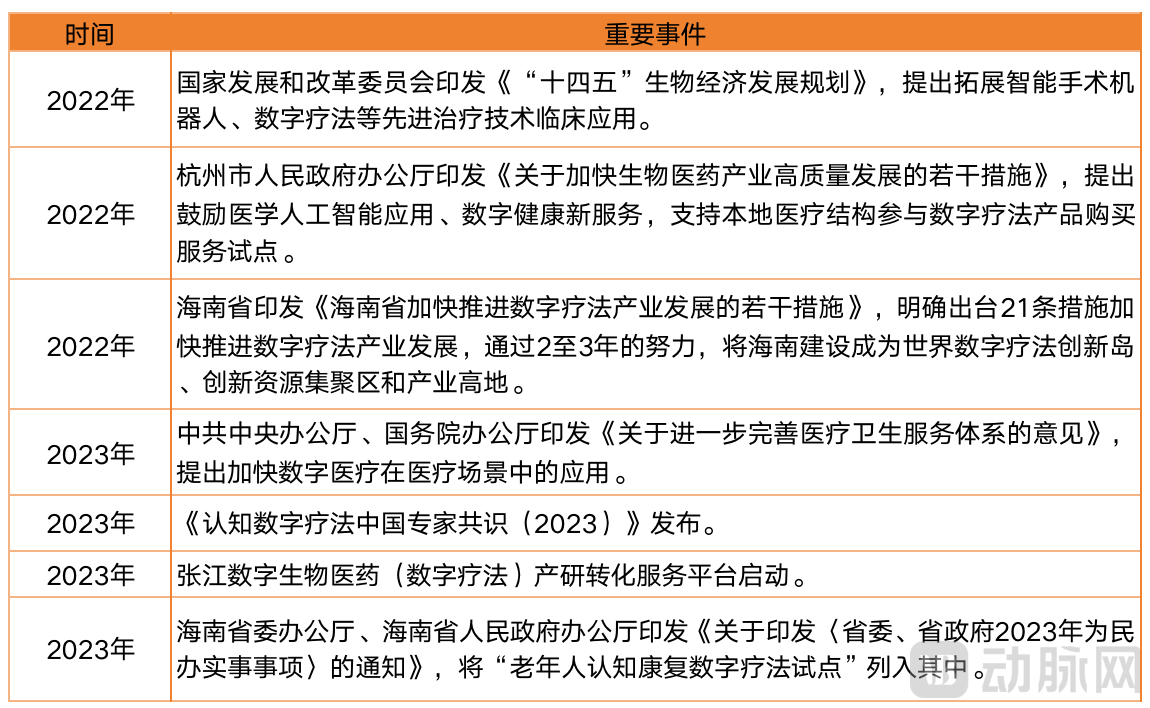
Digital Therapeutics Industry Events
“We are also frequently receiving attention and support from relevant government departments, so the improvement of policies and users’ trust and support for us will quickly resolve these obstacles. For digital therapeutics companies,”R&D and clinical development determine product competitiveness, which in turn determines commercialization capability.SDODT through“Exploration and practice have proven this,” said Li Wenyu, CEO of SDODT.
Following product approval, SDODT has taken its first step.
2023 marked the inaugural year of product commercialization for SDODT. By integrating its product pipeline reserves with hardware development, SDODT has established a digital therapeutics platform for neurological disorders. The company continues to expand its pipeline reserves and enhance its capacity for integrating new technologies, achieving comprehensive coverage across various therapeutic areas for neurological disorders. With product commercialization as its cornerstone, SDODT aims to better facilitate the iteration and optimization of its product pipeline. Targeting to become a brain-computer interface (BCI) company with a substantial user base, SDODT plans to develop into a leading digital therapeutics platform in the field of neurological disorders over the next five years.
It is worth mentioning that,SDODT Internet Hospital has already begun providing diagnostic services and dispensing medications.
With the exploration by companies such as SDODT and support from relevant policies, the commercialization pathway for digital therapeutics in China is expected to become increasingly clear, giving rise to a cohort of outstanding digital therapeutics enterprises with robust business models. Meanwhile, industry standards, regulatory policies, and the development of industrial alliances for digital therapeutics will also become more defined and standardized, ushering in a phase of high-quality, rapid development characterized by the elimination of inferior solutions and the retention of truly effective ones.
SDODT has spent two years meticulously developing its ADHD digital therapeutic product, the “Attention Enhancement Training Software.” This product features high technical and clinical barriers to entry, and has demonstrated strong user reputation and clinical efficacy through rigorous clinical testing and market validation. The potential user base for Attention-Deficit/Hyperactivity Disorder (ADHD) generally exhibits strong purchasing power and a high willingness to pay. Coupled with supportive policies for the digital therapeutics industry, this sector has emerged as the next trillion-yuan market opportunity.
SDODT is currently seeking partners across China with resources in pediatrics, neurodevelopment, and child psychology, looking forward to working together to bring better treatment options for children with ADHD.

References:
1. "Financing Shrinks, Digital Therapeutics Cools Down: The Market Awaits the Emergence of High-Quality Projects"
2. "Global Digital Therapeutics Industry Report"