

Envista's White Paper on Digital-Intelligent Dentistry: Advancing Practical Transformation and Industry Quality-Efficiency Upgrade

Envista
Dental consumables, equipment development, manufacturing, and sales
On October 16, Envista (formerly KaVo Kerr Group) held the Digital Intelligence Dentistry Summit Forum at the 2023 International Dental Equipment Exhibition (DenTech), where it released the *Envista Digital Intelligence Dentistry White Paper* (hereinafter referred to as the “White Paper”). This represents the latest phased achievement focusing on the practical application and translation of digitalization in dentistry, following the joint release last year by Envista, Shanghai Chuangqi Health Development Research Institute, and the Digital Dentistry Industry Branch of the China National Association of Health Industry Enterprise Management of the *2022 Blue Book on Digital Transformation of China’s Oral Healthcare Industry* (hereinafter referred to as the “Blue Book”).
From the Blue Book, which focuses on industry technologies, to the White Paper, which observes practical transformation, Envista has consistently remained committed to advancing digitalization in dentistry, accelerating collaborative innovation across the upstream and downstream segments of the industry, and jointly building a healthy ecosystem for the digital and intelligent transformation of oral healthcare. During the forum’s roundtable discussion, Yu Wei, Executive Dean of the Shanghai Chuangqi Health Development Research Institute; Liu Haijun, Secretary-General of the Digital Dentistry Industry Branch; Chen Danpeng, President of Hangzhou Stomatological Hospital Group; Huang Jian, Director of Shanghai Bainianmao Dental Clinic; Hu Xuan, Senior Researcher at VCBeat’s Industrial Research Department; and Xu Bangda, General Manager of Envista’s Implant and Professional Consumables Business Unit, shared valuable insights into the policy, supply, and demand sides of the industry.
 From left to right: Professor Yu Wei, Executive Dean of the Shanghai Chuangqi Health Development Research Institute; Chen Danpeng, President of Hangzhou Stomatological Hospital Group; Liu Haijun, Secretary-General of the Digital Dentistry Industry Branch; Xu Bangda, General Manager of the Implant and Professional Consumables Division at Envista; Huang Jian, President of Shanghai Bainianmao Dental Clinic; and Hu Xuan, Senior Researcher at the Industry Research Department of VCBeat.
Policies Accelerate Demand Release, Quality and Efficiency Improvements Face Escalating Challenges
According to data from the China Health and Health Statistics Yearbook, the number of patients receiving dental treatment at major hospitals in China increased from less than 25 million in 2013 to nearly 45 million in 2019. With the implementation of this year’s centralized procurement results for dental implants, demand for dental implants has been further unleashed. Data projections suggest that the number of dental implants placed in China is expected to exceed 10 million this year.
“The massive incremental demand has placed higher requirements on dental care providers in terms of talent, technology, and services, posing a challenge to improving quality and efficiency,” said Liu Haijun, Secretary-General of the Digital Dentistry Industry Branch, commenting on the current state of the industry. “How to treat more patients in less time while delivering tangible benefits to them has become the primary focus for dental services at present.”
 Left: Liu Haijun, Secretary-General of the Digital Oral Industry Branch
Navigating the “Danger Zone” of Digital Practice to Unlock Potential for Quality and Efficiency Improvement
Addressing the challenge of improving quality and efficiency, Hu Xuan, a senior researcher at VCBeat’s Industry Research Department, shared that in the “2023 Dental Care Services Insights Report,” nearly 90% of the 100 surveyed medical service institutions believed that digital transformation would help resolve these issues. Huang Jian, director of Shanghai Bainianmao Dental Clinic, introduced their practical experience: “Currently, over 80% of dental implant cases at Shanghai Bainianmao Clinic are performed using digital techniques, which not only enhances diagnostic and treatment efficiency but also positively contributes to patient acquisition.”
 Left: Huang Jian, Director of Shanghai Bainianmao Dental; Right: Hu Xuan, Senior Researcher at VCBeat’s Industry Research Department
The process of digital transformation in dentistry is not a simple one-click switch. The Envista Digital Intelligence White Paper researched and proposed the “Digital Dentistry Adoption Model,” which divides the adoption process into five stages: Foundation, Advancement, Danger Zone, Competence, and Leadership. The Foundation stage focuses primarily on digital hardware, lacking software support for data transmission. In the Advancement stage, hardware is linked into an initial “digital workflow” through external data storage. As digital hardware and software proliferate, data integration within workflows becomes increasingly complex, while hardware updates and maintenance consume excessive time. Consequently, digitalization instead becomes a burden on clinical practice, pushing digital transformation into the “Danger Zone.”
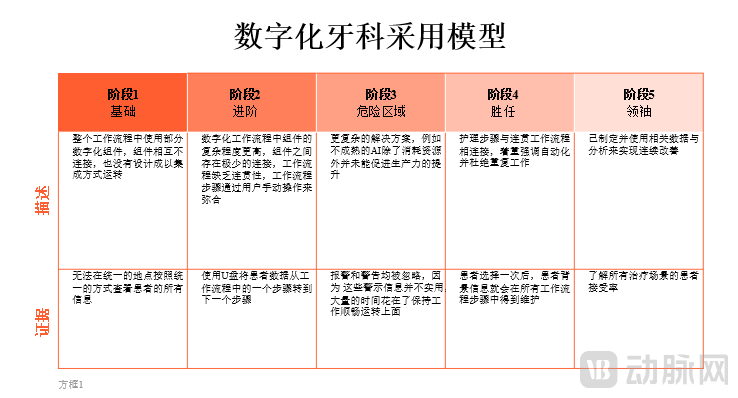
To bridge this gap, Envista has remained steadfastly focused on the needs of clinicians. “Our goal is to genuinely simplify operations, address the pain points associated with lengthy and complex workflows, and enhance diagnostic and treatment efficiency,” said Xu Bangda, General Manager of Envista’s Implant and Professional Consumables Division. “This vision gave rise to the Envista DTX Studio™ digital dentistry system. Envista’s comprehensive product portfolio enables us to integrate the entire workflow from imaging to orthodontics, implantology, and restorative care. By replacing multiple software programs with a single digital platform and seamlessly connecting data across required hardware devices, we are advancing dental digitization toward a more confident and capable stage of ‘competence.’”

Xu Bangda, General Manager of the Implant and Professional Consumables Business Unit at Envista
Digitalization + Intelligence: Pioneering the Future of Digital Dentistry
Chen Danpeng, President of Hangzhou Stomatological Hospital Group, shared the hospital’s end-to-end digitalization practices and stated, “From equipment and case management to clinician consultation management, including patient diagnosis and treatment workflows, digitalization not only enhances diagnostic and therapeutic precision but can also accelerate clinicians’ professional development.” This demonstrates that, amid the three major challenges of talent scarcity, high service homogenization, and elevated customer acquisition costs, dental digitalization is becoming a key advantage for differentiated competition among clinics. Hu Xuan, Senior Researcher at VCBeat’s Industry Research Department, pointed out, “In the future, dental service providers that excel in informatization and intelligence will be more likely to stand out.”
 Chen Danpeng, President of Hangzhou Stomatological Hospital Group
How can we take the next step in digitalization? The Envista Digital Intelligence White Paper proposes two key technical principles: data openness and augmented intelligence. Data openness requires digital platforms to continuously integrate more third-party software and data, ensuring seamless, high-level interoperability among all critical devices and technologies. Augmented intelligence entails leveraging vast volumes of specialized data to enable the platform to analyze information and provide physicians with personalized diagnostic reports for patients. By multiplying digitalization with intelligence, digital intelligence profoundly empowers clinical diagnosis and treatment.
“We are standing at the remarkable starting point of digitalization,” said Filippo Impieri, Senior Vice President and President of Emerging Markets at Envista. “Looking ahead, Envista aims to collaborate with the industry to advance digital transformation, accelerate the practical application of digital technologies, and create a future for dental care that is more digital, personalized, and accessible to the masses.”