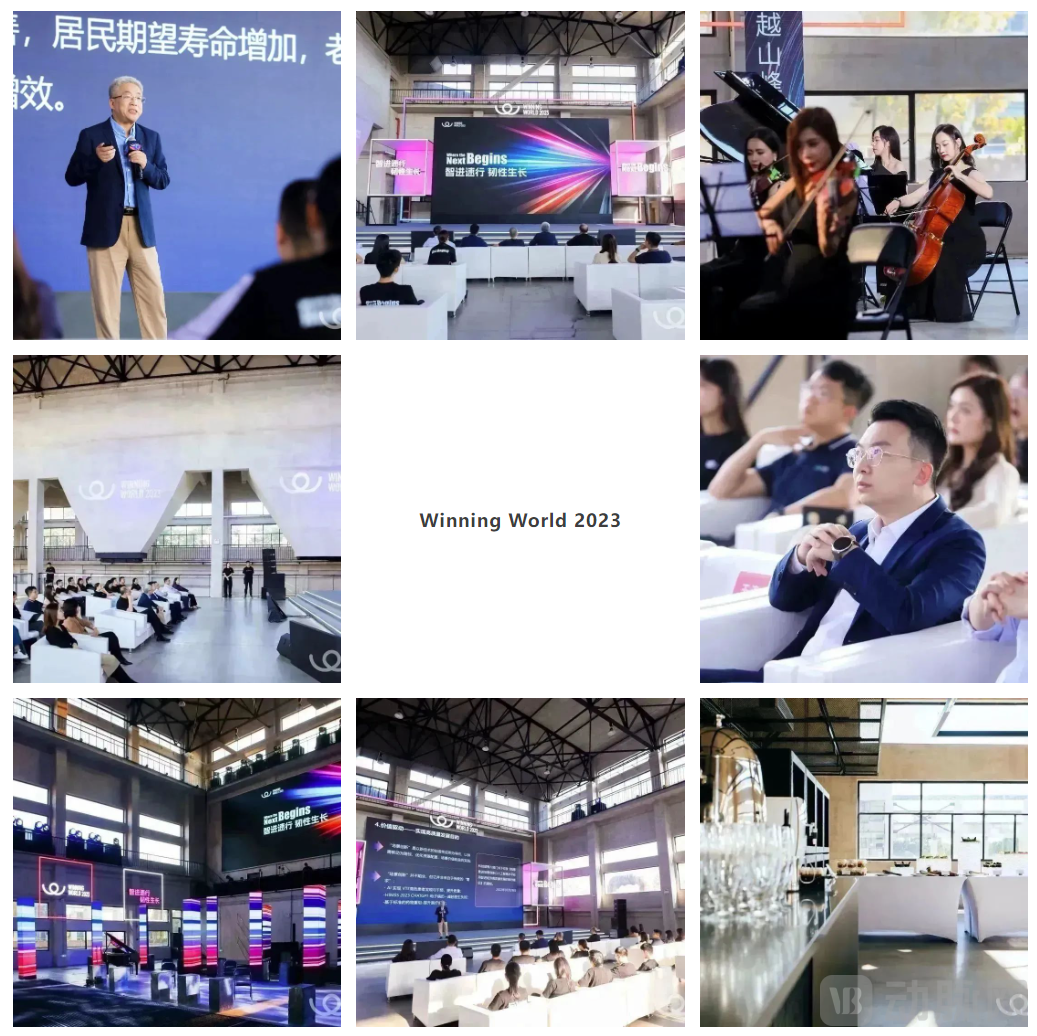
Winning World 2023 Successfully Held: Winning Health Officially Launches WiNGPT and WiNEX Copilot
On October 18, 2023, Winning Health’s “Winning World 2023” conference was held online. The theme of this conference was“Smart Progress, Rapid Advancement, Resilient Growth—Where the Next Begins”, the conference officially launched Winning Health’s medical-domain large language model WiNGPT, the WiNEX Copilot intelligent assistant for healthcare professionals based on WiNGPT, and the iterative upgrades to WiNEX products and solutions.
The conference specially invited Wang Caiyou, Chairman of the Information Professional Committee of the Chinese Hospital Association, and Yuan Lin, General Manager of the Medical Business Division at Sangfor Technologies, to deliver keynote presentations. Also sharing at the conference were Wang Tao, President of Winning Health; Zhao Daping, Vice President and CTO; Wang Qi, General Manager of the Hospital Product Headquarters; and Wang Lixia, General Manager of the Pre-sales Consulting Headquarters.
Smart Acceleration, Resilient Growth
Wang Tao, President of Winning Health, Explores the Future Direction of Healthcare from the Perspective of Advances in Intelligence and Digital Technology
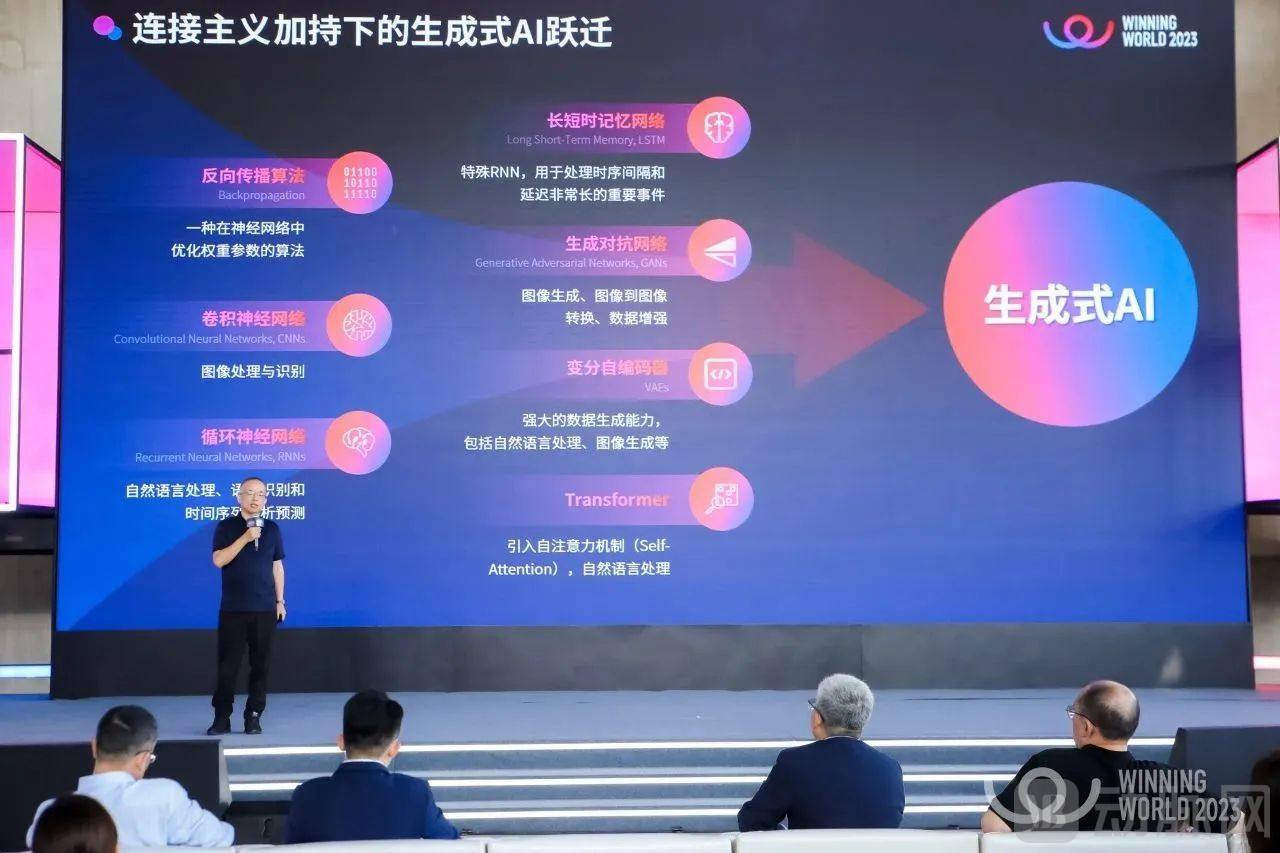
Wang Tao, President of Winning Health
Wang Tao believes that behind every wave of technological revolution lies a profound transformation in human cognition; the world remains unchanged, but our understanding of it evolves. Throughout the history of artificial intelligence (AI) development, people may have harbored doubts during periods when AI faced downturns. However, with recent breakthroughs in key technologies, confidence in AI has been strengthened, and attention has shifted to the question: “How should we coexist with artificial intelligence?” This has sparked particular discussion in the medical field: Is general artificial intelligence suitable for medicine? How can generative AI be integrated with expert systems? From the perspective of medical software, these questions boil down to “How can software comprehend healthcare?” For an intelligent system to be effectively utilized in healthcare, it must possess the capability to understand medical practices.
Reviewing the development trajectory of artificial intelligence, from “symbolism” to “connectionism,” and then to “generative AI,” empowered by connectionism, becoming mainstream, the emergence of ChatGPT has allowed the general public to perceive the remarkable capabilities of AI in natural language understanding and generation. Recently, AI has also made rapid progress in understanding multimodal information such as images and videos, as well as in content generation, advancing at a pace that has exceeded many people’s expectations. The future path of artificial intelligence is gradually becoming clear: leveraging computing power and massive datasets, AI will learn and understand the physical world through specific algorithms, evolving into intelligence that approaches or even surpasses human capabilities, thereby exerting influence across both physical and digital spaces.
Based on the above analysis, it can be seen that there are four main elements in the development of artificial intelligence:Computing Power, Data, Algorithms, and InteractionAmong these, interaction is particularly crucial. As the physical and digital worlds converge into a new, integrated realm, a key imperative of digitalization is to create new value within this space. We believe that digitalization is, in essence, an interaction revolution. Data-driven interactions have established novel modes of engagement between humans and the digital world, thereby transforming how people interact with one another.
So, in the healthcare sector, can digital health offer solutions to real-world challenges such as the uneven distribution of medical resources, the establishment of a people-centric integrated healthcare service system, and the broader promotion of coordinated development among healthcare services, health insurance, and pharmaceuticals?
Winning Health’s next-generation product, WiNEX, aims to address these fundamental challenges in healthcare by fully integrating the four core elements for future development mentioned earlier: computing power, data, algorithms, and interaction. Leveraging its middle-platform architecture, Winning Health has developed WiNGPT, a large language model specialized for the healthcare vertical, and introduced WiNEX Copilot to streamline collaboration and interaction between physicians and software systems.
In terms of computing power,WiNEX’s architecture effectively supports diverse computing power, enabling on-demand allocation of computational resources and flexibly supporting cloud-based or on-premises deployment of AI runtime services. Meanwhile, in collaboration with ecosystem partners, Winning Health is continuously exploring practical solutions for the low-cost deployment of large language models.
In terms of data,WiNEX leverages its data middle platform to provide high-quality data sources for vertical models in the healthcare sector, establishing a bidirectional closed loop between production system data and model training data. This approach aligns models more closely with real-world clinical scenarios, ensuring that AI is effectively utilized in medical practice.
In terms of algorithms,Large language models have long been plagued by the issue of “hallucination.” To mitigate this, we leverage a knowledge- and rule-based medical expert system in collaboration with WiNGPT to build an integrated framework that addresses the hallucination problem. The built-in WiNEX Copilot serves as a unified front-end entry point, intelligently determining the integration strategy between the large language model and the expert system, as well as the optimal model usage pathway, based on different medical scenarios, thereby delivering high-quality, highly usable, and optimal results.
In terms of interaction,We are witnessing that interactions within the digital healthcare realm, facilitated by various sensing media, are increasingly adopting multimodal approaches involving vision and hearing, such as intelligent voice-assisted ward rounds and multi-turn medical dialogues. It is believed that in the near future, leveraging more advanced spatial computing, the digital world will exert a greater influence on and interact more profoundly with the physical world, marking a transformative shift brought about by the new generation of digital technologies.
Regarding AI technology, many people ask: Will AI replace doctors? Wang Tao believes that behind this question lies a more profound issue: What exactly are human intelligence and consciousness? Where is the boundary of integration between silicon-based life and carbon-based life? How can we humans coexist with AI?
Reflecting on these issues, Wang Tao stated that, in fact, it is not AI that endows us with meaning; rather, we humans imbue AI with meaning. That meaning is to better treat diseases and save lives.
The future is unpredictable; rather than attempting to forecast it, we should strive to create it. Winning Health has devoted itself wholeheartedly to embracing new technologies and adapting them for healthcare applications. The WiNEX new products being launched today represent some of the achievements made on this journey.
Value-Driven Trends in Healthcare Informatics Development
Wang Caiyou, Chairman of the Information Professional Committee of the Chinese Hospital Association, shared insights on value-driven hospital informatization construction and development trends.
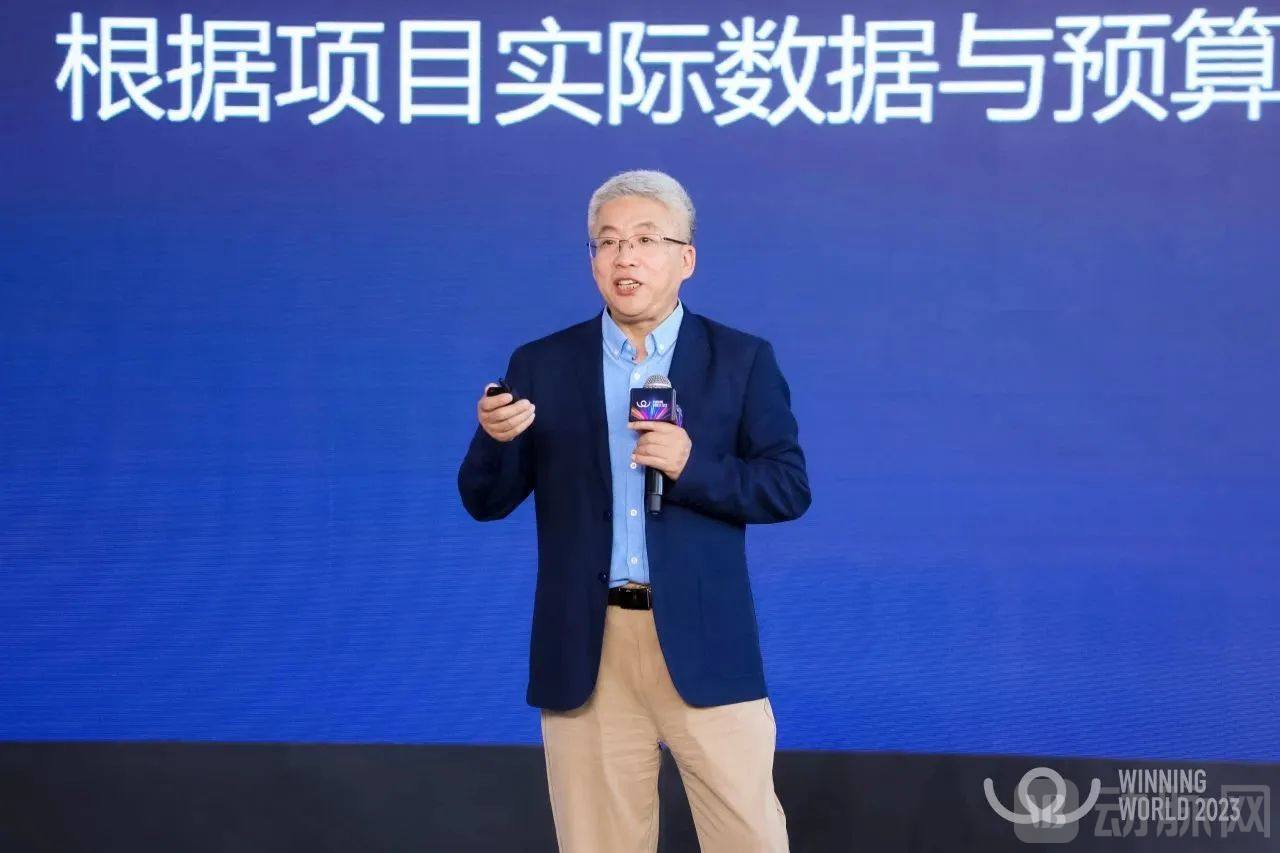
Wang Caiyou, Chairman of the Information Professional Committee of the Chinese Hospital Association
Wang Caiyou pointed out that only things capable of creating value can sustain their existence, a principle that equally applies to the field of healthcare informatization. Therefore, the future development path of informatization must be based on the value delivered by the systems themselves. We can explore the issues and solutions in the historical development of healthcare informatization from the following three perspectives:
“Small Incisions” – Pursuing New Value
By examining the confusion and issues arising from past hospital informatization development through a “small lens,” it is evident that healthcare institutions are currently facing numerous pressures. In the short term, public hospitals are grappling with the dual pressures of the pandemic’s impact and reforms in health insurance payment methods. In the long term, advances in medicine and improvements in healthcare coverage systems are accelerating efforts to enhance quality and efficiency in hospitals.
The aforementioned status quo imposes higher demands on hospital operational management, requiring more efficient and rapid scientific allocation and effective utilization of resources, with the core objective being to enhance the efficiency of resource allocation. To address these challenges, there is a need in the field for a flexible information system that enables proactive management and organically integrates “information” with “business activities, resource consumption, and financial items,” thereby supporting the development needs of higher-quality hospital operational management.
“Big Problems” – The Dilemma of Treating Symptoms
From the perspective of hospital operational management, healthcare informatization must have the capability to support the implementation of this core system of hospital operations and truly address the “major challenges” faced by hospitals.
At the core of operational management is the “integration of business and finance,” which requires pre-event planning, in-process control, and post-event evaluation to form a closed-loop management system that better captures key control points within processes. In this context, the highest priority is to determine how fragmented data with inconsistent standards can be organized and integrated to meet the operational management requirements of business-finance integration. Addressing this pain point necessitates building a robust team comprising data engineers, data architects, data administrators and governance specialists, as well as data scientists, data analysts, and business intelligence professionals. Together, they would create a data supply chain system to collect and integrate fragmented information and data, restructure and match them, thereby forming more rational resource allocation plans. However, it is evident that the construction cost of such an approach is relatively high. As the demands for high-quality development in hospitals continue to rise, implementing this method to resolve operational management pain points will likely become increasingly difficult.
So, how can healthcare institutions effectively break through the deadlock when facing operational and management dilemmas?
“New Horizons”—The Fundamental Solution
As emerging technologies proliferate, we are witnessing a new generation of information systems with enhanced data processing capabilities, enabling the development and rational utilization of data resources that were previously difficult to leverage. The advancement of emerging digital technologies, the evolution of information standards, and the innovation and refinement of the digital economy environment collectively foster value-driven growth, thereby supporting healthcare institutions in achieving high-quality development goals. Addressing inherent challenges with new technologies to underpin the future of healthcare aligns perfectly with Winning Health’s product development strategy.
Based on the above analysis and discussion, we can draw the following conclusion:In the digital era, addressing root causes is an inevitable choice; value-based healthcare payment models represent the choice of our times, and hospitals must adapt to their development.
In this process, healthcare IT enterprises can only realize their true social value by helping hospitals achieve their own value. This requires companies to continuously iterate and innovate their products. Although the journey may be arduous, the contributions made are substantial.
Marcel Proust, the 20th-century French novelist, once said, “The real voyage of discovery consists not in seeking new landscapes, but in having new eyes.” Wang Caiyou stated that, amid the robust momentum of current medical informatization development, Winning Health Technology Group Co., Ltd. will surely leverage innovation as its driving force, continuously employ new technologies to facilitate better development in medical services and management, and constantly bring new value to healthcare.
2023 Winning Health Product Launch
This year’s Winning Health products were jointly launched by Zhao Daping, Vice President and CTO of Winning Health; Wang Qi, General Manager of the Hospital Products Headquarters; and Wang Lixia, General Manager of the Pre-sales Consulting Headquarters.
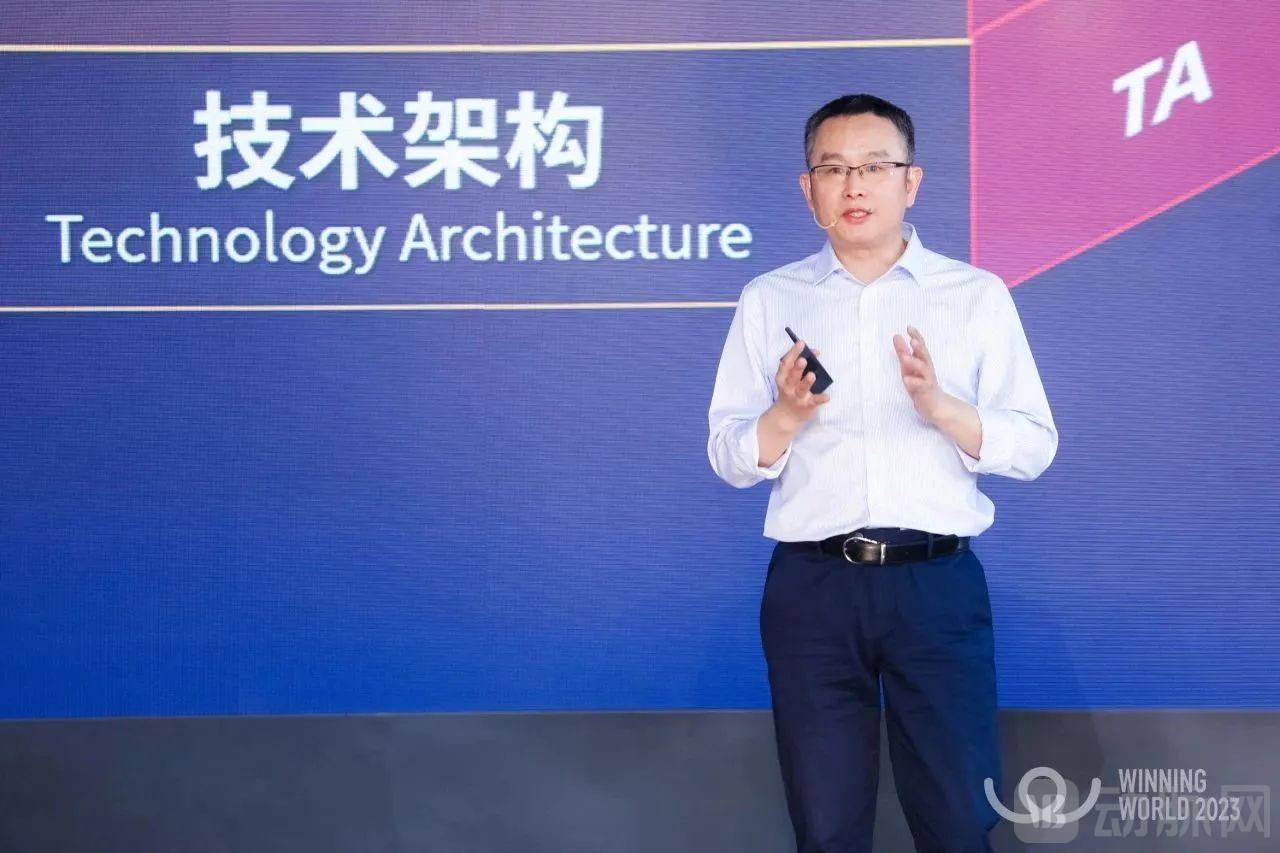
Zhao Daping, Vice President and CTO of Winning Health
Prior to the product launch, Zhao Daping, Vice President and CTO of Winning Health, summarized the three major technological shifts over the past year using three Chinese characters starting with “Xian”: AI large language models’Emergence, spatial interaction methods ofInitial Appearanceand “Xinchuang”Highlight。
First, we are at a critical juncture where the large-scale “emergence” of AI converges with the digital transformation of healthcare. This convergence will inject greater vitality into medical innovation, and we must fully comprehend the changes brought by AI from an industry perspective.
AI will exert influence at the level of underlying logic:On one hand, the information value stream is evolving, forming a “one decline, one rise” pattern within the DIKW framework; on the other hand, AI is driving changes in interaction interfaces, shifting from single-function technical interfaces to diverse interactions powered by large language models.
AI Can Reshape Application Systems Through Three Pathways:The first is “AI-Enabled” assistance, which involves using AI to perform specific tasks; the second is “AI-Powered” drive, referring to AI tools that drive scenario-based innovation; the third is “AI-Native” force, which entails rebuilding AI systems from the ground up to support digitalization and intelligence. WiNEX is essentially built on an AI-Native architecture.
In terms of design methodology, AI design has become routine:The existing architectural framework will evolve into a parallel EA+AI architecture, where AI considerations are integrated at every layer—business, application, data, and technology. Manual processes and AI-driven processes can operate in parallel or intersect.
Secondly, with the release of Apple Vision Pro, this “emerging” trend signals that spatial interaction is on the verge of becoming mainstream.In the future, interactive touchpoints between the virtual and real worlds in digital healthcare will be unlocked, enabling a spatial reconstruction from traditional language-based interaction to a “personal + scenario” model, thereby achieving digital twins of three-dimensional spaces.
Once again, the prominent trend of “Xinchuang” (IT application innovation) will lead the iterative upgrade of healthcare digitalization.The increasing maturity of the technological ecosystem, validation by pioneering industries, and the guidance and drive of relevant policies are all accelerating the development of medical information technology innovation (Xinchuang), while also imposing higher requirements on product design. Currently, Winning Health has completed Xinchuang adaptation for most of its products, carrying out mainstream Xinchuang transformations for more than 14 categories of systems.
Technological advancements drive continuous product innovation. In retrospect,Zhao Daping made a major announcement regarding Winning Health’s large medical model, WiNGPT, as well as the intelligent nursing assistant based on WiNGPT, WiNEX Copilot.
WiNGPT A large language model tailored for the healthcare vertical, built on general-purpose LLM technology and integrated with high-quality medical data. It is optimized and customized for healthcare scenarios to deliver intelligent knowledge services across various applications in the medical industry.
WiNGPT featuresThree Characteristics:
First,“Small and Specialized” refers to “small models” built on large language models.WiNGPT is fine-tuned based on medical scenarios and high-quality training data to precisely meet various business needs;
Second,Low-cost delivery.By optimizing model algorithms and deploying on CPUs, current generation efficiency has been measured to approach that of GPUs;
Third,Supports customizable private deployment.Private deployment ensures that medical data remains within the hospital, preventing data leaks while providing higher system stability and reliability.
WiNEX CopilotPositioned as an intelligent assistant for healthcare professionals, this solution is designed for medical staff and built upon WiNGPT and industry-specific open large language models. Tightly integrated into clinical workstations, it focuses on three core functionalities: partner-style assistance, in-depth data insights, and high-quality knowledge services.
As the connector between models and application systems, WiNEX Copilot focuses on buildingThree Core Capabilities:
1. Support flexible integration with business systems by providing various components to facilitate the use of large language models in application systems;
2. Support for internal and external model management, integrating various model capabilities;
III. A management platform that meets the requirements for Copilot development and configuration.
Currently, WiNEX Copilot supports over 30 scenarios spanning pre-consultation, intra-consultation, post-consultation, and healthcare management. The product launch introduced several assistants, including the Patient Service Assistant, Clinical Decision Support Assistant, Medical Documentation Assistant, Quality Control Assistant, Medical Imaging Report Assistant, and Health Management Assistant.
Going forward, Winning Health will continue to optimize its products and enhance their level of intelligence, leveraging WiNGPT as the foundation and Copilot as the key instrument.
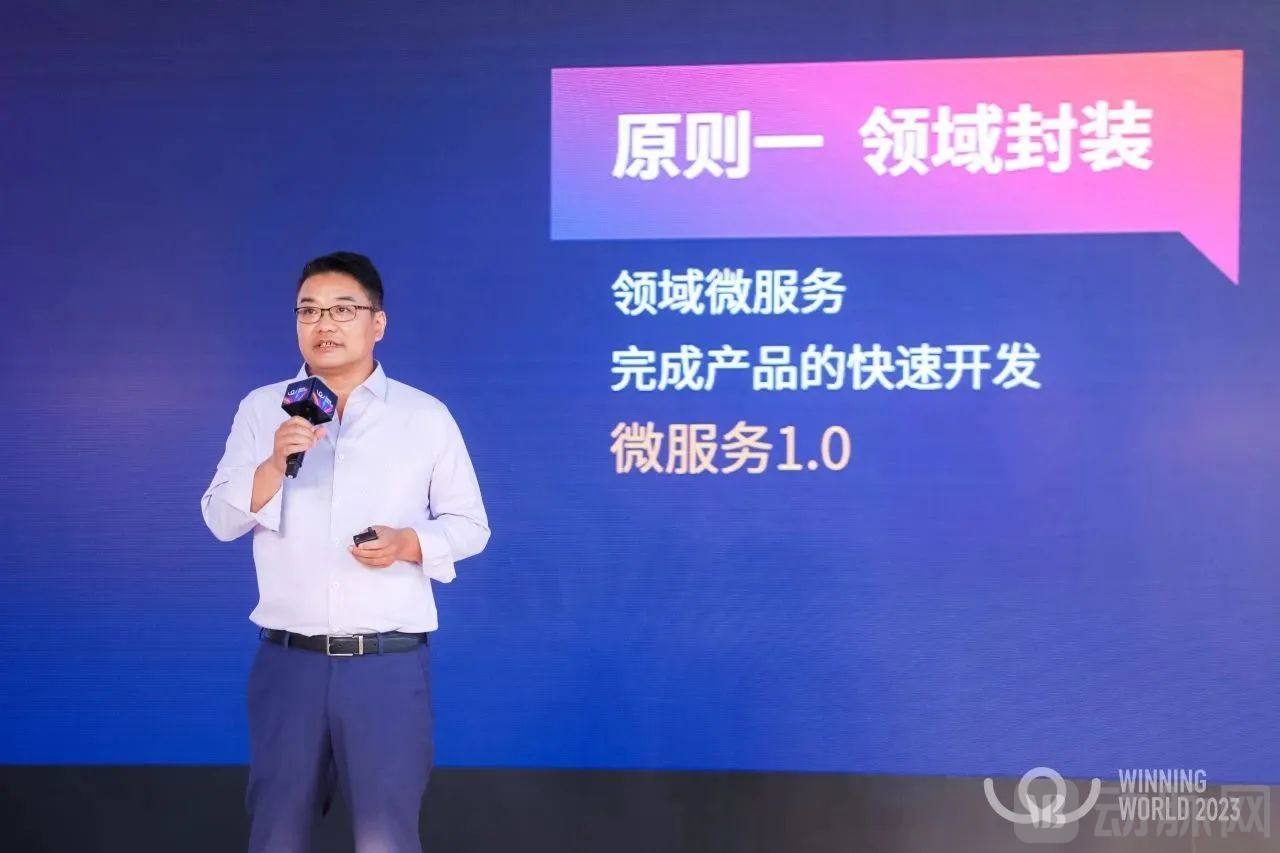
Wang Qi, General Manager of the Product Headquarters at Winning Health
Wang Qi, General Manager of the Product Headquarters at Winning Health, presented the iterative release of the WiNEX product and introduced the path to WiNEX Ready.
After several years of refinement, WiNEX’s products have reached a state of readiness, a journey that can be summarized by three “Ready”s.
Product Status: Ready, WiNEX has implemented a series of solutions centered on core business scenarios, shifting its products toward higher-value services;
Delivery Status: Ready, 2022 was the year of delivery. Having navigated various project delivery challenges, WiNEX has validated multiple delivery models, including the integrated delivery model, modular delivery model, phased delivery model, group distributed model, and group cloud-based model. Its delivery capabilities are mature, with successful implementations at typical clients.
Architecture Ready,From Microservices Architecture 1.0 to 3.0 (PBC), technically forming a "modular and composable" architectural system that lays a solid foundation for the development of the product portfolio.
The WiNEX Ready pathway enhances the connotation of the 5IN characteristics, gradually unleashing high-level capabilities. In addition to Intelligence (INtelligent) mentioned earlier, there are four other aspects:
InIntegrated (INtegrated)In terms of aspects, the 2023 optimized incremental features were released for basic services, outpatient physician workstations, inpatient physician workstations, electronic medical records (EMR), and inpatient nurse workstations. The new products, WiNEX Emergency and WiNEX Consultation, are incubated based on the WiNEX framework, evolving into more integrated, specialized, and flexible scenario-based applications.
AtInteroperabilityIn terms of aspects, WiNEX's extensive service system not only focuses on ESB integration between heterogeneous systems but also considers the integration of homogeneous microservice gateways and external internet-facing services.
InOnline (Internet)In this regard, WinDHP 2023 supports distributed deployment. To meet varying security requirements at different user levels, organizations can choose their preferred deployment method. Additionally, two new products have been launched: the Unified Payment Platform and the Panoramic Reconciliation Platform, both based on WinDHP.
AtInteractiveIn this regard, as a mobile healthcare platform for medical professionals, WiNEX MY has deepened role-based and scenario-specific interactions over the past year, introducing a new modality of integrated mobility and strengthening the platform’s open ecosystem capabilities.
WiNEX has come a long way, evolving from concept to implementation and then to large-scale validation, gradually maturing in the process. Winning Health will continue to advance the comprehensive research and development of WiNEX, striving to create an intimate assistant for healthcare professionals.

Wang Lixia, General Manager of the Pre-sales Consulting Headquarters at Winning Health
Wang Lixia, General Manager of the Pre-sales Consulting Headquarters at Winning HealthSolution upgrades were released across three dimensions: Smart Hospital, Smart Operations, and Smart District Health.
Smart Hospital SolutionsIt includes smart services, smart medical technology, and smart management.
Smart ServicesFocusing on strengthening the expansion of service scenarios and building a unified business rule engine, the conference launched four upgraded products: the Hospital-wide Unified Resource Management System, the Hospital-wide Messaging Platform, the Hospital-wide Appointment Platform, the Inpatient Preparation Center, and the Customer Operations Platform.
Smart Medical TechnologyUnder the overall WiNEX framework, AI capabilities have been continuously enhanced and restructured, leading to the launch of two new products—WiNEX Health Checkup and WiNEX Pathology—as well as an upgraded version of WiNEX PACS.
Smart ManagementBy establishing a unified hospital management platform with built-in various hospital management models and constructing an intelligent quality control engine that complies with the 18 core systems for medical quality and safety, Winning Health has upgraded its three products: WiNEX Medical Administration, WiNEX Healthcare-Associated Infection Control, and WiNEX Medical Records.
Smart Operations SolutionIncludes WiNEX DnA and WiNEX Reports.
WiNEX DnAEstablished a new data foundation, strengthened data infrastructure, supported information technology application innovation (Xinchuang), and achieved end-to-end visualized management of data aggregation, governance, analysis, and services.
WiNEX ReportsBy building the WiNEX DVE data visualization engine, it supports the standardized and customized generation of reports.
Smart District Health SolutionsFully integrated into the WiNEX overall framework, the conference unveiled the fully cloud-based WiNEX Region Digital Health Cloud Solution for small and medium-sized medical institutions, as well as the WiNEX Region New-Generation District Health Platform Solution.
Finally, Zhao Daping summarizedProgress in WiNEX DeliveryHe noted that, building on years of project accumulation, WiNEX has established a tool-based delivery model and formed a comprehensive 5D value delivery system. The meeting highlighted four toolchains—service architecture tools, operations monitoring toolchain, R&D low-code platform, and service delivery tools—as well as the “1+1+N” delivery organizational framework, with delivery efforts increasingly centralized. To support large-scale rollout, the standardized delivery model and WinCloud cloud-based delivery have undergone comprehensive upgrades through continuous iteration.
WiNEX, having been refined over several years, has grown through resilience and is poised to accelerate its next phase of development by harnessing the wave of artificial intelligence.
Next-Generation Weixin Cloud for AI
Building an Autonomous and Controllable Cloud Infrastructure
Yuan Lin, General Manager of the Healthcare Division at Sangfor Technologies, first shared insights into the changes and challenges currently facing healthcare digitalization: The rapid development of the digital economy has spurred the emergence and application of new technologies; meanwhile, achieving self-reliance and strength in science and technology has become a key objective for industry development, pushing IT innovation into deeper, more complex waters.
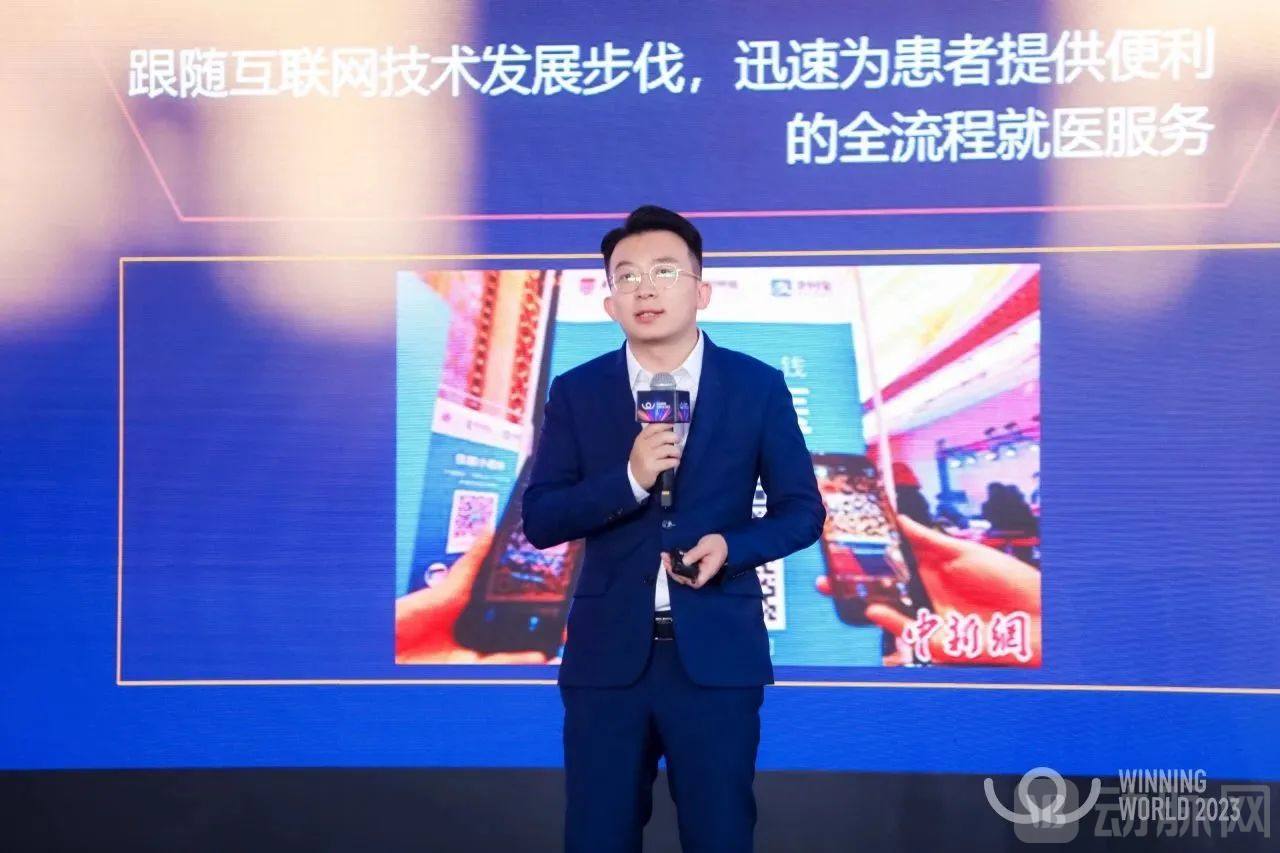
Yuan Lin, General Manager of Sangfor’s Healthcare Division
From the perspective of business development within the healthcare industry, it is evident that digital transformation has become an inevitable trend for hospital development. Adequate information technology support is required at every stage, whether in operational efficiency, medical quality, or patient satisfaction evaluation.
Based on the above, we can see that the emergence of new technologies and the need for internal business development have both placed new demands on IT. Weixin Cloud, jointly created by Sangfor Technologies and Winning Health, aims to build a new architecture to meet these ever-evolving requirements.
Since Sangfor Technologies and Winning Health officially established their strategic partnership in late 2018, both parties have adhered to their original aspiration of “leveraging their respective core competencies, driving continuous technological innovation and integration, and delivering efficient, user-friendly, stable, secure, and business-adaptive holistic solutions.” Together, they have progressed through the development of Weixin Cloud from version 1.0 to 2.0, with implementations now deployed in nearly 300 hospitals.In the face of new changes and challenges, we have built Weixin Cloud 3.0 around a new direction.
The new generation of Weixinyun adds three major features on the original basis:
1. Established a high-performance computing platform tailored for AIGC; through collaboration with Winning Health, it significantly enhances AI computational power, reduces overall costs, and better safeguards data privacy and model security;
II. Through in-depth collaboration with application software such as WiNEX, we have built an industry-leading full-stack IT innovation solution based on indigenous information technology infrastructure. This solution achieves performance and stability/reliability that are essentially consistent with those of non-indigenous IT business systems.
III. Optimized designs centered on Winning Health’s next-generation software, WiNEX, and its SaaS-based services have created an O2O online-offline integrated solution, enabling WiNEX to better align with and support users’ operational workflows while ensuring a superior user experience. The most critical change in Weixin Cloud 3.0 is the shift from previous on-premises delivery to an O2O online-offline integrated delivery model.
Weixin Cloud 3.0 also applies AI capabilities to fault chain tracing across the entire platform, enabling proactive issue prediction with an accuracy rate exceeding 95%. It provides insight into full-stack correlation analysis, empowering businesses with full-stack observability.
After five years of in-depth collaboration, Winning Health and Sangfor Technologies have established a leading solution for digital transformation in the healthcare industry. In the face of emerging technologies and evolving industry demands, we are increasingly convinced of the value of our integrated approach that “combines software and hardware to simplify complexity.” Looking ahead, both parties will continue to leverage cutting-edge technologies and best practices to advance hospital digitalization. Through dedicated service, we aim to ensure that every healthcare user can conveniently enjoy the benefits of digitalization, thereby contributing to the digital transformation of China’s medical and health industry.
Replay:
Scan the QR code at the end of the article to revisit more conference content!
To download conference materials, please visit the official website or scan the QR code at the bottom of the page:
https://www.winning.com.cn/winningWorld2023/