

LeadarTech Launches 'Target Space Station', Pioneering High-Throughput, Digital-Intelligent Target Discovery in Drug Development
Small-molecule drugs have been used to treat diseases for centuries, yet many of their interactions with protein targets remain unknown. The field of drug discovery is actively seeking additional protein targets and the drug molecules that modulate them. Currently, target-based drug screening technologies primarily involve screening large-scale small-molecule libraries, but these approaches face multiple challenges.
Chemical proteomics technologies have revolutionized drug discovery by enabling the screening of all proteins in living cells, thereby improving efficiency and reducing costs. Founded in 2017, Leadart is a leading company in chemical proteomics technology. Recently, it launched the “Target Space Station,” an automated workstation that covers the entire workflow from cell culture to drug target panel screening, with an efficiency equivalent to that of 100 biological operators. Meanwhile, its exclusive probe library will also be made publicly available, comprising two sub-libraries: photoaffinity probes and ABPP probes.https://probe.leadartech.cn/show), providing clients with one-stop chemical proteomics services that cover a target space of over 10,000 human proteins.
As a cutting-edge interdisciplinary field, chemical proteomics technology has garnered significant attention from numerous pharmaceutical companies and research institutions due to its systematic and precise advantages in drug screening.
According to Dr. Ni Feng, Founder and CEO of Ningbo Leadart Biotechnology Co., Ltd., the two primary concerns for pharmaceutical companies and research institutions are: first, how to identify drug targets, and second, how to obtain drug molecules that bind to those targets. Chemical proteomics technology effectively addresses both needs; it enables target identification starting from bioactive or drug molecules, and conversely, facilitates the screening of additional drug candidates centered on specific targets.
A Brief Introduction to Chemical Proteomics Technologies:
Starting from active drug molecules, chemical probes are employed to conduct target profiling directly within live cell environments. This approach circumvents many challenges inherent in traditional drug development, such as the difficulty of isolating active proteins and analyzing protein structures, particularly dynamic conformations. By enabling high-throughput characterization of interactions between candidate drugs and the proteome, this method facilitates a deeper understanding of mechanistic issues including off-target toxicity and polypharmacology.
Meanwhile, chemoproteomics technology can acquire drug-related information in a single experiment that would traditionally require multiple methods. This aligns closely with the information needs of the drug development process, representing the most valuable data closest to drug discovery. Chemoproteomics data has become a standard requirement for publication in high-impact pharmaceutical journals.
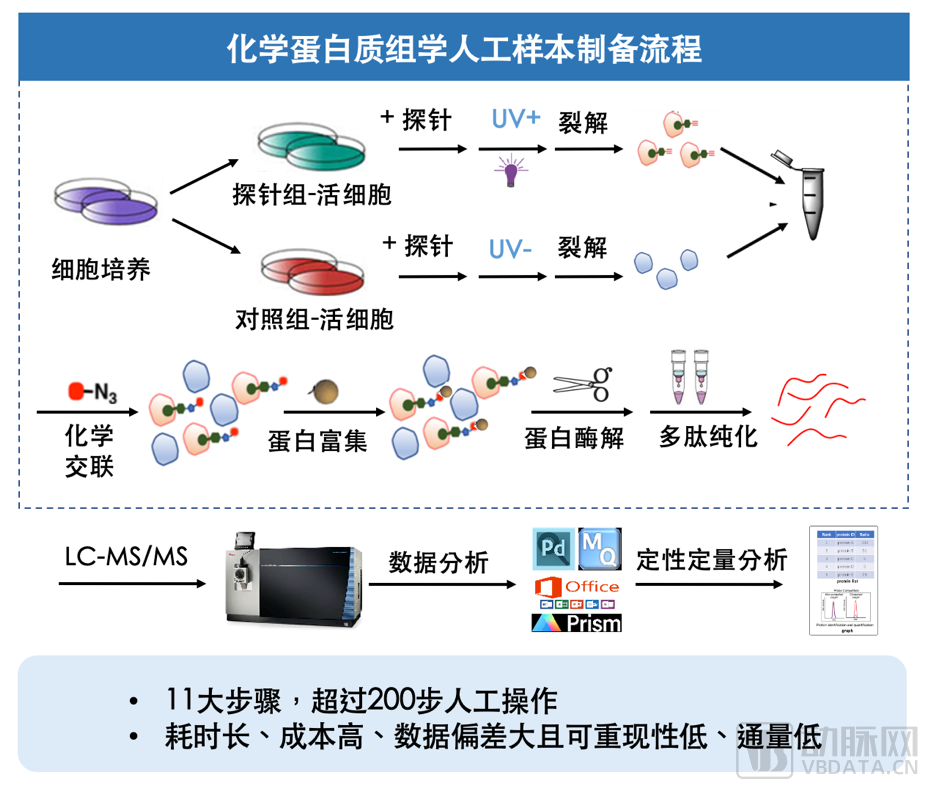
However, conventional chemical proteomics techniques also face challenges.
As a technology integrating the two major systems of biology and chemistry, mass spectrometry sample preparation in chemical proteomics requires 11 major steps and over 200 manual operations. The experimental process is complex, resulting in low reproducibility and comparability of data processing, analysis, and experimental results. It is also prone to manual operational errors and efficiency issues, leading to high costs and prolonged experimental cycles.
Building on this, Ningbo Leadart Biotechnology Co., Ltd. has pioneered the “Target Space Station,” which integrates chemoproteomics with an automated dual-platform technology to enable automated and standardized experimental workflows, thereby breakthroughly addressing the most significant pain point of traditional chemoproteomics.
Leadart’s “Target Space Station” is the world’s first fully automated chemical proteomics sample preparation system. The system comprises three modules—“Nuwa,” “Fuxi,” and “Shennong”—and integrates functions such as cell culture, probe/drug treatment, and proteome extraction. It enables efficient preparation of target-associated protein samples for drug molecules, meeting the needs of high-throughput drug target screening and novel drug discovery in pharmaceutical R&D.
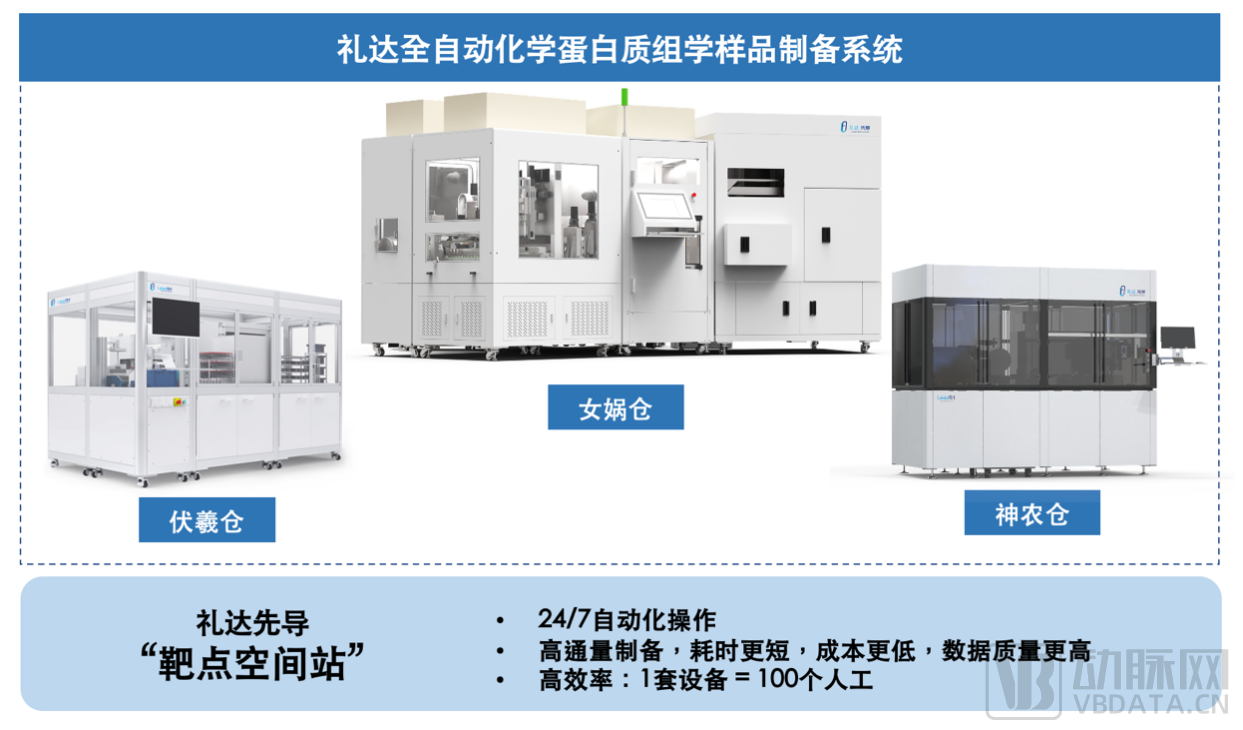
First, automation empowerment has significantly increased system throughput. The system is designed for a throughput of 20,000–30,000 samples per year per instrument, representing at least a 100-fold efficiency improvement compared to manual operation, which handles 100–200 samples per person per year.
Secondly, it avoids the complexity and errors associated with manual operations, facilitating the collection of highly reliable multi-dimensional big data and enabling a systematic exploration of the interaction space between the human targetome and the drugome.
Meanwhile, automated systems are also poised to rewrite the history of biological replicate experiments. Biological experiments typically require three replicates to ensure data reliability; however, by enhancing standardization and accuracy, automated systems may reduce this requirement to two or even single runs in the future. This advancement could cut reagent consumables and overall time down to two-thirds or one-third of current levels, significantly saving on both financial and time costs.
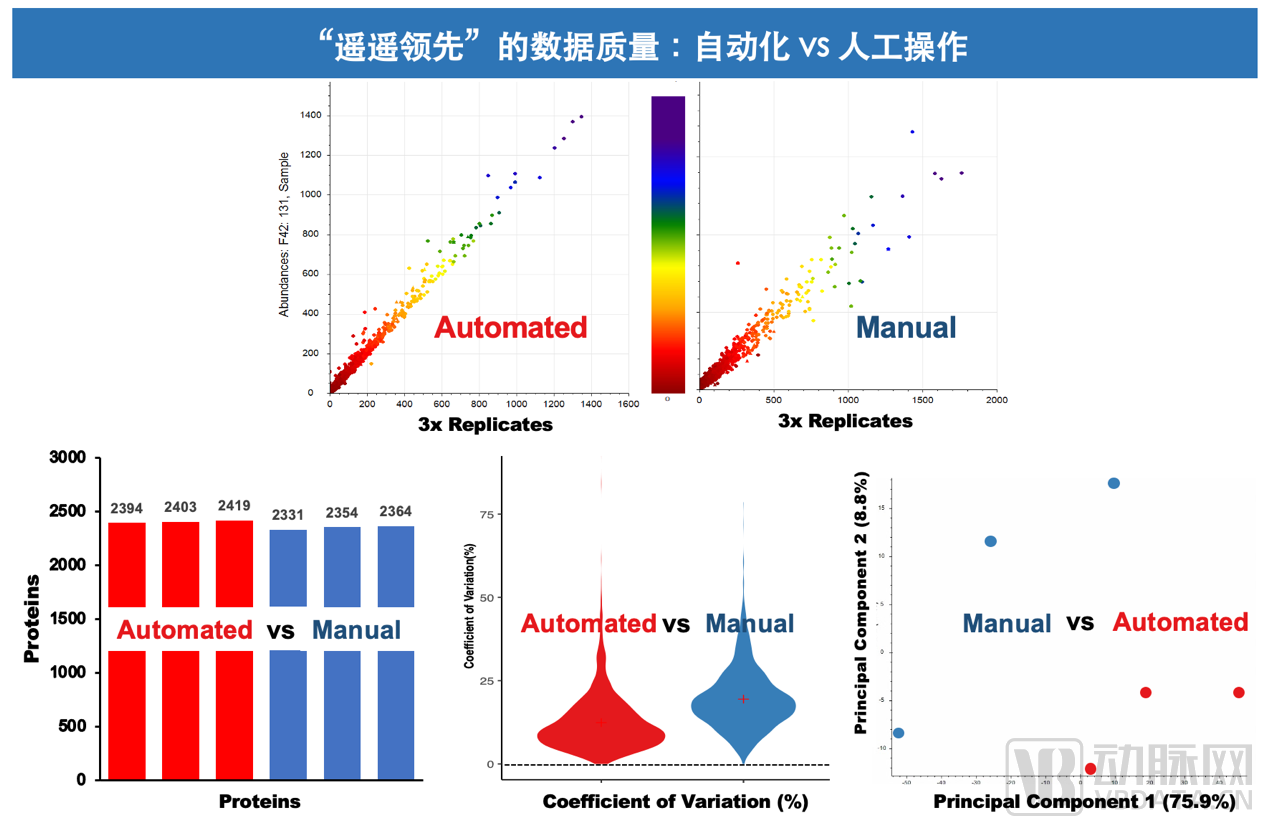
More importantly, with the realization of automated sample preparation, every user has the opportunity to achieve the dream of a “wet-dry cycle.” Researchers need only select cell lines and start from a single chemical molecule or probe to easily obtain more protein target information, enabling them to design experiments that facilitate the collection of more comprehensive data with greater ease.
“Information on the direct target profiles of a drug is something many researchers have long dreamed of. We aim to make this technology widely accessible, much like the poetic imagery of ‘swallows that once flew only into noble halls now entering ordinary homes.’ When we reduce the cost of the technology to one-fifth or even one-tenth of its current level, more research in the life and health sectors will undoubtedly begin to adopt it. All health issues related to the regulatory interactions between chemical molecules and proteins can then be addressed more conveniently using chemoproteomics technologies,” said Ni Feng.
Build an original live-cell target/ligand database,The "Digital Intelligence Era" Empowering New Drug Discovery
With the rapid advancements in AI technology and computational science, the biopharmaceutical industry is undergoing a digital and intelligent transformation. New computational tools will empower biopharmaceutical professionals to more efficiently unravel the mysteries of human biology.
However, what is scarce in the biopharmaceutical industry is high-quality big data. Ningbo Leadart Biotechnology Co., Ltd. is dedicated to acquiring high-quality biological big data from the level of chemical proteomics through automated standard processes.
In addition to the “Target Space Station,” Ningbo Leadart Biotechnology Co., Ltd. has also established an active probe library comprising over 4,000 compounds. By leveraging these probes to conduct research directly in live cells, the company can not only significantly shorten the cycle for acquiring targetomics data but also obtain critical information regarding the potential clinical translation risks of these bioactive molecules.
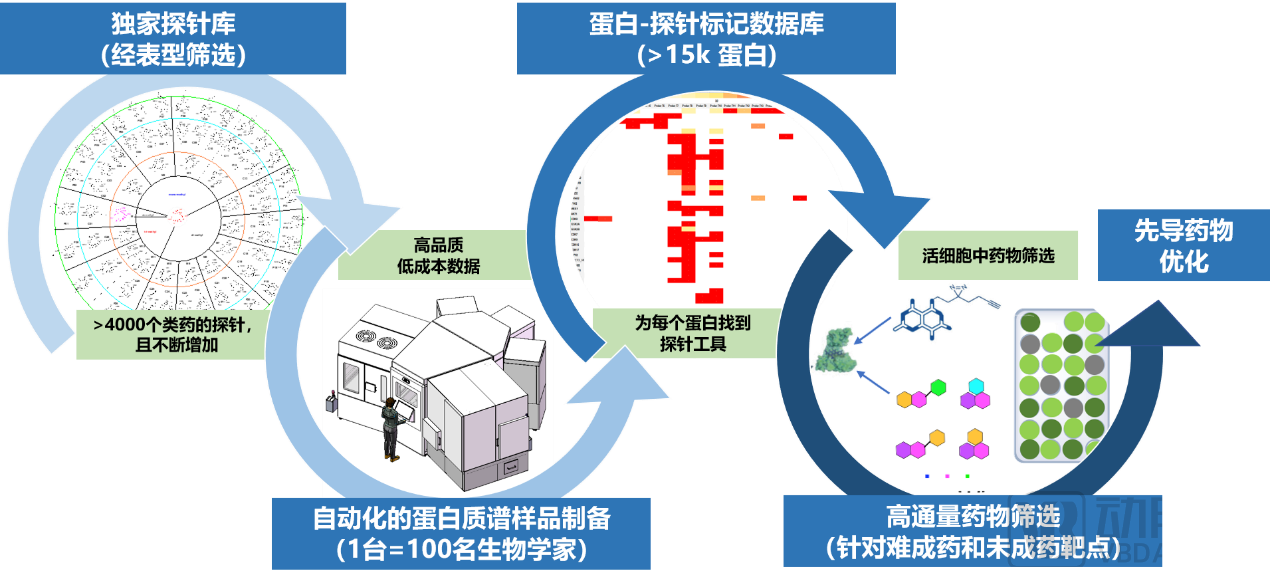
Behind the automated “Target Space Station” and probe library layout, Leadart’s ultimate goal is to build the world’s largest proteomics and drug-binding database and data factory at the live-cell level, achieving a closed loop from “compound freedom” and “cell freedom” to “drug-target data freedom.”
“The ultimate goal of the development of chemical proteomics is to promote drug discovery and guide health maintenance in a high-throughput, cost-effective manner,” said Ni Feng. “Therefore, Leadart leverages advanced automation and digital technologies, combined with its proprietary platform integrating an activity-based probe library, chemical proteomics techniques, and sample operation systems, to build the world’s largest and highest-quality human live-cell target–ligand database, aligning with the ‘International Human Targetome Project’ (also known as the ‘Target2035 Initiative’).”
“Automated data acquisition is a significant milestone. With the database in place, we can query corresponding matching molecules for any disease-related or high-value target to support applications such as drug optimization and screening,” said Yan Jie, Co-Founder and COO of Leadart Biotechnology.
According to reports, the first version of the database will be officially released this year. Its launch will complete the final key component of Leadart’s automation- and digitalization-driven drug discovery platform, facilitating the expansion of the druggable target space. It enables customized, precise, and rapid screening of chemical drug molecules against various targets in living cells.
It is understood that the launch of the “Target Space Station” has also initiated a new round of financing for Leadart, following its Pre-A round in August last year. Going forward, the company will establish operations in major domestic and international pharmaceutical R&D hubs, including Shanghai, the Yangtze River Delta, and the Pearl River Delta, to scale up and promote the “Target Space Station” system. Meanwhile, Leadart will continue to develop new products and services, integrating them into critical pharmaceutical R&D scenarios to build the “Leadart Future Laboratory.” This initiative aims to serve more researchers and pharmaceutical companies, steering new drug discovery toward an era of high-throughput, digital, and intelligent innovation.