

Grand Pharmaceutical's Innovative Liquid Embolic Agent Lava™ Commercially Launched in the U.S., Offering a Novel Treatment for Peripheral Arterial Hemorrhage
On October 29, Grand Pharmaceutical Group Limited (0512.HK), a Hong Kong-listed innovative pharmaceutical enterprise focused on technological innovation, announced further positive news. Its subsidiary, BlackSwan Vascular, Inc. (“BlackSwan”), has officially launched the commercialization of its innovative liquid embolic agent, Lava™, in the United States. Lava™ is the first and only liquid embolic agent approved by the U.S. Food and Drug Administration (FDA) for the treatment of peripheral arterial bleeding in the United States. Its successful commercialization provides a novel therapeutic option for patients with peripheral arterial bleeding in the U.S.
Superior Embolization Efficacy Compared to Similar Products, with Product Portfolio Highlighting Synergistic Value
Reportedly, Lava™ is an injectable, non-adhesive liquid embolic agent composed of ethylene vinyl alcohol (EVOH), tantalum powder, and dissolved dimethyl sulfoxide (DMSO). The product exhibits radiopaque properties, minimizes artifacts during imaging, and delivers superior imaging quality. Compared with similar products that require approximately 20 minutes for preparation, Lava™ offers greater convenience with a preparation time of only 3 minutes, thereby saving physicians’ preparation time in emergency situations and improving patient survival rates. Furthermore, the solidified embolus formed by Lava™ is available in two viscosity levels, each offered in two dosage options, allowing for flexible use tailored to patients with varying clinical conditions.
Lava™ demonstrates favorable safety and efficacy. Due to its high packing density within the vasculature, it minimizes the risk of recanalization in diseased vessels. Furthermore, the product’s adhesiveness helps prevent catheter retention. Clinical study results for Lava™ showed no major adverse events within 30 days, with successful embolization achieved in 94% of lesions—significantly exceeding the predefined target of 70%. Moreover, Lava™ exhibited effective embolization in distal small vessels that were inaccessible to other types of embolic agents.
Dr. Gary Siskin, Professor and Chair of the Department of Radiology at Albany Medical Center, stated that the ability of Lava™ to maximize filling density within the target vessel is critical, as it minimizes the likelihood of future recurrence or recanalization.
Notably, Lava™ can synergize with brachytherapy and interventional therapies involving radioisotopes, and is expected to be used in combination with the Company’s yttrium-90 (⁹⁰Y) microsphere product in the future, thereby expanding its indications to other oncology fields. In addition, the Company has submitted a Premarket Approval (PMA) application to the U.S. Food and Drug Administration (FDA) for Kona™, another product indicated for preoperative embolization of cerebral arteriovenous malformations, which is anticipated to receive approval and be launched by the end of this year.
Strategically Positioning in the High-Growth Embolization Market: Differentiated Pipeline Poised to Meet Surging Demand
Liquid embolic agents are liquid formulations capable of occluding aneurysm sacs, isolating blood flow, or embolizing pathological vessels, and are commonly used in the treatment of patients with irregular aneurysms and arteriovenous malformations. Against the backdrop of an accelerating aging population, the number of patients with cardiovascular and cerebrovascular diseases, including irregular aneurysms, is steadily increasing. According to PENUMBRA’s annual report, approximately 6 million people in the United States may have cerebral aneurysms, with annual rupture rates of 0.5%–3.0% for cerebral aneurysms and 1.0%–3.0% for cerebral arteriovenous malformations. In China, data from the “Medical Device Blue Book” indicates that the prevalence of intracranial aneurysms ranges from 2.5% to 3.0%.
Against this backdrop, the market size of liquid embolic agents has also risen significantly. Data shows that the global embolization market was valued at approximately USD 3.4 billion in 2021 and is projected to reach USD 5 billion by 2026, representing a compound annual growth rate (CAGR) of 8%. With the rising incidence of peripheral vascular disease, liver cancer, stroke, and uterine fibroids, coupled with increasing penetration of minimally invasive procedures, the interventional embolization market is poised for rapid growth in the coming years.
Despite the substantial market potential, the number of pharmaceutical companies entering the liquid embolic agent market remains limited due to R&D technical barriers, with domestic players being particularly scarce. For Chinese pharmaceutical companies, this sector represents a blue ocean market yet to be fully explored, further validating Grand Pharmaceutical Group Limited’s strategic foresight in making precise investments in this area.
In addition to Lava™ and Kona™, Grand Pharmaceutical Group Limited has another product in its pipeline for tumor interventional therapy: the temperature-sensitive embolic agent GPN00289, which is currently undergoing type testing. This product is indicated for the embolization treatment of various hypervascular solid organ tumors, particularly benign and malignant hypervascular liver tumors. At room temperature, the gel exhibits excellent fluidity; after being delivered via a microcatheter into the blood vessels of the lesion tissue, it undergoes in situ solidification from peripheral vessels to the main feeding vessels at body temperature, thereby achieving embolization of the lesion’s vasculature. The product has currently received certification as an innovative medical device from the National Medical Products Administration (NMPA).
It is foreseeable that, as market demand gradually expands, Grand Pharmaceutical Group Limited, as one of the first innovative pharmaceutical companies in China to lay out its portfolio in liquid embolic agents, may leverage its first-mover advantage to create a new development landscape.
Continuously Deepening the Science and Technology Innovation Strategy: Multidimensional Products Strengthen Competitive Advantages in the Oncology Field
Interventional oncology is one of the key strategic focuses within Grand Pharmaceutical’s radiopharmaceutical segment for cancer diagnosis and therapy. The company’s global sales network in this segment covers more than 50 countries and regions, and it has joined forces with its associate company, Sirtex Medical Limited, to establish an interventional oncology technology platform of international leading standards.
The official commercial launch of Lava™ in the United States marks a significant milestone in Grand Pharmaceutical Group Limited’s internationalization strategy. Its gradual clinical adoption will provide new insights for expanding the indications of the company’s Yttrium-90 (⁹⁰Y) microsphere product, with the potential to form a product portfolio with ⁹⁰Y microspheres for interventional treatment of other solid tumors. Furthermore, Lava™ can be combined with other chemotherapeutic agents or radiopharmaceuticals to create novel drug-device combinations, thereby expanding Grand Pharmaceutical’s product pipeline in the field of oncology intervention.
Yi Gan Tai®Yttrium [90Y] Microspheres Injection is the flagship product of Grand Pharmaceutical’s radiopharmaceutical oncology diagnosis and treatment division, having received marketing approval from the National Medical Products Administration (NMPA) in January 2022. This product provides a novel and effective therapeutic option for patients with malignant liver tumors in China, offering opportunities for conversion therapy followed by surgical resection to achieve clinical cure. It addresses the gap in local treatment for colorectal cancer liver metastases, improves long-term outcomes for Chinese patients with liver cancer, and marks the advent of a new internationalized precision interventional treatment paradigm for malignant liver tumors in China. Currently, clinical studies investigating its use in treating primary liver cancer are progressing smoothly in the United States, and real-world studies on its application in treating primary malignant liver tumors are expected to be launched in China in the second half of this year.
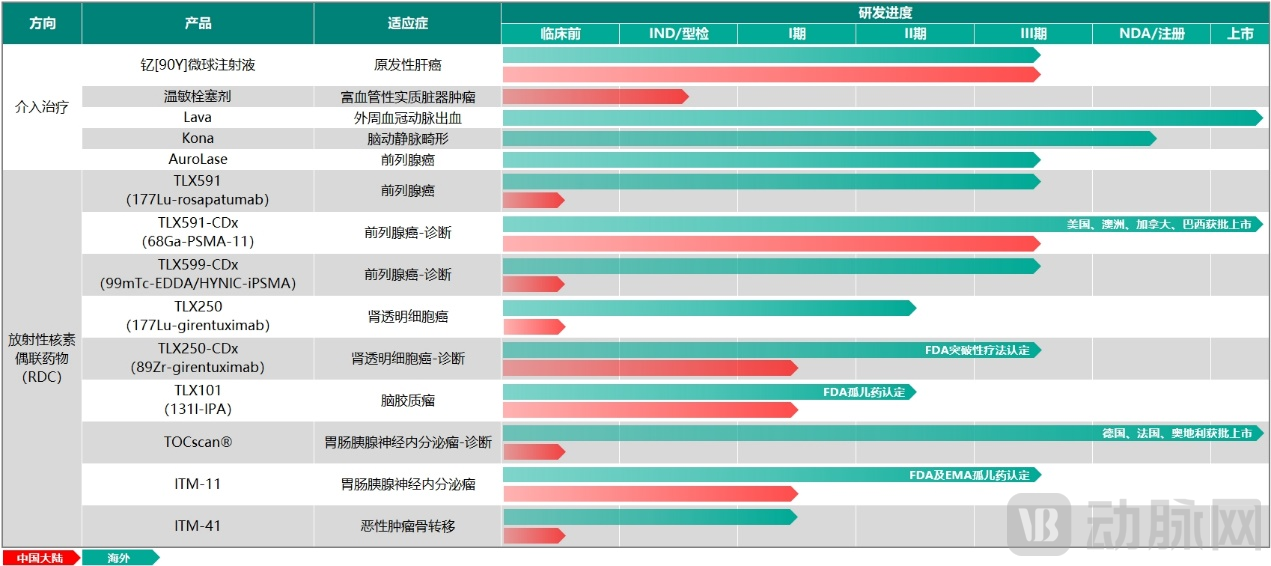
In addition, Grand Pharmaceutical Group Limited has also reserved a global innovative solid tumor ablation therapy technology, AuroLase, in the field of oncology interventional therapy.®, for the ablation of prostate cancer tissue, and is poised to become the world’s first and currently only ultra-precise focal therapy. Compared with surgical intervention, radiation therapy, or conventional alternative focal therapies, AuroLase®The therapy maximizes treatment efficacy while minimizing side effects associated with surgery, radiation, and alternative focal therapies. AuroLase®It is expected that the marketing application will be submitted in the United States in the second half of this year.
Lava™, Kona™, and AuroLase®The market launch progress of innovative products, coupled with the continuous advancement of Grand Pharmaceutical Group Limited’s R&D on innovative radiopharmaceuticals in recent years, underscores the deepening implementation of the company’s technological innovation strategy and its robust capabilities in innovative R&D. As pipeline products and commercialized products exert synergistic effects, the company’s future growth potential continues to strengthen.
Grand Pharmaceutical stated that the company will continue to strengthen R&D and investment in its radiopharmaceutical oncology diagnosis and treatment segment, enrich and refine its product pipeline and industrial layout, strive to bring 10 radiopharmaceutical products into clinical stages within the next three years, achieve a pipeline layout of more than 25 radiopharmaceutical oncology diagnosis and treatment products, and form a portfolio centered on YiganTai®A cluster of radiopharmaceutical products for cancer diagnosis and treatment, centered on Yttrium-90 [90Y] microsphere injection, continues to solidify the company’s position as a global leader in the field of oncological radiopharmaceutical theranostics.