

Health Tech Firm Xikali Secures Tens of Millions RMB in Funding Led by Hongnuo Ventures to Advance Millimeter-Wave Biomedical Radar Solutions
Health-tech company Xikali Announces Completion of Multi-Million RMB Financing RoundXikali, a health technology company, has announced the completion of a financing round amounting to tens of millions of RMB. This round was exclusively invested by Hongnuo Venture Capital. Previously, the company secured seed funding from Oufang Angel, a fund affiliated with Zhejiang University’s alumni network. The raised capital will be primarily allocated to research and development, product manufacturing, and team expansion. The company’s core offerings are health and medical-grade monitoring products based on millimeter-wave technology. It has already established commercial partnerships with several large domestic elderly care institutions, insurance companies, and smart home product manufacturers, while also conducting joint clinical research with multiple top-tier hospitals in China.
Xicali is a technology company established through the implementation model for individuals who have achieved the transformation of scientific and technological achievements at Shanghai Jiao Tong University. Its founder, Gu Changzhan, is an Associate Professor and Doctoral Supervisor at Shanghai Jiao Tong University, as well as a Senior Member of the IEEE. His primary research focuses on radio frequency (RF)/microwave/millimeter-wave circuits and systems, millimeter-wave microsystem integration, short-range radar sensing, and applications in non-contact health monitoring and human-computer interaction. He previously worked at Google’s headquarters in Silicon Valley, USA, where he participated in research on millimeter-wave radar gesture interaction technology (Project Soli, Google ATAP Lab) and its application in products such as Google Pixel smartphones.
With population aging and changes in lifestyle, the incidence of chronic diseases continues to rise. According to statistics, chronic diseases cause 41 million deaths globally each year, accounting for more than 70% of all deaths. These conditions are influenced by a combination of genetic, physiological, environmental, and behavioral factors; their prolonged duration and high treatment costs impose a substantial economic burden on both patients and society. Long-term, routine management is essential to ensure timely detection and adjustment of treatment. Therefore, there is significant potential demand for home-based chronic disease management and daily health monitoring.
However, the infrastructure for chronic disease management remains inadequate. There is a lack of long-term, accurate, convenient, and cost-effective devices at the data acquisition end to capture key physiological and biochemical data from the human body. Furthermore, there is a significant shortage of analytical interpretation of collected data and clinical research. This infrastructural deficit hinders the practical implementation of digital healthcare and health management in home settings, reducing them to mere channel innovations for online consultations and pharmaceutical sales.
Millimeter-wave technology features low privacy intrusion, contactless operation, clothing penetration, and minimal susceptibility to temperature and humidity variations, making it a highly suitable modality for home-based health monitoring. Current primary challenges lie in the hardware domain, which lacks high-precision, cost-effective bio-radar sensors optimized for close-range monitoring, and in the software domain, which lacks high-precision artificial intelligence algorithms for biosignal analysis that support edge computing and are annotated against clinical gold standards.
To address the aforementioned challenges, the Xikali team leveraged its years of accumulated full-stack expertise in integrated hardware and software to redesign a biometric radar sensor system tailored for close-range detection, and developed specialized algorithms based on scenario-specific and clinical data. Through collaborations with the cardiology, respiratory, sleep, and neonatology departments of multiple Grade A tertiary hospitals affiliated with Shanghai Jiao Tong University, the team has successfully implemented functionalities such as apnea detection, arrhythmia monitoring, sleep staging, and pediatric intermittent hypoxia assessment. Furthermore, it has conducted technical research and development in areas including unobtrusive heart failure detection, atrial fibrillation screening, and blood pressure measurement, achieving favorable results in clinical trials.
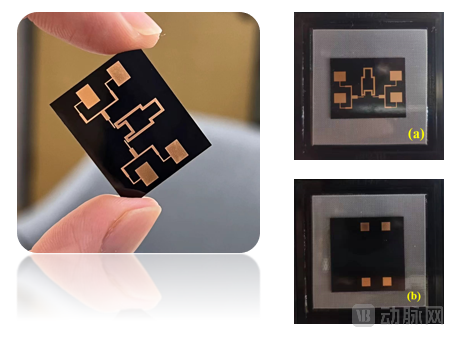
Figure: Full-Duplex Package Antenna for Heterogeneously Integrated Biomedical Radar Chips
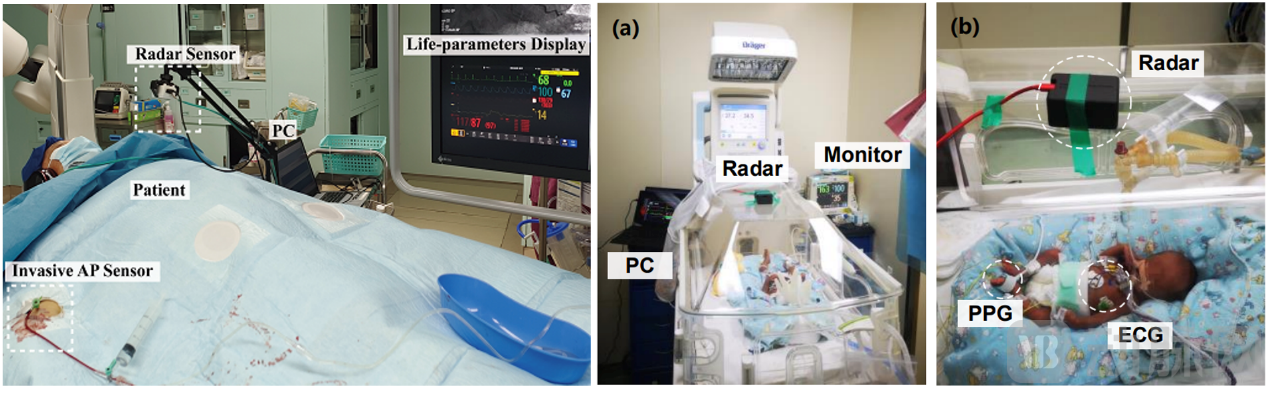 Figure: Clinical validation completed at multiple top-tier Grade 3A hospitals.
Li Ruiyuan, Managing Partner at Hongnuo Venture CapitalThe statement reads: “Changes in demographic structure and lifestyle have increased societal demand for chronic disease management in home settings. Meanwhile, the maturation of technologies such as sensors, processing chips, and AI algorithms has enabled medical electronic devices for home use to collect, process, and analyze data in real time, thereby providing more accurate and timely data for chronic disease management and digital healthcare. We are pleased to see Hicali’s innovations in this field and hope the team will continue to refine its technology to deliver better products to consumers. Hongnuo Venture Capital stands firmly with innovators; consumer-grade medical and health products remain a key focus of our investment strategy.”