

Breakthrough in Minimally Invasive BPH Treatment: Hangzhou Weinak MicroNife System Successfully Used in First Prostate Ablation Surgery at Zhejiang Hospital

V-Onco
Irreversible Electroporation Technology Developer
Recently, Hangzhou V-Onco Medical Technology Co., Ltd. successfully performed the first “Micro-Nano Knife” ablation procedure for benign prostatic hyperplasia in the Department of Urology at Zhejiang Hospital. The surgery was carried out smoothly under the overall coordination of Director Yu Jiandi from the Department of Urology at Zhejiang Hospital.
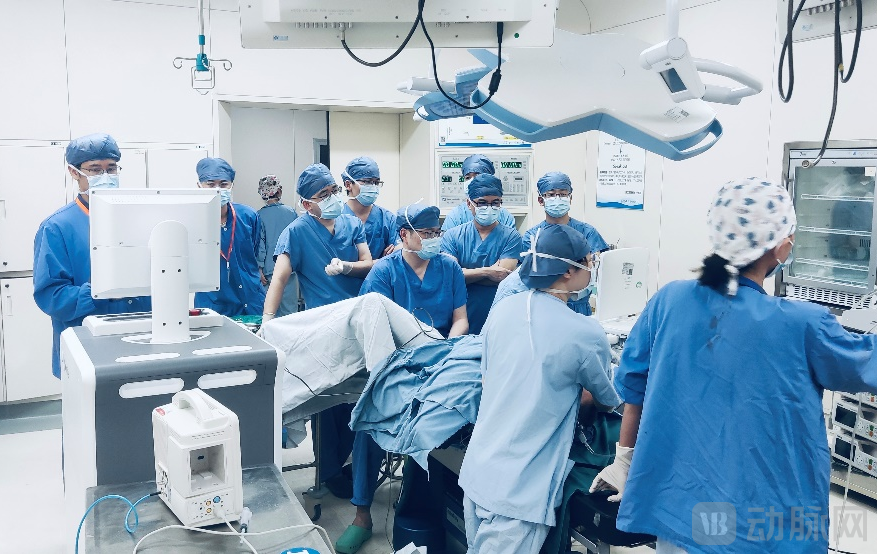
Prostate Patients Welcome a New Era of Minimally Invasive Treatment
The patient in this treatment was 68-year-old Mr. Li (pseudonym), who had suffered from symptoms of benign prostatic hyperplasia (BPH), such as difficult urination, for ten years. Conservative pharmacological therapy yielded suboptimal results. Preoperative assessment revealed a prostate gland size of approximately 4.6 cm × 3.8 cm × 3.7 cm, a maximum urinary flow rate (Qmax) of 7.8 mL/s, and an International Prostate Symptom Score (IPSS) of 19. In light of the patient’s preference for minimally invasive therapy, the Urology Team at Zhejiang Hospital conducted a comprehensive evaluation of his condition and physical status, and tailored a “Micro-Nano Knife” ablation treatment plan for his BPH.
Throughout the procedure, the patient received intravenous anesthesia. Under dual-plane B-ultrasound guidance, the surgeon performed perineal puncture using a specialized “Micro-Nano Knife” to deliver broadband pulse ablation to the hyperplastic prostatic tissue. The ablation process lasted approximately 20 minutes. No muscle relaxants were administered, and endotracheal anesthesia was not employed. Immediate postoperative contrast-enhanced ultrasound demonstrated that the ablation effect met expectations, with no injury observed to the adjacent urethra or surrounding tissues. The patient’s vital signs remained stable intraoperatively and postoperatively. After removal of the urinary catheter, he was able to void spontaneously, without significant traumatic reactions such as hematuria or urinary incontinence, and was discharged smoothly. “After suffering for so many years, I finally feel relieved!” said Uncle Li excitedly.
“How does the ‘Micro-Nano Knife’ achieve ultra-minimally invasive procedures?”
Prostatic diseases are among the most common conditions affecting middle-aged and elderly men and represent the primary cause of lower urinary tract symptoms (LUTS) due to bladder outlet obstruction. Traditional surgical treatment for benign prostatic hyperplasia (BPH) involves partial resection of the prostate gland to relieve obstruction, which can rapidly alleviate voiding difficulties but is also associated with a high risk of complications such as sexual dysfunction, urinary incontinence, and urethral stricture. Therefore, identifying a minimally invasive therapeutic approach that effectively relieves BPH-related urinary obstruction while fully preserving sexual and urinary continence functions remains a prominent focus and challenge in urology.
“Micro-Nano Knife” is a non-thermal, selective physical ablation technology that induces irreversible electroporation (IRE) and subsequent apoptosis of cells through the action of pulsed electric fields. It can achieve ablation and volume reduction of prostate tissue while relieving relative urethral stenosis, ensuring that important surrounding structures (such as blood vessels, nerves, urethra, rectum, bladder neck, etc.) remain undamaged. Therefore, it has significant advantages in the treatment of benign prostatic hyperplasia (BPH). “Micro-Nano Knife” prostate ablation improves upon the shortcomings of traditional surgeries, achieving true minimally invasive, painless procedures with preservation of sexual and urinary continence functions. This greatly reduces patient trauma and suffering, making it a promising new option for BPH treatment. Meanwhile, during this procedure, Director Yu and his medical team, supported by the Micro-Nano Knife and the latest single-needle ablation technology, innovatively addressed the challenges associated with traditional IRE devices, such as the need for “general endotracheal anesthesia (combined with sufficient muscle relaxants)” and multi-needle parallel placement. This significantly reduced the complexity of the surgical operation, shortened the overall treatment time, and made IRE ablation surgery more efficient, safe, and convenient, thereby maximizing benefits for patients undergoing local ablation for BPH.
The successful implementation of this surgery marks a new breakthrough for Hangzhou V-Onco’s micro-nano knife product series in the treatment of benign prostatic hyperplasia (BPH), following its previous success in liver cancer therapy. This achievement is expected to provide a novel minimally invasive local treatment option for BPH, thereby advancing the urology field toward “focusing on precise minimally invasive techniques and establishing a highland for urological diagnosis and treatment.”
The “Micro-Nano Knife” technology is the latest achievement of Professor Yao Chenguo’s team at Chongqing University, resulting from over two decades of research. Since 2000, the team has been dedicated to the study of electroporation in tumor cells, with their findings first published in an international academic journal in 2004. Since then, Professor Yao Chenguo’s team has continuously refined and improved the product technology, securing independent intellectual property rights. They are now internationally recognized as pioneers and leaders in electroporation-based tissue ablation technology.。